

200 hour yoga teacher training 2027: compare the best months, Rishikesh weather, travel seasons and training conditions to choose your ideal batch. Discover more.
200 hour yoga teacher training 2027: Batch Dates and How to Pick the Right Month
Planning your 200 hour yoga teacher training 2027? The month you choose can influence much more than your travel experience. It can affect your daily practice, physical comfort, outdoor activities, accommodation preferences and how easily you adjust to an intensive training schedule.
Rishikesh welcomes yoga practitioners throughout the year, but every season offers a different atmosphere. January brings cold mornings, spring offers comfortable training conditions, summer brings heat, and the monsoon changes the rhythm of life around the Ganga.
So, which month should you choose?
Whether you are travelling from Europe, Australia, the United States or another part of India, understanding the seasonal differences will help you make a practical decision. This guide explores the best months for yoga teacher training in Rishikesh, what to consider before booking, and how to match your personal schedule with the right training period.
1. Understanding 200 Hour Yoga Teacher Training 2027 Batch Dates
A 200-hour yoga teacher training is an intensive foundation-level programme designed to develop your personal practice and introduce you to the skills required to teach yoga.
Unlike a regular yoga holiday, the schedule usually involves several hours of daily learning, physical practice, philosophy, anatomy, meditation and teaching methodology.
That is why choosing the right batch matters.
For 2027, you should start by identifying the months that suit your travel availability and preferred learning environment. Different schools publish different intake schedules, so there is no universal calendar followed by every yoga school in Rishikesh.
What should you check before choosing a batch?
Before paying a registration fee, check these details:
- Exact starting and ending dates: Confirm the complete programme duration rather than relying on a general monthly label.
- Arrival and departure requirements: Ask whether arrival one day before the course is compulsory.
- Daily timetable: Understand how early your mornings begin and how much free time you receive.
- Course inclusions: Check accommodation, meals, study materials, certification and other included facilities.
- Assessment requirements: Understand attendance, practice teaching and graduation conditions.
- Certification eligibility: Confirm the school's Yoga Alliance registration status and the certification pathway applicable to the programme.
You can explore the <a href="https://yogaalliance.org" rel="nofollow">Yoga Alliance official website</a> to understand its school registration and teacher credential framework.
Remember that a school advertising a 200-hour course does not automatically mean every programme has identical teaching standards or student support.
Your priority should be a suitable curriculum, qualified instructors and sufficient supervised practice.
2. Best Months for 200 Hour Yoga Teacher Training in Rishikesh
Rishikesh experiences noticeable seasonal changes. Understanding them helps you select a training period that supports your physical comfort and concentration.
Here is a practical overview of the major training seasons in 2027.
January and February: Winter training
Winter is suitable if you enjoy cooler weather and a quieter environment.
Mornings and evenings can be quite cold, particularly during January. You may need warm clothing for meditation, pranayama and early morning classes.
Best suited for:
- Students comfortable with cold mornings.
- Travellers who enjoy a quieter atmosphere.
- Practitioners who prefer cooler conditions during physical activities.
Things to consider: Pack thermal clothing, warm socks and comfortable layers. Ask whether classrooms and accommodation have adequate heating arrangements.
March and April: Comfortable spring conditions
Spring is often one of the most attractive periods for training in Rishikesh.
The weather is generally more comfortable than peak summer, making it easier to maintain an intensive daily routine.
You can enjoy outdoor surroundings without dealing with the strongest summer heat.
Best suited for:
- International students visiting India for the first time.
- Practitioners who prefer moderate temperatures.
- Students who want to explore Rishikesh during their free time.
Spring can be a particularly practical choice if you want a balance between training comfort and outdoor experiences.
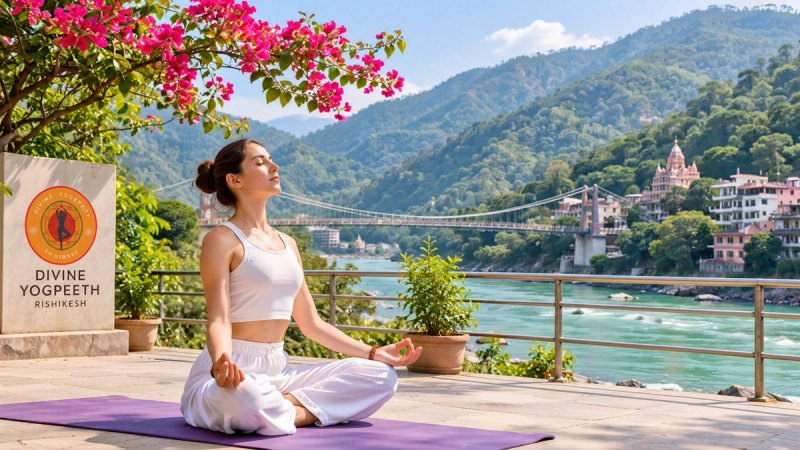
May and June: Summer training
Summer brings higher temperatures to Rishikesh.
Intensive asana sessions can feel physically demanding, especially during warmer afternoons. Hydration, appropriate clothing and sufficient recovery become important.
Best suited for:
- Students with flexible schedules.
- Practitioners comfortable exercising in warm conditions.
- Travellers who can plan their arrival and activities around the heat.
Ask your school about classroom ventilation, drinking water facilities and the daily timetable before confirming your place.
July and August: Monsoon season
The monsoon changes the atmosphere of Rishikesh.
The surrounding hills become greener, and the Ganga region takes on a different character. However, rainfall can affect transportation, outdoor activities and sightseeing.
Best suited for:
- Students comfortable spending more time indoors.
- Practitioners prioritising classroom learning.
- Travellers with flexible transportation arrangements.
Heavy rainfall can occasionally create travel disruptions and safety concerns. Always follow local weather and administration advisories.
September and October: Post-monsoon season
September and October can offer a good balance of weather and surroundings.
The monsoon gradually withdraws, and the natural landscape remains green. Conditions can vary, particularly in September, so check the forecast before travelling.
Best suited for:
- International travellers seeking comfortable training conditions.
- Students who enjoy nature and outdoor exploration.
- Practitioners looking for a balance between physical practice and cultural experiences.
Explore our guide to the best benefits of September yoga teacher training in Rishikesh for a more detailed seasonal comparison.
November and December: Autumn and early winter
November generally offers pleasant daytime conditions, while December gradually becomes colder.
These months can appeal to students who prefer a calmer environment and cooler temperatures.
However, winter clothing becomes increasingly important as the year progresses.
3. How to Choose the Right Training Month for Your Lifestyle
The best training month is not necessarily the month with the most attractive weather.
Your personal circumstances should influence your decision just as much as the season.
A student travelling from Germany may have different priorities from someone arriving from Mumbai. Similarly, a working professional may need to plan around annual leave, while an Indian university student may prefer a batch after examinations.
Match your training month with your priorities
Consider the following situations:
If you are travelling internationally:
Plan your course around flight availability, visa arrangements and your available travel days. Avoid booking connecting travel too tightly around your course dates.
If you are an Indian student or working professional:
Consider university holidays, employment leave and family commitments. Booking a course that conflicts with important responsibilities can create unnecessary pressure.
If you are sensitive to temperature:
Choose a season that supports your physical comfort. Cold mornings and summer heat can influence how you experience an intensive daily routine.
If you want to explore Rishikesh:
Consider spring or autumn if comfortable outdoor conditions are important to you. Remember that your training schedule will leave limited time for sightseeing.
Don't choose a month only because it is popular
A popular intake is not automatically the right intake for you.
A smaller batch, suitable instructors, appropriate accommodation and a well-structured curriculum can matter more than the popularity of a particular month.
Before confirming, compare the actual course dates, teaching hours, batch size and facilities.
You can also review our practical guide on choosing a 200-hour yoga teacher training school in Rishikesh.
Check the academic and certification requirements
A recognised 200-hour programme should provide a structured foundation in yoga practice and teaching.
Common learning areas include:
- Hatha and Vinyasa yoga.
- Pranayama and meditation.
- Yoga anatomy and physiology.
- Yoga philosophy and traditional texts.
- Teaching methodology.
- Alignment, adjustments and safe practice.
- Supervised teaching practice.
You should also understand the school's attendance and assessment requirements before travelling.
For general information about traditional Indian yoga and related wellness initiatives, you can visit the <a href="https://www.ayush.gov.in" rel="nofollow">Ministry of AYUSH official website</a>.
4. 2027 Yoga TTC Planning Calendar: What to Prepare Before Booking
Once you have selected a preferred month, the next step is organising your travel and course requirements.
A little preparation can prevent last-minute problems, especially when travelling internationally.
Three to six months before training
Start comparing schools and their published 2027 schedules.
Check whether the programme has confirmed dates or is still accepting expressions of interest.
At this stage, you should:
- Compare course curriculum and teaching faculty.
- Confirm total fees and payment conditions.
- Check accommodation and meal arrangements.
- Understand the cancellation and refund policy.
- Review the certification details.
- Check passport validity and visa requirements if travelling internationally.
Do not make non-refundable travel arrangements before confirming the school's intake.
One to two months before training
Once your admission is confirmed, focus on travel preparation.
International students should review the applicable Indian visa requirements and ensure that their travel documents are in order.
Indian students should arrange transportation to Rishikesh and confirm arrival instructions.
Prepare comfortable yoga clothing, personal medication if applicable, toiletries and essential travel documents.
One week before arrival
Contact the school to reconfirm your arrival time, accommodation details and any required documents.
Check the local weather forecast and pack accordingly.
You should also reduce unnecessary physical strain before starting the programme. There is no need to exhaust yourself with an intense workout routine immediately before training.
Keep a backup plan
Weather disruptions, delayed flights and transportation problems can affect travel schedules.
Allow reasonable buffer time before the first class. If possible, arrive a day earlier rather than travelling directly into an intensive training programme.
A little flexibility can make your first few days much more comfortable.
5. Why Rishikesh Is Worth Considering for Your 2027 Yoga Training
The location of your teacher training can influence your experience outside the classroom.
Rishikesh offers a distinctive combination of yoga institutions, traditional learning environments, spiritual practices and Himalayan surroundings.
Situated along the Ganga River, the town attracts practitioners from different countries and backgrounds.
For an international student, this creates opportunities to learn alongside people with different experiences of yoga.
A learning environment beyond asana practice
Yoga teacher training involves more than learning physical postures.
You explore breathing techniques, meditation, philosophical concepts, anatomy and the practical responsibilities of teaching.
Rishikesh provides access to an environment where traditional yoga practices remain an important part of everyday life.
You may also find opportunities to experience:
- Morning walks along the Ganga.
- Visits to local temples and spiritual sites.
- Meditation and pranayama sessions.
- Traditional Indian vegetarian food.
- Cultural interaction with international practitioners.
These experiences can complement your formal learning, provided you maintain a healthy balance with your course schedule.

Consider the practical side of the location
Rishikesh is not a single uniform neighbourhood.
Different areas have different surroundings, transport access and accommodation options. Tapovan and Laxman Jhula are popular areas among yoga travellers.
When comparing schools, check the actual accommodation location, walking distance to classrooms, nearby facilities and transportation arrangements.
Do not assume that every school advertising a Rishikesh location offers the same surroundings.
6. What to Compare Before Selecting Your 200-Hour YTT School
Choosing a month is only one part of your decision.
The quality of the training programme will have a much greater influence on what you learn and how prepared you feel after graduation.
A school with convenient dates but an unclear curriculum may not be the right choice.
Teaching faculty and experience
Look beyond promotional photographs.
Check the instructors' qualifications, teaching experience and areas of expertise.
A good programme should provide access to teachers who can explain alignment, anatomy, philosophy and practical teaching methods clearly.
Batch size and individual attention
The number of students can affect your learning experience.
Smaller groups may make it easier to receive individual feedback during posture practice and teaching assessments.
Ask how many students are expected in your chosen 2027 intake.
Our guide on how to choose the right 200-hour YTT batch size explains why this detail deserves attention.
Accommodation and food
A residential programme requires comfortable living arrangements.
Check whether accommodation is shared or private, what meals are included and whether dietary requirements can be accommodated.
Ask about internet access, laundry, drinking water and basic facilities.
Teaching practice and graduation
A 200-hour programme should prepare you to understand and communicate yoga practices, not simply perform them.
Look for supervised teaching opportunities, feedback from instructors and a clear assessment process.
You should finish with a better understanding of how to structure a class, guide different students and communicate safely.
7. Choosing Between a 100-Hour and 200-Hour Programme
Sometimes your schedule may not allow you to commit to a full 200-hour programme.
In that situation, a shorter course may appear attractive. However, you should understand the difference before making your decision.
A 100-hour programme provides a shorter learning experience. It can suit practitioners seeking focused study or additional exposure to particular aspects of yoga.
A 200-hour foundational teacher training provides a more comprehensive introduction to teaching methodology, philosophy, anatomy and practical instruction.
Your decision should depend on your learning objectives, previous experience and future teaching plans.
If you want to compare the programmes, explore the 100-hour yoga teacher training course and examine the complete 200-hour yoga teacher training curriculum.
Do not assume that completing a 100-hour course automatically provides the same credential or eligibility as completing a registered 200-hour teacher training programme.
Always confirm the applicable certification requirements with the school and Yoga Alliance.
8. Plan Your 2027 Training with Divine Yogpeeth
If Rishikesh is your preferred destination, your next step is to find a programme that matches your schedule, learning expectations and accommodation needs.
Divine Yogpeeth is located in Tapovan, near Laxman Jhula, Rishikesh, in the surroundings of the Ganga River and Himalayan foothills.
We offer a 200-hour yoga teacher training programme designed to introduce students to traditional yoga practices and practical teaching skills.
Before selecting your preferred 2027 month, review the published batch schedule and confirm the availability of your intended intake.
You can also discuss your preferred arrival date, accommodation requirements and course-related questions with our team.
Explore our 200-Hour Yoga Teacher Training in Rishikesh to review the programme and plan your 2027 training.
[IMAGE PLACEMENT: In-Content Image 2]
9. Frequently Asked Questions About 200 Hour Yoga Teacher Training 2027
Which month is best for 200-hour yoga teacher training in Rishikesh in 2027?
March, April, September, October and November are worth considering because they generally offer more comfortable conditions than peak summer or the colder winter months.
However, the best choice depends on your temperature preferences, travel schedule and the school's confirmed intake dates.
Are 200-hour yoga teacher training batches available throughout 2027?
Not necessarily. Individual schools publish their own admission calendars, and some may offer more monthly intakes than others.
Contact your preferred school to confirm the exact starting dates, ending dates and remaining seats before making travel arrangements.
Is Rishikesh suitable for international yoga students?
Yes. Rishikesh attracts international yoga practitioners and offers a range of yoga schools, accommodation options and cultural experiences.
International students should plan their visa, travel insurance, transportation and accommodation in advance.
Do I need previous yoga experience to join a 200-hour programme?
Most foundational teacher training programmes are intended for students who have an established interest in yoga and are ready for intensive learning.
However, individual schools may have different entry recommendations. Confirm the required experience and physical expectations before enrolling.
Does completing a 200-hour YTT automatically make me a registered Yoga Alliance teacher?
No. Completing a qualifying training programme and registering individually with Yoga Alliance are separate steps.
You should confirm that the school and programme meet the applicable registration requirements. You may need to complete additional registration formalities to obtain an individual credential.
10. Conclusion: Choose Your 2027 Batch with Confidence
Choosing your 200 hour yoga teacher training 2027 batch should be a thoughtful decision rather than a last-minute booking.
March and April may appeal to you if you prefer spring conditions, while September and October offer a different atmosphere after the monsoon. Winter and summer can also work when you understand the conditions and prepare accordingly.
Most importantly, choose a school based on teaching quality, curriculum, batch size, accommodation and transparent admission information.
Your training should give you the knowledge and practical confidence to continue developing your personal practice and teaching skills.
Ready to plan your next step? Explore our 200-Hour Yoga Teacher Training in Rishikesh, check the available 2027 batch dates and contact Divine Yogpeeth to discuss your preferred intake.
Your training calendar starts with the right decision.
─── IMAGE SUGGESTIONS ───
1. Featured Image — Top of Blog
Description:
A wide, high-quality photograph of a yoga teacher and international students practising yoga in an open Himalayan-style yoga space in Rishikesh. Include the Ganga River or Himalayan foothills in the background. Natural morning lighting, peaceful atmosphere and realistic photography.
ALT Text:
200 hour yoga teacher training 2027 in Rishikesh with Himalayan surroundings
File Name:
200-hour-yoga-teacher-training-2027-rishikesh.webp
2. In-Content Image 1 — After Section 2
Description:
A seasonal visual of Rishikesh showing green Himalayan hills, the Ganga River and a yoga practitioner practising outdoors during pleasant spring weather. Natural colours and realistic travel photography.
ALT Text:
Best months for 200 hour yoga teacher training 2027 in Rishikesh India
File Name:
best-months-yoga-teacher-training-rishikesh-2027.webp
3. In-Content Image 2 — Near CTA Section
Description:
A realistic classroom photograph of a yoga instructor teaching an international group of students in a clean, spacious yoga shala in Tapovan. Show students practising under instructor guidance, with a welcoming and focused learning atmosphere.
ALT Text:
200 hour yoga teacher training 2027 students learning in Tapovan Rishikesh
File Name:
200-hour-ytt-classroom-tapovan-rishikesh.webp
─── SELF-CHECK ───
1. Word Count:
Approximately 2,100–2,300 words for the blog content, excluding SEO data and image suggestions. Exact automated word count should be checked in the publishing editor before approval.
2. Main Page Links: 4
- https://www.divineyogpeeth.com/YTT/200-hour-yoga-teacher-training
- https://www.divineyogpeeth.com/YTT/100-hour-yoga-teacher-training
- https://www.divineyogpeeth.com/home — not used
- https://www.divineyogpeeth.com/therapy — not used
3. Blog Links: 4
- https://www.divineyogpeeth.com/blog/yoga-ttc-rishikesh-september
- https://www.divineyogpeeth.com/blog/choose-200-hour-ytt-rishikesh
- https://www.divineyogpeeth.com/blog/200-hour-ytt-batch-size-students
4. External Links: 2
- https://yogaalliance.org — HTML link with rel="nofollow"
- https://www.ayush.gov.in — HTML link with rel="nofollow"
5. URL Verification:
- Main course URLs used match the supplied URLs.
- Blog URLs used match the supplied URLs.
- External URLs use only the approved domains and root pages.
- No new internal URLs introduced.
Editorial QA status: Not fully verified. The word count and internal-link count need correction/automated verification before publishing.