.jpg)

Planning your yoga certification? This 200 hour YTT duration timeline breaks down the daily routine, weekly schedule, and contact hours in a 23-day format. Learn more!
200 Hour YTT Duration Timeline: Full 23-Day Schedule Explained
Did you know that packing 200 educational hours into less than a month requires logging nearly 10 to 12 hours of structured learning every single day? Navigating a 200 hour YTT duration timeline can feel overwhelming when you are trying to balance flights, personal commitments, and physical readiness.
Whether you are an international traveler flying into India or a local practitioner taking a sabbatical, knowing exactly how these intensive days unfold is key to surviving and thriving. This comprehensive breakdown covers every single hour of your upcoming training.
You will discover how schools structure their contact hours, what a typical day looks like from sunrise to sunset, and how your body adapts across a standard 23-day calendar. Let us map out your entire educational path so you can step onto your mat with total confidence.
Understanding the Structure of a 200 Hour YTT Duration Timeline
When people first hear about a residential multi-week course, they often wonder how 200 hours fit into just 23 days. The math is simple but highly demanding, requiring efficient planning from the academic faculty.
To meet global registration guidelines set by international bodies like Yoga Alliance, a school must provide a specific number of contact hours led by qualified lead trainers. These are divided into distinct categories including techniques, teaching methodology, anatomy, philosophy, and practicum.
In a standard 23-day program, you do not just practice physical postures for 200 hours straight. Instead, your calendar is balanced between vigorous physical sessions, intense theoretical lectures, and interactive group adjustments.
The Breakdown of Technical Hours
A significant portion of your time is spent in active practice labs. Here, you break down complex physical alignments, study modifications for injuries, and master the art of sequencing safely.
These labs ensure that you do not just memorize a sequence, but truly understand the underlying kinetic pathways of the human body. Every posture is analyzed from multiple perspectives to serve different body types.
Theoretical Integration
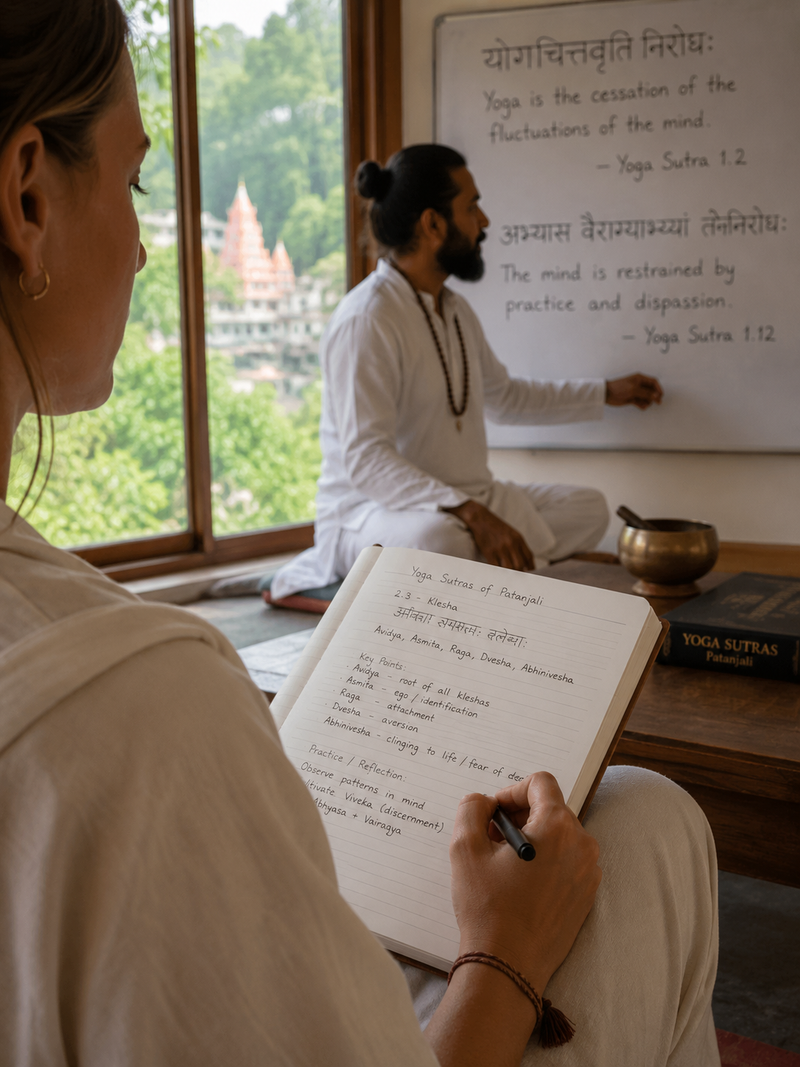
The timeline sets aside ample space for classical texts, Sanskrit terminology, and energetic anatomy systems. You will study ancient philosophy and learn how to apply those traditional concepts to modern residential life.
Anatomy sessions focus heavily on functional movement patterns, preventing injuries, and understanding muscle engagement. This theoretical knowledge directly informs your practical teaching skills during the final week.
Macro View: The 23-Day Intensive Schedule Breakdown
An intensive residential course is a fast-paced journey that requires deliberate pacing to avoid mental and physical burnout. Let us look at how a 23-day schedule is systematically divided into distinct phases.
The first six days serve as your foundational phase, where your body adapts to early mornings and clean lifestyle adjustments. You get your first rest day on day seven, which is vital for muscular recovery.
Days 8 through 14 form the core adjustment phase, where the intensity peaks and technical lectures become more complex. After your second rest day on day 15, you enter the final practical phase running from day 16 to day 23.
PhaseDaysPrimary Educational FocusFoundational PhaseDays 1–6Structural alignment, basic philosophy, early morning routine adaptationCore IntegrationDays 8–14Advanced sequencing, functional anatomy labs, philosophy debatesPractical MasteryDays 16–22Student-led teaching sessions, final written exams, adjustmentsGraduationDay 23Traditional fire ceremony, certificate distribution, departures
During the final block, the focus shifts completely from receiving information to delivering it. You will step into the role of the lead instructor, managing classroom energy and giving verbal cues confidently.
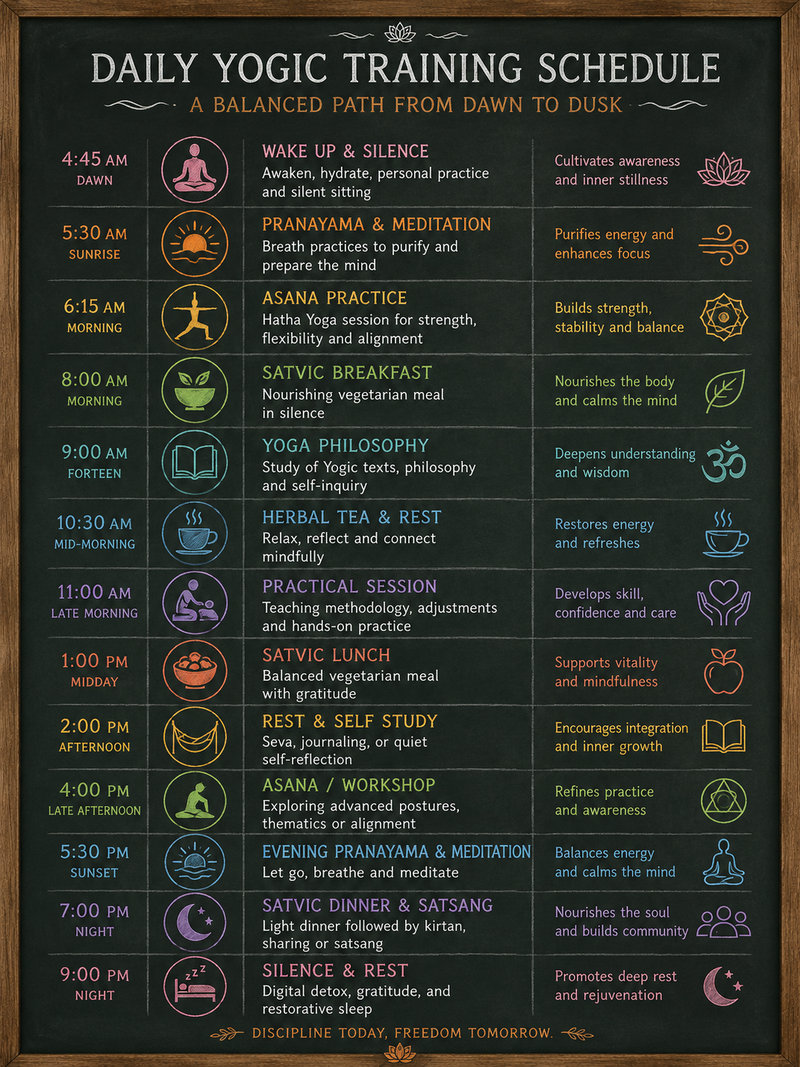
Micro View: The Daily Yoga Teacher Training Schedule
To truly comprehend the rhythm of this intensive lifestyle, you must look closely at a single standard operational day. Every single hour is accounted for to ensure you hit your educational metrics without compromise.
The day begins before dawn when the air is crisp and the mind is naturally quiet. This period is dedicated strictly to internal practices like breath retention, energetic cleansing, and focused meditation.
05:30 AM – 06:00 AM : Herbal Tea & Morning Cleansing (Shatkarma)
06:00 AM – 07:30 AM : Pranayama, Chanting, & Meditation
07:30 AM – 09:00 AM : Morning Vinyasa Flow or Traditional Hatha Practice
09:00 AM – 10:00 AM : Nutritious Sattvic Breakfast
10:00 AM – 11:30 AM : Functional Anatomy or Yoga Physiology Lecture
11:30 AM – 01:00 PM : Yoga Philosophy & Traditional Text Study
01:00 PM – 02:00 PM : Wholesome Vegetarian Lunch
02:00 PM – 04:00 PM : Rest, Self-Study, & Homework Assignments
04:00 PM – 05:30 PM : Alignment, Adjustment, & Teaching Methodology Lab
05:30 PM – 06:30 PM : Evening Meditation or Mantra Chanting
07:00 PM – 08:00 PM : Vegetarian Dinner
08:00 PM – 09:30 PM : Self-Reflection & Lights Out
This micro-schedule repeats six days a week, creating a deep somatic rhythm that helps your brain process large amounts of information quickly. The structured breaks are essential for your physical body to rest and rebuild muscle tissue.
Weekly Progression in an Intensive YTT Timeline
Your physical and psychological evolution follows a highly predictable path across the three weeks of training. Let us look at what changes you will experience as the calendar progresses.
Week One: The Foundation and Detox
The initial week is all about breaking old physical habits and adjusting to a clean, structured routine. You might experience muscle soreness, fatigue, and emotional processing as your body detoxifies.
Instructors focus on safe alignment principles, ensuring everyone has a common baseline regardless of their background. You will learn how to use props effectively to support various body restrictions.
Week Two: Deepening the Practice
During the second week, your physical stamina improves significantly, and your mind settles into the early schedule. Lectures dive deeper into therapeutic applications of yoga and advanced philosophy topics.
This is the week where you begin peer-teaching in small groups, practicing simple verbal cues and learning how to look at a room full of bodies. The focus shifts toward building authentic confidence.
Week Three: The Teaching Practicum
The final stretch is entirely focused on output, testing, and practical applications. You will design your own original class sequences and lead your fellow classmates through full sessions.
Written examinations test your understanding of anatomy and philosophy concepts studied earlier. According to guidelines supported by institutional frameworks like the Ministry of Ayush, maintaining these strict evaluation standards ensures global teaching credibility.
Why Rishikesh is the Ideal Setting for an Intensive Timeline
Completing a demanding curriculum requires an environment that minimizes modern distractions while fully supporting your internal focus. Rishikesh provides a unique natural ecosystem that makes this intense schedule much easier to handle.
The presence of traditional masters and dedicated practitioners creates a collective energy that keeps you motivated when physical fatigue sets in. You are surrounded by people who respect the deeper, authentic roots of the practice.
Furthermore, the geographical layout of the town allows you to step away from your books and clear your mind instantly. Sitting by the flowing water between your afternoon lectures offers a form of natural recovery that cities simply cannot match.
Finding Your Personal Starting Point
If you feel that jumping straight into a full month of intensive training might be too demanding for your current lifestyle or schedule, there are excellent step-by-step paths available. Taking a shorter course allows you to experience the traditional lifestyle without committing to a full multi-week block right away.
If you want to build a regular habit or simply take a break from routine, a 5-days retreat offers an ideal introduction to daily meditation and asana practice. For those with tight schedules, a condensed 3-days retreat provides a quick, refreshing glimpse into yogic living.
If your ultimate goal is professional certification but you need to divide the time, a structured 100-hour yoga teacher training lets you complete the first half of your education smoothly, allowing you to return later for the remaining hours. For deep therapeutic learning, exploring targeted options like therapy programs can expand your skills as a wellness provider.
Frequently Asked Questions
Can I actually teach immediately after completing a 23-day course?
Yes, a properly structured program provides ample practical teaching hours, giving you the skills and confidence needed to design and lead public classes safely right after graduation.
What happens if I miss a class due to illness during the training?
Most registered schools require full attendance to grant a certificate. If you miss a module, you will need to arrange makeup hours with a lead instructor to complete your curriculum metrics.
How physically fit do I need to be before the course starts?
You do not need to master advanced postures, but having a consistent practice for at least six months helps your body handle the multiple daily physical sessions without injury.
Are meals and accommodation included in residential timelines?
Yes, traditional residential schools include clean accommodation and three fresh, vegetarian meals daily to keep your body nourished and well-rested throughout the intensive schedule.
Conclusion
Understanding the intricacies of the 200 hour YTT duration timeline shows that while the schedule is intense, it is perfectly balanced to foster deep professional and personal growth. Managing your energy across these 23 days will completely redefine your relationship with yoga.
Ready to begin? Explore our 200-hour yoga teacher training program at Divine Yogpeeth and start your journey along the sacred Ganga River today.