.jpg)

Certified yoga teacher India programs offer profound personal growth. Explore our step-by-step guide to finding the right course and discover your true path.
Certified Yoga Teacher India: The Ultimate Step-by-Step Guide
Earning the title of certified yoga teacher India is a milestone that attracts thousands of passionate seekers every single year. You might be sitting at your desk right now, feeling the pull to trade your corporate routine for early mornings on a yoga mat.
Making the leap from a casual practitioner to a confident guide requires more than just physical flexibility. It demands dedication, the right environment, and a structured path to deeply understand ancient traditions.
Training in the birthplace of this practice gives you an unparalleled foundation that western studios simply cannot replicate. You learn to live the philosophy, rather than just perform the postures for an hour a day.
This comprehensive guide will walk you through everything you need to know to make this dream a reality. You will learn how to choose the right program, what to expect from the daily ashram schedule, and how to prepare yourself mentally and physically.
Let the journey begin.
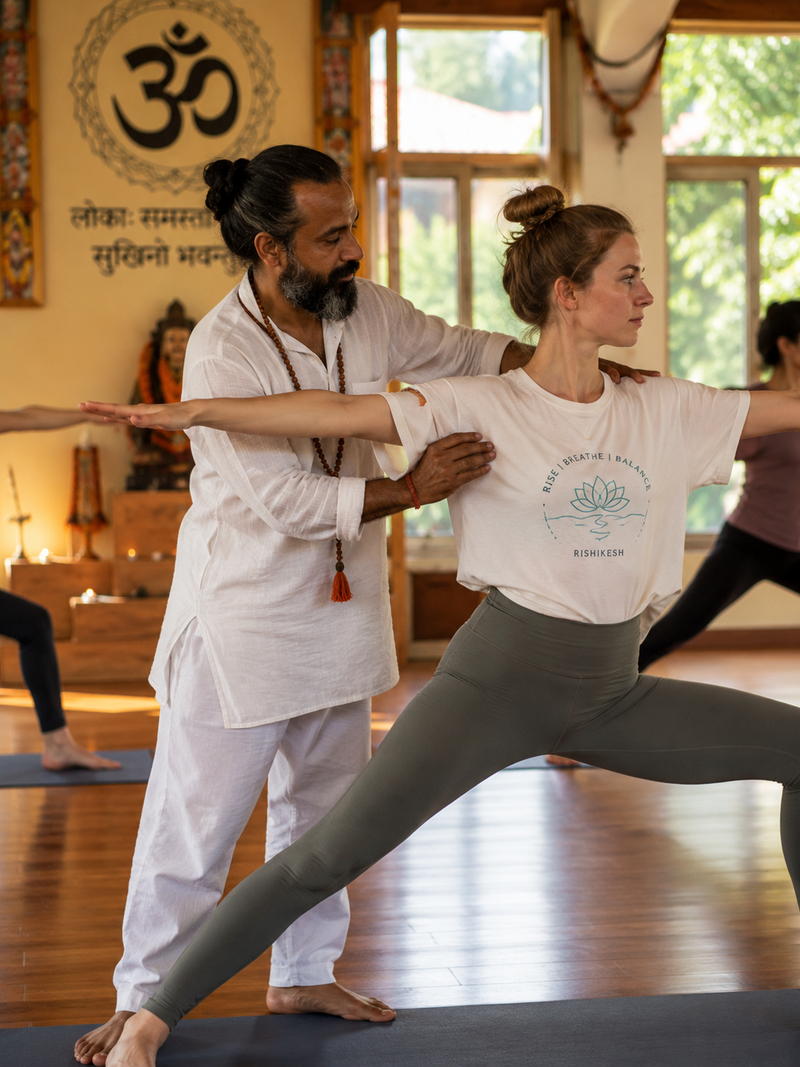
What Does It Mean to Be a Certified Yoga Teacher India?
Holding a certificate from an Indian school carries a specific weight in the global wellness industry. It signals to future students and studio owners that you have studied the practice at its purest source.
When you complete a rigorous training program here, you are not just learning how to sequence a vinyasa flow. You are absorbing centuries of spiritual lineage, anatomy, breathwork, and deep meditation techniques.
Most reputable schools align their curriculum with international standards. This ensures your education is universally recognized. For instance, registering with Yoga Alliance allows you to teach almost anywhere in the world immediately after graduation.
Being certified means you understand the mechanics of the human body to prevent injuries. It means you respect the cultural origins of the mantras you chant. Above all, it means you have undergone your own internal transformation first.
You cannot guide others to a place of inner peace if you have not navigated that terrain yourself. The intense immersion of an Indian ashram forces you to confront your mental blocks, ultimately making you a much stronger leader.
Crucial Steps to Become a Certified Yoga Teacher India
The path to certification requires careful planning and honest self-reflection. You cannot simply book a flight and hope for the best.
Follow these specific steps to ensure you select a program that aligns with your personal and professional goals.
Step 1: Define Your True Motivation
Ask yourself why you want to take this step. Are you looking to launch a full-time career in the wellness industry? Or are you primarily seeking a structured environment to deepen your personal practice?
Your answer will dictate the type of school you choose. Some programs are highly focused on modern studio teaching methodologies. Others lean heavily into traditional spiritual practices and ashram living.
Knowing your "why" keeps you grounded when the training gets physically and mentally demanding. It serves as your anchor during those tough 5:30 AM wake-up calls.
Step 2: Choose the Right Certification Level
If you are just starting your teaching journey, you must build a proper foundation. Do not rush into advanced modules without mastering the basics first.
Many students begin with a foundational 100-Hour Yoga Teacher Training. This is an excellent option if you have limited time or want to test the waters before committing to a full month of intensive study.
However, the global industry standard for a new instructor is the 200-hour level. This comprehensive format covers everything necessary to safely sequence and lead a public class upon graduation.
Step 3: Research the Lineage and Styles Offered
India offers a vast array of yogic styles. You will find traditional Hatha, dynamic Ashtanga Vinyasa, deeply restorative Yin, and precise Iyengar methodologies.
Look for a school that teaches a multi-style approach if you are unsure of your preferred niche. Learning both Hatha and Ashtanga, for example, gives you a well-rounded understanding of both static alignment and flowing breath-to-movement sequences.
Pay attention to the lead teachers' backgrounds. A school with experienced Indian masters often provides a more authentic transmission of knowledge than one relying solely on visiting western instructors.
Step 4: Verify the Curriculum
A legitimate training program should offer total transparency about its daily schedule and syllabus. You should know exactly how many hours are dedicated to philosophy versus physical practice.
Check if the school provides specialized modules that can set you apart in a crowded market. Adding holistic skills like Yoga Therapy to your toolkit allows you to work with students who have specific physical limitations or injuries.
A strong curriculum balances the physical exertion of asana with the intellectual stimulation of studying ancient texts.
Understanding the Curriculum and Daily Life
Stepping into a teacher training program is a shock to the system for most westerners. The schedule is intentionally rigorous, designed to break down your ego and build up your resilience.
You will likely be in class or studying for up to ten hours a day, six days a week. This immersive environment is exactly why training in India is so incredibly effective.
While specific schedules vary, you can generally expect your day to look something like this.
The Morning Discipline
Your day begins before sunrise. The quiet hours of the early morning are considered the most auspicious time for spiritual practice in Indian culture.
You will usually start with Shatkarma (yogic cleansing techniques) followed by Pranayama (breathwork). Mastering these internal practices is vital before moving on to the physical postures.
Next comes an intense two-hour physical practice, usually focusing on traditional Hatha or Ashtanga. This morning session challenges your stamina and helps you internalize the correct alignments.
Mid-Day Studies
After a nourishing, sattvic breakfast, the intellectual work begins. You will dive into the rich history and philosophy of the practice, often studying the Yoga Sutras of Patanjali.
Understanding the philosophical framework is essential. The government's Ministry of Ayush continually emphasizes the holistic, traditional roots of these practices, ensuring they are preserved beyond mere physical exercise.
Anatomy and physiology classes follow. You will learn the skeletal and muscular systems, focusing heavily on how joints move and how to prevent injuries during adjustments.
Afternoon and Evening Integration
Following lunch and a brief rest period, you move into teaching methodology. This is where you actually learn how to use your voice, cue postures, and sequence a logical class.
You might also explore complementary healing modalities during these afternoon sessions. Many modern instructors enhance their marketability by taking a Sound Healing Training Course to offer unique relaxation experiences to their future students.
The day typically concludes with a softer physical practice, like Yin or restorative yoga, followed by guided meditation. You will fall asleep early, physically exhausted but mentally clear.

Preparing for Your Training Journey
A successful certification experience requires significant preparation long before you board your flight. You are about to demand a lot from your body and mind over a short period.
If you arrive completely unprepared, you will spend the first week just trying to survive the physical soreness. Proper prep allows you to actually absorb the knowledge from day one.
Here is how you can set yourself up for absolute success.
Physical Conditioning
You do not need to be able to perform advanced acrobatics to enroll. However, you do need baseline stamina to handle up to four hours of physical practice daily.
Increase your current practice frequency in the months leading up to your trip. If you currently practice twice a week, slowly bump that up to four or five times a week.
Focus heavily on core strength and joint mobility. The stronger your physical foundation, the less likely you are to suffer from overuse injuries during the intensive month.
Mental and Cultural Preparation
India is a vibrant, intense, and deeply spiritual country. The cultural shift can be overwhelming if you have never traveled to South Asia before.
Read up on ashram etiquette. Understand that modest clothing is required, and silence is often observed during meals or early morning hours.
If you are feeling anxious about the commitment, consider easing into the environment first. Booking a short 3 Days Retreat can help you acclimate to the local food, the climate, and the general pace of life before the actual hard work begins.
Practical Logistics
Ensure your passport is valid for at least six months beyond your planned return date. Apply for your Indian tourist or e-visa well in advance to avoid last-minute stress.
Pack lightly and smartly. You will need comfortable, breathable clothing, a reusable water bottle, and any personal medications. Most schools provide yoga mats and props, but you may prefer to bring your own for hygiene reasons.
Leave your expectations at home. Approach the experience with an empty cup, ready to learn without constantly comparing it to your favorite studio back home.
Why Rishikesh? The Global Capital of Yoga
While you can find training centers across India, Rishikesh holds a truly unmatched status. Located in the foothills of the Himalayas, this city vibrates with spiritual energy.
The sacred Ganga River flows directly through the town, providing a stunning backdrop for meditation and self-reflection. Sages and saints have meditated in these exact caves and forests for thousands of years.
Studying in Rishikesh connects you directly to this ancient lineage. The atmosphere naturally supports an inward journey.
Beyond the spiritual history, the city offers an incredible community. You will be surrounded by hundreds of like-minded individuals from all over the globe, all seeking the same transformation.
The cafes in areas like Tapovan and Laxman Jhula are filled with aspiring teachers comparing notes, discussing philosophy, and sharing healthy meals. This supportive network often becomes your lifelong yoga family.
Rishikesh gives you the perfect balance. You get the strict discipline of traditional ashram life, alongside the comforts of a town completely dedicated to wellness and conscious living.
Choosing a Trusted Path Forward
Selecting a school in Rishikesh can feel overwhelming due to the sheer number of options available. You want a place that balances authentic Indian teachings with a safe, supportive environment for international students.
If you are currently evaluating your options, we invite you to explore what Divine Yogpeeth offers. Our curriculum is deeply rooted in tradition but delivered in a way that makes sense for the modern teacher.
We provide a nurturing space right on the banks of the Ganga. Our comprehensive 200-Hour Yoga Teacher Training is designed to guide you safely from passionate student to confident, globally recognized instructor.
Frequently Asked Questions
It is completely normal to have doubts before committing to a month-long intensive training in a foreign country. Here are the answers to the most common concerns students share.
Do I need to be highly flexible to enroll?
Absolutely not. Flexibility is a byproduct of the practice, not a prerequisite for learning. The training is designed to teach you how bodies move safely, regardless of their current range of motion. You are learning to be a guide, not a gymnast.
How long does the training process take?
A standard 200-hour program in India is typically completed in 24 to 28 days. This is an intensive residential format. You will live, eat, and breathe the practice six days a week, with Sundays usually reserved for rest or local excursions.
Is the certification valid in my home country?
Yes, provided you choose a school that is internationally accredited. Graduating from a Yoga Alliance registered school allows you to register as an RYT (Registered Yoga Teacher). This credential is required by almost all major studios and gyms worldwide.
What is the food like during training?
Ashrams serve a strict vegetarian, sattvic diet. This means the food is freshly prepared, mild in spice, and designed to support a clear mind and a light body. You will eat plenty of lentils, rice, fresh vegetables, and fruits. Meat, alcohol, and heavily processed foods are strictly prohibited.
Conclusion and Your Next Steps
Becoming a certified yoga teacher India is much more than acquiring a new piece of paper for your resume. It is a profound, life-altering commitment to your own personal evolution.
You will leave the banks of the Ganga with a stronger body, a clearer mind, and the practical skills needed to share this incredible ancient science with the rest of the world. The journey requires courage, discipline, and an open heart.
If you feel ready to answer that call, we are here to support your transformation every step of the way. Take a look at our complete offerings at Divine Yogpeeth and discover the program that speaks to your soul.
Ready to completely immerse yourself in the practice? Explore our 5 Days Retreat to dip your toes in, or leap directly into your new career by applying for our full certification program today.