.jpg)

Continuing education after 200-hour YTT 300 hour? Compare advanced training and specialisation, costs, goals, and Rishikesh options before you choose. Discover.
Continuing Education After 200-Hour YTT 300 Hour: 300-Hour or Specialisation?
INTRODUCTION
Continuing education after 200-hour YTT 300 hour training can feel like the obvious next step—but is a 300-hour program really the best choice for you? Once you have finished your first teacher training, the bigger question is no longer whether you should learn more. It is what kind of learning will make you a stronger teacher, practitioner, or specialist.
You may want deeper yoga philosophy, stronger sequencing skills, more confidence with adjustments, or a focused path such as pranayama, sound healing, meditation, or therapeutic yoga. A 300-hour program can provide broad advanced training, while a specialist course can help you build depth in one area without committing to another long, comprehensive curriculum.
This guide helps you compare both routes realistically. You will see what each option is designed to achieve, when a 300-hour YTT makes sense, when specialisation is smarter, how Rishikesh can fit into your next stage, and how to choose based on your actual career goals rather than the title printed on a certificate.
Continuing Education After 200-Hour YTT: What Should Come Next?
Finishing a 200-hour YTT gives you a foundation, not a finished education. You have learned core asana, basic anatomy, teaching methodology, philosophy, pranayama, meditation, and the responsibilities of teaching. Your next step should strengthen the areas that remain weak.
A useful test is simple: what problem are you trying to solve?
If you can teach a balanced class but struggle to explain alignment, you need technical depth. If your classes feel repetitive, you need sequencing and methodology. If students regularly ask about breathing practices, meditation, or stress management, a focused specialty may have more immediate value.
This is why continuing education should be treated as a strategic decision rather than a race to collect credentials. A second certificate is not automatically better than stronger teaching ability.
Your experience also matters. Someone who has taught regularly for two years may benefit from advanced methodology differently from someone who completed a 200-hour course last month and has barely taught. Before enrolling, review your actual teaching hours, feedback from students, subjects you enjoy, and situations where you feel least confident.
If you want to understand how a 200-hour qualification fits into professional teaching, you can also explore our guide to the Yoga Alliance RYT 200 certification details.
For an independent reference point on yoga teacher education and credentialing, you can review Yoga Alliance.
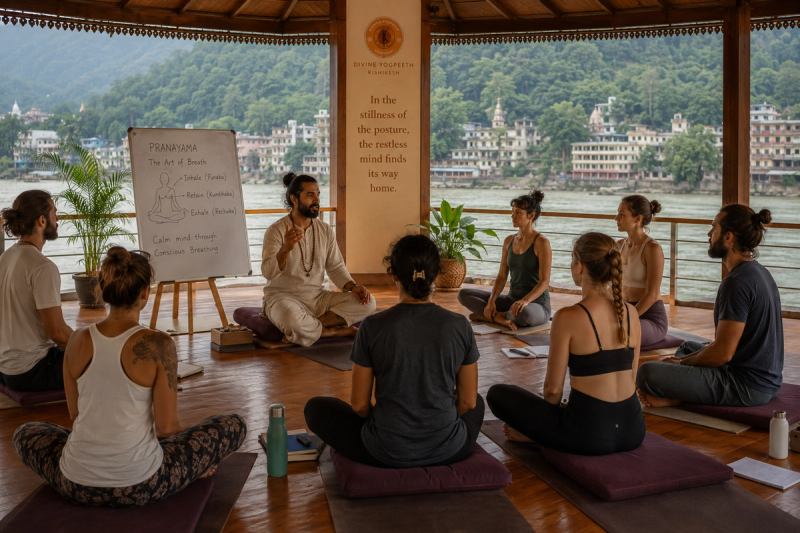
300-Hour YTT vs Specialisation: What Is the Real Difference?
The easiest way to understand the choice is to compare breadth with depth.
A 300-hour YTT is generally designed as advanced, broad-based education. It can revisit and expand subjects such as asana, anatomy, philosophy, pranayama, meditation, sequencing, teaching methodology, and professional development. It is useful when you want to become a more complete teacher and deepen several competencies at once.
A specialist course has a narrower objective. Instead of covering many advanced areas, it concentrates on one discipline or teaching tool. Examples include pranayama, sound healing, meditation, yoga therapy, or a particular style of practice.
Neither route is automatically superior.
Choose a 300-hour path when you want breadth
A broader advanced program can make sense when:
- You want structured advanced study across several areas.
- You plan to teach yoga professionally for the long term.
- You want stronger confidence designing classes for different levels.
- You enjoy philosophy, anatomy, teaching methodology, and practice equally.
- You want a substantial next stage after your foundational training.
Choose specialisation when you want depth
A focused program may be better when:
- You already know the subject you want to teach.
- You want to add a distinctive service to your existing classes.
- You have limited time or budget for another long program.
- You learn best through concentrated practice.
- You want to test a field before committing to advanced multi-subject training.
The smartest decision is therefore not “Which certificate sounds more impressive?” It is “Which education will change what you can responsibly do as a teacher?”
When a 300-Hour Yoga Teacher Training Makes More Sense
A 300-hour YTT becomes more valuable when you are ready for complexity.
At the 200-hour level, you are usually building the ability to teach safely and coherently. At an advanced level, you should be asking harder questions: Why did this sequence work for one group but not another? How should you adapt a class for different bodies and experience levels? How do you communicate without overwhelming students? How do philosophy and ethics actually influence your teaching decisions?
A strong advanced program should give you opportunities to practice these decisions, receive feedback, and refine your teaching.
It can also be useful if you want to broaden your teaching identity. Perhaps you started with general Hatha or Vinyasa classes and now want stronger knowledge of pranayama, meditation, philosophy, or advanced sequencing. A comprehensive curriculum can connect those subjects instead of teaching them as isolated skills.
However, do not choose 300 hours simply because “more hours” sounds better. A poorly designed advanced course can leave you with another certificate but little improvement. Look at curriculum depth, teacher experience, practice teaching, assessment, feedback, class size, and whether the course matches your goals.
You should also check how the program's credential is described. Avoid assuming that every “300-hour” course has identical recognition, structure, or professional implications. Ask the school exactly what you will study, how you will be assessed, and what certificate you will receive.
When a Yoga Specialisation Is the Smarter Investment
Specialisation can be the better move when you already know where your teaching interests are heading.
Imagine you enjoy working with breath and regularly use pranayama in your classes. A dedicated pranayama teacher training may give you more practical depth than spending months covering a wide advanced curriculum. If sound-based practices fascinate you, sound healing education can add a different modality to your existing teaching toolkit.
The same logic applies to therapeutic interests. If your goal is to understand how yoga can be adapted around individual needs, a therapy-focused pathway may be more relevant than a general advanced program. You should still be careful with professional boundaries: yoga education does not automatically make you a medical professional, physiotherapist, psychologist, or licensed healthcare provider.
Specialisation also lets you build a clearer niche. Instead of presenting yourself as a teacher who offers everything, you can develop a specific strength that students understand and value.
For example, you might combine general yoga teaching with:
- pranayama and breath-focused classes,
- meditation and mindfulness sessions,
- sound-based relaxation practices,
- beginner-focused yoga education,
- or complementary wellness sessions within an appropriate scope.
If sound is the area that genuinely interests you, you can explore our Sound Healing Certification Course in Rishikesh before deciding whether a broader advanced qualification is necessary.
Research on yoga and wellbeing is extensive, but individual practices should still be interpreted carefully. For a research-oriented reference, you can explore PubMed.
How to Choose Between 300-Hour Training and Specialisation
The decision becomes easier when you score your options against practical criteria instead of emotion.
Start with your career goal. If your target is to become a senior yoga teacher who can confidently handle varied classes, advanced training may fit. If your target is to add one specific modality to your existing work, specialisation may be more efficient.
Next, consider your teaching experience. If you have little real-world teaching practice, another long certificate may not solve the real problem. You may need mentoring, observation, teaching practice, and feedback first.
Then consider your learning gap. Write down three things you cannot yet teach confidently. If all three sit inside one subject, specialise. If they span several subjects, a broader advanced course may make more sense.
Finally, compare the practical investment:
Factor300-Hour YTTSpecialisationBreadthHighFocusedDepth in one topicModerate to highUsually highTime commitmentHigherUsually lowerCareer directionBroad advanced teachingNiche developmentBest forTeachers seeking comprehensive growthTeachers seeking a specific skillRiskChoosing a course without a clear goalBecoming too narrow too early
Do not ignore your budget. A course is worthwhile only when its learning outcomes justify the total cost of tuition, travel, accommodation, time away from work, and lost income.
You should also examine the school's teaching environment. Smaller groups can make practice teaching and feedback more useful, while a large program may provide more peer interaction. Neither is automatically better; the important point is whether the format supports how you learn.
If you are still building your foundation, a 100-hour YTT can also be considered as a focused continuing-education route rather than jumping immediately into the longest possible program.
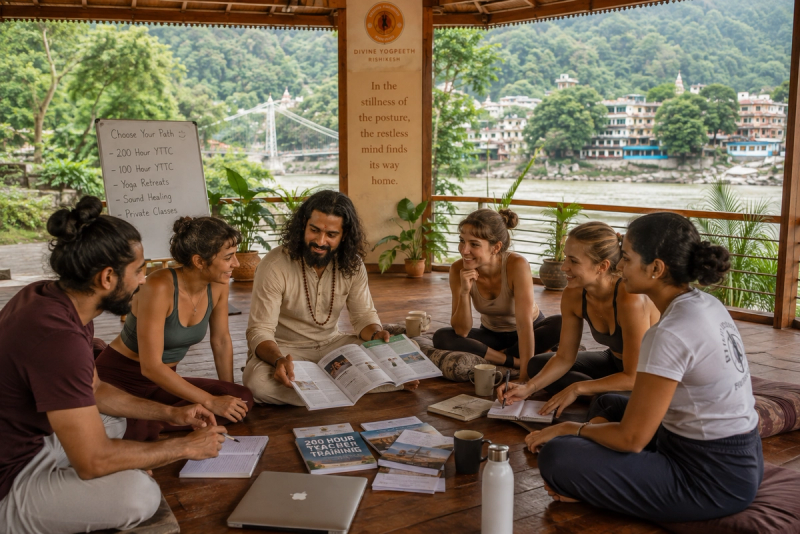
Why Rishikesh Can Be a Strong Place for Your Next Stage
Rishikesh is useful for continuing education because yoga is not limited to a classroom there. Your learning can extend into daily practice, conversations with teachers, different schools of thought, and the discipline of living around a strong yoga community.
The setting matters, but it should not be romanticised. A beautiful location cannot compensate for weak teaching, an unclear curriculum, or poor student support.
If you travel to Rishikesh for advanced education, evaluate the school before the scenery. Look for transparent course details, experienced teachers, realistic schedules, opportunities for practice teaching, clear assessment methods, and accommodation arrangements that allow you to rest and study.
Tapovan and the Laxman Jhula area can also make the experience practical because you can combine structured classes with personal practice, walking, meditation, and time around the Ganga.
Your timing matters too. Weather, travel conditions, and your own work schedule can affect the experience. If you are comparing seasons, our guide to the best time to visit Rishikesh for yoga can help you plan more realistically.
The key idea is simple: choose Rishikesh because the education fits your goal, not because the destination alone sounds inspiring.
Build a Long-Term Yoga Learning Plan
You do not have to decide between “300-hour immediately” and “specialise forever.” Continuing education can be staged around your actual development.
A practical sequence is to teach for a period after your foundational training, keep notes on recurring student questions, and review where you feel least confident. You might discover that your biggest gap is sequencing, while another teacher discovers that it is pranayama or communication.
From there, choose the smallest educational step that genuinely solves the problem. A focused workshop can test an interest. A specialist certification can build a new modality. A comprehensive advanced program can provide a larger framework when several gaps appear at once.
This approach also protects your time and money. You do not need to travel for every course, and you do not need to collect certificates simply because another teacher has one. Your continuing education should produce visible changes in how you plan classes, explain concepts, observe students, adapt practices, and reflect on your teaching.
It is also useful to revisit your professional direction every six to twelve months. Ask yourself:
- What kind of students do you enjoy teaching?
- Which subjects do you naturally study outside class?
- What feedback do students give you repeatedly?
- Which skill would make your next year of teaching noticeably stronger?
- Does another certificate solve that problem, or would mentoring and practice solve it better?
If your goal is to build a teaching career after foundational training, our guide to career paths after a 200-hour TTC can help you think beyond certification alone. For teaching craft, you can also explore teaching methodology for a 200-hour YTT.
A Practical Next Step in Rishikesh
If you are considering continuing your yoga education in Rishikesh, we offer structured training options that you can compare with your goals through our 100-Hour Yoga Teacher Training.
FAQs
Is a 300-hour YTT necessary after 200 hours?
No. A 300-hour program can be valuable, but it is not automatically necessary for every teacher. Your teaching experience, goals, and learning gaps should determine the next step.
Should you specialise before doing 300 hours?
It depends. If you already know your niche, specialisation can be highly practical. If you want broader advanced teaching skills and have enough experience to benefit from them, a 300-hour program may be the better next step.
Can you combine a 300-hour YTT with specialisation?
Yes, but you do not have to complete both at the same time. A staged approach can be more useful because you can apply one area of learning before adding another.
What specialisations are useful after a 200-hour YTT?
Common options include pranayama, meditation, sound healing, yoga therapy, sequencing, adjustments, and specific yoga styles. The best choice is the one that matches your teaching goals and professional scope.
How long should you teach before advanced training?
There is no universal number of months. However, teaching real students before advanced study can reveal gaps that are impossible to identify from theory alone. If you have the opportunity, gain practical teaching experience and collect honest feedback before investing heavily in your next qualification.
Conclusion: Choose the Education That Makes You Better
Continuing education after 200-hour YTT 300 hour training is not really about choosing the bigger certificate. It is about deciding what kind of teacher you want to become next.
Choose a 300-hour pathway when you need broad, structured advanced education. Choose specialisation when you have identified a subject where deeper knowledge will immediately improve your teaching or create a focused niche. And if you are unsure, give yourself time to teach, observe your weaknesses, and make the decision from evidence rather than pressure.
If Rishikesh is part of your next step, we invite you to explore our 200-Hour Yoga Teacher Training in Rishikesh and compare the curriculum with your goals before you enroll. The right course is not the one with the longest title—it is the one that gives you skills you can actually use.