

Diet lifestyle rules during 100 hour YTT can shape your daily routine in Rishikesh. Learn what to eat, avoid, pack, and expect. Discover more today.
Diet Lifestyle Rules During 100 Hour YTT: What to Expect in Rishikesh
Starting a yoga course in Rishikesh? The diet lifestyle rules during 100 hour YTT may be just as important to understand as the asanas you will practise each day. Your food choices, sleep schedule, hydration, and daily habits can influence how comfortably you adapt to an intensive training routine.
A 100-hour Yoga Teacher Training (YTT) programme often combines physical practice, breathing exercises, meditation, yoga philosophy, and time for personal reflection. You may spend more time on your mat than usual, wake up earlier, and discover that heavy meals or late nights make the next morning harder.
The good news is that you do not need to follow a perfect diet or completely change your personality before arriving. You need a practical understanding of the routine, a willingness to make thoughtful choices, and enough flexibility to listen to your body.
This guide explains what you may eat, which habits can support your practice, how to prepare for life in Rishikesh, and what to clarify with your training school before enrolment. Whether you are travelling from abroad or joining from another part of India, these insights can help you arrive prepared rather than overwhelmed.
1. Diet Lifestyle Rules During 100 Hour YTT: Understanding the Yogic Approach
A yogic lifestyle considers more than physical flexibility. It also pays attention to awareness, moderation, consistency, and the relationship between everyday habits and your state of mind.
During teacher training, you may encounter the concept of a sattvic lifestyle. In traditional yogic philosophy, sattva is associated with clarity, harmony, and balance. Sattvic food is generally described as fresh, nourishing, and relatively simple.
However, there is no single diet followed by every yoga school. Some programmes serve vegetarian meals, while others provide different options. Meal timings, restrictions, and expectations depend on the school's actual policies, so confirm them before booking.
The practical objective is to eat in a way that supports your energy without leaving you uncomfortable during movement or breathing exercises.
Useful principles include:
Choose balanced meals: Include carbohydrates for energy, protein for recovery, and vegetables or fruit for micronutrients.
Prefer freshly prepared food: Cooked meals and properly washed produce can help reduce food-safety risks.
Eat according to your needs: Avoid both overeating and deliberately under-eating to follow a perceived spiritual ideal.
Keep meal timings consistent: Regular meals can make an early training schedule easier to manage.
Stay flexible: Your nutritional needs depend on your activity level, medical circumstances, climate, and individual tolerance.
You might also hear discussions about rajasic and tamasic foods. These are traditional philosophical classifications, not scientifically validated categories for determining whether a food is universally healthy or unhealthy.
For a broader introduction to yoga's historical and philosophical background, explore Britannica.
The most useful mindset is simple: treat food as nourishment, not a test of discipline. Your training should help you develop awareness of your habits rather than encourage guilt about what you eat.
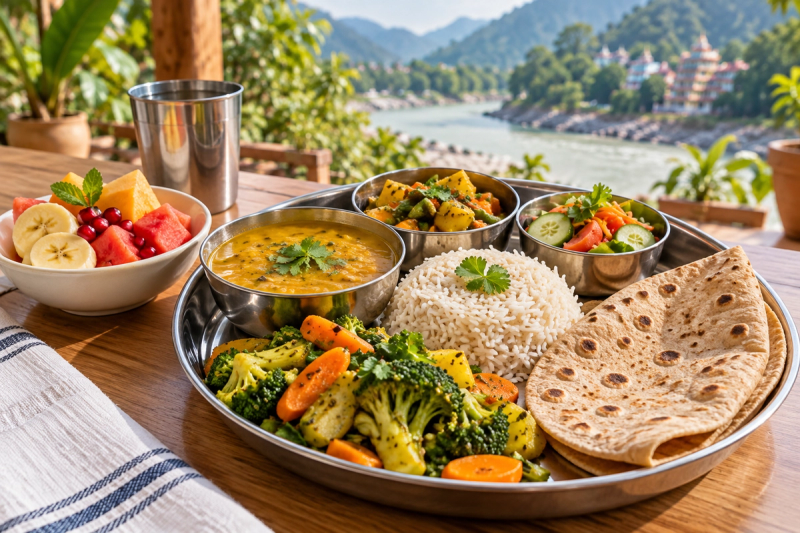
2. What to Eat During a 100-Hour Yoga Teacher Training Course
Your daily food choices can make a noticeable difference to your comfort during morning asanas, pranayama, and afternoon classes. You do not need expensive supplements or an elaborate meal plan. Familiar, balanced food is often the easiest place to start.
Breakfast: Build energy for morning practice
If your schedule begins early, you may have limited time between waking up and stepping onto your mat. Some people feel comfortable practising before breakfast, while others need a small snack first.
Options you might tolerate well include a banana, toast, a small serving of porridge, or another familiar light snack. If you feel weak, dizzy, or unusually hungry when practising on an empty stomach, do not force yourself to continue without food.
After practice, a more substantial breakfast could include:
Oats or porridge with milk or a suitable alternative.
Poha or upma with vegetables.
Whole-grain toast with eggs, where available.
Fruit, yoghurt, or another suitable protein-rich accompaniment.
Lunch: Replenish after the morning session
A typical Indian vegetarian meal can be practical and nourishing. Dal, rice or roti, cooked vegetables, and yoghurt where tolerated can provide a useful combination of carbohydrates, protein, and other nutrients.
Adjust portions to your appetite and activity level. A very large lunch may leave you uncomfortable during an afternoon session, but eating too little can also affect concentration and recovery.
Dinner: Keep it satisfying and comfortable
Dinner may be simpler than lunch, particularly if you have an early bedtime. Khichdi, vegetable curry with roti, dal and rice, or soup with a suitable protein source are possible choices.
There is no universal requirement to eat dinner at a particular hour. Follow your school's schedule and allow enough time to digest before lying down if large meals cause reflux or discomfort.
For more practical ideas, read our guide to yogic diet principles during teacher training.
Hydration matters throughout the day
Rishikesh can be warm, and physical practice may increase your fluid requirements. Drink safe water regularly and adjust your intake to the temperature, duration of activity, and amount you sweat.
Do not assume that drinking as little as possible is part of yogic discipline. Likewise, forcing excessive amounts of water is unnecessary. Carry a reusable bottle and refill it with safely treated or sealed drinking water.
3. Foods and Drinks to Limit During Intensive Yoga Training
You do not need to label every food as good or bad. Instead, notice which meals help you feel steady and which leave you sluggish, thirsty, bloated, or uncomfortable during practice.
Certain habits are worth reconsidering while you adjust to the training schedule.
Heavy, oily, and very spicy meals
Deep-fried snacks, rich gravies, and very large meals may cause indigestion or discomfort, especially if you practise soon afterwards. If you enjoy spicy Indian food, you do not necessarily need to stop eating it. Choose portions and spice levels that suit your digestion.
Excessive caffeine and energy drinks
If you usually drink several cups of coffee, reducing your intake gradually before the course may help you avoid withdrawal headaches and fatigue. Avoid experimenting with large amounts of caffeine to compensate for insufficient sleep.
Tea and coffee policies vary by school. Ask about the actual rules rather than assuming every yoga programme prohibits them.
Alcohol and smoking
Alcohol can interfere with sleep, hydration, coordination, and recovery. Avoiding it during an intensive training period is a sensible choice, particularly when you are practising physically demanding postures or breathing techniques.
Smoking can also affect respiratory health. If you smoke, training can be an opportunity to consider reducing or stopping, but do not expect a few days of yoga to reverse the effects of long-term tobacco use.
Excessive fasting or restrictive eating
Fasting is not a requirement for effective yoga practice. Restricting calories while increasing physical activity may leave you fatigued, light-headed, or unable to concentrate.
If you have diabetes, a history of disordered eating, take medication that affects blood sugar or blood pressure, or have other relevant medical needs, discuss dietary changes with a qualified healthcare professional.
Food safety in Rishikesh
When eating outside your accommodation, choose places with good hygiene, freshly cooked food, and safe drinking water. Be cautious with raw salads, cut fruit left uncovered, and ice from uncertain sources, particularly if you are visiting India for the first time.
For general public-health guidance, you can consult the
website for information about India's traditional systems of health. For specific food-safety or medical concerns, use appropriate public-health and clinical guidance rather than relying exclusively on traditional dietary advice.
The aim is to arrive at each session feeling adequately nourished and comfortable, not to follow a long list of arbitrary food prohibitions.
4. Daily Lifestyle Rules During 100-Hour YTT
Food is only one part of the adjustment. Your sleep, punctuality, personal boundaries, and recovery habits also influence how you experience training.
A 100-hour course can feel demanding if you are accustomed to sleeping late or spending most of your day sitting. A few small adjustments before arrival can make the transition easier.
Establish a consistent sleep schedule
Many residential yoga programmes begin early, although exact timings differ. If your first class starts in the morning, gradually move your bedtime and wake-up time earlier during the week before travelling.
Most adults should aim for around seven to nine hours of sleep per night. Your individual needs may vary, especially during periods of increased activity.
Avoid sacrificing sleep to squeeze in additional self-practice. Rest is part of learning, not a sign that you lack dedication.
Follow the timetable without ignoring your body
Arrive on time, bring the required materials, and allow a few minutes to settle before class. Regular attendance helps you understand how individual sessions connect across the course.
At the same time, do not push through sharp pain, dizziness, unusual breathlessness, or significant weakness to prove your commitment. Inform your instructor and seek medical assessment when appropriate.
Practise cleanliness and respect shared spaces
If you are staying in residential accommodation, keep your mat, clothing, and personal belongings clean. Shower when appropriate, wash practice clothes regularly, and respect other students' privacy.
Observe the school's rules regarding noise, shared facilities, and quiet hours. These everyday habits can make communal living more comfortable for everyone.
Make time for reflection
You may benefit from keeping a short journal. After each day, write down one concept you understood, one physical challenge, and one question you want to ask your teacher.
You can also explore morning sadhana during a 100-hour YTT in Rishikesh to understand how a consistent morning routine may fit into your practice.
Respect boundaries and course expectations
Follow the school's guidance on attendance, conduct, practice modifications, and communication with instructors. You should also feel able to ask questions about accessibility, dietary needs, and personal comfort.
A disciplined lifestyle should support learning and responsible practice. It should not require you to ignore pain, surrender personal boundaries, or accept rules that compromise your health.
5. Why Rishikesh Makes Diet and Lifestyle Preparation Important
Rishikesh attracts yoga practitioners from across India and around the world. Its yoga schools, ashrams, riverside surroundings, and Himalayan foothills offer an environment in which you can focus on learning away from your usual routine.
However, travelling to a new place also means adjusting to unfamiliar food, different weather, transport, accommodation, and sometimes a significant time-zone difference.
If you are arriving from another country, allow yourself time to recover from travel before attempting particularly demanding physical practice. Pack any prescribed medication, bring details of important allergies, and communicate dietary restrictions before arrival.
If you are travelling from another Indian state, the transition may be simpler, but you may still need to adjust to early mornings and a more structured daily schedule.

Understand what your course actually includes
Do not assume that every programme offers the same meals, accommodation, or daily timetable. Before paying, confirm:
Whether meals are included in the fee.
Whether vegetarian, vegan, or allergy-conscious options are available.
Whether the course is residential or non-residential.
How many hours of daily practice and study are scheduled.
What happens if you need to modify a posture or miss a session for health reasons.
You can explore Tapovan yoga in Rishikesh and its learning environment to learn more about the local setting.
The location can support a focused learning experience, but it cannot guarantee a particular physical, emotional, or spiritual outcome. Your experience will depend on the quality of instruction, your health, your expectations, and the way you engage with the course.
6. Preparing for Your 100-Hour YTT: A Practical Checklist
A little preparation can prevent unnecessary stress during your first few days. You do not need to buy an entirely new wardrobe or adopt a strict diet weeks before arrival.
Focus on the items and habits that will genuinely make daily life easier.
Clothing and practice essentials
Pack comfortable, breathable clothing, a water bottle, personal toiletries, and any equipment your school asks you to bring. Check whether a yoga mat is provided.
Dietary preparation
Tell the school about allergies, vegetarian or vegan preferences, and other dietary requirements in advance. Carry suitable familiar snacks for travel if needed.
Learning materials
Bring a notebook, pen, course documents, and any reading material specified by your instructors. A journal can help you record questions and track your progress.
Travel and health essentials
Keep identification, booking details, emergency contacts, prescribed medication, and travel insurance information accessible. International visitors should also check their travel and entry requirements.
Before the first class, eat in a way that suits your body, hydrate appropriately, and avoid trying new supplements or extreme dietary practices. The purpose of preparation is to reduce distractions so that you can concentrate on the training itself.
If you want to explore a more comprehensive programme later, compare the curriculum and requirements of the 200-Hour Yoga Teacher Training in Rishikesh before deciding which level fits your experience and goals.
7. Choosing a Yoga Training Programme That Fits Your Lifestyle
Not every practitioner joins a 100-hour course for the same reason. You might want to deepen your personal practice, study yoga philosophy, improve your understanding of pranayama, or build a foundation for future teaching.
Your goals should influence the programme you choose. Equally important are the course duration, teaching approach, daily schedule, accommodation arrangements, and overall cost.
A 100-hour programme is generally shorter than a 200-hour training, making it an option for practitioners who want a focused period of study. However, the qualification's recognition and suitability for your intended teaching career depend on the programme, the relevant credentialing requirements, and the organisation with which you hope to register.
Before enrolling, ask for a written curriculum, instructor information, a clear breakdown of included services, and the attendance and completion requirements. If your primary goal is professional teaching, clarify what the course qualifies you to do and whether further training will be necessary.
If you are comparing schools in Rishikesh, also consider whether the dietary arrangements are suitable for your needs. A programme that accommodates your genuine nutritional requirements may be a better fit than one whose restrictions sound more traditional but are difficult or inappropriate for you.
The right training should challenge you constructively while allowing you to learn safely and sustainably.
8. Explore 100-Hour Yoga Teacher Training at Divine Yogpeeth
If you are considering yoga training in Rishikesh, we welcome you to explore the 100-Hour Yoga Teacher Training programme at Divine Yogpeeth.
We encourage you to review the course details and clarify the daily timetable, food arrangements, accommodation options, and dietary requirements before making a booking. These practical details matter, particularly if you are travelling internationally or have specific nutritional needs.
A good preparation plan does not require perfection. It requires realistic expectations, a willingness to practise consistently, and an understanding that different bodies have different needs.
If you are still comparing shorter training experiences with a more comprehensive course, our 5-day yoga retreat in Rishikesh may also be worth exploring as a different option for your time and goals.
Before enrolling in any programme, make sure you understand the schedule, the actual services included, and the completion requirements. Choose a course that fits your experience, budget, health needs, and long-term plans.
9. FAQs About Diet and Lifestyle During 100-Hour YTT
What food should you eat during a 100-hour yoga teacher training course?
Choose balanced meals that include carbohydrates, protein, vegetables, and fruit. Dal, rice, roti, cooked vegetables, oats, and suitable protein-rich foods can all fit into a practical diet. Adjust portion sizes to your activity level and digestion.
Is a vegetarian diet compulsory during 100-hour YTT in Rishikesh?
Not necessarily. Dietary policies vary between schools. Some programmes provide vegetarian meals or expect students to follow specific food guidelines. Confirm the requirements with your chosen school before booking rather than assuming a universal rule.
Can you drink coffee during yoga teacher training?
That depends on the school's rules and your individual tolerance. Moderate caffeine intake may be compatible with your routine, but excessive caffeine can affect sleep or cause discomfort. If you want to reduce your intake, doing so gradually may be easier than stopping abruptly.
How many hours should you sleep during a 100-hour YTT?
Most adults should aim for approximately seven to nine hours of sleep each night. Early classes may require you to adjust your bedtime. Prioritise recovery instead of routinely staying awake late to practise more.
Do you need previous yoga experience to join a 100-hour YTT?
Entry requirements vary by programme. Some courses are designed for practitioners who already have experience, while others may accommodate a broader range of students. Ask about prerequisites, physical demands, and expected skill levels before enrolling.
10. Conclusion: Build Healthy Habits Before Your Yoga Training Begins
The diet lifestyle rules during 100 hour YTT are best understood as practical habits that support your learning, rather than a rigid set of restrictions that everyone must follow.
Eat enough to support your activity, drink safe water, establish a consistent sleep schedule, respect your body's limits, and make time to reflect on what you learn. Be willing to adapt, but do not compromise your health to meet an unrealistic idea of yogic discipline.
Rishikesh can offer a meaningful setting for focused yoga study, but your preparation and the quality of your chosen programme matter just as much as the destination.
Ready to take the next step? Explore our 100-Hour Yoga Teacher Training in Rishikesh, review the course details, and contact Divine Yogpeeth to clarify your questions about meals, lifestyle expectations, and accommodation before you enroll.