.jpg)

Eight limbs of yoga philosophy form the foundation of true practice. Discover how to move beyond physical asanas and find lasting inner peace. Read more now.
Eight Limbs of Yoga Philosophy: Your Complete Guide to Patanjali’s Ashtanga Path
Eight limbs of yoga philosophy map out a clear, practical route to a balanced life, yet most practitioners only ever experience the physical postures. You unroll your mat, move through a sequence, and roll it back up.
While physical movement feels fantastic, it barely scratches the surface of what this ancient science actually offers. Real growth happens when you step beyond the mat and into the deeper framework designed to steady your mind and elevate your spirit.
This comprehensive system acts as an instruction manual for human psychology and spiritual evolution. It addresses everything from how you treat others to how you manage your own internal energy during difficult times.
When you understand these distinct branches, you stop just doing poses and start living the practice entirely. The physical shapes you make become a gateway rather than the final destination.
In this guide, you will discover exactly how Patanjali’s classical framework operates. We will break down each step so you can apply these timeless principles to your daily routine, relationships, and personal growth.
The Origin of the Eight Limbs of Yoga Philosophy
To fully grasp the eight limbs of yoga philosophy, you must first look back at its historical roots. Thousands of years ago, sage Patanjali compiled the Yoga Sutras, a foundational text consisting of 196 brief aphorisms.
These ancient sutras organized a vast, scattered body of knowledge into a highly streamlined, systematic path. Patanjali called this system "Ashtanga," which translates directly from Sanskrit as "ashta" (eight) and "anga" (limb).
Unlike modern interpretations that often prioritize physical flexibility or fitness, the original framework focused entirely on the mind. The ultimate goal was to cease the constant mental chatter and reach a state of absolute stillness.
Patanjali recognized that human suffering stems from a restless, uncontrolled mind. Therefore, he designed a step-by-step methodology to help individuals regain total control over their thoughts, actions, and biological senses.
This structured approach is recognized globally today, with major organizations like Yoga Alliance building their educational standards around these very concepts.
Every branch of this system supports the others in perfect harmony. You cannot bypass the ethical guidelines and expect to find genuine peace in meditation. The roots must be strong for the tree to bear fruit.
By studying the Yoga Sutras, you learn that progress on this path is linear but also cyclical. You constantly refine your understanding of the basics even as you advance toward higher states of consciousness.
Mastering this philosophy requires patience, resilience, and unyielding dedication. It demands that you look deeply inward, confronting your habits and reactions with complete honesty and compassion.
Exploring the First Four Eight Limbs of Yoga Philosophy
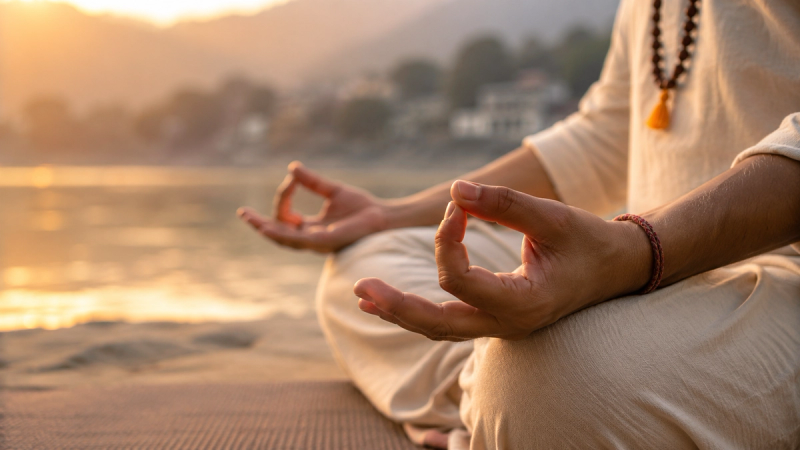
The initial stages of the eight limbs of yoga philosophy focus heavily on your interaction with the external world and your physical body. These outer branches build the sturdy foundation for all internal work.
1. Yamas (Ethical Disciplines)
The Yamas dictate how you behave toward others and the world around you. They are universal moral vows that transcend culture, location, and religion.
Ahimsa (Non-violence): This means causing no harm in thought, word, or physical action. It strictly starts with deep self-compassion before extending to other living beings.
Satya (Truthfulness): You must speak and live your truth daily, provided it does not violate the core principle of non-violence. Honesty builds necessary internal clarity.
Asteya (Non-stealing): Beyond physical theft, this includes not stealing someone's time, energy, or creative ideas. It strongly encourages respect for boundaries.
Brahmacharya (Right use of energy): Often translated as celibacy, it practically means directing your vital energy toward spiritual growth rather than sensory depletion.
Aparigraha (Non-attachment): You actively practice letting go of physical possessions and rigid mental expectations. You learn to take only what you truly need.
2. Niyamas (Personal Observances)
While Yamas focus outward, Niyamas focus on your internal habits and personal self-discipline. They intentionally refine your character.
Saucha (Purity): This involves keeping your body, physical environment, and mind clean. A clutter-free space naturally supports a clutter-free, focused mind.
Santosha (Contentment): You cultivate radical gratitude for what you have right now. You stop delaying your happiness for a future achievement or acquisition.
Tapas (Discipline): This is the fiery determination required to stick to your daily practice. It helps you burn through heavy laziness and mental excuses.
Svadhyaya (Self-study): You read sacred texts and rigorously observe your own ego. Taking time for an immersive 5-Days Retreat provides the perfect environment for this deep reflection.
Ishvara Pranidhana (Surrender): You willingly acknowledge a higher power or universal intelligence. You learn to comfortably let go of the illusion of absolute control.
3. Asana (Physical Postures)
Asana is the most recognizable limb practiced in studios today. Interestingly, Patanjali only described asana as a steady, comfortable seat for meditation.
The physical practice releases built-up tension and builds crucial strength, ensuring your body does not distract you during long periods of stillness. Modern Yoga Therapy often utilizes these specific postures to heal physical ailments and restore structural balance.
4. Pranayama (Breath Control)
Prana translates to life force, and ayama means extension or regulation. Pranayama is the highly conscious, deliberate regulation of your breathing patterns.
By controlling your respiratory system, you directly and intentionally influence your nervous system. Slowing the breath calms the frantic mind, bridging the vital gap between the physical body and the subtle energy within.
The Internal Journey: Pratyahara and Dharana
Once you stabilize the physical body and breath, the practice shifts deeply inward. The crucial transition from outer to inner limbs is where true psychological transformation occurs.
5. Pratyahara (Withdrawal of the Senses)
Pratyahara is the conscious, deliberate withdrawal of energy from the physical senses. You do not literally turn off your hearing or sight, but you actively choose not to react to the input.
Imagine a turtle gently pulling its limbs into its hard shell. Your mind withdraws from external stimuli, greatly reducing the constant bombardment of daily sensory distractions.
This specific limb is absolutely crucial for anyone feeling overwhelmed by modern technology, endless notifications, or heavy social obligations. It teaches you how to consistently create an internal sanctuary of complete silence.
Specific techniques like sound therapy can ironically aid this inward process immensely. A specialized Sound Healing Training Course demonstrates exactly how specific frequencies help the mind successfully detach from chaotic external noise.
6. Dharana (Focused Concentration)
With the physical senses quieted, you can now successfully practice Dharana. This is the powerful act of binding your consciousness securely to a single point of focus.
You might concentrate visually on the flame of a candle, mentally on a specific mantra, or physically on the sensation of breath at the tip of your nose. The objective is total, unwavering attention.
When distracting thoughts arise—and they inevitably will—you simply acknowledge them without judgment and gently return to your point of focus. This repeatedly builds powerful mental resilience.
Rigorous scientific research heavily supports the immense benefits of this stage. Global databases like PubMed contain thousands of peer-reviewed studies proving that sustained concentration physically alters brain structures related to stress and attention.
Dharana perfectly prepares the restless mind for true meditation. You cannot physically force meditation to happen; you can only create the optimal internal conditions through intense, dedicated concentration.
Consistent daily practice of Dharana rapidly sharpens your intellect and vastly improves your efficiency in everyday tasks. It trains your brain to permanently stop multitasking and start living fully in the present moment.
Attaining Dhyana and Samadhi
The absolute final stages of the path are not something you actively "do." They are profound states of being that unfold naturally when the previous limbs are firmly established.
7. Dhyana (Meditation)
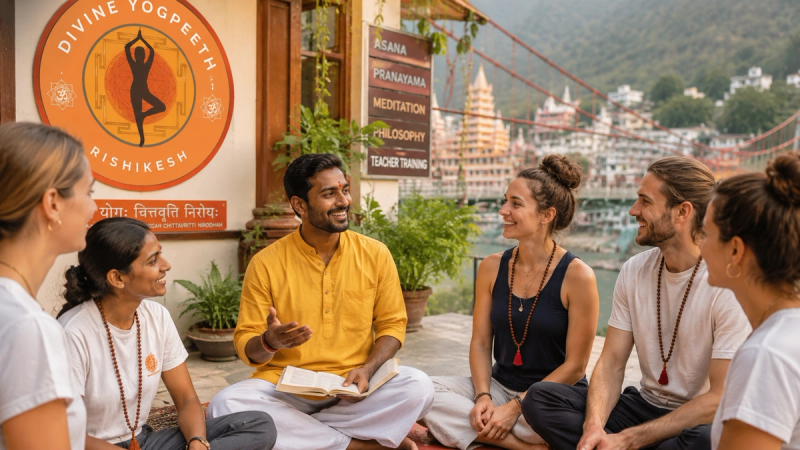
While Dharana is the strenuous effort to concentrate, Dhyana is a completely effortless flow of pure awareness. The rigid boundary between the observer and the object of focus begins to blur beautifully.
In this elevated state, the mind remains perfectly still and incredibly clear, much like a calm lake with no ripples reflecting the moon perfectly. The heavy friction of trying to concentrate vanishes entirely.
You experience a sudden, profound sense of deep peace and interconnectedness. Assorted thoughts may still occasionally exist, but they no longer disturb your underlying tranquility whatsoever.
Many enthusiastic practitioners frequently confuse Dharana (active concentration) with Dhyana (true meditation). True meditation is a sustained, beautifully uninterrupted current of consciousness that requires deep devotion to achieve.
8. Samadhi (Ultimate Integration)
Samadhi is the absolute pinnacle of the eightfold path. It is the highly sought-after state of total absorption, spiritual enlightenment, or ultimate self-realization.
Here, the persistent illusion of physical separation dissolves completely. The dedicated meditator, the act of meditation, and the object being meditated upon merge flawlessly into one unified experience.
Patanjali vividly describes different varying levels of Samadhi, each progressively deeper than the last. It is a spectacular state of pure bliss and complete liberation from all earthly suffering.
Achieving Samadhi remains the ultimate, final goal of all dedicated spiritual seekers globally. While it may seem distant, every conscious breath and ethical choice brings you significantly closer to this state of profound freedom.
Even if you only experience very brief flashes of this mental clarity, it fundamentally changes your perspective on life, your relationships, and your own deepest identity.
Why Rishikesh? The Perfect Setting for Yoga Philosophy
Studying these profound, complex concepts requires exactly the right environment to flourish. You need a dedicated space free from ordinary distractions, where spiritual practice is genuinely a way of life.
Rishikesh is universally recognized and celebrated as the undisputed yoga capital of the world. Located safely in the pristine foothills of the majestic Himalayas, its very soil holds centuries of deep spiritual history.
When you sit quietly on the sacred banks of the Ganga River, the ancient philosophy makes immediate, perfect sense. The surrounding powerful nature naturally induces a state of Pratyahara and Dharana effortlessly.
Laxman Jhula and Tapovan are incredibly vibrant hubs filled with serious seekers, wise sages, and dedicated scholars. Every single conversation and authentic interaction here beautifully supports your growth on this path.
Practicing intensely here connects you instantly to an unbroken, ancient lineage of respected teachers. You are not just reading about Patanjali; you are breathing the same air and walking the same paths as the legendary masters before you.
Learning safely in this unique environment strips away the heavy commercial aspects of modern fitness trends entirely. It firmly forces you to confront the raw, highly authentic roots of the practice.
Taking a structured, immersive program like a 100-Hour Yoga Teacher Training in Rishikesh drastically accelerates your understanding. The deeply immersive spiritual energy of the city acts as a massive catalyst for deep personal change.
You will return home not just with exciting new physical skills, but with a profoundly altered, enlightened worldview. The immense peace you find by the Ganga becomes an internal sanctuary you carry everywhere.
Take the Next Step in Your Journey
Reading extensively about the Yamas, Niyamas, and deep meditation is highly inspiring, but real understanding requires guided, incredibly consistent practice. You must actually live the philosophy to truly comprehend its power.
If you're considering training in Rishikesh, Divine Yogpeeth offers a highly supportive, deeply authentic environment to explore these teachings. Our experienced masters guide you safely through both physical stiffness and heavy mental blockages.
Sometimes, a highly focused, short immersion is all you need to entirely reset your life's trajectory. A dedicated 3-Days Retreat with our expert team provides the perfect, peaceful introduction to these life-changing concepts.
We warmly invite you to step confidently away from your stressful routine and discover what happens when you fully commit to the internal journey.
Frequently Asked Questions
What is the most important limb of yoga?
No single branch is inherently more important than the others. They proudly function as a unified, deeply interdependent system. However, Patanjali heavily emphasizes the Yamas and Niyamas as the absolute non-negotiable foundation for all subsequent spiritual growth and physical safety.
Do I need to master asana before moving to meditation?
You absolutely do not need to perform complex physical acrobatics or intense contortions. Asana simply means a steady, highly comfortable seat. As long as you can sit quietly without acute physical pain distracting your mind, you are totally ready to begin practicing concentration and meditation.
Can I practice the eight limbs of yoga philosophy in daily life?
Absolutely, without a doubt. In fact, your daily, routine life is the primary testing ground for these concepts. Every single time you choose honesty over deception, or take a deep breath to safely calm your sudden anger, you are actively living the philosophy.
How long does it take to learn the Ashtanga system?
Intellectually grasping the basic concepts takes only a few dedicated weeks of reading and study. Embodying them fully and experiencing Samadhi is a beautiful, lifelong pursuit. The ultimate goal is steady, daily progress rather than desperately rushing toward an imaginary finish line.
Conclusion: Walking the Path to Inner Peace
The eight limbs of yoga philosophy provide a truly flawless blueprint for complete self-realization and lasting joy. They gently take you from the loud external world of ethics and physical health into the deepest, quietest layers of human consciousness.
This incredible path demands daily discipline, brutal honesty, and a beautifully open heart. It continuously challenges you to look far beyond temporary physical achievements and actively seek permanent, unshakeable internal peace.
Every single time you bravely step onto your mat or sit quietly in meditation, you have the profound opportunity to engage with this ancient wisdom. The beautiful journey is entirely yours to take whenever you are ready.
Ready to begin? Explore our comprehensive 200-Hour Yoga Teacher Training at Divine Yogpeeth and take the very first step toward true transformation today.