.jpg)

Planning your gong bath meditation first session? Discover what to expect, how to prepare, and find profound relaxation. Learn more today!
Gong Bath Meditation First Session: Everything You Need to Know
Your gong bath meditation first session can feel like stepping into an entirely new dimension of deep relaxation. You lie down, close your eyes, and suddenly, waves of rich, resonant sound wash over your physical body and mind. It is a completely passive experience, yet the internal shifts can be incredibly profound. Many people arrive at their first sound therapy class feeling stressed, mentally exhausted, or simply curious about this ancient acoustic practice. They leave feeling lighter, clearer, and deeply centered.
If you have never experienced vibrational medicine before, you likely have questions. What exactly happens when the mallets strike the metal? Do you need to know how to meditate? Will it be too loud? This guide breaks down everything you need to know to prepare for your acoustic journey. You will learn the science behind the vibrations, the physical sensations you might encounter, and the best ways to integrate the experience afterward. Let go of any expectations. Your mind and body are about to experience rest on a cellular level.
The Science Behind Your Gong Bath Meditation First Session
Understanding the mechanics of your gong bath meditation first session helps remove any lingering apprehension. This is not just a musical performance; it is a scientifically backed modality designed to alter your brainwave state. When the practitioner begins playing, the instruments emit low-frequency sounds that interact directly with your nervous system. Your brain naturally attempts to follow the rhythm and frequency of the dominant sound source. This phenomenon is known as brainwave entrainment.
Within minutes, the complex overtones shift your brain from the active, alert Beta state into the relaxed Alpha state. As the session deepens, you may drop into the Theta state, which is associated with deep meditation, vivid imagery, and REM sleep. Some participants even reach the Delta state, the realm of profound, dreamless sleep where the body focuses entirely on physical healing. Scientific research available through organizations like the National Library of Medicine suggests that specific sound frequencies can significantly lower blood pressure and reduce cortisol levels.
The acoustic waves also physically massage your body at a cellular level. Since water makes up a large percentage of your physical form, the vibrations travel efficiently through your tissues, helping to release stored physical tension. You are quite literally being bathed in sound waves. This physical and mental reset provides a powerful antidote to chronic stress. You do not need to "do" anything to receive these Sound Healing Benefits: 7 Ultimate Ways It Transforms You; the vibrations do the heavy lifting for you.
Preparing for a Gong Bath Meditation First Session
Preparing for a gong bath meditation first session requires minimal effort, but a few smart choices can drastically improve your comfort. The goal is to eliminate any physical or mental distractions so you can fully surrender to the acoustic environment.
Physical Preparation
Comfort is your highest priority. Wear loose, breathable clothing that allows you to breathe deeply without restriction. Tight waistbands or restrictive fabrics can become highly distracting when you are lying still for an hour. Since your body temperature naturally drops when you enter a state of deep relaxation, bring a cozy pair of socks and a warm layer. Most studios provide mats and blankets, but bringing your own can help you feel more grounded. Avoid eating a heavy meal immediately before the class. A full stomach shifts your body's energy toward digestion rather than relaxation. Hydration is crucial. Drink plenty of water throughout the day, as well-hydrated tissues conduct sound vibrations much more effectively.
Mental Readiness
Approach the experience with an open mind and zero expectations. If you actively try to force yourself into a meditative state, you will likely create resistance. Simply give yourself permission to rest. If your mind wanders to your grocery list or work emails, do not judge yourself. Acknowledge the thought, and gently bring your attention back to the physical sensation of the sound waves. Setting a simple intention before the practice begins can also be powerful. You might mentally state, "I am open to receiving deep rest," or "I release all tension." Understanding how Singing Bowl Sound Healing: 7 Proven Ways It Restores You works can also help you mentally prepare for the shift in awareness.

What Actually Happens During the Experience?
The timeline of the class usually follows a specific arc. Knowing this structure helps you relax into the process without wondering when it will end.
The Initial Stages
The practitioner will guide you to lie down on your back in Savasana (corpse pose). They might lead a brief verbal relaxation or breathing exercise to help you settle. Then, the sound begins. It rarely starts with a loud crash. Instead, you will hear soft, rhythmic tapping or the gentle hum of singing bowls. These introductory sounds help your nervous system transition out of highly alert survival modes and into a state of safety.
The Deep Wash
As the session progresses, the volume and intensity of the vibrations will increase. The sound becomes a tangible force. You might feel vibrations tingling in your hands, feet, or chest. This is where the immersion aspect becomes clear; the sound feels like an ocean washing over you. You may experience visual colors, emotional releases, or a sensation of floating. According to standards recognized by reputable bodies like Yoga Alliance, a well-trained facilitator will expertly navigate these crescendos to ensure the intensity remains therapeutic, not overwhelming. Eventually, the sounds will gradually fade back into profound silence. This contrast between intense vibration and absolute quiet is often the most powerful moment of the entire class, acting as a profound form of Chakra Balancing Therapy: 7 Proven Ways to Restore Peace. Many practitioners integrate this deeply into our therapy offerings.
Post-Session Care and Integration
How you handle the hours following your class is just as important as the class itself. When the session concludes, do not rush to sit up or check your phone. Take your time slowly reawakening your body. Wiggle your fingers and toes, take a few deep breaths, and gently roll to your right side before pushing up to a seated position.
You might feel slightly disoriented or "spacey" afterward. This is a normal reaction to shifting brainwave states. Ground yourself by drinking a large glass of water immediately. The vibrations stimulate cellular detoxification, and water helps flush those released toxins from your system. Eat a nourishing, grounding meal like root vegetables or warm soup. Avoid alcohol and heavy screens for the rest of the evening.
Pay attention to your sleep that night. Many people report having the most restful sleep of their lives after an acoustic therapy session, while others experience vivid, colorful dreams. Both are signs that your nervous system is recalibrating. If strong emotions surface in the days following, allow them to pass without judgment. You have just completed a deep energetic clearing.
The Deeper Layers of Acoustic Healing
A gong bath meditation first session introduces you to the surface level of vibrational medicine. However, consistent practice reveals deeper layers of physical and emotional healing. The instruments used are carefully crafted to produce specific frequencies that resonate with different energy centers in your body. When these frequencies interact with your biofield, they help clear blockages that you might not even realize you are holding.
For instance, lower tones deeply affect the lower body and root energy centers, promoting a sense of safety and grounding. Higher tones resonate with the upper energy centers, fostering clarity, intuition, and mental lightness. When a skilled practitioner plays a sequence of instruments, they are essentially tuning your body like an orchestra. If one instrument in an orchestra is out of tune, the whole symphony sounds off. Similarly, if one part of your physical or energetic body is holding tension, it affects your overall well-being.
The acoustic waves bypass the logical mind entirely. Traditional talk therapy requires you to actively process thoughts and emotions. In contrast, sound therapy allows your body to release trauma and stress without you needing to analyze or even consciously understand what is happening. The sheer volume and complexity of the overtones give your analytical mind so much information to process that it eventually gives up and shuts down. This creates a rare window of pure stillness. In this stillness, your body’s innate healing mechanisms take over. You can learn to harness these techniques by exploring a Sound Healing Certification Course Rishikesh: 5 Best Perks.
Expanding Your Vibrational Awareness
Once you complete your acoustic immersion, you will likely notice a heightened sensitivity to sound in your daily life. You might become more aware of the harshness of traffic noise or the calming effect of wind moving through trees. This expanded awareness is a sign that your nervous system is becoming more finely tuned.
You can support this newfound sensitivity by actively curating your acoustic environment. Incorporate moments of intentional listening into your daily routine. Spend five minutes each morning simply listening to the sounds of your environment without labeling them as "good" or "bad." This practice reinforces the passive observation skills you learned during your session.
Furthermore, paying attention to the tone of your own voice can be highly revealing. The human voice is the most powerful acoustic instrument we possess. When you are stressed, your voice may become tight or high-pitched. When you are relaxed, it resonates from deeper within your chest. By consciously relaxing your vocal cords and speaking from your diaphragm, you can self-regulate your nervous system throughout the day. This simple technique acts as a mini-sound therapy session, keeping you grounded as you continue your journey at home.
The Role of Different Instruments
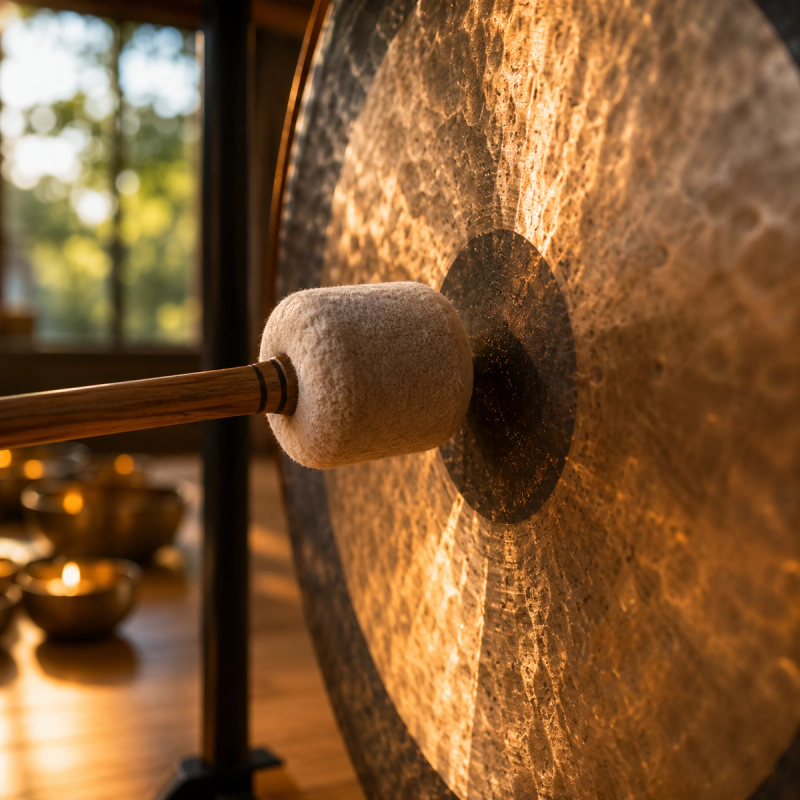
While the primary focus is often the large metal discs, a gong bath meditation first session typically involves a diverse array of acoustic tools. Each instrument serves a specific purpose in the therapeutic landscape. Crystal singing bowls, for example, produce pure, piercing tones that cut through mental chatter and align the higher energy centers. Tibetan singing bowls, forged from a mix of metals, offer rich, complex overtones that deeply ground the physical body.
You might also hear the soothing rush of an ocean drum, which perfectly mimics the sound of crashing waves. This particular instrument is highly effective at shifting the nervous system out of an anxiety-driven state. Chimes and tuning forks are often used at the very end of the class to gently pull you back to waking consciousness. The carefully orchestrated sequence of these different sounds ensures a comprehensive clearing of your physical, mental, and energetic bodies.
Integrating Mindfulness with Sound
To maximize the benefits of your acoustic class, try coupling it with a daily mindfulness practice. Sound therapy effectively clears the slate, leaving your mind quiet and receptive. This is the perfect fertile ground to establish a new habit.
Start with just five minutes of focused breathing each morning. Sit comfortably, close your eyes, and tune into the subtle sound of your own breath. When your mind inevitably wanders, gently redirect your focus back to the auditory rhythm of your inhalation and exhalation. This practice not only strengthens your ability to concentrate but also helps you maintain the profound sense of peace you experienced during your acoustic class. Over time, you will find it easier to drop into a meditative state, whether you are listening to instruments or simply sitting in silence.
Common Misconceptions About Acoustic Therapy
Before attending your class, it is helpful to clear up a few common misunderstandings. The term "bath" often confuses beginners. To be absolutely clear, no water is involved, and you remain fully clothed the entire time. The "bath" refers entirely to the immersion in sound waves.
Another frequent misconception is that the experience will be deafeningly loud. While gongs are powerful instruments capable of immense volume, a trained facilitator uses them dynamically. The focus is on producing sustained, resonant overtones rather than crashing noise. The volume will build in waves, but it should never cause pain in your ears. If an instrument is played too aggressively, it shocks the nervous system instead of soothing it. True therapeutic acoustic work is built on nuance and subtle vibration, guiding your brain safely into deeper states of consciousness.
Why Rishikesh?
Experiencing this modality in Rishikesh adds an entirely different dimension to the practice. Known globally as the Yoga Capital of the World, Rishikesh carries an innate energetic frequency that amplifies any healing work. Situated on the banks of the sacred Ganga River and enveloped by the towering Himalayas, the natural environment provides a perfect backdrop for deep acoustic meditation.
The air in Rishikesh is saturated with decades of spiritual practice, mantra chanting, and devotion. When you lie down for a class here, you are not just receiving the vibrations of the instruments; you are absorbing the profound stillness of the surrounding mountains. The natural acoustics of the region, combined with the pure mountain air, make the physical transmission of sound even more potent.
Moreover, studying or practicing in Rishikesh connects you to the authentic roots of these traditions. The facilitators here do not view acoustic therapy as a modern wellness trend. They understand it as a sacred science deeply intertwined with yogic philosophy and energetic anatomy. This authentic approach ensures that your experience is grounded in ancient wisdom, offering far more than just temporary stress relief. It offers a gateway to genuine self-discovery.
Continuing Your Sound Journey
If you're considering training in Rishikesh, Divine Yogpeeth offers an immersive environment to deepen your practice. Exploring our sound healing training course provides the perfect foundation to understand these ancient techniques profoundly.
FAQs
Is it safe for everyone?
Generally, yes. However, pregnant women in their first trimester, individuals with severe mental health conditions, and those with sound-induced epilepsy or pacemakers should consult a medical professional before attending.
Will I fall asleep?
Many people do fall asleep, and that is perfectly fine. Your body still absorbs the vibrations, and your subconscious mind continues to process the acoustic frequencies. Do not fight sleep if it comes.
What if I feel emotional during the class?
Emotional releases are common and completely normal. The vibrations can dislodge stagnant energy. If you feel the urge to cry or laugh, allow it to happen. It is a healthy sign that the therapy is working.
How often should I attend?
For general maintenance, once a month is excellent. If you are actively working through high stress or emotional blockages, weekly sessions can provide profound support.
Conclusion
Your gong bath meditation first session is an invitation to pause, reset, and experience true inner silence. By understanding the science behind the vibrations, preparing your physical body, and knowing what to expect during the class, you can fully surrender to the healing process. Remember to prioritize comfort, release all expectations, and allow the intricate overtones to wash away your accumulated stress. The benefits extend far beyond the studio, offering a deep recalibration of your nervous system and a renewed sense of clarity.
Ready to begin? Explore our 3 Days Yoga Retreat and take the first step today.