.jpg)

Hatha vs Ashtanga yoga can be confusing for beginners. Discover their unique benefits, pace, and breathwork to find your ideal path. Find out more today!
Hatha vs Ashtanga Yoga: The Ultimate Guide to Finding Your Path
Hatha vs Ashtanga yoga is often the first major crossroads you will encounter when deepening your practice. It leaves many practitioners wondering which path truly suits their body and mind.
Imagine stepping onto your mat: do you crave a slow, deliberate exploration of each posture? Or are you seeking a fiery, unbroken sequence that tests your physical limits?
Both paths offer incredible benefits, but they demand entirely different approaches to movement and breath.
You might be looking to build strength, heal an old injury, or simply quiet a chaotic mind. Navigating the nuances between these ancient traditions is crucial.
In this comprehensive guide, you will explore the distinct philosophies, pacing, and physiological impacts of both styles.
You will uncover what happens in a typical class and how each style affects your nervous system. By the end, you will have the clarity needed to step into your next class with absolute confidence.
Hatha vs Ashtanga Yoga: Unpacking the Ancient Origins
To truly understand the difference between Hatha vs Ashtanga yoga, you must first look at the roots from which they grew. Every modern physical yoga class you attend essentially traces its lineage back to Hatha.
The word itself translates to "sun" (ha) and "moon" (tha), representing a balance of opposing forces within your body. The original intention was never just about physical flexibility.
It was designed to purify the physical body and balance your energy channels, making it possible to sit in long, uninterrupted meditation.
When you practice Hatha, you are engaging with the foundational poses passed down for centuries. It is a broad umbrella term used as a baseline for standards by global organizations like Yoga Alliance.
Ashtanga, on the other hand, translates to the "eight-limbed path" as outlined by the sage Patanjali. The physical practice, however, was systematized in the 20th century by Sri K. Pattabhi Jois.
He developed it alongside his guru, T. Krishnamacharya, using a specific, highly demanding sequence of postures. Krishnamacharya believed the body needed to build internal heat to burn away impurities.
While Hatha is a generalized approach to balancing energy, Ashtanga is a rigorous system meant to discipline a restless mind. Understanding this history shifts your perspective from merely looking at the physical workout.
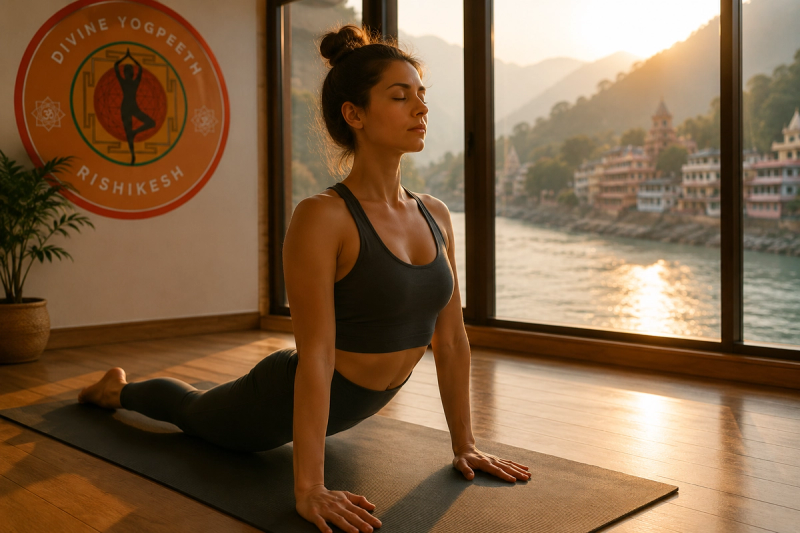
Pacing and Sequence: How Hatha and Ashtanga Differ
The most immediate contrast you will experience in the Hatha vs Ashtanga yoga debate is the speed of the class. If you thrive on predictability and routine, Ashtanga will feel like coming home.
In a traditional Ashtanga practice, the sequence never changes. You will perform the exact same postures, in the exact same order, every single time you step onto your mat.
The Primary Series is a set sequence of 75 poses. You link every single movement to a specific inhale or exhale, creating a continuous, unbroken flow of motion.
This demands an incredibly high level of cardiovascular endurance and unwavering focus. There is no time to let your mind wander when you are moving this quickly.
Conversely, Hatha completely removes the pressure of a ticking clock. A Hatha class does not follow a prescribed sequence, giving your teacher creative freedom to design the class.
Programs like a traditional 100-Hour Yoga Teacher Training often emphasize this adaptability to help you understand proper alignment from the ground up.
You will typically move at a much slower, more deliberate pace. Instead of flowing rapidly from one posture to the next, you will hold poses for several long, deep breaths.
This allows you time to understand the micro-adjustments required for proper alignment. You have the luxury of exploring how a pose feels in your joints without rushing the transition.
For many, this slower pace makes Hatha an incredibly therapeutic practice. It gives your nervous system a much-needed break from the constant stimulation of daily life.
Breathwork and Bandhas: The Internal Engine of Your Practice
Your breath is the absolute foundation of any physical practice. However, Hatha and Ashtanga utilize this vital tool in vastly different ways.
In Ashtanga, the breath is heavily regulated and fiercely powerful. You are required to use the Ujjayi breath, often called the "ocean breath" or "victorious breath."
This technique involves a slight constriction in the back of your throat. It creates an audible, rhythmic sound that serves as an anchor for your wandering mind.
Alongside this breathing technique, Ashtanga emphasizes the continuous engagement of internal energy locks. By lifting the pelvic floor and pulling the lower abdomen inward, you create intense core stability.
In a Hatha class, the approach to breathing is generally much softer. While you will still connect breath with movement, the strict adherence to Ujjayi is often relaxed.
You are encouraged to breathe deeply and fully into your belly. When holding a challenging pose for an extended period, this unrestricted breathing helps muscles release tension naturally.
Rather than generating extreme internal heat, the breath in Hatha is used to cool the system. It calms the mind and facilitates a deeper release into the connective tissues.
This distinction in breathing mechanics is precisely why you might leave an Ashtanga class drenched in sweat. Meanwhile, you leave a Hatha class feeling deeply rested and grounded.
The Physical Impact: Strength vs Flexibility
When comparing Hatha vs Ashtanga yoga, you have to look honestly at the physical toll and benefits of each. Ashtanga is undeniably a crucible for building lean muscle and internal heat.
It relies heavily on repeated vinyasas—the dynamic transitions of plank, chaturanga, upward dog, and downward dog. This repetitive, weight-bearing movement builds immense upper body and core strength.
Research indexed on PubMed frequently highlights the robust cardiovascular and musculoskeletal benefits of such a vigorous practice. However, this intensity means Ashtanga can be tough on your shoulders and knees if your alignment is poor.
Hatha, conversely, shines in its ability to safely cultivate deep flexibility and joint mobility. Because you hold postures longer, your fascia and connective tissues have the necessary time to stretch and release.
You also have the freedom to use props like blocks, straps, and bolsters without breaking the flow of a sequence. This makes Hatha incredibly accessible for recovering athletes, seniors, or anyone managing physical limitations.
Integrating holistic Therapy techniques is much easier in a Hatha setting because of this slow, highly adaptable pace. It is a practice of nurturing the body rather than pushing it to its absolute limits.
The Mental and Emotional Transformation
The Hatha vs Ashtanga yoga conversation is incomplete without addressing what happens to your mind on the mat. Ashtanga is frequently described by its dedicated practitioners as a moving meditation.
The sheer intensity of remembering the sequence, maintaining the Ujjayi breath, and engaging the bandhas leaves zero room for rumination. If you struggle with an overactive mind, this intense focus forcefully anchors you into the present moment.
Hatha approaches mental stillness through a much gentler, yielding doorway. You are asked to sit with physical discomfort during a long hold and simply observe your mental reactions without judgment.
This cultivates a profound sense of patience and emotional resilience that translates directly into how you handle daily stress.
Practicing deep, restorative relaxation—perhaps enhanced by exploring a Sound Healing Training Course—pairs beautifully with the introspective Hatha philosophy.
Why Choose Rishikesh for Your Yoga Journey?
Learning about these ancient styles in a local studio is one thing, but experiencing them in the birthplace of yoga is transformative. Rishikesh sits on the sacred banks of the Ganga River, enveloped by the majestic Himalayas.
The energy of this city is steeped in centuries of spiritual devotion, rigorous study, and profound meditation. Practicing here strips away the highly commercialized, fitness-focused layers of modern studio yoga.
You learn directly from masters who have dedicated their entire lives to these texts and physical disciplines. The pure vegetarian food, the ashram lifestyle, and the surrounding natural beauty actively accelerate your physical and spiritual growth.
Taking the Next Step with Divine Yogpeeth
If you are considering immersing yourself in these life-changing practices, finding a trusted school is your most important decision. Divine Yogpeeth provides a deeply authentic, Yoga Alliance USA certified environment in the heart of Tapovan, Laxman Jhula.
We believe in honoring the ancient roots of both styles while making them accessible to modern practitioners. If you want to explore the foundations of our teachings and our welcoming ashram space, start by visiting our Home page.
Our experienced teachers are dedicated to guiding you safely. Whether you are stepping onto the mat for the very first time or looking to refine a decade-long practice, you are supported here.
Frequently Asked Questions (FAQs)
Which is better for absolute beginners, Hatha or Ashtanga?
Hatha is generally the safer starting point for absolute beginners. The slower pace allows you to learn proper alignment, understand your body's limits, and avoid injury before attempting rapid transitions.
Can I practice both styles simultaneously?
Absolutely. Many practitioners use Ashtanga to build fiery strength and mental discipline, while incorporating Hatha on recovery days to stretch tight muscles and soothe their nervous system.
Do I need to memorize the Ashtanga sequence before my first class?
No. If you attend a "Led" Ashtanga class, the teacher verbally guides the entire room through the primary series. In a traditional "Mysore" class, the teacher instructs you one-on-one, adding poses only as you build strength and memory.
Is Hatha yoga just stretching and relaxing?
Not at all. While it is slower, holding poses for extended periods requires significant muscular endurance and mental stamina. It effectively builds isometric strength and deep core stability.
How long does it take to see results?
Physical changes like increased flexibility and strength can be felt within just a few weeks of consistent practice. The mental clarity and stress relief, however, are often experienced immediately after your very first session.
Conclusion: Embrace Your Yogic Path Today
The debate over Hatha vs Ashtanga yoga does not have a single, universal winner. Your choice depends entirely on your current physical condition, your mental state, and what you need from your time on the mat.
Ashtanga will relentlessly challenge your limits, build incredible fire, and forge unwavering discipline. Hatha will teach you profound patience, precise alignment, and the art of deep, restorative release.
The most important step is simply making the decision to begin your journey.
Ready to commit to a life-changing experience by the Ganga River? Take the leap and join our comprehensive 200-Hour Yoga Teacher Training to master these practices.
If you have less time but still need a profound reset, check out our 5 Days Retreat or our shorter 3 Days Retreat. Your mat is waiting in Rishikesh.