.jpg)

Plan a monsoon yoga retreat Rishikesh off season with practical tips on weather, safety, packing, practice, and choosing the right retreat. Discover more today.
Monsoon yoga retreat Rishikesh off season: The Ultimate Rainy-Season Guide
Imagine waking to steady rain, hearing the Ganga swell below the hills, and stepping into your morning yoga practice while the air feels cooler and cleaner than it did a week earlier. A monsoon yoga retreat Rishikesh off season can offer exactly that kind of slower rhythm—provided you understand what the season is really like.
Monsoon in Rishikesh is not simply a quieter version of peak season. Rain can change travel plans, river conditions can become powerful, some outdoor activities may be restricted, and humidity can affect how your body feels during practice. At the same time, the crowds thin out, the Himalayan landscape turns intensely green, and a yoga retreat can feel more focused.
This guide explains what you can realistically expect from a rainy-season retreat, why the off-season can be a smart choice, what to pack, how to stay safe, and how to decide whether this is the right time for you.
Monsoon Yoga Retreat Rishikesh Off Season: What the Season Is Really Like
If you are considering a monsoon yoga retreat Rishikesh off season, start by dropping the idea that every day will be a postcard of gentle rain. Rishikesh's monsoon can be unpredictable. You may get a clear, humid morning followed by a heavy afternoon shower, or several rainy hours followed by a surprisingly pleasant evening.
The biggest change is the environment. The hills around the city become greener, streams and waterfalls can become more active, and the Ganga can carry far more force than during drier months. That makes the landscape dramatic, but it also means you need to respect local safety guidance.
For yoga practice, the weather can actually be comfortable. Cooler mornings may make movement easier, while rainy periods encourage you to spend less time rushing between activities. Instead of trying to fill every hour with sightseeing, you naturally create space for asana, pranayama, meditation, reading, rest, and conversation.
You should also expect humidity. Your body may feel warmer than the air temperature suggests, and mats or clothes can take longer to dry. A retreat center with good ventilation, indoor practice space, and sensible daily scheduling matters more during monsoon than it might in a dry season.
The season therefore rewards a different mindset: flexibility. If you need perfect weather every day, monsoon may frustrate you. If you want fewer distractions and are comfortable adapting your plans, it can be one of the most rewarding periods to practice in Rishikesh.
Why a Rishikesh Yoga Retreat in Monsoon Can Be Better Than Peak Season
Peak season has obvious advantages: more predictable weather, more outdoor activity options, and a lively atmosphere. But those benefits come with crowds, busier roads, higher demand, and less quiet around popular areas.
During the rainy season, the pace changes. You can spend more time with your practice instead of constantly deciding where to go next. A quieter environment can be especially useful if your main goal is to reset your routine rather than collect sightseeing experiences.
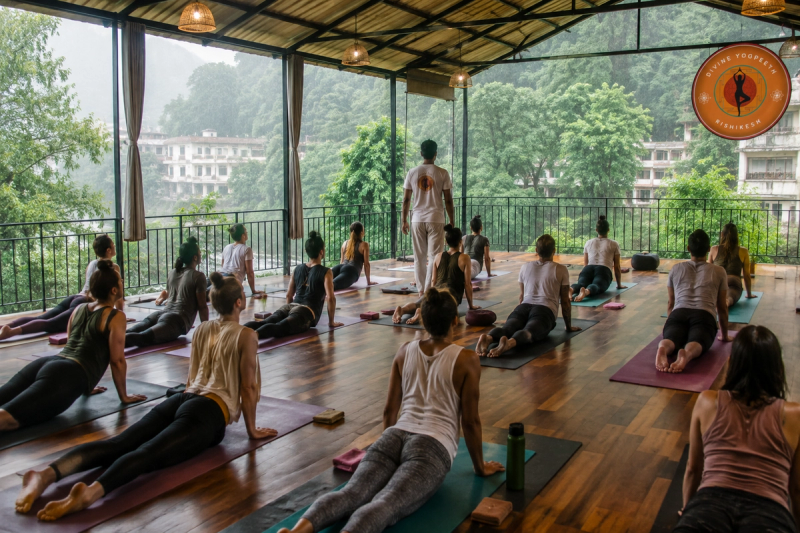
1. Fewer crowds, more attention
Popular areas around Tapovan, Laxman Jhula, and riverside spaces can feel much less congested. That does not mean you will have Rishikesh to yourself, but the overall rhythm is generally slower.
If you are a beginner, this can make a retreat feel less intimidating. You have more mental space to concentrate on alignment, breathing, meditation, and simply getting comfortable with being present. If certification is part of your plan, check the school and program details through Yoga Alliance before you book.
2. A greener Himalayan landscape
Rain changes the visual character of Rishikesh. Vegetation becomes lush, the hills look deeper and richer, and the air often feels refreshed after rainfall.
That atmosphere pairs naturally with slower practices. A rainy afternoon can be a good time for meditation, yoga philosophy, journaling, or a sound-based relaxation session rather than another excursion.
3. Better conditions for slowing down
A retreat works best when you are not treating it like a packed holiday itinerary. Monsoon makes that easier. You have a practical reason to leave gaps in your schedule.
If you want a shorter experience, a structured short retreat can give you a concentrated introduction without requiring a long stay.
4. Potentially better value
Off-season pricing and availability vary by school, accommodation type, and dates, so you should compare the actual package rather than assuming every monsoon retreat is automatically cheaper.
What can be more consistent is availability. You may have more choice when selecting dates, room types, or program formats. That flexibility can matter if you are planning around flights or work.
What to Expect From Daily Practice During Monsoon
A well-designed rainy-season retreat should not depend on outdoor weather for its core practice. Your yoga, meditation, and learning sessions should have an indoor alternative or a schedule that can adapt when conditions change.
Your mornings may still begin early. A typical retreat rhythm can include meditation, pranayama, asana practice, breakfast, philosophy or anatomy sessions, rest, and another practice later in the day. The exact schedule depends on the school and program. For broader context on yoga and wellness practices in India, you can also consult India’s Ministry of Ayush.
Humidity is the main physical adjustment. You may sweat more during a practice that normally feels moderate. Rather than chasing intensity, pay attention to breathing, hydration, and how stable you feel in each posture.
Pranayama deserves particular care. If you already practice advanced breathing techniques, follow your teacher's instructions instead of turning a retreat into an experiment. If you are new, focus on controlled, comfortable breathing rather than forcing long breath holds.
If you want to explore breathing practices before your trip, this guide to pranayama types, benefits, and practice can help you understand the basics. If you are comparing the season itself, this guide to yoga in Rishikesh during monsoon season can help you plan with more context.
Rain also changes what happens outside class. You may spend more time indoors, which is not a disadvantage if the retreat has thoughtful programming. Reading, journaling, philosophy discussions, meditation, and sound healing can become meaningful parts of your day.
For some travelers, this is the real advantage of monsoon: the retreat stops feeling like a checklist of activities and starts feeling like a period of deliberate practice.
What to Pack for a Monsoon Yoga Retreat in Rishikesh
Packing for monsoon is less about bringing more and more about bringing the right things. You want lightweight clothing that dries reasonably quickly, protection from rain, and enough backup clothing to stay comfortable when something gets damp.
A practical packing list includes:
- Lightweight yoga clothes with a couple of extra sets.
- A compact rain jacket or poncho.
- Waterproof or water-resistant footwear with good grip.
- A small umbrella for short local trips.
- Quick-drying towel and a separate bag for damp clothes.
- Reusable water bottle.
- Personal medicines and basic toiletries.
- Mosquito protection appropriate for you.
- A small dry bag or waterproof pouch for phone, passport, and electronics.
Avoid packing only heavy cotton clothing. It can become uncomfortable when humidity is high and drying conditions are poor.
Good footwear matters more than fashionable footwear. Wet paths and uneven surfaces can become slippery, particularly after heavy rain. You should also avoid walking close to river edges or attempting to enter the Ganga when local authorities or retreat staff advise against it.
If you are traveling internationally, keep your passport and important documents protected from moisture. A simple waterproof pouch can prevent a very avoidable problem.
For a more detailed preparation guide, see what to pack for a yoga retreat in Rishikesh.
Why Rishikesh? Why the Off-Season Matters for Your Retreat
Rishikesh is already strongly associated with yoga, meditation, spiritual study, and the Ganga. But the value of visiting during monsoon is not simply that the city becomes quieter.
It is the combination of environment and intention. When outdoor plans become less predictable, you are encouraged to simplify. You may spend less time commuting between attractions and more time inside the retreat routine.
The location also gives you a useful contrast. You can experience a living Indian city, walk through Tapovan when conditions are suitable, attend classes, and still return to a structured practice environment.
For international visitors, planning deserves extra attention. Monsoon does not mean travel is impossible, but heavy rain can affect road journeys and outdoor plans. Build some flexibility into your itinerary rather than scheduling every transfer with zero margin.
If this is your first retreat in India, you may also want to understand the practical side of choosing a program, accommodation, and schedule. A guide to booking a yoga retreat in India for the first time can help you think through those decisions before paying a deposit.
The most important point is simple: choose the season based on your purpose. If your priority is adventure and consistently dry weather, another season may suit you better. If your priority is practice, reflection, and a slower environment, monsoon deserves serious consideration.
How to Choose the Right Monsoon Yoga Retreat
Not every retreat is equally suitable for rainy-season travel. Before booking, look beyond Instagram photographs and ask practical questions.
First, check whether the main yoga hall is fully usable during heavy rain. You should not have to depend on outdoor classes for the program to work.
Second, understand what is included. Accommodation, meals, classes, excursions, airport transfers, and therapies can differ significantly between packages.
Third, check the level of the course. A restorative retreat is very different from an intensive teacher-training program. You should know whether the daily schedule matches your experience and energy level.
Fourth, ask about group size. Smaller groups can make it easier to ask questions and receive individual guidance, although a larger group can also provide a lively community.
Fifth, consider the school's credentials and teaching approach. If certification matters to you, verify the specific program and its recognition rather than relying on vague claims.
For example, if your goal goes beyond relaxation and you want formal teacher training, you may compare a 100-hour yoga teacher training program with a longer 200-hour pathway.
The right retreat is not necessarily the cheapest or the most luxurious. It is the one whose teaching, schedule, safety practices, accommodation, and purpose match what you actually want from the trip.
Monsoon Yoga Retreat Rishikesh Off Season: Is It Safe?
Safety should be part of your decision, not an afterthought. The Ganga can become especially powerful during monsoon, and you should never treat a dramatic river as a swimming opportunity.
Follow local instructions about river access, trekking routes, waterfalls, and roads. Avoid isolated trails during or immediately after heavy rain, and do not assume a route is safe because you saw other travelers using it.
Weather can also affect transportation. If you are catching a flight or train after your retreat, leave a buffer rather than planning a tight connection after a long road journey.
For yoga itself, safety means listening to your body. Humidity, disrupted sleep, travel fatigue, and a new practice schedule can change how you feel. You do not need to prove anything by forcing advanced postures or exhausting yourself.
A reputable school should be comfortable modifying practice when conditions require it. That is especially important during monsoon, when the environment can change faster than your timetable.
The broader principle is useful: a retreat should reduce unnecessary risk, not create it in the name of adventure.
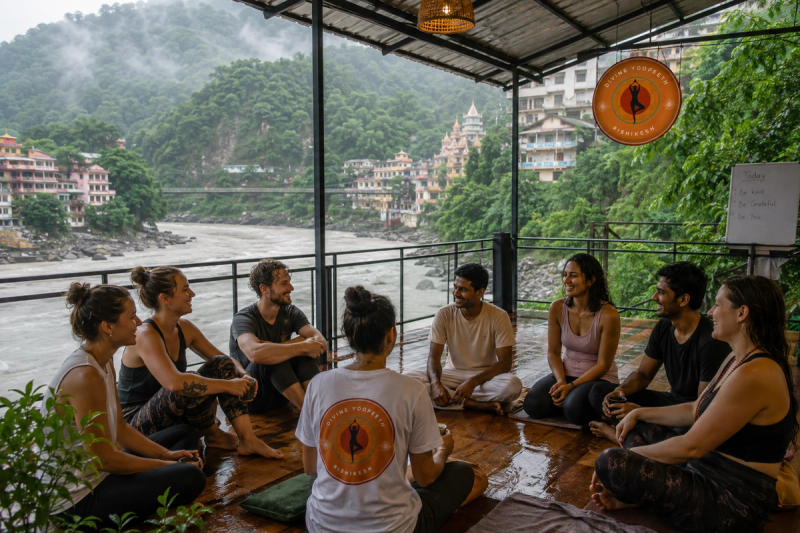
A Quiet Way to Experience Monsoon Rishikesh With Divine Yogpeeth
If you want your rainy-season trip to combine structured yoga practice with the atmosphere of Tapovan, our Divine Yogpeeth yoga programs in Rishikesh offer options ranging from short retreats to longer teacher-training programs.
You can also use quieter monsoon days for practices that complement asana, including sound-based relaxation and meditation. The goal is not to keep you busy from morning to night; it is to give your practice enough structure while leaving room for rest.
A short retreat can be a good fit if you want a focused reset without committing to teacher training. A longer program makes more sense if you want deeper study and a formal training pathway.
The important thing is to choose honestly. Do not book a teacher-training course simply because you have heard that Rishikesh is a yoga capital. Book it if you actually want the study, discipline, and teaching practice involved.
FAQs
Is monsoon a good time for a yoga retreat in Rishikesh?
Yes, if you are comfortable with rain, humidity, and flexible travel plans. Monsoon can provide fewer crowds, greener scenery, and a slower environment that suits meditation and focused practice.
Is Rishikesh safe during monsoon?
It can be, provided you follow local weather and safety guidance. The Ganga may be very strong, and heavy rain can make roads, trails, and waterfalls hazardous. Avoid risky outdoor activities during poor conditions.
Will it rain all day during monsoon?
Not necessarily. Rainfall can vary considerably. You may experience showers, clear periods, humid mornings, or heavy rain at particular times. Build flexibility into your schedule.
What should you pack for a rainy yoga retreat?
Prioritize lightweight quick-drying clothes, rain protection, footwear with good grip, a waterproof pouch for electronics and documents, and enough spare clothing to stay comfortable.
Should you choose a retreat or teacher training?
Choose a retreat if your primary goal is rest, practice, meditation, and a short reset. Choose teacher training if you want structured study, assessment, and a pathway toward teaching. A 200-hour program is a substantially bigger commitment than a short retreat.
Conclusion: Should You Book a Monsoon Yoga Retreat in Rishikesh?
A monsoon yoga retreat Rishikesh off season is not the right choice for everyone—and that is precisely why it can be such a good choice for the right traveler.
You should expect rain, humidity, changing plans, and a powerful river. In exchange, you can experience greener hills, fewer crowds, slower days, and more room to focus on yoga without treating Rishikesh like a sightseeing checklist.
If that balance matches what you want, choose a retreat with a reliable indoor practice space, experienced teachers, clear safety practices, and a schedule that can adapt to the weather.
If you are ready to make your monsoon stay more than a holiday, explore our 200-hour yoga teacher training in Rishikesh and see whether the full training format fits your goals. For a shorter commitment, consider a 5-day yoga retreat in Rishikesh.
The best time to practice is not always the time with the perfect weather. Sometimes it is the season that gives you the fewest distractions.