

Discover how morning sadhana 100 hour YTT Rishikesh builds focus, discipline, and deeper yoga awareness. Explore the benefits of early practice. Learn more.
morning sadhana 100 hour YTT Rishikesh: Why the 6 AM Practice Changes Everything
What if the most important part of your yoga teacher training begins before breakfast? Morning sadhana 100 hour YTT Rishikesh introduces you to the discipline of meeting yourself early, when the day is quiet and your attention has fewer demands competing for it.
A 6 AM practice can feel challenging at first, especially if you're travelling, adjusting to a new climate, or used to starting your day later. Yet, as you settle into a regular routine, those early hours can become an opportunity to develop steadiness, awareness, and a more thoughtful relationship with yoga.
During a 100-hour yoga teacher training course, morning sadhana is more than a scheduled class. It can connect physical postures with breathing techniques, meditation, yogic philosophy, and the practical discipline of showing up consistently.
Whether you're an international traveller exploring traditional yoga in India or an Indian practitioner deepening an existing practice, understanding this routine can help you decide whether an intensive training programme suits your goals.
Here's what morning sadhana involves, why the early start matters, how to prepare for it, and what you should realistically expect from a training experience in Rishikesh.
1. Morning Sadhana in 100-Hour YTT Rishikesh: What Does It Really Mean?
The Sanskrit word sadhana refers to a disciplined spiritual practice undertaken consistently to develop awareness, understanding, and personal growth. In yoga, it can include asana, pranayama, meditation, mantra chanting, self-study, and other practices aligned with your intentions.
In a structured teacher training programme, morning sadhana brings several of these elements into your daily routine. Instead of practising only when you feel motivated, you learn to approach the mat with consistency.
The 6 AM start provides a practical framework for that discipline. You wake up, prepare yourself, arrive at practice, and give your attention to the session before the distractions of the day take over.
However, the clock itself is not magical. The value comes from the quality of your attention, appropriate guidance, regular practice, and sufficient rest.
What might a morning session include?
Depending on the school's curriculum and daily timetable, your practice may involve:
Quiet preparation: Arriving on time, settling your body, and bringing your attention to the present moment.
Mantra chanting or meditation: Using sound, silence, or focused attention to establish a steady mental state.
Pranayama: Exploring breathing practices under appropriate instruction.
Asana practice: Developing mobility, stability, balance, and awareness of alignment.
Closing relaxation: Allowing your body and mind to settle before moving into the next part of the day.
Not every programme includes all these elements in a single session. Ask the school for its actual timetable before enrolling.
You can also explore the role of traditional terminology through this guide to essential Sanskrit yoga teacher training terms.
For broader context on yoga education and professional standards, visit
. Remember that registration standards and the actual quality of teaching are separate considerations; examine the curriculum and instructors before making your decision.
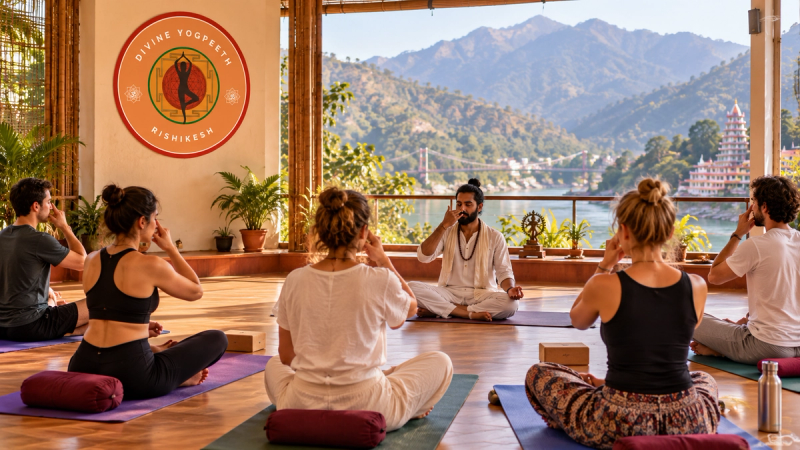
2. How a 6 AM Yoga Practice Can Change Your Daily Routine
An early morning practice does not guarantee a dramatic personal breakthrough. Its benefits tend to develop through repetition, reflection, and realistic expectations.
When you follow a regular schedule during training, you begin to notice how your body and mind respond to different conditions. Some mornings you may feel energetic. On others, you may experience stiffness, sleepiness, or a wandering mind.
Learning to respond appropriately to both experiences is part of the practice.
You develop consistency instead of relying on motivation
Motivation fluctuates. A structured morning routine gives you a practical way to practise even when you don't feel particularly inspired.
Over time, preparing your clothes the previous evening, waking at a consistent time, and arriving at the session can become familiar habits. This discipline may also support other areas of your life, including studying, working, and maintaining a personal yoga practice after training.
You learn to notice your body more clearly
Morning movement can help you recognise stiffness, balance limitations, muscular tension, and changes in energy. Rather than forcing yourself into a posture, you learn to observe what is available to you on that particular day.
This matters because effective yoga practice is not about competing with classmates or achieving the deepest possible stretch.
A qualified instructor should help you adapt postures to your experience, physical capacity, and any relevant limitations.
You create space for focused attention
Meditation and mindful movement give you an opportunity to practise returning your attention when it wanders.
You may find that this carries over into conversations, studying, or daily responsibilities. However, individual outcomes vary, and morning practice should not be presented as a guaranteed treatment for anxiety, depression, or other medical conditions.
You establish a healthier relationship with effort
A disciplined practice involves effort, but effort does not mean ignoring pain or exhaustion.
You learn when to participate fully, when to modify a posture, and when to rest. This distinction is essential if you intend to continue practising yoga over the long term.
3. The Main Practices That Make Morning Sadhana Meaningful
A morning session is most useful when its different elements work together rather than becoming a checklist of techniques.
Understanding each component can help you approach your 100-hour training with greater awareness.
Asana: Moving with awareness
Asana practice develops your understanding of movement, posture, balance, and bodily control. In a teacher training environment, the goal is not simply to perform poses but to understand how they are approached and adapted.
You may explore standing postures, seated positions, gentle backbends, twists, or other movements according to the programme's level and sequence.
Pay attention to your instructor's explanations of alignment, transitions, and modifications. These details are especially valuable if you eventually plan to teach other people.
For additional context, read about Vinyasa fundamentals in a 100-hour YTT.
Pranayama: Working with the breath
Pranayama introduces structured breathing practices that may support attention and awareness of breathing patterns.
Depending on your level and the curriculum, your instructor may introduce simple breath observation or specific pranayama techniques.
Do not assume that every breathing exercise is suitable for every student. Forceful breathing, prolonged breath retention, and advanced techniques require appropriate instruction and may be unsuitable for some health conditions.
If you feel dizzy, unusually breathless, or uncomfortable, stop and inform your instructor rather than pushing through the exercise.
The
provides an official starting point for exploring India's traditional systems of health and wellness. Use authoritative resources alongside qualified, individual instruction rather than treating online guidance as a substitute for personalised advice.
Meditation: Practising observation
Meditation can begin with something simple: sitting comfortably and noticing your breathing.
Your mind will probably wander. You may think about breakfast, the day's schedule, or how tired you feel. The practice is to recognise that distraction and gently return your attention without judging yourself.
Consistency matters more than trying to force your mind into complete silence.
Relaxation and integration
A few quiet minutes at the end of practice can help you transition into the next activity without immediately rushing away.
Notice how your body feels after movement and how your breathing compares with its state at the beginning. These observations can make your practice more personal and help you identify patterns over time.
4. How to Prepare for a 6 AM Sadhana Session
The first few mornings may be uncomfortable, particularly if you have travelled across time zones or are adjusting to a different climate.
Preparation makes the routine easier. You do not need an elaborate wellness ritual; you need enough sleep, sensible planning, and a willingness to adapt.
The evening before
Aim to create conditions that make waking up manageable.
Prepare comfortable yoga clothing and any required equipment.
Confirm the class location and start time.
Avoid leaving meals, laundry, or other tasks until very late.
Allow enough time for a full night's sleep. Most adults need around seven to nine hours, although individual requirements vary.
Keep your morning routine simple so you aren't rushing.
If you need to wake at 5:15 AM, for example, going to bed around 9:30–10:00 PM may give you a more realistic opportunity to rest than staying awake until midnight.
Before the session
Drink water according to your needs and the conditions. Whether you practise on an empty stomach or have a small snack depends on your body, the intensity of the session, and your instructor's guidance.
You do not need to copy another student's routine. If you feel faint or unwell when practising without food, discuss a safer approach with your instructor.
Arrive early enough to settle in. Use those extra minutes to notice your breathing, relax unnecessary muscular tension, and prepare mentally.
During practice
Listen to instructions rather than trying to keep pace with the most flexible person in the room.
Modify movements when necessary, ask questions if an instruction is unclear, and distinguish normal muscular effort from sharp or persistent pain.
A good teacher training environment should make reasonable adjustments possible without making students feel embarrassed about their limitations.
After practice
Follow the school's schedule for breakfast, hydration, and the next class. If your training day includes philosophy, anatomy, or practice teaching, remember that recovery and concentration matter throughout the entire timetable.
Keep brief notes about your energy, sleep, breathing, and observations. This can help you recognise progress without judging each session solely by physical performance.
5. Why Rishikesh Is a Meaningful Place for Morning Sadhana
Rishikesh offers a distinctive setting for yoga practice. The presence of the Ganga, views of the surrounding Himalayan foothills, established yoga communities, and a long association with spiritual study can make the city an appealing destination for practitioners from India and abroad.
In neighbourhoods such as Tapovan and Laxman Jhula, you can find yoga schools, meditation spaces, cafés, and accommodation serving students who come for short retreats or longer training programmes.
The environment can support your intention to step away from familiar routines and devote more attention to practice. But the location alone does not determine the quality of your experience.
The environment supports a different pace
A stay in Rishikesh gives you an opportunity to build your day around yoga rather than fitting every session between work, commuting, and household responsibilities.
Depending on your accommodation and the weather, you may experience cool early mornings, birdsong, distant river sounds, and quieter streets before the day becomes busy.
These details can make a morning feel special. At the same time, Rishikesh is a living town, not a silent retreat throughout the day. Traffic, construction, crowds, and seasonal weather can affect your experience.
You can learn within a yoga-focused community
Training alongside people from different countries and backgrounds exposes you to different motivations for practising yoga.
Some students want to develop their personal practice. Others are exploring whether teaching is right for them. Some already have experience and want to deepen their understanding of asana, pranayama, and philosophy.
This diversity can encourage thoughtful discussion and help you recognise that yoga practice does not look identical for everyone.
If you are travelling internationally, review this guide to yoga retreats in Rishikesh for foreigners before planning your stay.
Choose the course for its substance, not its scenery
Beautiful surroundings are a bonus, but your decision should also consider teaching quality, the daily timetable, accommodation arrangements, food, class size, student support, and the exact certificate offered.
Ask specific questions before paying a deposit. A credible school should be able to explain what the course covers and what you can reasonably expect to learn.
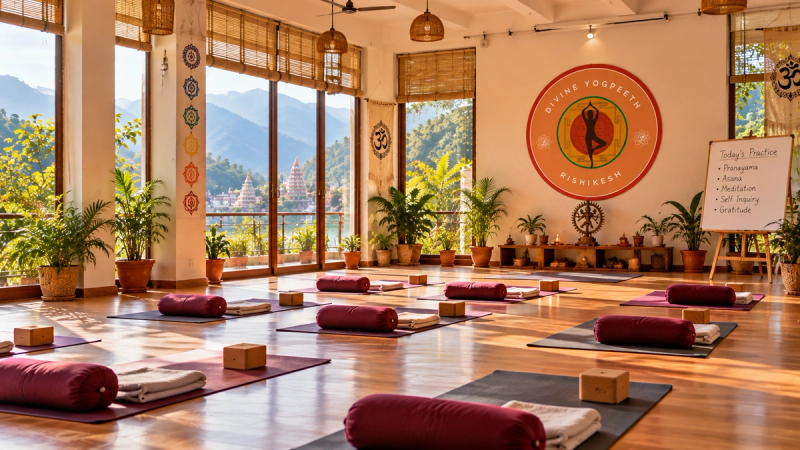
6. Is a 100-Hour YTT Right for Your Practice?
A 100-hour yoga teacher training programme can be a useful starting point for someone who wants a structured introduction to yoga education or a deeper understanding of their personal practice.
However, 100 hours should not automatically be treated as equivalent to a complete 200-hour foundational teacher training qualification. What a course allows you to do depends on its curriculum, the organisation's standards, and the requirements of any school or professional body with which you intend to register.
When a 100-hour course may suit you
Consider this format if you want to:
Build a more consistent personal yoga routine.
Explore asana, pranayama, meditation, and yoga philosophy in a structured setting.
Experience an immersive training schedule before committing to a longer course.
Develop a stronger understanding of the foundations of yoga practice.
Investigate whether teaching yoga could become a future professional interest.
You do not necessarily need to be an advanced practitioner to benefit. What matters is that the course matches your current ability and offers appropriate guidance.
When you may need a different option
If your primary goal is to pursue a recognised foundational teacher training pathway, compare the requirements carefully before enrolling in a 100-hour course.
A 200-hour yoga teacher training programme in Rishikesh may be more appropriate if you want a broader curriculum and a qualification aligned with the applicable 200-hour training standards.
Also ask whether the 100 hours can count towards further training. Never assume that separate courses can automatically be combined for registration or certification.
The right choice depends on your goals, experience, budget, available time, and intended next step.
7. Begin Your Morning Sadhana Practice with Divine Yogpeeth
If you want to experience a structured yoga routine in Rishikesh, choosing a school with a clear timetable and suitable instruction is an important first step.
At Divine Yogpeeth, located in the Laxman Jhula and Tapovan area of Rishikesh, you can explore our 100-hour yoga teacher training programme as a possible option for deepening your practice.
Before enrolling, ask us about the morning schedule, the balance between asana and other subjects, the level of physical intensity, instructor guidance, accommodation, meals, and the certificate awarded on completion.
These details matter more than promises of instant transformation.
If you have limited time for a full training course, you can also compare our five-day yoga retreat in Rishikesh with the 100-hour training format. A retreat may offer a shorter introduction to a yoga-centred routine, while a teacher training course is intended for more structured study.
Choose the format that fits your purpose. You do not need to commit to the longest course simply because it sounds more intensive.
8. FAQs About Morning Sadhana in a 100-Hour YTT
Is 6 AM compulsory during a 100-hour yoga teacher training course?
It depends on the school's timetable. Many intensive programmes schedule morning practice early to establish a consistent daily routine, but the exact start time and attendance requirements vary. Confirm the timetable before booking.
Do you need previous yoga experience for morning sadhana?
Not necessarily. Some programmes welcome beginners, while others expect a basic understanding of asana. Check the course prerequisites and explain your experience honestly before enrolling.
What should you eat before early morning yoga?
Your needs depend on the intensity of the session, your digestion, and your health. Some people feel comfortable practising before breakfast; others benefit from a light snack. Stay hydrated and discuss any concerns with your instructor.
Will morning sadhana make you more flexible?
Regular, appropriately adapted yoga practice may improve flexibility and mobility over time. Results vary according to your starting point, practice consistency, recovery, and individual physical characteristics. Flexibility is not the only measure of progress.
Can a 100-hour YTT qualify you to teach yoga professionally?
Not automatically. The qualification and its recognition depend on the programme, the applicable training standards, and the organisation or employer assessing your credentials. Check the requirements for your intended teaching pathway before enrolling.
9. Conclusion: Make the First Hour Count
Morning sadhana in a 100-hour yoga teacher training programme offers an opportunity to practise consistency, improve your awareness of movement and breathing, and create space for reflection before the day begins.
The real value of a 6 AM session is not the early alarm. It is what you learn by returning to your practice, respecting your limits, listening to your instructor, and observing yourself with greater honesty.
Rishikesh can provide a supportive environment for that process, but your choice of school, the quality of its teaching, and the suitability of its curriculum remain essential.
If you're ready to explore a structured practice in the foothills of the Himalayas, take the next step by reviewing our 100-hour Yoga Teacher Training in Rishikesh. Check the syllabus, daily timetable, course dates, and enrolment details, then decide whether the programme fits your goals.
Your practice does not have to begin perfectly. It has to begin with a realistic commitment that you can sustain.