.jpg)

Unlock the ultimate pranayama types benefits practice to boost your energy, heal your body, and calm your mind. Ready to breathe better? Find out how inside.
Pranayama Types Benefits Practice: Master the Art of Conscious Breathing
Are you breathing right now, or is your body just running on autopilot? Unlocking the true potential of pranayama types benefits practice is the quickest way to move from shallow survival mode to a state of vibrant vitality.
You take roughly 22,000 breaths every single day without a second thought. Yet, the moment you intentionally shift your breathing patterns, your entire central nervous system undergoes an immediate recalibration.
In this comprehensive guide, you will explore how mastering your breath changes your physiology, reduces chronic stress, and deepens your mind-body connection. You will gain actionable, practical tools to elevate your physical health and mental clarity starting today.
Understanding Pranayama Types Benefits Practice
Pranayama is far more than just a sequence of mechanical inhalations and exhalations. It is the conscious, mindful expansion and regulation of life force energy, known across ancient traditions as prana.
When you dedicate time to understand this discipline, you gain the power to alter your state of consciousness at will. Different techniques target completely different psychological and physical states within a matter of minutes.
Whether you need to cool down your body after an intense workout or fire up your digestive system, your breath acts as a highly versatile control panel. Global governing bodies like Yoga Alliance actively recognize regular pranayama as an essential pillar of standard, authentic spiritual education.
Expanding your knowledge of this field empowers you to break free from reactive emotional habits. By working closely with your lung capacity, you directly improve your body's oxygen delivery mechanics.
This profound level of internal awareness establishes a solid foundation for any deeper meditation or movement routine. The systematic approach ensures that practitioners of all backgrounds can experience measurable biological shifts safely.
Deep Dive into Pranayama Types and Benefits
Every single technique in the yogic tradition serves a specific, distinct physiological purpose. You cannot treat breathwork as a one-size-fits-all solution for your daily wellness goals.
Understanding the unique nuances of each practice allows you to build a highly customized daily wellness ritual. Let us look closely at the primary exercises that have stood the test of time.
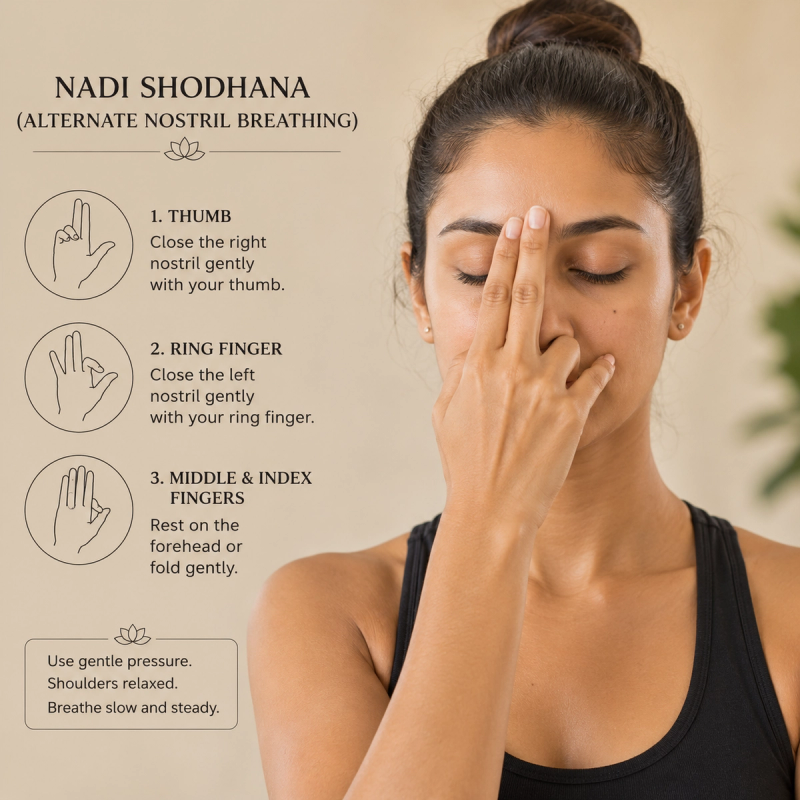
Nadi Shodhana (Alternate Nostril Breathing)
This classic practice focuses on restoring balance between the analytical left hemisphere and creative right hemisphere of your brain. By closing off one nostril at a time, you clear away subtle energy blockages and promote an overall sense of internal equilibrium.
It is an exceptional tool to utilize right before a major presentation, a challenging exam, or a high-stress meeting. It takes your mind out of a scattered state and grounds your awareness back into the present moment.
Kapalbhati (Skull Shining Breath)
This dynamic technique utilizes strong, passive inhalations paired with sharp, forced exhalations driven entirely by your abdominal muscles. It acts as a powerful internal purification process for your respiratory tract.
It clears out stagnant air from the lower lungs, stimulates your digestive organs, and fills your mind with sudden clarity. Regular practice helps boost your metabolic rate and leaves you feeling instantly refreshed and awake.
Bhramari (Humming Bee Breath)
If your mind constantly races with anxious thoughts at night, this technique offers a simple, natural remedy. By making a soothing humming sound on your exhalation, you create a powerful internal vibration.
This self-generated sound wave instantly calms your overstimulated nervous system and triggers a deep relaxation response. It is widely used by modern practitioners to combat insomnia and soothe residual emotional tension.
Sheetali (Cooling Breath)
During hot summer days or moments of intense anger, you can use your breath to actively lower your core body temperature. By inhaling deeply through a rolled tongue, you draw chilled air directly into your system.
This instantly pacifies excess heat, reduces inflammation, and creates a refreshing sensation throughout your throat and chest. It proves that simple structural changes to your inhalation can alter your internal chemistry.
The Physiology of Yogic Breathing
Your lungs are merely the outermost mechanism of a incredibly complex biochemical system. When you practice shallow chest breathing, you signal to your brain that you are under constant threat.
Shifting your focus toward deep, diaphragmatic expansion completely flips this biological switch. It allows your lungs to utilize their full volume, which dramatically improves overall cellular oxygenation.
Medical studies compiled on leading databases like PubMed demonstrate that controlled breathwork reduces systemic cortisol levels. This drop in stress hormones protects your cardiovascular health and boosts immune function.
Slow, deliberate breathing directly tones your vagus nerve, which serves as the main highway of your parasympathetic nervous system. A toned vagus nerve means your body recovers much faster from unexpected psychological stressors.
It also ensures that your digestive system receives adequate blood flow, preventing common gastrointestinal complaints. Your blood chemistry becomes more balanced, optimizing nutrient delivery to every major organ group.
Over time, this practice expands your total lung elasticity and vital capacity. You will find yourself moving through your daily life with significantly more stamina and stamina.
Step-by-Step Guide to Daily Practice
Building a sustainable, lifelong breathwork routine requires a strong commitment to consistency over sheer intensity. You do not need to spend hours sitting on a cushion to see genuine progress in your health.
Start your journey by dedicating just five minutes every morning before you check your smartphone notifications. This small boundary ensures that you set your own energetic tone for the rest of the busy day.
Find a quiet, clean space where you can sit comfortably without any sudden interruptions. Use a firm cushion or a sturdy chair to help keep your spine upright and fully elongated.
- Relax your shoulders down away from your ears.
- Rest your left hand gently on your knee with your palm facing open.
- Bring your right hand up to your face to prepare for nostril regulation.
- Close your eyes and take three natural, unforced cycles of breath.
Begin by gently closing your right nostril with your thumb and inhaling smoothly through the left side. Hold the breath for a split second, then close the left side and exhale completely through the right.
Repeat this circular process with total, undivided attention on the physical texture of the passing air. If your mind begins to wander to your daily to-do list, simply bring it back to the sound of your breath.
If you want to dive deeper into these practices while taking a break from your routine, a structured 3 Days Retreat is an excellent way to ground your foundational habits. Immersing yourself briefly allows you to iron out any technical mistakes with professional feedback.
Advanced Breathing Mechanics
As your comfort level grows, you can begin to explore the delicate art of intentional breath retention, known traditionally as kumbhaka. Retaining the breath after an inhalation or exhalation expands your energetic boundaries.
This advanced stage must always be approached with immense respect and patient guidance. Holding the breath forces your mind to become completely still, breaking the endless cycle of internal monologue.
It teaches your nervous system to remain completely calm even during moments of slight biochemical challenge. This translates directly into real-world resilience, helping you stay clear-headed during stressful life events.
You will notice a profound shift in how you perceive time and space during these quiet gaps between thoughts. It opens the doorway to deeper meditation states that often feel unattainable through mental effort alone.
Always listen carefully to your body's signals during retention exercises. If you feel any sudden tension in your chest or throat, back off immediately and return to a natural rhythm.
Integrating Breath with Physical Posture
Pranayama should never be viewed as an isolated practice completely separate from your physical yoga postures. Combining conscious breathing with intentional body movement creates an incredibly potent synergy.
Your breath acts as a direct bridge linking your physical body to your inner mental landscape. When you move through postures with a steady breath, you prevent injuries and build functional strength.
Inhaling naturally opens up your chest and extends your spine, while exhaling allows you to sink deeper into twists. This natural rhythm turns a standard physical workout into a deeply moving meditation.
You will find that postures which once felt incredibly rigid become spacious and accessible. Your mind stops fighting the physical sensations and instead learns to surrender to the present moment.
For those eager to understand how breath and movement interlock on a professional level, exploring a certified 200-Hour Yoga Teacher Training offers a pathway to total mastery. This immersive study gives you the comprehensive tools required to teach others safely.
Why Rishikesh is the Ultimate Breathwork Destination
Practicing sacred breathwork in the geographical birthplace of yoga alters your entire perception of the practice. The environmental conditions found in northern India provide an optimal setting for respiratory expansion.
The fresh, crisp air coming down from the surrounding Himalayan peaks is naturally rich in life-giving negative ions. This clean air quality makes it much easier to clear out chronic congestion and breathe deeply.
The vibrant spiritual legacy of Laxman Jhula creates an unseen, supportive energetic field for your daily practice. Generations of dedicated practitioners have meditated along these specific rocky riverbanks.
The rhythmic, continuous sound of the sacred Ganga River acts as a perfect natural metronome for your breathing intervals. It effortlessly coaxes your brainwaves into a deeply relaxed, creative alpha state.
Removing yourself from your familiar environment eliminates the modern distractions that break your focus. It gives you the physical and mental space required to look inward without guilt.
Begin Your Spiritual Journey with Divine Yogpeeth
Navigating the subtle internal energies of breathwork requires clear, reliable guidance from experienced practitioners. Attempting advanced techniques without proper instruction can sometimes lead to unnecessary frustration or physical strain.
Our school provides a safe, structured, and deeply supportive environment designed to help you thrive. We focus on honoring traditional lineages while utilizing modern anatomical insights to keep you safe.
Our teachers walk alongside you, offering personal adjustments and answering your specific practical questions. You will join a global community of like-minded seekers dedicated to authentic self-discovery.
If you are a beginner looking to build a rock-solid foundation, our 100-Hour Yoga Teacher Training breaks down these concepts into highly digestible daily segments. It provides the ideal stepping stone before committing to longer programs.
Frequently Asked Questions
Can anyone practice these breathing techniques safely?
Yes, basic techniques like alternate nostril breathing are completely safe for individuals of all ages and fitness levels. However, dynamic practices like Kapalbhati should be avoided by pregnant women or anyone dealing with severe high blood pressure.
How long does it take to see tangible results?
You will likely experience a significant drop in your immediate anxiety levels after just one single session of conscious breathing. Long-term benefits like improved lung capacity and better emotional health develop over a few weeks of daily practice.
Is it normal to feel slightly dizzy during the exercises?
Slight lightheadedness can sometimes occur if you are inadvertently over-breathing or taking in too much oxygen too quickly. If this happens to you, simply pause the technique immediately and rest quietly until your breathing naturally regulates itself.
Can pranayama help with physical recovery and pain management?
Yes, by shifting your body into a parasympathetic state, you reduce overall muscle tension and systemic inflammation. If you are seeking targeted healing for chronic conditions, you can learn more about customized approaches on our dedicated Therapy page.
What should I do if my mind refuses to sit still?
Be incredibly gentle with yourself, as a restless mind is completely natural when you first begin. Use the physical sensation of the air moving past the tip of your nostrils as an anchor to pull your awareness back.
Conclusion: Elevate Your Pranayama Types Benefits Practice
Your breath is your most portable, powerful, and completely free resource for emotional self-regulation. Investing your time into a structured pranayama types benefits practice grants you total control over your state of mind.
You no longer have to remain a helpless victim to the unpredictable stresses of your external environment. By changing how you breathe, you fundamentally change how you think, feel, and react to the world.
Take your first conscious, deep inhalation right now and commit to prioritizing your inner well-being. The path to true mastery simply requires you to show up for yourself one breath at a time.
If you are ready to completely submerge yourself in this life-altering wisdom, explore our immersive 5 Days Retreat and experience the magic of authentic practice firsthand.