

Explore sattvic cooking yoga food philosophy, traditional Indian ingredients, mindful eating, and practical recipes for yoga practice in Rishikesh. Discover more.
Sattvic Cooking Yoga Food Philosophy: How Mindful Eating Supports Your Practice
Have you ever noticed how a heavy meal can make meditation feel uncomfortable, while a simple, freshly prepared meal leaves you feeling more settled? The sattvic cooking yoga food philosophy explores this connection between what you eat, how you prepare food, and the quality of your daily yoga practice.
In traditional Indian yogic thought, food is more than fuel. Its freshness, preparation, quantity, and the attitude you bring to eating are considered important parts of a balanced lifestyle.
You do not need an elaborate kitchen, expensive organic ingredients, or a perfectly controlled diet to apply these principles. Small choices, such as eating freshly cooked lentils, choosing seasonal vegetables, and allowing yourself time to eat without distraction, can make your routine more intentional.
This guide explains the traditional meaning of sattvic food, the connection between food and yoga philosophy, practical cooking principles, and simple meals you can prepare at home or experience during a stay in Rishikesh.
You will also learn how to adapt these ideas to modern nutritional needs without treating traditional dietary beliefs as medical facts or rigid rules.
1. What Is Sattvic Cooking in Yoga Food Philosophy?
The word sattva comes from Sanskrit and is associated with qualities such as clarity, harmony, balance, and purity. In Indian philosophical traditions, sattva is one of the three gunas, or qualities of nature, alongside rajas and tamas.
Sattvic cooking applies these ideas to food choices and preparation. The aim is to support a lifestyle that encourages moderation, awareness, and a calm approach to eating.
Traditional sattvic meals commonly feature freshly prepared vegetables, seasonal fruits, whole grains, lentils, beans, nuts, seeds, milk products where suitable, and mild spices.
Preparation matters, too. A simple meal cooked with attention may fit the philosophy better than an elaborate dish prepared in a rushed, stressful environment.
The three gunas and their relationship with food
Traditional interpretations associate different food qualities with the three gunas:
Sattva: Fresh, balanced, nourishing food associated with clarity and harmony.
Rajas: Food associated in some traditions with stimulation, restlessness, or intense sensory experiences.
Tamas: Food associated with heaviness, inertia, or dullness.
These categories are philosophical rather than scientifically established classifications of how individual foods affect every person. For example, spicy food does not automatically cause restlessness, and a food traditionally described as tamasic is not necessarily unhealthy.
Your response to a meal depends on portion size, preparation, digestion, nutritional composition, sleep, activity, and individual tolerance.
For a broader understanding of how traditional concepts fit into a modern routine, explore the importance of yoga philosophy in modern practice.
You can also consult the Yoga Alliance website for information about yoga education and professional standards, while recognizing that sattvic cooking is a traditional dietary philosophy rather than a universal dietary requirement for yoga practitioners.
2. How Sattvic Cooking and Yoga Practice Connect
Yoga extends beyond physical postures. Traditional yoga teachings include ethical principles, breath regulation, concentration, meditation, and approaches to everyday living.
Food can become part of this broader practice because eating is a daily activity that gives you opportunities to exercise moderation, awareness, and self-observation.
The Bhagavad Gita, for example, discusses moderation in eating, recreation, work, and sleep as part of a balanced approach to yoga. This does not mean everyone must eat identical meals. It suggests paying attention to how your habits support or interfere with your overall well-being.
Food and meditation
If you eat a very large meal immediately before sitting for meditation, physical fullness may make it harder to remain comfortable. A lighter meal, eaten with enough time for digestion, may be more practical.
However, fasting or eating as little as possible is not a requirement for concentration. Hunger, dehydration, and insufficient energy can also make meditation uncomfortable.
Food and asana practice
For yoga postures, the practical goal is to feel adequately nourished without uncomfortable fullness.
You might find that a meal containing rice, dal, and cooked vegetables works well a few hours before a demanding class. A banana or another easily tolerated snack may suit you better when you have less time.
There is no single ideal waiting period for everyone. The size of your meal, the intensity of your practice, and your digestion all matter.
Food and mindful awareness
Mindful eating encourages you to notice hunger, fullness, taste, and the pace at which you eat. Instead of treating meals as interruptions, you can use them as opportunities to practise attention.
Try putting your phone aside, chewing comfortably, and pausing before taking another serving.
These habits connect naturally with the broader principles explored in yogic diet tips for yoga teacher training.
3. Essential Ingredients and Cooking Principles for a Sattvic Kitchen
A sattvic kitchen does not need to be complicated. Start with familiar ingredients that are affordable, easy to prepare, and compatible with your nutritional needs.
The traditional approach generally favours freshness, simplicity, and moderate seasoning. You can apply those ideas without assuming that one ingredient automatically makes a meal spiritually superior.
Choose ingredients that nourish you
Whole grains and lentils
Rice, oats, whole-wheat roti, moong dal, masoor dal, chickpeas, and other legumes provide energy, fibre, and plant-based protein. Combining grains and legumes across your daily diet helps you obtain a range of nutrients.
Fresh vegetables and fruits
Seasonal produce adds fibre, vitamins, minerals, and variety. Cook vegetables according to your preference and digestive tolerance rather than assuming raw food is always better.
Mild spices and herbs
Cumin, coriander, turmeric, ginger, and fresh coriander can add flavour without relying on excessive salt or heavy sauces. Use quantities that suit your taste and tolerance.
Suitable sources of protein and fats
Lentils, beans, tofu, nuts, seeds, yoghurt, and milk where tolerated can help make meals nutritionally complete. Include appropriate sources of dietary fat instead of trying to eliminate fat altogether.
Cook with attention, not unnecessary restrictions
Try preparing one meal without rushing. Wash the ingredients, organize your workspace, and pay attention to the smell, texture, and colour of the food.
Traditional sattvic cooking often emphasizes freshly prepared meals and moderate seasoning. Some lineages also avoid onion and garlic, but practices vary. These exclusions are not universal requirements across all yoga traditions.
The Ministry of Ayush provides an official starting point for exploring India's traditional systems of health and wellness. Traditional dietary frameworks can offer cultural and practical insights, but they should not replace individualized nutritional advice when you have specific medical needs.
4. Practical Sattvic Meals You Can Prepare at Home
The easiest way to understand a food philosophy is to put it into practice. You do not need to change every meal overnight. Start with a few familiar dishes and notice how their portion sizes, ingredients, and timing fit your day.
Breakfast: Vegetable poha or oatmeal
Prepare poha with peas, carrots, and a moderate amount of oil, or cook oatmeal with fruit, nuts, and seeds.
Both options can provide energy for your morning. If you have a long yoga session ahead, consider adding a suitable protein source, such as yoghurt, milk, or nuts, depending on your dietary preferences.
Lunch: Rice, dal, and seasonal vegetables
This is a practical Indian meal that combines carbohydrates, plant protein, and vegetables.
Cook dal until tender, season it with mild spices if desired, and serve it with rice or roti. Add a vegetable preparation and adjust portions according to your appetite and activity level.
A sattvic meal does not need to be bland. Flavour, satisfaction, and adequate nutrition matter.
Dinner: Vegetable khichdi
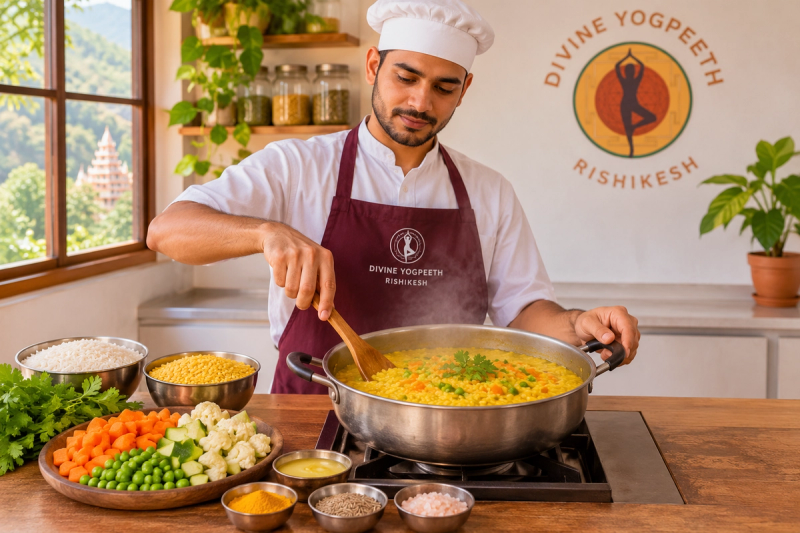
Khichdi made with rice, moong dal, vegetables, and spices is a convenient one-pot option. It is particularly useful when you want a simple meal with minimal preparation and cleanup.
You can change the ingredients to suit seasonal availability and your nutritional requirements. If you need more energy or protein, adjust the portion or add an appropriate side dish.
How to make mindful eating part of your routine
Use these simple steps at your next meal:
Check whether you are genuinely hungry before serving yourself.
Choose a portion that leaves you comfortably satisfied.
Eat at a pace that allows you to notice taste and fullness.
Avoid forcing yourself to finish food when you are already full.
Reflect on whether the meal kept you comfortably nourished for your next activity.
Do not turn these habits into a new source of anxiety. The purpose is to build awareness, not to judge every ingredient or feel guilty about eating differently from a traditional ideal.
5. Why Rishikesh Is a Meaningful Place to Explore Sattvic Food
Rishikesh has a long-standing association with yoga, meditation, pilgrimage, and spiritual learning. Its ashrams, yoga schools, vegetarian eateries, and local food traditions make it a natural setting in which to explore the relationship between daily habits and yoga practice.
In areas such as Tapovan and around Laxman Jhula, you may encounter simple vegetarian meals, fresh juices, lentil dishes, seasonal vegetables, and food prepared for yoga students.
Availability and preparation standards vary from establishment to establishment, so ask about ingredients, allergens, hygiene, and dietary requirements instead of assuming that every vegetarian restaurant follows sattvic principles.
Make food part of your daily rhythm
A structured yoga retreat can help you establish regular meal times, create space between meals and practice, and spend less time planning everyday logistics.
You can also explore these habits independently. Visit a local market, learn how a familiar dish is prepared, or set aside time to eat without your phone.
If you are visiting from abroad, remember that a sattvic diet may differ from your usual eating pattern. Travel, heat, changes in activity, and unfamiliar ingredients can all affect how you feel.
Choose safe drinking water, eat food that has been handled and cooked appropriately, and communicate allergies or dietary restrictions clearly. You can find additional practical guidance in this guide to yoga retreats in Rishikesh for international visitors.
The real value lies not in copying someone else's routine perfectly, but in discovering which sustainable habits help you practise comfortably and consistently.
6. Sattvic Cooking and Yoga Food Philosophy in a Yoga Teacher Training Course
When you study yoga in depth, food can become part of your learning rather than simply something arranged around your class schedule.
Yoga teacher training often includes philosophy, asana, pranayama, meditation, anatomy, and teaching methodology. Depending on the school and curriculum, you may also explore yogic lifestyle principles and how everyday choices relate to traditional teachings.
Understanding sattvic cooking can help you connect these concepts with ordinary life. Preparing a simple meal, eating at regular times, and observing your body's responses are practical ways to explore discipline without making food a rigid set of rules.
What should you look for in a yoga school?
If food philosophy is important to you, ask a prospective school specific questions before enrolling:
Are meals included in the course fee, and how many meals are provided each day?
Can the kitchen accommodate allergies, vegan preferences, or other dietary requirements?
Are meals prepared fresh, and can the school explain its approach to sattvic food?
Does the curriculum include yoga philosophy and yogic lifestyle practices?
Is there enough flexibility to meet individual nutritional needs?
These questions are more useful than relying on the word sattvic alone. A school may describe its meals as traditional or yogic, but you should understand what that means in practice.
A residential programme may provide more structure than studying independently, although the actual experience depends on the school's facilities, teachers, and timetable.
If you want a more structured foundation, explore the 200-hour yoga teacher training programme in Rishikesh and review the curriculum, accommodation arrangements, and meal provisions before making a decision.
Remember that a yoga teacher training certificate does not automatically qualify you to provide individualized medical nutrition therapy. If you want professional dietary guidance for a medical condition, consult an appropriately qualified healthcare professional or registered dietitian.
7. How to Follow a Sattvic Diet Without Compromising Nutrition
Traditional food philosophies can offer useful structure, but your diet still needs to provide enough energy, protein, essential fats, vitamins, and minerals.
A common mistake is to focus so heavily on purity or food restrictions that you unintentionally eat too little or eliminate important sources of nutrition.
You can approach sattvic eating thoughtfully while respecting your body's needs.
Avoid treating every food rule as universal
Different yoga traditions interpret sattvic food differently. Some emphasize vegetarianism and freshly cooked meals, while others apply additional restrictions to ingredients such as onion, garlic, fermented foods, or particular spices.
There is no single universally accepted menu followed by every yoga practitioner.
If you choose a vegetarian diet, plan adequate protein through foods such as lentils, beans, chickpeas, soy products, dairy products where suitable, nuts, and seeds. People following vegan diets should pay particular attention to vitamin B12 and other nutrients that may require fortified foods or supplementation.
Pay attention to portion size and energy
A light meal is not automatically a healthy meal. If you practise several hours daily, walk extensively, or have physically demanding work, you may need substantial portions and additional snacks.
Under-eating can contribute to fatigue, poor concentration, and inadequate recovery. These outcomes work against the goal of maintaining a sustainable yoga routine.
Adapt traditional practices to your circumstances
You do not need to avoid entire food groups unless there is a clear reason to do so. Instead, consider whether a meal is fresh, balanced, satisfying, and appropriate for your digestion and activity level.
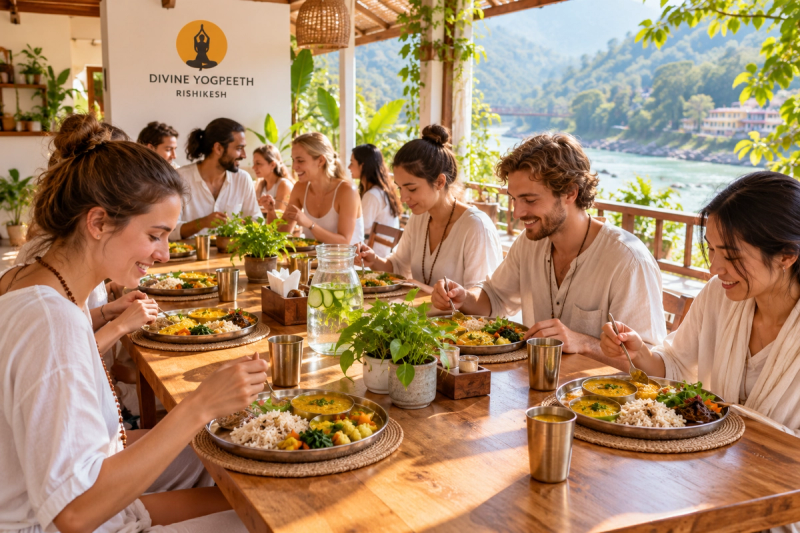
For example, a meal of dal, rice, cooked vegetables, yoghurt, and fruit can fit many of the practical principles associated with sattvic eating. If you avoid dairy, suitable alternatives can be included.
The guiding idea is balance, not perfection. Traditional concepts can inform your choices without replacing evidence-based nutritional guidance.
8. Begin Your Yoga and Food Exploration in Rishikesh
Understanding a food philosophy through reading is useful, but experiencing it alongside a regular yoga routine can make the ideas easier to apply.
A few days away from your usual schedule may give you time to observe your eating habits, practise meditation, and experiment with a simpler daily rhythm. A longer programme may offer more opportunities to study yoga philosophy alongside practical training.
If you are planning a short stay, consider a five-day yoga retreat in Rishikesh as one option to investigate. Confirm the programme schedule, meal arrangements, and whether dietary education or cooking activities are actually included before booking.
At Divine Yogpeeth, we welcome you to explore our yoga programmes and learning opportunities in Rishikesh when you are ready to learn more about yoga in a dedicated practice environment.
9. FAQs About Sattvic Cooking and Yoga Food Philosophy
What is the main principle of sattvic cooking?
The central idea is to choose and prepare food in a way that reflects traditional values of balance, freshness, moderation, and awareness. Practices vary between yoga traditions, and there is no single mandatory sattvic menu.
Can you eat rice and dal on a sattvic diet?
Yes. Rice and dal are common choices in many sattvic meal traditions. Together, they provide carbohydrates and plant-based protein, and they can be served with vegetables and other foods to create a balanced meal.
Are onion and garlic prohibited in sattvic cooking?
Some traditional schools avoid onion and garlic because of their interpretation of yogic food principles. Others use them. These restrictions are not universal, so follow the tradition you are studying without assuming every yoga school has the same rules.
Is a sattvic diet scientifically proven to improve meditation?
There is no strong scientific basis for claiming that a specifically defined sattvic diet automatically improves meditation or produces spiritual clarity. Balanced nutrition, adequate hydration, comfortable meal timing, and consistent practice can support well-being, but individual results vary.
Do you need to follow a sattvic diet to practise yoga?
No. Yoga does not require every practitioner to follow one strict dietary system. You can practise yoga while choosing a varied, nutritionally adequate diet that suits your health, culture, ethics, and personal circumstances.
10. Conclusion: Bring Sattvic Principles Into Your Everyday Meals
The sattvic cooking yoga food philosophy offers a practical way to reflect on your relationship with food, preparation, and daily habits. Its traditional emphasis on freshness, moderation, and awareness can complement your yoga practice without requiring perfection or unnecessary restrictions.
Start with one manageable change. Prepare a simple meal, eat without distractions, or pay attention to how meal timing affects your comfort during asana and meditation.
As you learn more, keep an open mind about the difference between traditional beliefs and established nutritional evidence. Your goal should be a sustainable routine that supports both your practice and your overall well-being.
If you want to explore these principles in a structured yoga environment, take the next step by reviewing our 200-hour yoga teacher training in Rishikesh. Check the curriculum, accommodation, and food arrangements, and choose a programme that fits your goals.
Your relationship with food does not need to be complicated. Begin with awareness, build consistency, and allow your everyday choices to support a balanced yoga practice.