.jpg)

Planning a yoga retreat Rishikesh foreigners guide? Get essential tips on visas, ashrams, and daily life. Find out how to prepare for your journey today!
Yoga Retreat Rishikesh Foreigners Guide: Everything You Need to Know
Planning your very first yoga retreat Rishikesh foreigners guide can feel incredibly overwhelming at first glance.
You are flying across the globe to practice in the worldwide capital of yoga, leaving your comfort zone far behind.
Stepping off the plane in India brings an entirely new culture, climate, and way of life.
You might not know what to expect upon arrival or how to navigate the strict ashram schedules.
This comprehensive guide breaks down every single detail you need to physically and mentally prepare for your journey.
You will learn exactly how to handle visas, what to pack, and how to stay perfectly healthy.
We will cover the unspoken cultural rules that every international student should respect.
By the end of this read, you will feel completely confident booking your ticket and packing your bags.
Your focus should remain entirely on your personal practice and spiritual growth.
Let the logistical worries fade away as we map out your entire Indian adventure step by step.
Preparing for Your Yoga Retreat Rishikesh Foreigners Guide: Visas and Arrival
Securing the correct paperwork is the crucial first step for any international traveler.
Almost all foreign nationals require a valid visa to enter India legally.
The easiest option is the Indian e-Visa, which you can apply for entirely online from home.
Ensure you use the official government website to avoid third-party scam fees and delays.
Apply at least thirty days before your departure date to avoid any last-minute stress or panic.
Print multiple physical copies of your approved e-Visa and your passport identification pages.
Indian immigration officials often request hard copies rather than scanning digital screens on your phone.
Booking your flights strategically will save you hours of exhausting ground travel upon arrival.
Most international practitioners fly directly into Indira Gandhi International Airport (DEL) in New Delhi.
From New Delhi, you have a few options to reach the Himalayan foothills safely.
The fastest and most comfortable method is a brief domestic flight to Jolly Grant Airport (DED) in Dehradun.
Dehradun is the closest airport to your final destination, sitting just forty-five minutes away by car.
You can easily hire a pre-paid taxi from Dehradun airport directly to your accommodation in Laxman Jhula.
If you prefer ground travel, you can book a private cab directly from New Delhi.
The drive takes roughly five to seven hours, depending heavily on highway traffic and weather.
Always arrange this taxi through a trusted provider or your chosen ashram in advance.
Once you arrive, getting a local SIM card should be your immediate priority for safety and navigation.
Airtel and Jio offer excellent cellular coverage across the region and very cheap data plans.
You will need your original passport, a printed visa copy, and a passport-sized photo to purchase a SIM card.
The Ministry of Ayush heavily promotes international wellness tourism, making the overall arrival process much smoother today than in previous decades.
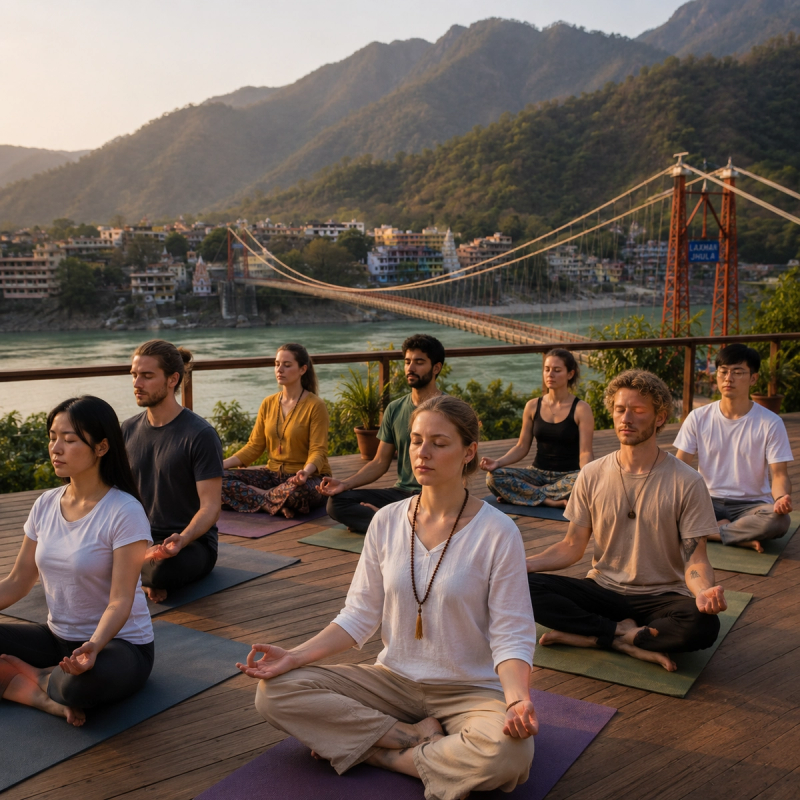
Planning Your Yoga Retreat Rishikesh Foreigners Guide: Styles and Durations
Choosing where to study dictates the entire rhythm of your upcoming trip.
The town is packed with hundreds of schools, ashrams, and independent teachers offering different lineages.
You must align your personal goals with the specific style taught at the facility you choose.
Traditional Hatha and Ashtanga Vinyasa are the most prominent and widely taught styles here.
If you want a highly structured, disciplined environment, look for traditional ashrams with strict rules.
If you prefer a gentler introduction with modern amenities, resort-style centers might fit your needs better.
Duration is another massive factor when planning your international trip.
Not everyone has the time or desire to commit to a rigorous month-long certification.
If your schedule is tight, a shorter immersion can still provide immense physical and mental benefits.
Shorter programs give you a structured taste of ashram life without overwhelming your nervous system.
You can easily start with a 3 Days Retreat to acclimatize to the environment and the time zone.
This allows you to learn basic pranayama, physical alignment, and meditation techniques safely under professional guidance.
For those seeking a deeper commitment, a month-long immersion requires serious mental preparation.
Programs like the 200-Hour Yoga Teacher Training demand intense daily focus and physical endurance.
You will spend up to ten hours a day engaged in active learning, practice, and theoretical study.
A typical day in a traditional setting starts long before the sun rises.
You will likely wake up around 5:30 AM for herbal tea and traditional nasal cleansing (Jal Neti).
The morning continues with intense physical practice, usually lasting ninety minutes to two hours.
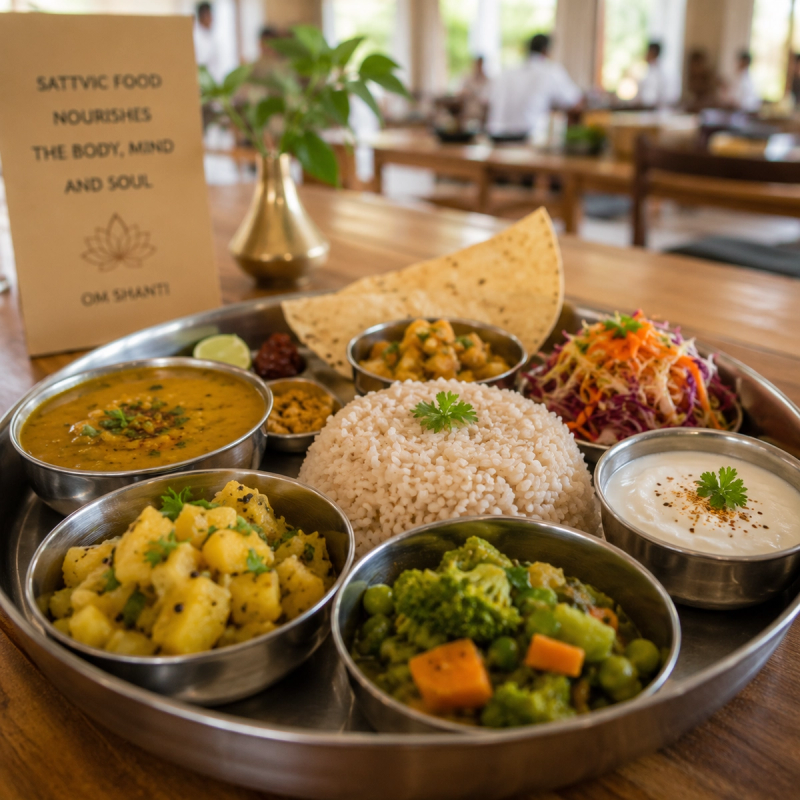
Breakfast follows, consisting of simple, vegetarian, Sattvic food designed specifically for easy digestion.
Afternoons are filled with philosophy lectures, intricate anatomy classes, or quiet self-study time.
Evenings conclude with gentle meditation, chanting, and a light, early dinner before mandatory silence.
This strict schedule is designed to detoxify your body completely and calm your restless mind.
Adjusting to this intense routine takes a few days, especially while battling severe jet lag.
Give yourself grace during the first forty-eight hours as your body adapts to the new demands.
Essential Packing List for International Students
Packing appropriately for India requires a careful balance between modesty, comfort, and practicality.
The climate varies drastically depending on the exact month you choose to visit.
Summers are incredibly hot and humid, while winter mornings in the foothills are surprisingly freezing.
Bring lightweight, breathable cotton clothing that covers your shoulders and knees entirely.
Leave your expensive, tight-fitting Western activewear at home, as it often draws unwanted stares in public markets.
Loose linen pants, long tunics, and comfortable t-shirts are the standard uniform for foreign students.
Footwear should be strictly functional and easy to remove quickly.
You will take your shoes off dozens of times a day when entering ashrams, temples, and cafes.
A sturdy pair of slip-on sandals or Birkenstocks will be your best friend during this trip.
Your medical kit needs to be comprehensive and well-stocked before you leave your home country.
Pack activated charcoal, high-quality electrolytes, and your preferred over-the-counter painkillers.
While local pharmacies carry excellent supplies, having your trusted brands brings immediate peace of mind at 2:00 AM.
Do not forget a universal power adapter to keep your devices charged.
A reliable power bank is essential, as the town occasionally experiences unexpected power outages during storms.
Finally, decide whether you want to bring your own mat or purchase one locally upon arrival.
Buying a mat in local shops supports the economy and saves massive amounts of luggage space.
Cultural Etiquette and Respectful Practice
India is a deeply traditional country with conservative values regarding public behavior and dress codes.
Understanding these cultural norms is essential for a respectful, frictionless, and smooth trip.
Clothing is the most immediate adjustment you will need to make upon stepping out of the airport.
Both men and women must keep their shoulders, chest, and knees fully covered in public spaces.
While sports bras and tight leggings are standard in Western studios, they are inappropriate on the streets here.
Wear loose clothing when walking through the local markets or crossing the suspension bridges.
Visiting local temples requires strict adherence to ancient customs and unspoken religious rules.
You must always remove your shoes completely before entering any sacred space or ashram grounds.
Many temples also strictly require you to cover your head with a scarf or shawl before entering the inner sanctum.
If a local priest offers you a blessing or holy food (Prasad), always receive it with your right hand.
The left hand is traditionally considered unclean in Indian culture and should never be used for eating or receiving gifts.
Physical contact in public is generally frowned upon in traditional Indian society.
Avoid hugging or touching members of the opposite sex when greeting them on the street.
Instead, press your palms together at your chest, bow your head slightly, and say "Namaste" as a greeting.
Photography should be handled with immense respect, caution, and common sense at all times.
Never take photos inside temple sanctums or of holy men (sadhus) without asking for clear verbal permission first.
Remember that your practice here is fundamentally a spiritual discipline, not just a physical fitness workout.
Many schools follow international curriculums, but the core delivery remains deeply rooted in local spiritual lineage.
Major organizations like Yoga Alliance help standardize the quality of instruction globally for foreign students.
However, the true essence of your education comes from surrendering completely to the local traditions.
Respect your teachers (gurus) by arriving to every class early and remaining utterly silent during lectures.
This deep level of respect transforms a standard vacation into a profoundly life-altering educational experience.
Health, Safety, and Dietary Adjustments
Staying physically healthy is the absolute foundation of a successful international study trip.
The most common challenge for foreign visitors is adjusting to the highly spiced local food and water.
You must absolutely never drink water directly from the tap during your entire stay.
Always consume reverse osmosis (RO) filtered water, which is generously provided by all reputable schools.
Carry a reusable steel or copper bottle to refill throughout the day, avoiding unnecessary plastic waste.
Your digestive system will encounter entirely new cooking methods and intense flavor profiles.
Start taking a high-quality probiotic supplement a full week before your flight departs.
Continue taking these probiotics daily throughout your entire stay to support your gut flora.
Stick to freshly cooked, steaming hot meals and avoid raw salads or unpeeled fruits from random street vendors.
If you do experience stomach trouble, colloquially known as "Delhi Belly," do not panic or stress.
Rest immediately, hydrate heavily with oral rehydration salts, and visit a local pharmacy for activated charcoal tablets.
General safety in the Laxman Jhula and Tapovan areas is quite high for international travelers.
Violent crime is extremely rare, but petty theft like pickpocketing can occasionally occur in crowded markets.
Keep your passport, credit cards, and large amounts of cash locked safely in your room at all times.
Solo female travelers should avoid walking alone in unlit, isolated areas late at night.
You will share the narrow streets with cows, wild monkeys, and stray dogs on a daily basis.
Cows are deeply sacred and generally docile, but always give them plenty of space when walking past.
Monkeys are highly notorious for stealing exposed food and anything shiny they can easily grab.
Never feed the monkeys and strictly avoid carrying visible food while walking across the suspension bridges.
If you feel overwhelmed physically or mentally, actively explore alternative holistic treatments available in town.
Programs like a Sound Healing Training Course can help recalibrate your stressed nervous system.
You can also seek out traditional Ayurvedic Therapy to soothe sore muscles after intense practice sessions.
Why Rishikesh Matters for Your Journey
You might wonder why millions of seekers actively bypass other beautiful destinations for this specific town.
The answer lies deeply rooted in thousands of years of spiritual history, geography, and myth.
The town sits squarely on the banks of the sacred Ganges River (Ganga), surrounded by mountains.
At this northern altitude, the river water is remarkably clean, vibrant, and energetically powerful.
Bathing in the Ganges is traditionally believed to wash away negative karma and completely purify the soul.
The surrounding Himalayan foothills create an atmosphere that is naturally conducive to deep meditation.
Sages, saints, and wandering ascetics have meditated in these exact caves and dense forests for millennia.
This unbroken lineage of intense practice has charged the atmosphere with a palpable, electric energy.
You can physically feel the profound stillness when you sit quietly by the riverbanks at dawn.
Beyond the spiritual weight, the international community aspect is a massive draw for foreigners.
You are instantly surrounded by thousands of like-minded individuals traveling from every corner of the planet.
Walking down the vibrant streets of Tapovan, you will hear dozens of different languages spoken simultaneously.
Cafes serve incredible organic, vegan food alongside traditional Indian chai, perfectly catering to the wellness crowd.
You can spend hours discussing ancient philosophy with strangers who quickly become your lifelong friends.
The town perfectly bridges the gap between ancient Eastern wisdom and accessible modern conveniences.
This unique blend makes it the absolute ideal location for your international education and personal growth.
Finding Your Path: A Trusted Educational Home
Choosing the right school from a massive distance requires immense trust and very careful research.
You want a facility that beautifully balances authentic teachings with safe, comfortable living conditions.
If you're considering training in Rishikesh, our team at Divine Yogpeeth offers a highly welcoming environment specifically designed for you.
We expertly handle the complex logistics of ashram life so you can focus entirely on your personal practice.
Our experienced, certified teachers guide you safely through both the physical and spiritual aspects of the curriculum.
You are never just a number; you are a highly valued member of our growing global family.
Frequently Asked Questions (FAQs)
Do I need prior experience before arriving?
Absolutely not. There are exceptional programs designed specifically for absolute beginners and highly advanced practitioners alike.
If you are completely new, inform your teachers immediately so they can offer appropriate physical modifications.
Starting your journey here ensures you learn correct alignment directly from the authentic source.
Simply avoid jumping into advanced teacher trainings if you have never stepped on a mat before.
How much spending money should I bring?
Your main expenses, including comfortable accommodation and daily food, are usually completely covered in your tuition fees.
You only need extra money for weekend excursions, local cafe visits, laundry services, and beautiful souvenirs.
Bringing the equivalent of two hundred to three hundred US dollars in cash is usually more than sufficient.
Reliable ATMs are widely available in the main market areas for any additional cash needs that arise.
Is it safe for solo female travelers?
Yes, this specific area is widely considered one of the safest destinations in all of India for solo women.
The local community is highly accustomed to respectful female travelers and international wellness tourists.
Simply practice standard global safety precautions, dress modestly at all times, and always trust your intuition.
Most high-quality programs pair you with trusted roommates or keep you within highly secure, gated facilities at night.
What is the best time of year to visit?
The most highly recommended months are February through April, and September through November.
During these specific windows, the weather is beautifully temperate, making early morning practice highly enjoyable.
Avoid the peak monsoon season in July and August, as heavy rains can cause frustrating travel delays.
December and January are incredibly beautiful but require warm winter clothing for the freezing morning temperatures.
Can I communicate effectively using only English?
English is practically the secondary official language in this specific tourist and wellness zone.
Every single teacher, cafe owner, and local shopkeeper speaks enough English to easily conduct daily business.
All major certification classes and retreats are taught entirely in English specifically for international crowds.
Learning a few basic Hindi phrases is deeply appreciated by locals but certainly not mandatory for your survival.
Conclusion: Ready to Begin?
Properly preparing for your yoga retreat Rishikesh foreigners guide requires organization, patience, and a radically open mind.
You are about to embark on an incredible adventure that will actively challenge you physically, mentally, and spiritually.
By securing your visa early, packing respectfully, and prioritizing your gut health, you eliminate the major travel stressors.
The initial culture shock will inevitably happen, but it quickly gives way to profound, lasting personal growth.
Embrace the early morning wake-up calls, the unfamiliar spices, and the intense heat of the practice room.
The challenges you face are precisely what make this specific destination so incredibly rewarding and famous worldwide.
You are not just learning physical postures; you are learning an entirely new, holistic way to live.
Ready to begin? Explore our 5 Days Retreat and take the first confident step toward your new journey today.