.jpg)

Looking for a reliable yoga teacher training beginners FAQ? Find honest answers about costs, daily schedules, physical prep, and more. Discover your path!
Yoga Teacher Training Beginners FAQ: Everything You Need to Know Before Starting
Searching for a reliable yoga teacher training beginners FAQ usually means you are balancing deep excitement with a healthy dose of natural anxiety. Taking a month away from your normal routine to study an ancient practice is a massive commitment of time, energy, and resources. You likely have dozens of questions running through your mind about your physical readiness, the daily schedule, and what living in an ashram environment actually entails.
The reality is that almost every student arrives on their first day feeling a mix of anticipation and nerves. You are stepping into an intensive environment designed to challenge your body, expand your mind, and completely shift your perspective on wellness.
This guide is designed to strip away the mystery and give you straight, honest answers. We will walk through the physical demands, the mental preparation required, the logistical realities of traveling to India, and the actual day-to-day experience of an intensive certification course. By the end of this read, you will have a clear, grounded understanding of what to expect and how to prepare for this incredible journey.
Your Essential Yoga Teacher Training Beginners FAQ on Physical Requirements
One of the most common fears prospective students harbor is whether their physical practice is strong enough. Many people mistakenly believe they need to perform advanced arm balances or deep backbends before enrolling. This is completely false.
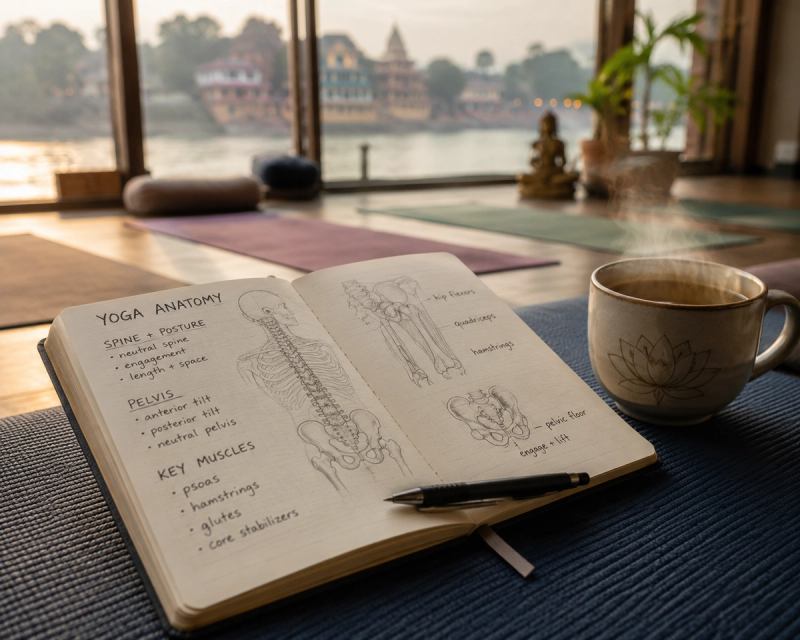
A quality training program is designed to teach you how to practice safely, not to judge your current level of flexibility. You are there to study alignment, anatomy, and modifications. The focus is on understanding the mechanics of each posture, identifying muscular engagement, and learning how to adapt poses for different body types.
You will spend hours breaking down fundamental poses like downward-facing dog or warrior two. This detailed deconstruction often means you will sweat more holding a basic lunge than you ever did flowing quickly through a studio class back home. Building physical stamina is important, but absolute perfection is an illusion.
To prepare your body, focus on consistency rather than intensity in the weeks leading up to your course. Practice four to five times a week, mixing dynamic vinyasa classes with slower restorative or yin sessions. Getting your muscles accustomed to frequent movement will significantly reduce the inevitable soreness during your first week.
It is also crucial to research the standards set by governing bodies regarding physical curriculum. Organizations like Yoga Alliance provide clear guidelines on the number of hours dedicated to asana practice, teaching methodology, and anatomy. Reviewing these standards can help you understand exactly what physical benchmarks you will be working toward during your course.
Remember to prioritize joint health and listen to your body. Injuries happen when ego takes over. A training environment requires you to check your ego at the door, embrace modifications, and rest when your nervous system signals fatigue.
Navigating Yoga Teacher Training Beginners FAQ: Mental and Emotional Prep
While the physical practice is demanding, the mental and emotional aspects often surprise students the most. You will be meditating daily, studying ancient philosophy, and spending vast amounts of time in self-reflection. This combination naturally brings suppressed emotions to the surface.
Studying texts like the Yoga Sutras of Patanjali introduces you to the eight limbs of yoga. You quickly realize that the physical postures (asana) make up only a tiny fraction of the overall practice. The ethical guidelines (yamas and niyamas) challenge you to examine how you interact with the world and yourself.
This deep philosophical study, combined with physical fatigue, can create days where you feel emotionally raw. It is completely normal to experience moments of frustration, homesickness, or self-doubt. The key is to view these moments as opportunities for growth rather than signs of failure.
To prepare mentally, start incorporating a short, daily meditation practice before you leave home. Even five to ten minutes of sitting in silence will train your mind to focus and observe thoughts without judgment. Establishing this baseline will make the hour-long meditation sessions during your course feel much more approachable.
Bring a dedicated journal to document your thoughts, breakthroughs, and challenges. Writing is a powerful tool for processing the heavy influx of new information and emotional shifts. You will look back on these pages years later and see exactly how much you evolved during those four weeks.
Finally, prepare for a significant digital detox. While most schools offer Wi-Fi, the intensive schedule leaves little room for scrolling social media. Embrace this disconnection from the digital world as a rare chance to connect fully with the people around you and your own internal landscape.
Understanding the Core Curriculum and Daily Schedule
The daily schedule of an intensive certification course is rigorous, highly structured, and designed to maximize learning over a short period. Days typically begin before sunrise, requiring discipline and a willingness to adapt your normal sleep patterns.
A standard day often starts around 6:00 AM with cleansing practices (shatkarmas), followed by pranayama (breathwork) and meditation. By 7:00 AM, you are usually moving through a vigorous 90-minute asana practice, often Ashtanga Vinyasa or strong Hatha. This morning session sets the tone for the day, waking up the nervous system and building serious physical heat.
Breakfast follows the morning practice, offering a chance to refuel and connect with your peers. The middle of the day is heavily focused on academics. You will attend comprehensive lectures on human anatomy, exploring skeletal structures, muscle groups, and the biomechanics of movement.
Philosophy and teaching methodology classes usually fill the afternoon blocks. You will learn how to sequence classes safely, find your teaching voice, and offer hands-on adjustments. Understanding the traditional roots of these practices is vital, and many programs align their historical teachings with guidelines recognized by the Ministry of Ayush to preserve authenticity.
The late afternoon brings a second physical practice, which is typically slower and highly focused on structural alignment. This session allows you to apply the anatomical concepts learned earlier in the day directly to your body. You will use props, partner up for adjustments, and break down the precise engagement required for specific postures.
Evenings conclude with dinner, a calming meditation or chanting session, and then dedicated study time. You will have reading assignments, sequence planning, and journaling to complete before bed. The schedule is relentless, but this immersion is exactly what accelerates your learning and confidence.
Practical Logistics: Health, Packing, and Finance
Traveling to India for an intensive course requires careful logistical planning. Securing the correct visa is your first priority. Most international students utilize the e-Visa system, which is efficient but requires precise documentation. Ensure your passport has at least six months of validity remaining from your date of entry.
Budgeting for your trip goes beyond the tuition fee. You need to account for flights, travel insurance (which is non-negotiable), visa fees, and spending money for weekend excursions, massages, or extra snacks. While living in an ashram environment covers your basic needs, having a financial buffer reduces stress significantly.
Packing correctly will make your day-to-day life much more comfortable. Bring lightweight, breathable clothing that covers your shoulders and knees to respect local cultural norms. The weather varies drastically depending on the season, so layering is essential. Bring a warm sweater for chilly early morning meditations.
Your health is paramount during this intensive month. Bring a well-stocked medical kit containing electrolytes, activated charcoal, probiotics, and basic first aid supplies. Transitioning to a new environment, a different diet, and an intense physical regimen can temporarily weaken your immune system.
Hydration is critical, especially when practicing twice a day in a warm climate. Only drink filtered or bottled water, and be mindful of consuming raw vegetables or ice outside of your school's dining hall. Taking preventative health measures ensures you do not miss valuable hours of training due to illness.
Why Rishikesh? The Perfect Place for Your Yoga Journey
Choosing the right location for your training deeply impacts your overall experience. Rishikesh is globally recognized as the birthplace of yoga, offering an atmosphere that is impossible to replicate anywhere else in the world.
Situated in the foothills of the Himalayas and split by the sacred Ganga River, the natural environment alone is deeply inspiring. The air carries the scent of incense, the sound of temple bells rings out constantly, and sadhus (holy men) walk the streets alongside international travelers.
Studying here connects you to an unbroken lineage of teachers and practitioners. You are learning in the exact environment where these ancient practices were developed and refined over thousands of years. The spiritual energy of the city actively supports the introspective work you are doing in your classes.
Beyond the spiritual appeal, Rishikesh offers a vibrant community of like-minded individuals. The cafes in Tapovan and Laxman Jhula are filled with students comparing notes on anatomy, discussing philosophy, and forming lifelong friendships. You will never feel alone in your journey when surrounded by this global community.
Finding Your Path with Divine Yogpeeth
If you're considering training in Rishikesh, Divine Yogpeeth offers an authentic, deeply supportive environment right on Laxman Jhula. Our programs are designed to nurture beginners while maintaining rigorous academic and physical standards.
Whether you are looking for a complete certification or a shorter immersion, we provide options that fit your specific goals. Taking that first step toward a deeper practice is profound, and exploring our 100-Hour Yoga Teacher Training is a brilliant way to build a foundational understanding before committing to a full month.
Top Yoga Teacher Training Beginners FAQs Answered
1. Am I 'good enough' at yoga to take a 200-hour course?
Yes. If you have a consistent practice of at least a few months and an open mind, you are ready. The curriculum is built to teach you the foundations from the ground up. You do not need to be an acrobat; you just need to be a dedicated student willing to learn, make mistakes, and ask questions.
2. What is the food like during the program?
Most traditional ashrams and schools serve a pure vegetarian, sattvic diet. This means the food is fresh, easily digestible, and prepared without heavy spices, garlic, or onion. Meals typically include plenty of lentils (dal), rice, fresh vegetables, chapati, and fruit. This diet is specifically designed to support intense physical practice and mental clarity without weighing your body down.
3. Can I take the course just for personal growth, even if I never want to teach?
Absolutely. A large percentage of students enroll purely to deepen their own physical practice, understand anatomy, and study philosophy. The intensive nature of the course facilitates massive personal growth, emotional healing, and self-discovery. The skills you learn will benefit your daily life, regardless of whether you ever sit at the front of a classroom.
4. How do I handle the physical exhaustion during the first week?
The first week is notoriously difficult as your body adapts to practicing for three to four hours a day. The secret is active recovery. Prioritize sleep over socializing, stay aggressively hydrated with electrolytes, and do not push into pain during your physical practice. Use your rest days to truly rest—book an Ayurvedic massage, read quietly, and let your muscles repair.
5. What if I don't have a full month to dedicate right now?
If a 26-day commitment is impossible due to work or family obligations, there are excellent alternatives. You can begin with a shorter immersion to experience the ashram lifestyle and deepen your knowledge. For instance, attending a 5 Days Retreat offers a profound reset and a taste of the daily schedule without the pressure of exams. Alternatively, you might explore specialized modalities like our Sound Healing Training Course to expand your skill set in a shorter timeframe.
6. Will I learn about healing and modifications for injuries?
Yes, this is a crucial part of the curriculum. Anatomy classes will heavily focus on safe alignment and how different body mechanics dictate posture variations. Furthermore, you will be introduced to broader concepts of holistic health. If you have a specific interest in healing modalities, you might later explore dedicated Yoga Therapy programs to understand how to work safely with various physical limitations.
Take the Next Step in Your Journey
Completing a certification course is an incredibly rewarding challenge that will shift how you view your body, your mind, and your potential. The key is to arrive prepared, stay humble, and trust the process. You now have the essential yoga teacher training beginners FAQ answers needed to make an informed, confident decision.
Ready to begin? Explore our complete 200-Hour Yoga Teacher Training program and take the first step toward transforming your practice today.