.jpg)

Proper yoga teacher training India preparation starts here. Discover how to physically and mentally prep for Rishikesh, what to pack, and what to expect now!
Yoga Teacher Training India Preparation: How to Get Ready for Your Journey
Proper yoga teacher training India preparation is the secret difference between simply surviving your course and deeply enjoying every moment of it. Stepping onto an ashram in Rishikesh brings a unique mix of high excitement and genuine nerves.
You are about to commit to long hours of physical practice, extensive theoretical study, and a completely new cultural environment. Many students arrive expecting a typical studio schedule, only to feel instantly overwhelmed by the intensity of traditional ashram life.
Your success does not depend on your ability to perform a perfect handstand or sit in a flawless lotus pose. True readiness comes from understanding the daily rhythm you are stepping into and adjusting your habits before you board your flight.
By taking the time to condition your body, organize your belongings, and set your expectations, you create a solid foundation for your practice. This guide covers everything you need to know before you arrive on the banks of the Ganga.
1. Physical Yoga Teacher Training India Preparation
Your body needs time to adapt to the rigorous demands of a month-long intensive course. A traditional ashram schedule often requires four to six hours of physical movement daily, split between dynamic asana, pranayama, and alignment workshops.
Build Consistency Over Complexity
Instead of pushing yourself to master advanced or acrobatic postures, focus entirely on the consistency of your practice. Try to step onto your mat five to six days a week in the month leading up to your departure.
Practicing for ninety minutes without interruption trains your nervous system for the endurance required in India. If you currently only practice flowing vinyasa, start incorporating static holds to build muscular endurance.
Your muscles and joints will thank you when you face the inevitable soreness of week one. If you want a taste of a shorter intensive schedule before committing to a full month, joining a 3 Days Retreat can be a great way to test your physical baseline.
Prepare for Long Seated Sessions
Many students are surprised to discover that the hardest physical challenge is not the asana practice, but the seated meditation and lectures. Sitting cross-legged on the floor for hours requires strong back extensors and open hip flexors.
Begin practicing your floor-sitting stamina at home right now. Swap your desk chair for a meditation cushion for at least thirty minutes a day while working or reading.
Stretching your hips with poses like pigeon and baddha konasana will prevent lower back pain during long philosophy classes. Remember, a globally recognized body like Yoga Alliance sets strict hours for theoretical learning, meaning you will spend significant time studying anatomy and philosophy.
Transition to a Sattvic Diet Early
The food served at traditional Indian ashrams follows sattvic principles—meaning it is strictly vegetarian, mild, and free from heavy spices, onion, and garlic. If your current diet relies heavily on processed foods, heavy meats, or excessive caffeine, start cutting back now.
Weaning yourself off coffee two weeks before your flight helps you avoid severe withdrawal headaches during your first week of training. Begin eating lighter, plant-based meals to prepare your digestive system for the local cuisine.
Hydration is just as crucial; begin drinking more water daily to prep for the heat and humidity of the subcontinent.
2. Cultivating Mental and Emotional Readiness for Your Course
The physical demands of a YTT are obvious, but the emotional intensity often catches students off guard. Stripping away your normal routines, comforts, and distractions leaves you face-to-face with your internal mental landscape.
Embrace the Beginner’s Mindset
Leave your ego at the airport. Whether you have been practicing for two years or ten, you will encounter concepts, alignments, and teaching methodologies that challenge what you previously learned.
Approach every class with a completely empty cup. If a teacher corrects a posture you thought you had mastered, receive the adjustment with gratitude rather than defensiveness.
Traditional Indian teachers focus heavily on foundational alignment and energetic pathways, which may differ significantly from Western studio styles. Being open to these differences allows you to absorb the true depth of the practice.
Practice Digital Minimalism
Ashram life is designed to minimize external noise so you can focus entirely on your internal growth. Start practicing digital minimalism at home by turning off your phone an hour before bed.
During your training, you will have very little free time, and spending it scrolling through social media drains the energy you need for recovery. Setting boundaries with friends and family back home regarding your availability will alleviate the pressure to constantly reply to messages.
Some students even choose to delete specific apps for the duration of their course. This intentional disconnect fosters deeper connections with your fellow students and your own practice.
Emotional Detox Expectations
As you release physical tension through intense daily asana and breathwork, stored emotional energy often rises to the surface. It is incredibly common for students to experience unexplained tears, frustration, or sudden waves of joy during their training.
Do not fight these emotional releases. Acknowledge them as a natural, necessary part of the purification process.
Having tools to process these feelings is vital; if you are currently navigating deep emotional blocks, exploring preliminary Therapy modalities beforehand can provide you with excellent coping mechanisms. Trust the process and lean on your teachers when the emotional weight feels heavy.
3. Essential Packing List for Your Ashram Stay

Knowing exactly what to pack minimizes travel anxiety and ensures you remain comfortable in a completely different climate. Overpacking is a common mistake, but forgetting daily essentials can disrupt your focus.
Appropriate Clothing for the Ashram
India is a conservative country, and ashrams enforce strict dress codes to maintain a respectful, spiritually focused environment. Pack lightweight, breathable cotton or linen clothing that covers your shoulders, chest, and knees.
Tight leggings are fine for the practice hall, but you should bring loose pants or long tunics for dining, walking around town, and attending philosophy lectures. Darker colors are highly recommended, as the dust and sweat will quickly ruin pristine white workout gear.
Remember that laundry is often hand-washed or done by local services, so quick-dry fabrics will make your daily routine much easier. Bring a warm shawl or fleece for early morning meditations, as the Himalayan air feels crisp before sunrise.
Essential Toiletries and Medications
While Rishikesh has many pharmacies, bringing your preferred brands of essential items saves you time and stress. Pack high-quality sunscreen, mosquito repellent, and a robust first-aid kit containing rehydration salts.
Electrolytes are absolutely critical; the combination of intense physical exertion and a different climate depletes your minerals rapidly. Bring activated charcoal or probiotics to help your stomach adjust to the new environment and water supply.
To understand more about integrating local wellness practices, you can explore guidelines from the Ministry of Ayush, which oversees traditional medicine in India. Keep your medical kit small but comprehensive.
Study Materials and Daily Gear
You will be taking extensive notes daily, so pack high-quality pens, highlighters, and two sturdy notebooks. A reusable, insulated water bottle is mandatory to keep your water cool during hot afternoon lectures.
Bring a reliable power bank, as power outages are a normal part of life in the foothills of the Himalayas. Finally, a small headlamp or flashlight is invaluable for navigating the ashram grounds before sunrise or during an evening power cut.
Do not bring your most expensive jewelry or electronics; ashram life is about simplicity, and keeping track of valuables is an unnecessary distraction.
4. Navigating Ashram Etiquette and Cultural Norms
Living in an Indian ashram is vastly different from staying in a hotel or a western retreat center. Understanding local customs ensures you show respect to your teachers and integrate smoothly into the community.
Understanding the Guru-Shishya Tradition
In Indian culture, the relationship between teacher (Guru) and student (Shishya) is built on deep reverence. Always greet your teachers respectfully, often with a slight bow and the phrase "Namaste."
Never point your feet at a teacher, an altar, or a sacred text, as the feet are considered the lowest and most impure part of the body. If a teacher is speaking, wait for them to finish completely before asking a question, and approach disagreements with humility.
This traditional dynamic fosters a disciplined environment where knowledge is passed down directly and authentically.
Modesty and Respect in Daily Life
Modesty extends beyond your clothing into your behavior and interactions. Public displays of affection are culturally inappropriate in India, especially within the sacred confines of an ashram.
Meals are typically eaten in a communal dining hall, often seated on the floor. It is customary to eat with your right hand only, as the left hand is traditionally reserved for personal hygiene.
Always take off your shoes before entering any practice hall, temple, or dining area. Following these simple rules demonstrates your willingness to honor the culture hosting you.
The Power of Mauna (Silence)
Many YTT programs observe a period of silence, known as Mauna, usually from the end of evening meditation until breakfast the next morning. This is not a punishment, but a powerful tool for energy conservation.
Talking constantly drains your vital energy (prana). Observing silence allows your mind to digest the day's physical and intellectual lessons without the distraction of small talk.
Respecting the silence of others is crucial; if you must communicate during Mauna, use simple gestures or write a brief note. Embrace the quietness as a rare opportunity to simply exist without the need to perform or entertain.
Why Rishikesh is the Ultimate Destination for Your Practice
Choosing where to complete your training is a monumental decision, but Rishikesh holds a unique frequency that cannot be replicated elsewhere. Known globally as the Yoga Capital of the World, its history is deeply intertwined with the origins of the practice.
The city rests at the foothills of the mighty Himalayas, cut through by the emerald waters of the sacred Ganga River. For thousands of years, sages, saints, and ascetics have meditated in these surrounding caves, charging the atmosphere with profound spiritual energy.
Practicing here means you are stepping into a living, breathing tradition rather than a commercialized fitness trend. The constant sound of temple bells, the evening Ganga Aarti ceremonies, and the community of global seekers create an unmatched environment for self-discovery.
When you feel exhausted during week three of your training, simply walking down to the riverbanks can instantly restore your sense of purpose. The city itself becomes one of your greatest teachers.
Your Trusted Guide on the Banks of the Ganga
If you are currently evaluating schools, finding an authentic environment that supports both traditional teachings and modern understanding is critical. You want a space that challenges you physically while holding you safely during emotional shifts.
At Divine Yogpeeth, we blend the ancient wisdom of Himalayan yogis with rigorous, structured curriculum design. If you are seeking a foundational stepping stone, our 100-Hour Yoga Teacher Training provides a perfect introduction to ashram life.
We are dedicated to ensuring your transition into this lifestyle is seamless, supportive, and completely life-changing.
Frequently Asked Questions (FAQs)
Do I need to be an advanced practitioner to join?
Absolutely not. A YTT is designed to teach you how to practice and how to instruct, not to test your acrobatic skills. As long as you have a consistent foundational practice and a willingness to learn, you are ready.
Is it safe to travel to Rishikesh alone?
Yes, Rishikesh is widely considered one of the safest destinations in India for solo international travelers. The town is highly accustomed to foreign visitors, and the ashram environment provides a secure, structured, and communal living space from the moment you arrive.
How do I handle the physical intensity?
Listen to your body carefully. There is a sharp difference between the discomfort of muscle growth and the pain of an impending injury. Utilize your rest days for actual rest, stay aggressively hydrated, and never force a posture just to keep up with the person on the mat next to you.
What happens if I get sick during the training?
Minor stomach upsets or fatigue are common as your body adjusts to the climate and diet. Our staff is highly experienced in supporting students through these adjustments, and excellent medical care or pharmacies are immediately available in the Tapovan area if needed.
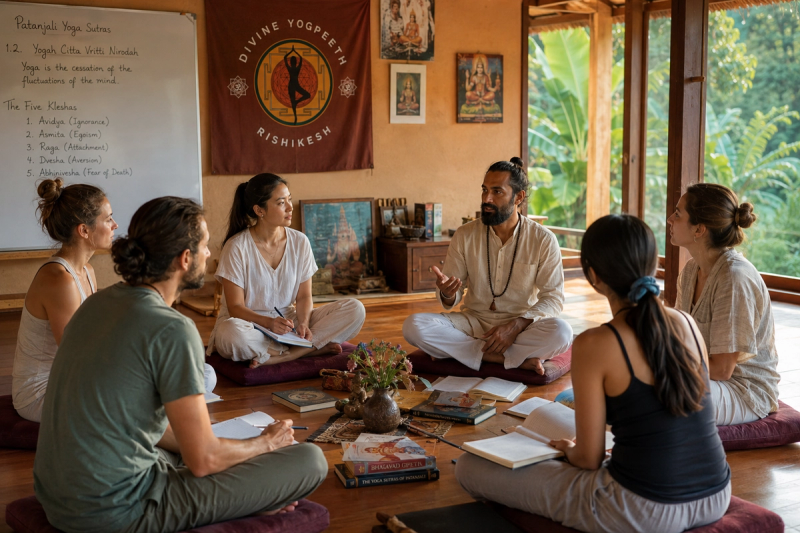
Conclusion + Your Next Step
Thorough yoga teacher training India preparation allows you to bypass the initial shock of ashram life and dive straight into the profound benefits of the practice. By preparing your body, packing intelligently, and adopting a humble mindset, you set yourself up for a phenomenal experience.
The journey to the yoga capital is not just about earning a certificate; it is about rewriting your understanding of yourself. The discipline you build now will carry you through every early morning wake-up bell and every challenging posture.
Are you ready to commit to your personal evolution? Explore our 200-Hour Yoga Teacher Training to build your foundation, or elevate your holistic skills with our specialized Sound Healing Training Course today.