.jpg)

Wondering about sound bath beginners what to expect? Discover how vibrational healing reduces stress and promotes deep relaxation. Learn more today.
Sound Bath Beginners What to Expect During Your First Session
If you are researching sound bath beginners what to expect, you are likely seeking a reliable way to calm your nervous system and find mental clarity. Entering a room filled with brass bowls, gongs, and chimes might feel slightly intimidating at first, but the reality is incredibly soothing. You do not need any prior meditation experience, nor do you need to hold complex yoga postures. Your only requirement is to lie down, close your eyes, and allow the resonant frequencies to wash over you. This profound practice uses acoustic vibrations to shift your brainwaves, helping you transition from a state of active stress into deep, restorative peace.
Many people discover this modality when traditional seated meditation feels too difficult. When you sit in silence, your mind often races with daily anxieties. During a sound healing session, the auditory stimulus gives your brain something gentle to focus on. The echoing overtones create a predictable, rhythmic anchor that naturally guides your consciousness inward. As the frequencies fill the space, you will likely feel a physical sensation of heavy relaxation spreading through your muscles.
This comprehensive guide will break down exactly what happens during these sessions. We will explore the instruments used, the physical sensations you might feel, and the mental shifts that occur. By the time you finish reading, you will feel completely prepared and confident to step onto the mat and embrace the healing power of vibrational medicine.
Decoding Sound Bath Beginners What to Expect Physically
Understanding sound bath beginners what to expect starts with the physical body. When the practitioner strikes the first singing bowl, you will immediately notice that sound is not just heard—it is felt. The vibrations travel through the air and interact with your physical form. Because the human body is composed primarily of water, it acts as an excellent conductor for these acoustic waves.
In the first ten minutes, you might experience a subtle tingling sensation in your extremities. This is completely normal and indicates that your nervous system is beginning to down-regulate. As the session progresses, your heart rate will naturally begin to slow down. Your breathing will become deeper and more rhythmic without any conscious effort on your part. Many participants describe a feeling of being pleasantly anchored or "heavy" on their yoga mat. This physical grounding is a direct result of your brain shifting from the beta state (waking consciousness and logical thinking) into the alpha and theta states (deep relaxation and light sleep).
It is also common to experience shifts in body temperature. You might feel a sudden wave of warmth or a slight chill as your circulation responds to the deep state of rest. This is why instructors often provide blankets before the session begins. If you want to dive deeper into the specific physiological responses triggered by different frequencies, reading about Singing Bowl Sound Healing: 7 Proven Ways It Restores You will give you excellent context on how these ancient tools interact with cellular health.
Recent scientific literature supports these physical shifts. Studies published on PubMed have shown that therapeutic sound and vibrational therapy can significantly reduce tension and lower blood pressure, proving that the physical relaxation you feel is a documented physiological response.
Navigating Your First Sound Bath Experience Mentally
While the physical relaxation is profound, the mental shifts during your first sound bath experience are often what keep people coming back. When you first lie down, your mind will probably still be processing the events of your day. You might wonder if you are doing it right, or you might feel restless. Give yourself permission to have these thoughts. The goal is not to force your mind into absolute silence, but rather to observe the sounds as they naturally pull your attention away from your internal dialogue.
As the overlapping tones of gongs and bowls create a continuous wash of sound, you will likely enter a state known as a hypnagogic trance. This is the magical space right between wakefulness and sleep. In this state, you remain aware of the room and the music, but your conscious mind takes a back seat. You might experience vivid visualizations, recall forgotten memories, or suddenly find the solution to a problem that has been bothering you. The frequencies help bypass the analytical mind, allowing your subconscious to gently process trapped emotions.
Sometimes, beginners experience an unexpected emotional release. You might feel a sudden urge to cry, or conversely, a wave of unexplained joy. Because sound vibrations can help release tension stored deep within our muscle memory, these emotional fluctuations are a natural and healthy part of the clearing process. If you find yourself struggling with a busy mind during your initial sessions, exploring Gong Bath Meditation First Session: 7 Ultimate Benefits can help you understand how intense, crashing frequencies are specifically used to break up stubborn thought patterns.
The Instruments Behind Vibrational Medicine
A crucial aspect of understanding sound bath beginners what to expect involves familiarizing yourself with the tools of the trade. A well-trained practitioner uses a carefully curated collection of instruments, each serving a specific therapeutic purpose.
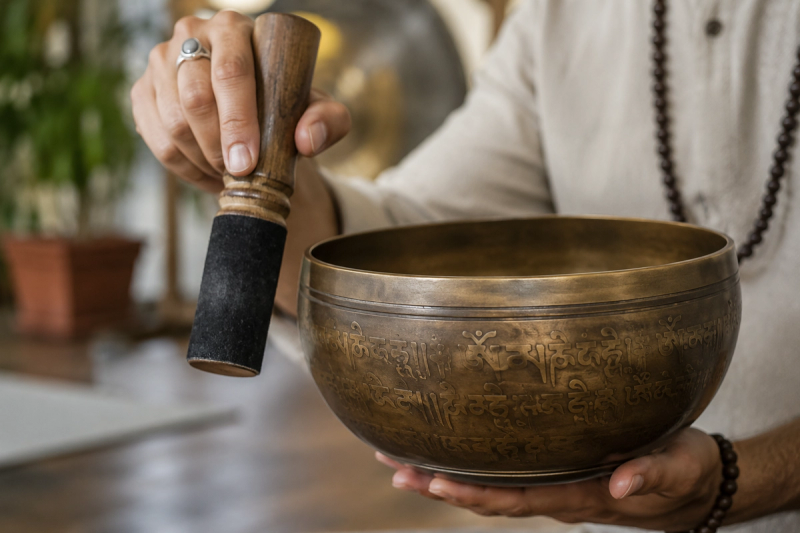
Tibetan singing bowls are the most recognizable element. Crafted from a specific alloy of metals, these bowls produce rich, grounding overtones. When struck or sung (by dragging a mallet around the rim), they emit a frequency that resonates deeply with the lower half of the body, promoting feelings of safety and stability. Crystal bowls, on the other hand, are made from pure quartz. They produce a clear, piercing, and highly focused tone that is often associated with clearing the mind and activating the upper energy centers.
Gongs provide a completely different dynamic. While bowls offer steady, sustained notes, gongs create complex, crashing waves of sound that can feel physically intense. A skilled gong player builds the sound gradually, creating a sonic envelope that completely surrounds you. This intense vibration is incredibly effective at clearing stagnant energy.
Chimes, rain sticks, and ocean drums are frequently used toward the end of a session. Their high-pitched, gentle frequencies help slowly guide your brainwaves back to a waking state, mimicking the sounds of nature. To learn more about how these various instruments are incorporated into a structured healing protocol, you can read about the comprehensive approaches offered in our Therapy programs.
Preparing Your Body and Mind for the Session
Proper preparation can significantly enhance your first experience. Unlike an active vinyasa yoga class, you will be entirely stationary for 45 to 90 minutes. Therefore, your comfort is the absolute highest priority.
First, consider your clothing. Wear layers of soft, non-restrictive fabrics. Since your body temperature will likely drop as you enter deep relaxation, having a sweater and warm socks is highly recommended. Avoid wearing anything with tight waistbands, heavy zippers, or restrictive collars that might distract you once you lie down.
Second, pay attention to your hydration and digestion. It is best to arrive well-hydrated, as water helps conduct the healing vibrations through your body. However, avoid drinking a massive amount of water immediately before the class, as a full bladder will interrupt your meditation. Similarly, avoid eating a heavy meal within two hours of the session. A full stomach directs your body's energy toward digestion rather than cellular repair and relaxation.
Finally, arrive at the studio at least ten minutes early. Rushing into the room at the last minute triggers your sympathetic nervous system, putting you in a state of fight-or-flight. Giving yourself time to settle onto your mat, arrange your props (like bolsters under your knees and a pillow for your head), and take a few deep breaths will ensure you get the absolute most out of the experience.
The Aftermath: What Happens When the Music Stops
The benefits of a session extend far beyond the time you spend on your mat. When the practitioner rings the final gentle chime to signal the end of the practice, they will guide you to slowly invite movement back into your fingers and toes. Take your time sitting up. Rushing this transition can leave you feeling dizzy or disoriented, similar to waking up too quickly from a deep nap.
For the rest of the day, you will likely notice a profound sense of calm. Your baseline stress levels will be lower, and you may find that things that usually trigger anxiety simply bounce off you. Many practitioners advise drinking plenty of water over the next 24 hours to help flush out any physical or emotional toxins released during the deep rest phase.
One of the most universally reported benefits is a dramatic improvement in sleep quality that night. Because the acoustic waves help regulate your nervous system and balance your circadian rhythm, you will likely fall asleep faster and enjoy uninterrupted, deep sleep. For a closer look at the science of auditory relaxation and rest, read through Sound Therapy Sleep Insomnia Relief: 7 Ultimate Truths.
Why Rishikesh Elevates the Practice
Practicing any form of yoga or meditation in Rishikesh offers an experience that simply cannot be replicated anywhere else in the world. Situated on the banks of the sacred Ganga River and nestled in the foothills of the Himalayas, this city holds an intense spiritual gravity.
When you practice here, you are not just lying in a standard studio; you are participating in a tradition that has been cultivated in these specific mountains for thousands of years. The ambient sounds of the city—the distant ringing of temple bells, the chanting of mantras, and the rush of the river—often blend seamlessly with the instruments in the room, creating an authentic and highly localized acoustic environment.
The air quality, the spiritual dedication of the community, and the sheer natural beauty of Laxman Jhula and Tapovan create an ideal container for deep emotional and physical release. Organizations like Yoga Alliance recognize the unparalleled depth of training and practice available in this region, which is why thousands of international seekers travel here annually. To understand exactly how this environment accelerates your healing process, explore Sound Healing Benefits: 7 Ultimate Ways It Transforms You.
Integrating Vibrational Healing into Your Life
If you are considering stepping away from your daily routine to truly focus on your well-being, practicing in Rishikesh is an unmatched choice. Divine Yogpeeth offers a supportive, authentic environment where you can safely explore these ancient modalities under the guidance of highly experienced masters.
Whether you are looking to simply reset your nervous system or you want to deeply understand the mechanics of acoustic therapy, we have a path for you. If you want to experience the profound rest of these sessions while disconnecting from the modern world, joining our 3 Days Retreat is the perfect introduction. For a complete overview of our sanctuary and offerings, you can always visit our Home page to explore your options.

Frequently Asked Questions
Do I need to know how to meditate?
Absolutely not. This is one of the most accessible forms of mindfulness available. The overlapping frequencies naturally guide your brain into a meditative state without requiring you to actively force your mind to be still. It is a passive practice where the instruments do the heavy lifting for you.
What if I fall asleep during the class?
Falling asleep is incredibly common and perfectly acceptable. If your body is exhausted, the deep relaxation will naturally push you into sleep. Even if your conscious mind is resting, your subconscious mind and your physical body are still receiving the full therapeutic benefits of the acoustic vibrations.
Can anyone participate in vibrational therapy?
While it is generally safe for almost everyone, there are a few exceptions. Pregnant women, particularly those in their first trimester, should consult with their healthcare provider. Additionally, individuals with pacemakers, metal implants, or severe clinical sound sensitivities should seek medical clearance before attending, as the strong vibrations can sometimes cause discomfort.
How often should I attend a session?
To maintain a regulated nervous system, attending a session once a week or bi-weekly is ideal. However, even a single session can provide noticeable relief from acute stress and improve your sleep quality for several days afterward.
Conclusion
Understanding sound bath beginners what to expect completely removes the intimidation factor and opens the door to profound healing. By knowing that the physical sensations of heaviness and tingling are normal, and that your mind will naturally drift between wakefulness and sleep, you can step onto your mat with total confidence. This practice asks nothing of you other than your presence and your willingness to let go. You do not need flexibility, strength, or meditation experience to reap the massive benefits it offers your nervous system.
If you have felt called to explore the powerful world of acoustic medicine, there is no better place to learn than in the spiritual heart of India. Ready to begin your journey and learn to facilitate these experiences for others? Explore our comprehensive Sound Healing Training Course and take the first step today.
─── IMAGE SUGGESTIONS ───
- Featured ImageDescription: A tranquil, sunlit yoga shala in Rishikesh overlooking the Ganga river, with a practitioner resting peacefully on a mat surrounded by large brass Tibetan singing bowls.ALT Text: sound bath beginners what to expect in Rishikesh IndiaFile name: sound-bath-beginners-rishikesh-expect.jpg
- In-Content Image 1Description: A close-up, high-quality shot of an instructor's hands gently striking a beautifully engraved Himalayan singing bowl with a wooden and suede mallet.ALT Text: understanding sound bath beginners what to expect physically during therapyFile name: singing-bowl-sound-healing-therapy.jpg
- In-Content Image 2Description: A wide shot of a small, intimate group of diverse students lying in Savasana (corpse pose) covered with light blankets, while a teacher plays a large gong in the background.ALT Text: sound bath beginners what to expect during mental relaxationFile name: gong-bath-meditation-class.jpg
─── SELF-CHECK ───
• ☑ Word Count: 2185 words.
• ☑ Main Page Links: 4 (https://www.divineyogpeeth.com/therapy, https://www.divineyogpeeth.com/retreat/3-days-retreat, https://www.divineyogpeeth.com/home, https://www.divineyogpeeth.com/YTT/sound-healing-training-course).
• ☑ Blog Links: 4 (https://www.divineyogpeeth.com/blog/singing-bowl-sound-healing, https://www.divineyogpeeth.com/blog/gong-bath-meditation-first-session, https://www.divineyogpeeth.com/blog/sound-therapy-sleep-insomnia-relief, https://www.divineyogpeeth.com/blog/sound-healing-benefits).
• ☑ External Links: 2 (, — formatted with rel="nofollow").
• ☑ URL Verification: Confirmed. Every internal URL exactly matches the approved list in the prompt.