
Explore sound healing certification in Rishikesh, learn singing bowl techniques, sound therapy principles and practical session skills. Discover your next step.
Sound Healing Certification in Rishikesh: What the Course Covers and How You Can Become a Practitioner
Introduction
What if the sound of a singing bowl could become more than a relaxing experience? With the right training, you can learn how to use sound, vibration and mindful listening to facilitate structured relaxation sessions for yourself and others. A sound healing certification in Rishikesh gives you an opportunity to explore these practices in a setting where meditation, yoga and traditional sound practices are part of everyday life.
Sound healing combines musical instruments, rhythmic patterns and focused listening to create an environment that encourages relaxation and self-awareness. You may already have experienced a singing bowl session during a yoga retreat. However, facilitating one requires a deeper understanding of instruments, techniques, session planning and participant safety.
Whether you are a yoga practitioner, wellness enthusiast or aspiring sound healing facilitator, understanding the course curriculum helps you choose training that matches your goals.
This guide explains the subjects a comprehensive programme should cover, the instruments you may learn to use, the practical experience you need and what to consider before choosing a training school in Rishikesh.
1. What Is Sound Healing Certification in Rishikesh?
Sound healing training introduces you to the practical and theoretical use of sound as a complementary wellness practice. Instead of simply listening to calming music, you learn how to work intentionally with different instruments, sounds and listening environments.
A structured certification course generally combines instrument demonstrations, guided practice, basic sound theory and supervised session experience.
Understanding the principles of sound healing
Sound is produced through vibrations that travel through a medium, such as air. When you strike a singing bowl, for example, its surface vibrates and produces tones with different frequencies and characteristics.
During training, you can explore several foundational concepts:
- Frequency: The number of sound vibrations per second, measured in hertz (Hz).
- Resonance: The response of an object or system to particular frequencies.
- Vibration: Repeated movement that produces sound waves.
- Rhythm: The organisation of sounds over time.
- Sound perception: How your hearing and attention respond to different sounds.
These concepts help you understand why instruments produce different listening experiences.
It is important to separate traditional healing explanations from established scientific findings. Sound may support relaxation and provide a meaningful meditative experience, but claims that particular frequencies cure diseases, balance organs or remove trauma should not be treated as proven medical facts.
Why formal training matters
Watching a singing bowl demonstration online can introduce you to basic techniques. It cannot replace supervised practice.
Through organised training, you can develop:
- Better control over instrument handling.
- Awareness of sound volume and intensity.
- Understanding of different instrument characteristics.
- Confidence in guiding a group session.
- Ability to structure a session from beginning to end.
- Awareness of participant comfort and safety.
For background on the wider yoga and wellness education ecosystem, you can explore the Yoga Alliance official website. Remember that a sound healing certificate and a Yoga Alliance teaching credential are not automatically the same qualification.
2. What Does a Sound Healing Certification Course Cover?
The quality of a training programme depends on how well it balances theoretical understanding with hands-on learning.
A useful course should not leave you with only a certificate and a few demonstrations. You should understand the instruments, practise different techniques and learn how to conduct a session responsibly.
Here are the major learning areas you should expect to explore.
A. Introduction to singing bowls
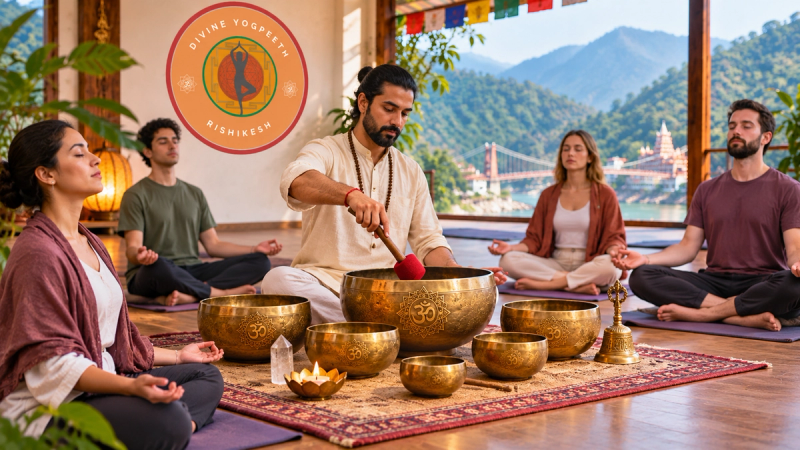
Tibetan singing bowls are among the most recognisable instruments used in sound meditation and relaxation practices.
You learn how to identify different bowls, understand their sound characteristics and use appropriate striking or rubbing techniques.
Practical learning may include:
- Holding and positioning a bowl correctly.
- Using a wooden mallet or striker.
- Producing a clear tone through gentle striking.
- Creating sustained sounds using circular movements.
- Exploring differences between bowls.
- Controlling volume and maintaining a steady rhythm.
You also learn that different bowls produce different tones. There is no single universally superior bowl for every person or session.
B. Understanding sound frequencies
Frequency is an important part of sound education. During training, you can explore how pitch relates to frequency and how different instruments produce distinct acoustic characteristics.
You may encounter discussions about specific frequency ranges, harmonic overtones and the way sounds interact.
However, be cautious about exaggerated claims surrounding 432 Hz, 528 Hz or other so-called healing frequencies. A particular frequency should not be presented as a scientifically established treatment for a medical condition.
A responsible facilitator focuses on sound quality, listening comfort, personal preference and the overall session experience rather than promising guaranteed physical or emotional outcomes.
C. Traditional sound practices and meditation
Sound has been used in various cultural and contemplative traditions. Chanting, bells, gongs and resonant instruments can help create a focal point for meditation.
You may explore:
- The role of sound in meditation.
- The use of silence between sounds.
- Mantra chanting and mindful listening.
- Traditional approaches to singing bowl practice.
- Creating a calm and focused atmosphere.
Understanding the cultural background of an instrument also helps you approach the practice with greater respect.
D. Practical instrument combinations
A comprehensive programme should introduce you to more than one way of producing sound.
You may explore how singing bowls, gongs, chimes and other instruments can be combined without creating an overwhelming sound environment.
The goal is not to play every instrument simultaneously. It is to understand how each sound contributes to the structure and atmosphere of a session.
For a deeper introduction to the tools used in this practice, explore this guide to sound healing instruments and their uses.
3. Sound Healing Techniques and Practical Training
Knowing the theory is useful, but practical experience is what helps you develop confidence as a facilitator.
A good programme should give you opportunities to practise instrument techniques, receive feedback and understand how a session feels from both sides: the facilitator's position and the participant's experience.
A. Individual singing bowl practice
You begin by developing control over individual instruments.
This may include practising different striking positions, circular movements, sound duration and transitions between tones.
You should also learn how to avoid unnecessary force. Striking a bowl too aggressively can create an unpleasantly loud sound and reduce participant comfort.
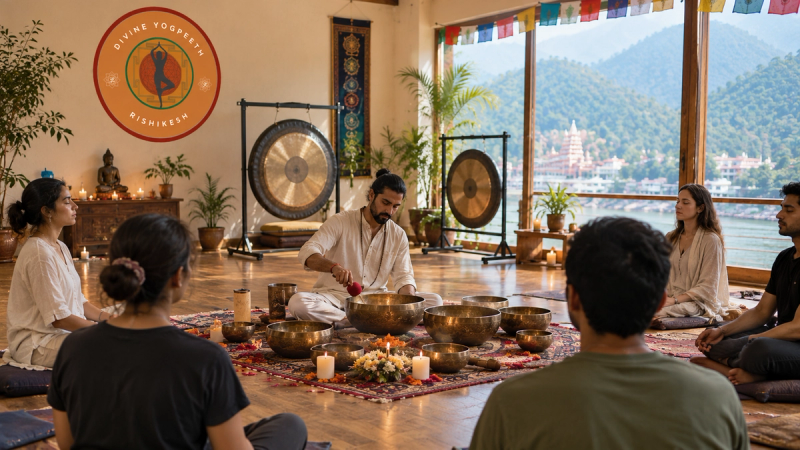
B. Group sound meditation
Group sessions require a different approach from individual practice.
You need to consider the size of the room, the number of participants, instrument placement and sound levels.
A typical session structure might include:
- Welcoming participants and explaining the session.
- Allowing everyone to settle into a comfortable position.
- Beginning with gentle sounds or guided breathing.
- Introducing instruments gradually.
- Maintaining appropriate pauses and silence.
- Reducing the sound intensity towards the end.
- Allowing time for participants to return to normal awareness.
This structure is an example, not a fixed therapeutic protocol. Your session should adapt to the participants and the training you have received.
C. Individual sound sessions
An individual session gives you more opportunity to understand a participant's comfort and preferences.
You learn to ask relevant questions before beginning, explain what will happen and avoid making assumptions about what another person needs.
Some practitioners use singing bowls around a participant, while others prefer an approach where instruments are played at a comfortable distance.
Physical contact or placing vibrating instruments on the body should never be assumed to be acceptable. It requires appropriate training, informed consent and consideration of individual circumstances.
D. Developing your own practice routine
Repetition is essential. You should practise regularly rather than relying entirely on classroom demonstrations.
A useful routine may involve:
- Ten minutes of individual bowl practice.
- Five minutes of mindful listening.
- Ten minutes of combining two instruments.
- Ten minutes of practising a short session sequence.
- Reviewing your technique and identifying areas for improvement.
This helps you develop consistency and become more comfortable handling instruments.
E. Understanding the evidence behind sound-based relaxation
Sound-based interventions are an area of continuing research. Some studies have investigated singing bowl meditation and its relationship with perceived stress, mood and relaxation.
However, the available evidence is not sufficient to claim that sound healing cures illnesses or replaces psychological or medical treatment.
If you want to explore research on health and wellness interventions, you can visit PubMed, a database of biomedical and life-sciences research.
A responsible practitioner understands the difference between offering a relaxation experience and making medical claims.
4. Sound Healing Instruments You May Learn to Use
The instruments you encounter can influence the character of a session. Each has different sound qualities, playing techniques and practical considerations.
Here are some commonly used instruments worth understanding during training.
Tibetan singing bowls
Singing bowls produce resonant tones when struck or played with a suitable mallet.
You may learn to use individual bowls, combine different bowls and create gradual sound transitions.
Their relatively simple playing techniques make them a useful starting point for beginners.
Crystal singing bowls
Crystal singing bowls are commonly made from quartz-based materials and are known for their clear, sustained tones.
Their sound characteristics differ from traditional metal bowls.
During practice, you should learn how to handle them carefully, select suitable strikers and control their volume.
Gong
A gong produces a broad range of sounds depending on its size, material and playing technique.
It can create deep resonances, complex overtones and powerful sound effects.
Because gongs can produce intense sounds, facilitators need to develop good control over striking force, distance and duration.
Tuning forks
Tuning forks produce relatively consistent tones when activated.
They are used in some sound-based wellness practices and can help you explore pitch, resonance and controlled sound production.
You should understand the intended technique before using them near a participant's body or ears.
Koshi chimes and other percussion instruments
Chimes and small percussion instruments can add gentle sounds and transitions to a session.
They may be useful when creating a calm opening or closing sequence.
However, more instruments do not automatically mean a better session. Good facilitation depends on appropriate selection and timing.
5. Why Rishikesh Is a Meaningful Place for Sound Healing Training
Your learning environment can influence how you approach a wellness practice.
Rishikesh offers a setting where yoga schools, meditation spaces, spiritual traditions and wellness programmes are part of the local environment.
Located in the Himalayan foothills beside the Ganga River, the city attracts practitioners from India and other countries who want to explore yoga and meditation.
A learning environment connected with yoga
Sound meditation can complement practices such as breath awareness, mindfulness and restorative yoga.
When you study these disciplines in the same environment, you can better understand how different practices may be incorporated into a balanced wellness routine.
You can also explore related subjects through chakra meditation practices for beginners.
Exposure to different practitioners
Rishikesh attracts students with different backgrounds.
You may meet experienced yoga practitioners, first-time wellness students, international travellers and people exploring new professional directions.
This diversity can give you opportunities to exchange ideas and learn how different people approach meditation and relaxation.
Time away from everyday distractions
A training programme can provide dedicated time for learning and personal practice.
However, do not assume that travelling to a spiritual destination automatically improves your learning. Your progress still depends on the quality of instruction, regular practice and your willingness to understand the subject properly.
Choosing the right training school
Before paying for a programme, check the following:
- Who teaches the course, and what practical experience do they have?
- Which instruments are included?
- How many hours are dedicated to hands-on practice?
- Does the course include supervised session demonstrations?
- What does the certificate actually represent?
- Are accommodation, meals and instruments included in the fee?
- Is there guidance after the course?
You should also ask whether the programme is designed for personal enrichment, introductory facilitation or more advanced practitioner development. These are different learning goals.
6. What Can You Do After Completing Sound Healing Training?
Completing a training programme can give you a foundation for exploring sound-based wellness practices.
Your next step depends on your experience, the depth of your training and how confidently you can apply what you have learned.
A. Conduct introductory sound relaxation sessions
After gaining sufficient supervised practice, you may begin facilitating simple relaxation sessions within the scope of your training.
You could organise small group sessions at yoga studios, wellness spaces or retreat centres.
Start with manageable groups and collect feedback to improve your session structure.
B. Complement your existing yoga practice
If you already practise or teach yoga, sound meditation may become an additional element in your classes.
For example, you might introduce gentle singing bowl sounds during a relaxation segment or offer a separate guided sound meditation.
You should not automatically combine every yoga technique with sound instruments. Consider the class objective and participants' comfort.
C. Collaborate with wellness centres
Some yoga studios and wellness centres organise meditation sessions, workshops and retreats.
With appropriate training and practical experience, you can approach these spaces about collaborative opportunities.
Your ability to communicate clearly, demonstrate your skills and work responsibly will matter more than simply holding a certificate.
D. Develop your own wellness offering
You may eventually create a dedicated sound meditation programme.
This could involve individual sessions, small-group workshops or sound-based activities as part of a larger retreat.
Before offering paid services, establish clear boundaries. Explain that your sessions support relaxation and wellbeing rather than diagnosing or treating medical conditions.
E. Continue learning
A basic certification should be treated as a starting point, not proof of mastery.
Continue developing your instrument skills, learning about participant safety and understanding the limitations of sound-based wellness practices.
If you are interested in combining sound practices with other wellness approaches, explore the available yoga and holistic therapy programmes.
7. How to Choose the Right Sound Healing Certification Course
Not every programme offers the same level of instruction. Some focus mainly on instrument demonstrations, while others include structured practice and session facilitation.
You should compare courses based on their learning outcomes rather than choosing one simply because it has an attractive location or promotional offer.
Check the actual curriculum
Ask for a detailed syllabus before enrolling.
A useful curriculum should explain what you will learn, which instruments you will practise with and how much time is dedicated to practical sessions.
If the school only provides broad descriptions such as energy activation or frequency alignment without explaining the actual teaching methods, ask for clarification.
Evaluate the instructor
The instructor's practical experience matters.
Ask about their background, teaching experience and approach to participant safety.
You should be able to understand how they demonstrate techniques, correct mistakes and assess your progress.
Understand the certification
The word certification can mean different things.
A school-issued certificate of completion is not necessarily a government-recognised qualification, a clinical therapy licence or an internationally regulated professional credential.
Ask these questions:
- Who issues the certificate?
- What training hours does it represent?
- Is there a practical assessment?
- What professional activities does it prepare you for?
- Is any external accreditation claimed, and can it be independently verified?
Clear answers are a sign of transparent training.
Compare the total course cost
Do not compare only the advertised tuition fee.
Check whether your payment covers:
- Training and instruction.
- Instrument access or personal instrument ownership.
- Course materials.
- Accommodation.
- Meals.
- Certificate charges.
- Additional workshops.
A lower fee may not represent better value if important learning components are excluded.
Ask about post-course support
Training becomes more useful when you can continue practising after returning home.
Ask whether the school provides practice guidance, learning materials or opportunities to ask instructors questions after graduation.
This is particularly important if you are new to sound meditation and want to build confidence gradually.
8. Begin Your Sound Healing Learning Experience in Rishikesh
If you want to explore singing bowls and sound-based relaxation in a structured learning environment, choosing a course with practical instruction should be your priority.
At Divine Yogpeeth, we offer a dedicated Sound Healing Training Course in Rishikesh for those interested in learning more about this practice.
Before enrolling, review the course details, curriculum, available dates, fees and training arrangements. You should understand exactly what is included and whether the programme matches your experience level.
You can also explore our main yoga and wellness programmes in Rishikesh to understand the wider learning environment.
Whether you are an existing yoga practitioner or exploring sound meditation for the first time, approach the subject with curiosity, patience and realistic expectations.
9. Frequently Asked Questions About Sound Healing Certification in Rishikesh
1. Do you need previous yoga experience to join a sound healing course?
Not necessarily. Many introductory sound healing programmes are designed for beginners as well as experienced yoga practitioners.
However, you should check the specific eligibility requirements of the school before enrolling.
A willingness to practise, listen carefully and understand basic sound principles is more important than having an advanced yoga background.
2. What instruments are commonly taught in sound healing training?
Singing bowls are among the most common instruments.
Depending on the course, you may also learn about crystal singing bowls, gongs, tuning forks, chimes and other sound-producing instruments.
The exact instrument list varies between training programmes, so confirm it before registration.
3. Can you become a professional sound healing practitioner after certification?
A course can provide foundational knowledge and practical skills for facilitating sound relaxation sessions.
However, completing a short certification does not automatically make you a licensed healthcare professional or clinical therapist.
You should gain supervised experience, continue practising and work within the limits of your qualifications.
4. Is sound healing scientifically proven to cure diseases?
No. There is currently insufficient scientific evidence to establish sound healing as a cure for diseases.
Some research explores possible associations with relaxation, stress and mood, but the findings should not be exaggerated.
Sound-based practices should be considered complementary wellness activities rather than substitutes for medical care.
5. How should you prepare before joining a sound healing course?
Start by learning the basic names of common instruments and understanding simple concepts such as frequency, pitch and resonance.
You can also explore sound healing session preparation tips before attending your training.
Most importantly, check the school's instructions regarding clothing, equipment, accommodation and course requirements.
Conclusion: Take Your First Step Towards Sound Healing Training
A sound healing certification in Rishikesh can introduce you to singing bowls, gongs, sound meditation, instrument techniques and the fundamentals of facilitating relaxation sessions.
However, the real value of your training comes from what you can understand and practise, not simply from the certificate you receive.
Choose a programme that provides clear teaching, sufficient hands-on experience, responsible guidance and transparent certification details. Develop your skills gradually, respect individual participant needs and avoid making medical claims that your training cannot support.
If you are ready to explore this practice, take a closer look at our Sound Healing Training Course at Divine Yogpeeth in Rishikesh.
Review the curriculum and course arrangements, speak with the school about your learning goals and take the next step towards developing your sound meditation practice.