.jpg)

Yoga Alliance RYT 200 certification details reveal what to expect from your training in Rishikesh. Discover the curriculum, costs, and benefits. Learn more.
Yoga Alliance RYT 200 Certification Details: Everything You Need to Know Before Enrolling
Did you know that becoming a certified yoga instructor requires far more than just mastering complex physical postures? Understanding the Yoga Alliance RYT 200 certification details is the critical first step in transforming from a passionate practitioner into a skilled, confident teacher. This credential serves as the global standard for yoga education, ensuring you receive comprehensive, safe, and effective training.
Many practitioners feel overwhelmed when researching their options for teacher training. The internet is flooded with conflicting information, making it difficult to understand exactly what you will learn, how much it will cost, and what qualifications you actually need to teach globally.
This guide breaks down every essential component of the 200-hour program. You will learn the exact curriculum requirements, the daily time commitments, and the hidden benefits of studying in an authentic environment. Whether your goal is to teach internationally or simply to deepen your personal practice, having a clear roadmap eliminates confusion.
By the end of this guide, you will know exactly what to look for in a registered yoga school. We will cover the specific subjects you must study, the importance of proper accreditation, and how to prepare yourself mentally and physically for this immersive journey.
Understanding Yoga Alliance RYT 200 Certification Details
To grasp the full scope of your future training, you must look closely at the foundational structure set by governing bodies. The precise Yoga Alliance RYT 200 certification details mandate specific hours dedicated to distinct educational categories. This ensures that every graduate, regardless of where they study, meets a universal standard of excellence.
The credential itself stands for "Registered Yoga Teacher at the 200-hour level." It is not merely a piece of paper; it is a globally recognized symbol of your commitment to the discipline. When studios or gyms look to hire new instructors, they specifically search for this designation. It proves that you have studied under qualified lead trainers and have completed a rigorous, structured program.
The Yoga Alliance maintains strict guidelines for what a Registered Yoga School (RYS) must teach. These standards elevate the profession by demanding that schools provide comprehensive education rather than just a superficial overview of physical poses. You must complete your hours at an approved institution to earn your registry mark.
Earning this title gives you professional credibility. It allows you to obtain liability insurance, which is mandatory for teaching in most professional settings. Beyond the legal and professional requirements, this training provides you with the deep knowledge necessary to keep your future students safe. You learn how to modify postures, sequence classes logically, and hold space for others effectively. For an even deeper understanding of why this registry matters, explore the Yoga Alliance RYT 200 Certification: 7 Best Real Truths to see how it impacts your career.
Breakdown of the RYT 200 Curriculum
When you examine the curriculum, you will quickly realize that physical practice is only one piece of the puzzle. The program divides your 200 hours into specific educational blocks, ensuring a well-rounded education. This comprehensive approach builds the foundation you need to teach with genuine authority.
Techniques, Training, and Practice form the bulk of your hours. This category covers asanas (postures), pranayama (breathwork), and meditation. You will spend significant time breaking down individual poses, learning their proper alignment, benefits, and contraindications. This detailed study ensures you can perform the postures correctly while understanding their mechanical functions.
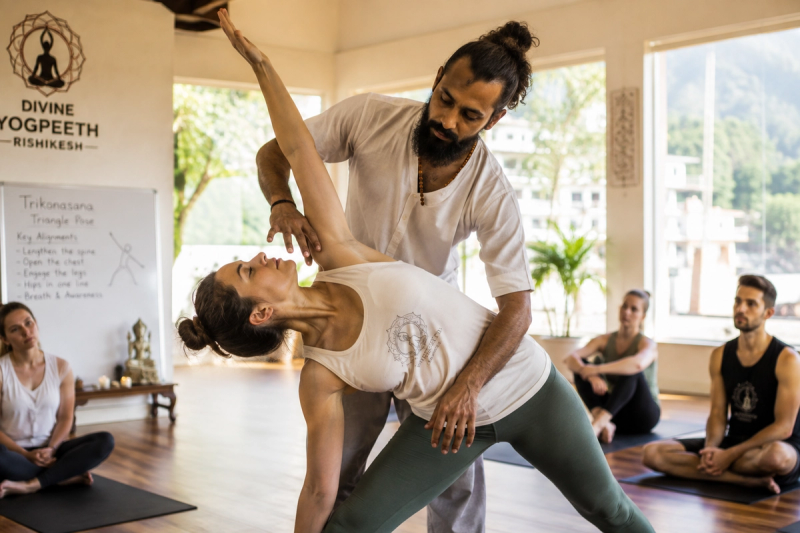
You will also learn how to guide others into and out of these postures safely. This involves verbal cueing, physical demonstrations, and hands-on adjustments. Mastering these techniques requires daily practice and repetition. You are not just learning how to do yoga; you are learning how to translate that physical experience into clear, actionable instructions for your future students.
Additionally, you will dive into the subtle aspects of the practice. This includes learning various breathing techniques and meditation methods. You will understand how to calm the nervous system and manage energy flow throughout the body. These subtle practices are often what separate an average class from a truly profound one. If you are curious about how these hours are structured on a daily basis, our 200 Hour YTT Duration Timeline: Complete 23-Day Guide breaks down the exact schedule you can expect.
Essential Anatomy and Physiology Guidelines
A critical component of your training involves the study of the human body. Anatomy and physiology are vital for ensuring student safety and preventing injuries. You will learn both physical anatomy—such as bones, muscles, and joints—and energy anatomy, which includes the chakras and nadis.
Understanding biomechanics changes how you approach every posture. You will learn how different bodies move and why certain poses feel completely different from one person to the next. This knowledge allows you to offer intelligent modifications, ensuring that yoga remains accessible to students of all ages, body types, and fitness levels.
You will also study the physiological effects of yoga on the nervous, respiratory, and circulatory systems. Knowing how deep breathing impacts the parasympathetic nervous system gives you the scientific vocabulary to explain the benefits of the practice. This evidence-based approach builds trust with your students and grounds your teaching in physiological reality.
Yoga Philosophy, Lifestyle, and Ethics
To truly embrace the practice, you must study its historical and philosophical roots. The curriculum mandates hours dedicated to yoga philosophy, lifestyle, and ethics. This section of the training contextualizes the physical movements, connecting them to a broader spiritual and ethical framework.
You will study foundational texts like the Yoga Sutras of Patanjali and the Bhagavad Gita. These ancient scriptures outline the ethical precepts of yoga, known as the Yamas and Niyamas. Learning these principles changes how you interact with the world off the mat. It provides a moral compass that guides both your personal life and your professional conduct as a teacher.
The ethics component specifically addresses the student-teacher relationship. You will discuss boundaries, inclusivity, and the responsibility you hold when leading a class. This training ensures you create safe, welcoming spaces free from judgment or harm. The Indian government, through bodies like the Ministry of Ayush, heavily emphasizes the preservation of these traditional ethical standards in all yogic education.
Adopting a yogic lifestyle is also a key part of your immersion. You will learn about Sattvic diets, daily routines (Dinacharya), and the importance of self-study (Svadhyaya). Embracing these habits during your training helps you build the stamina and mental clarity required to absorb vast amounts of new information.
Teaching Methodology and Practicum
Knowing how to practice yoga is entirely different from knowing how to teach it. The teaching methodology section equips you with the practical skills needed to lead a room. This includes class sequencing, pacing, voice modulation, and learning how to read the energy of your students.
Sequencing is an art form. You will learn how to design a class that flows logically, preparing the body for peak poses while ensuring a safe cool-down. You will study how to structure classes for different levels, from absolute beginners to advanced practitioners. Effective sequencing keeps your students engaged, safe, and coming back for more.
The practicum is where you put this theory into action. You will spend hours practice-teaching in small groups. This hands-on experience is often the most challenging but rewarding part of the training. You will receive constructive feedback from your peers and lead trainers, helping you refine your delivery and eliminate nervous habits.
By the time you graduate, you will have successfully designed and taught a complete class. This builds immense confidence, ensuring you are ready to step into a studio environment immediately after receiving your certificate. You learn to project your voice, hold authority, and manage time effectively.
100-Hour vs 200-Hour: What You Must Know
Many prospective students wonder if they should start with a shorter course before committing to the full certification. While a 100-hour program offers an excellent introduction to the foundational elements of the practice, it does not qualify you to register as a teacher.
A 100-hour course focuses heavily on personal development and basic alignment. It is ideal for individuals who want to deepen their knowledge but are not yet ready to commit the time or finances required for the full program. It serves as the first half of a complete teacher training, allowing you to split the education into two manageable phases.
However, if your immediate goal is to teach, the 200-hour certification is mandatory. It provides the complete curriculum required by international registries. The full immersion builds the necessary teaching methodology and practicum hours that shorter courses lack. If you are struggling to decide between the two, you can read more about the core differences in our guide on 100 Hour vs 200 Hour Yoga Teacher Training: 5 Best Truths.
Why Rishikesh Matters for Your Certification
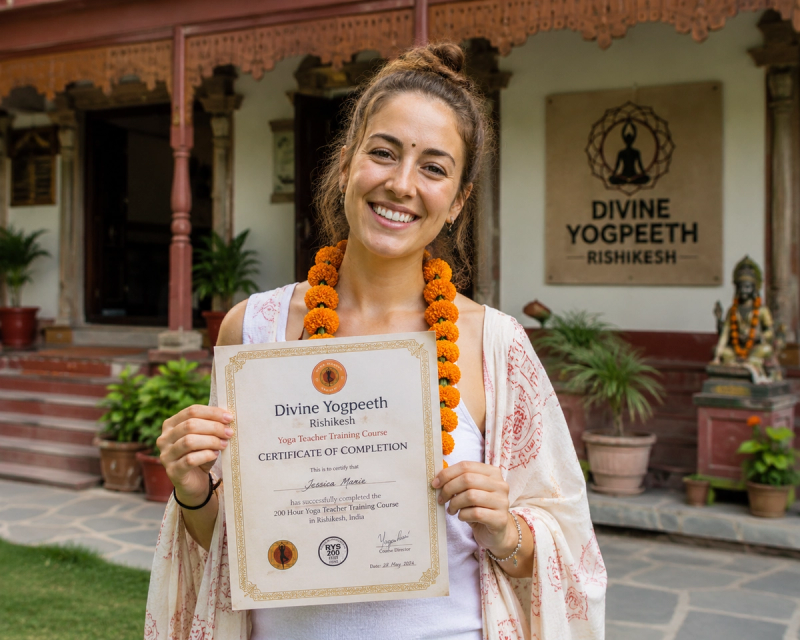
Where you choose to study significantly impacts the quality of your education. Rishikesh is universally recognized as the birthplace of this ancient science. Studying here provides an authentic, traditional environment that cannot be replicated in a Western studio.
The atmosphere in Rishikesh is entirely dedicated to spiritual growth and self-discovery. You are surrounded by the sacred Ganges River, the majestic Himalayas, and thousands of like-minded seekers. This environment naturally supports your journey, making it easier to detach from daily distractions and fully immerse yourself in the practice.
Training in Rishikesh also gives you direct access to experienced Indian masters. These teachers carry generations of traditional wisdom, offering insights that go far beyond standard textbook learning. You will experience authentic mantra chanting, traditional fire ceremonies (Havan), and an environment that respects the deepest roots of the philosophy.
Furthermore, studying in India is often more cost-effective than completing a comparable program in your home country. The comprehensive packages usually include accommodation, daily meals, and course materials, allowing you to focus entirely on your studies without worrying about daily logistics.
Finding the Right Registered Yoga School
Choosing the correct institution is the most important decision you will make in this process. You must look for a school that is officially registered and maintains a strong reputation for academic excellence. A quality school will transparently share its daily schedule, curriculum syllabus, and lead teacher qualifications.
Take the time to read reviews and speak with alumni if possible. Ensure the school limits class sizes to provide personalized attention and constructive feedback during your practicum. The environment should feel supportive, structured, and deeply committed to your personal and professional growth.
If you are considering your options and looking for an authentic experience that balances traditional Indian wisdom with modern teaching techniques, Divine Yogpeeth offers a comprehensive path forward. We provide a supportive, structured environment on the banks of the Ganga. You can explore the core of our philosophy and approach directly on our home page to see if our values align with your goals.
Choosing a school with a dedicated, experienced faculty ensures you graduate not just with a certificate, but with genuine teaching capability. Look for institutions that prioritize safe alignment, detailed anatomy, and extensive practice-teaching opportunities.
FAQs About RYT 200 Certification
Do I need to be an advanced practitioner to enroll?
You do not need to perform complex acrobatics to join a teacher training. The primary requirements are dedication, an open mind, and a consistent personal practice. The program is designed to teach you how to instruct safely, not to judge your physical flexibility.
What happens if I miss a day of training?
Because the curriculum strictly mandates a specific number of contact hours, attendance is mandatory. Most registered schools have strict policies regarding absences. You will typically need to make up any missed time through extra assignments or private sessions with the lead trainers to ensure you meet the graduation criteria.
Can I teach internationally with this certificate?
Yes, the 200-hour designation is the globally recognized standard. Whether you plan to teach in Europe, the Americas, Asia, or Australia, studios and gyms recognize this credential as proof of your professional competence and education.
Does the certificate expire?
The certificate you receive from your school does not expire. However, if you choose to register with international governing bodies, you must pay annual renewal fees and log continuing education hours to maintain your active directory listing.
Are meals and accommodation included?
When studying in Rishikesh, most schools offer residential programs. This means your tuition covers your training, a private or shared room, and three daily Sattvic meals. This immersive setup allows you to focus 100% of your energy on your education without outside distractions.
Expanding Your Skills Beyond the Basics
Once you secure your foundation, many teachers seek to expand their skill sets to offer more diverse classes. Continuing education keeps your teaching fresh and allows you to reach different demographics. This is where specialized training becomes incredibly valuable.
For example, integrating sound therapy into your classes provides a profound relaxation experience for your students. Learning to use singing bowls or other instruments can set your classes apart in a crowded market. If this interests you, exploring a sound healing training course is an excellent way to earn continuing education hours while adding a powerful tool to your teaching arsenal.
Similarly, if you ever feel you need to brush up on specific foundational elements before committing to advanced 300-hour programs, returning to the basics is always beneficial. Some students even find value in reviewing fundamental alignments through programs like a 100-hour yoga teacher training as a refresher.
Continuous learning is the hallmark of an excellent teacher. The 200-hour certificate is not the end of your education; it is merely the gateway. As you grow in your practice, you will naturally gravitate toward specific styles, therapies, or philosophies that resonate with your unique voice.
Conclusion
Understanding the Yoga Alliance RYT 200 certification details equips you with the clarity needed to make an informed decision about your future. This comprehensive training program provides the essential tools, from precise physical alignment and deep philosophical knowledge to the practical teaching methodology required to lead a room confidently.
By choosing to complete your hours at a registered school, you guarantee that your education meets the highest international standards. When you pair this rigorous curriculum with the transformative environment of Rishikesh, you experience a truly life-changing immersion that shapes not just your career, but your entire worldview.
Ready to begin? Explore our 200-Hour YTT in Rishikesh and take the first step today.