
Yoga hormonal balance poses practices may support stress regulation and better sleep. Discover 7 practical techniques, their benefits and how to practice safely.
Yoga Hormonal Balance Poses Practices: What Actually Helps and How to Build a Sustainable Routine
Hormonal balance poses and practices can support your well-being, but can yoga actually correct hormonal imbalances? If you experience irregular periods, persistent stress, poor sleep, mood fluctuations or unexplained fatigue, you may have wondered whether a regular yoga practice could help.
The honest answer is that yoga can support several systems involved in hormonal regulation, particularly stress management, sleep quality and general metabolic health. However, it is not a guaranteed treatment for thyroid disorders, PCOS, menopause symptoms or other endocrine conditions.
Your hormones work through an interconnected network involving the brain, endocrine glands, metabolism and reproductive organs. Your daily habits influence this network, and yoga offers a practical way to develop healthier routines.
In this guide, you will discover which yoga poses and breathing practices are worth incorporating, what scientific evidence actually suggests, which techniques require caution and how to build a realistic routine. You will also learn why a structured yoga environment in Rishikesh can help deepen your understanding of these practices.
1. Understanding Hormonal Balance and How Yoga May Help
Hormones are chemical messengers produced by endocrine glands. They regulate essential functions such as metabolism, growth, reproduction, stress responses, sleep and energy levels.
Your endocrine system includes several important glands and organs:
- Hypothalamus: Connects the nervous system with hormonal regulation.
- Pituitary gland: Coordinates signals to several other endocrine glands.
- Thyroid gland: Helps regulate metabolism and energy use.
- Adrenal glands: Produce cortisol, adrenaline and other hormones.
- Pancreas: Produces insulin and glucagon to regulate blood glucose.
- Ovaries and testes: Produce reproductive hormones.
These systems do not work independently. For example, the hypothalamic-pituitary-adrenal (HPA) axis helps coordinate your body's response to stress.
When you experience ongoing stress, your body may maintain elevated stress-related activity. This can influence sleep, appetite, menstrual function and other aspects of health.
Where Does Yoga Fit Into This Picture?
Yoga combines physical movement, controlled breathing, relaxation and attention training. These elements may help regulate your stress response and encourage habits that support overall health.
Research on yoga suggests potential benefits for perceived stress, anxiety, sleep quality and certain metabolic indicators. Some studies involving people with PCOS have also reported improvements in selected health outcomes, although the evidence is still developing.
The important distinction is that supporting hormonal health is not the same as directly controlling hormone production.
Yoga does not mechanically stimulate your thyroid or balance estrogen simply because you perform a particular posture.
For a deeper understanding of the research, you can explore scientific literature through PubMed's medical research database.
Think of yoga as one part of a wider health strategy that includes appropriate medical care, balanced nutrition, regular movement and sufficient sleep.
2. Yoga Hormonal Balance Poses and Practices Worth Trying
Not every yoga posture has the same purpose. Some movements develop strength, others improve mobility, and certain restorative postures encourage relaxation.
For hormonal wellness, a balanced practice should avoid unnecessary physical exhaustion and include a combination of gentle movement, breathing and recovery.
Here are seven practices worth exploring.
1. Baddha Konasana (Bound Angle Pose)
Baddha Konasana is a seated posture in which you bring the soles of your feet together and allow your knees to move outward.
How to practise:
- Sit comfortably with your spine upright.
- Bring the soles of your feet together.
- Hold your feet or ankles gently.
- Allow your knees to move towards the floor without forcing them.
- Maintain a comfortable position for 30–60 seconds.
Potential benefits:
- Improves hip mobility.
- Encourages awareness of pelvic posture.
- Provides a gentle seated position for mindful breathing.
- Can help reduce physical tension associated with prolonged sitting.
This pose is traditionally associated with pelvic-region awareness. However, there is insufficient evidence that it directly regulates estrogen, progesterone or reproductive function.
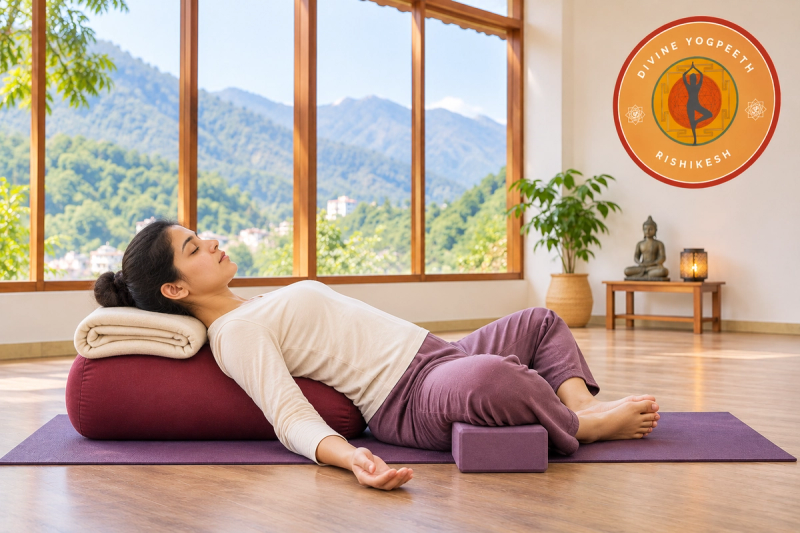
2. Supta Baddha Konasana (Reclining Bound Angle Pose)
This supported reclining variation is particularly useful when you want to slow down your practice.
How to practise:
- Lie comfortably on your back.
- Bring your feet together and allow your knees to open.
- Place cushions beneath your thighs if necessary.
- Rest your arms beside your body.
- Breathe naturally for two to five minutes.
Potential benefits:
- Encourages relaxation.
- Reduces unnecessary muscular effort.
- Provides a comfortable position for slow breathing.
- Can become part of an evening relaxation routine.
If your lower back feels uncomfortable, place additional support beneath your knees or choose another resting position.
3. Setu Bandhasana (Bridge Pose)
Bridge Pose introduces gentle spinal extension and strengthens muscles around your hips and back.
How to practise:
- Lie on your back with your knees bent.
- Keep your feet approximately hip-width apart.
- Place your arms beside your body.
- Press through your feet and gently lift your hips.
- Hold for 15–30 seconds while breathing comfortably.
- Lower slowly and repeat two or three times.
Potential benefits:
- Strengthens glutes and posterior-chain muscles.
- Develops spinal and hip mobility.
- Encourages controlled breathing during movement.
- Provides a moderate level of physical activity.
You do not need to lift your hips as high as possible. Controlled movement and comfortable alignment matter more than depth.
4. Marjaryasana-Bitilasana (Cat-Cow Pose)
Cat-Cow is a gentle movement connecting spinal mobility with breathing.
How to practise:
- Begin on your hands and knees.
- Inhale and gently move your chest forward while allowing your abdomen to lower.
- Exhale and round your back comfortably.
- Repeat slowly for eight to twelve cycles.
Potential benefits:
- Improves spinal mobility.
- Encourages coordination between breathing and movement.
- Helps release stiffness after prolonged sitting.
- Offers a gentle starting point for beginners.
This is an accessible movement for most healthy practitioners, provided there is no painful wrist, knee or spinal condition.
5. Viparita Karani (Legs-Up-the-Wall Pose)
This restorative posture allows you to rest with your legs supported against a wall.
How to practise:
- Sit sideways beside a wall.
- Gently turn onto your back while bringing your legs upward.
- Allow your legs to rest against the wall.
- Support your lower back with a folded blanket if comfortable.
- Remain for three to five minutes.
Potential benefits:
- Encourages relaxation.
- Provides a gentle recovery position.
- Allows you to practise slow, comfortable breathing.
- May help reduce the sensation of tired legs.
Avoid this posture if it causes discomfort, and seek medical guidance if you have conditions for which leg elevation or inversion-like positions may be unsuitable.
6. Balasana (Child's Pose)
Child's Pose is a resting posture that can be incorporated between more active movements.
How to practise:
- Kneel on your mat.
- Bring your hips towards your heels.
- Extend your arms forward or rest them beside your body.
- Lower your forehead towards the mat or a cushion.
- Breathe gently for one to two minutes.
Potential benefits:
- Encourages physical relaxation.
- Provides a break between demanding postures.
- Helps develop awareness of breathing.
- Can make a yoga session feel less physically demanding.
If your knees are uncomfortable, place a cushion beneath your hips or choose a supported seated position.
7. Shavasana (Corpse Pose)
Shavasana is more than simply lying down after exercise. It gives you an opportunity to practise conscious relaxation.
How to practise:
- Lie comfortably on your back.
- Allow your legs and arms to relax.
- Close your eyes if comfortable.
- Observe your natural breathing without controlling it.
- Remain for five to ten minutes.
Potential benefits:
- Encourages relaxation.
- Helps you transition out of physical activity.
- Develops awareness of bodily sensations.
- Can support a consistent stress-management routine.
Do not underestimate this final practice. Recovery is an important part of a sustainable yoga routine.
3. Pranayama and Meditation for Hormonal Wellness
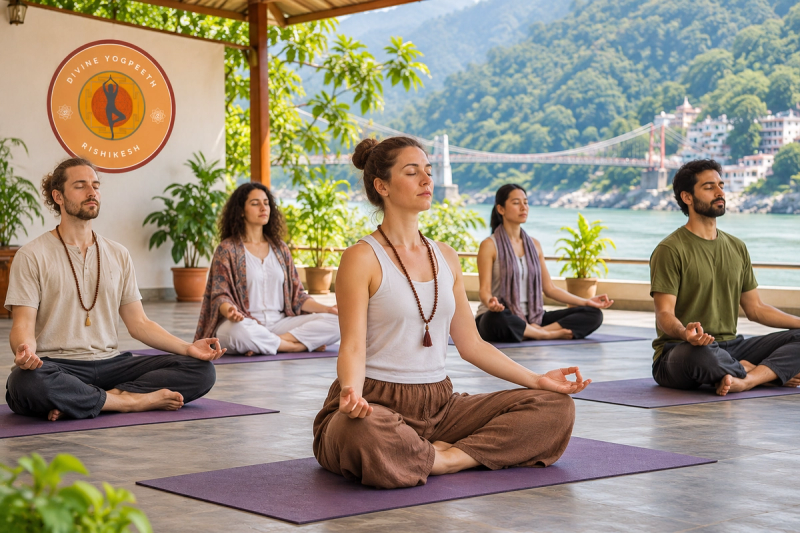
Physical postures are only one part of yoga. Breathing exercises and meditation may be equally valuable when your primary goal is managing stress and improving sleep.
Your breathing pattern interacts with your autonomic nervous system, which regulates processes such as heart rate and digestion.
Slow, comfortable breathing can encourage relaxation and help reduce perceived stress.
Nadi Shodhana (Alternate Nostril Breathing)
Nadi Shodhana is a traditional breathing practice involving alternating airflow through the nostrils.
How to practise:
- Sit in a comfortable upright position.
- Use your right hand to gently manage airflow through the nostrils.
- Close the right nostril and inhale through the left.
- Close the left nostril and exhale through the right.
- Inhale through the right and exhale through the left.
- Continue gently for three to five minutes.
Avoid forceful breathing and prolonged breath retention, particularly if you are a beginner.
The practice may help you develop breathing awareness and relaxation. However, claims that it directly balances reproductive or thyroid hormones are not established.
Bhramari Pranayama (Humming Bee Breath)
Bhramari involves producing a gentle humming sound during exhalation.
How to practise:
- Sit comfortably.
- Close your eyes if comfortable.
- Inhale gently through your nose.
- Exhale slowly while producing a soft humming sound.
- Repeat five to seven times.
Many practitioners find the vibration and prolonged exhalation calming. You can use this practice before meditation or as part of an evening routine.
Yoga Nidra for Deep Relaxation
Yoga Nidra is a guided relaxation practice performed in a comfortable resting position.
A session generally includes body awareness, breath observation and guided attention.
It can be useful if you struggle to switch off after a demanding day.
Explore the principles and practical steps in our guide to Yoga Nidra benefits and how to practise it.
What Does Research Say About Yoga and Hormones?
Research suggests that yoga may influence stress-related outcomes, sleep and psychological well-being. Some small clinical studies have investigated yoga as a supportive intervention for PCOS.
However, findings vary according to study design, duration, participant characteristics and the type of yoga practised.
You should not interpret improvements in stress or menstrual symptoms as proof that a specific breathing technique has corrected an endocrine disorder.
For broader information about recognised traditional systems of Indian health and wellness, visit the Ministry of AYUSH.
4. How to Build a Practical Yoga Routine for Hormonal Health
A sustainable routine is more useful than an ambitious programme that you abandon after a week.
You do not need to practise advanced asanas or spend two hours on your mat every morning. Consistency, suitable intensity and adequate recovery are more important.
Here is a simple 30-minute routine you can adapt to your ability.
PracticeDurationComfortable breathing and centring3 minutesCat-Cow3 minutesBaddha Konasana3 minutesBridge Pose4 minutesSupported Child's Pose3 minutesAlternate Nostril Breathing4 minutesBhramari2 minutesShavasana8 minutes
Adjust Your Practice According to Your Needs
If stress is your primary concern:
Prioritise gentle movement, comfortable breathing, meditation and relaxation. Avoid turning every session into an intense workout.
If you experience PCOS:
Combine suitable yoga with regular physical activity, balanced nutrition and medical guidance. Yoga may support general health, but it should not replace evidence-based PCOS treatment.
If you experience menopause-related discomfort:
Focus on comfortable mobility, strength, balance, relaxation and sleep-supportive routines. Adapt postures according to joint health and physical ability.
If you have thyroid-related concerns:
Practise yoga for general fitness and stress management, but do not rely on shoulder stands, plough poses or neck compression to treat thyroid conditions.
Important Safety Considerations
Yoga should be adapted to your health rather than forcing your body to follow a fixed routine.
Keep these points in mind:
- Avoid aggressive stretching and painful postures.
- Do not force breath retention.
- Modify postures during pregnancy.
- Seek guidance if you have uncontrolled blood pressure, cardiovascular conditions or significant joint problems.
- Stop if you experience dizziness, chest discomfort or unusual breathlessness.
- Consult a qualified healthcare professional for persistent or unexplained symptoms.
If you experience irregular or absent periods, unusual hair growth, persistent fatigue, unexplained weight changes or significant sleep disturbances, consider a medical evaluation.
A healthcare professional may recommend appropriate tests based on your symptoms and medical history. Do not self-diagnose a hormonal disorder using symptoms alone.
For practitioners interested in developing safer, more structured techniques, understanding pranayama techniques and their practical applications is a useful next step.
5. Why Rishikesh Is a Meaningful Place to Explore Yoga and Wellness
Rishikesh offers an environment where yoga is practised through physical training, traditional philosophy, breathing exercises and meditation.
Located along the Ganga River and surrounded by the Himalayan foothills, the town attracts practitioners from India and across the world.
For someone exploring yoga for general well-being, the environment can offer several practical advantages.
Structured daily practice: A guided schedule can help you develop consistency instead of practising occasionally without direction.
Exposure to different yoga traditions: You can explore Hatha Yoga, Vinyasa, restorative techniques, pranayama and meditation.
Time away from everyday distractions: A retreat can create space for better sleep habits, mindful eating and reduced screen exposure.
Guidance from experienced teachers: Proper instruction helps you understand alignment, modifications and the limitations of different techniques.
However, Rishikesh is not a medical treatment destination. Visiting a yoga school does not guarantee hormonal improvements, and no responsible teacher should promise to cure PCOS, thyroid disorders or infertility through asanas.
Your experience should be based on realistic expectations, qualified instruction and respect for your individual health requirements.
If you want to understand how location influences your practice, explore our guide to Tapovan Rishikesh yoga and its traditional learning environment.
6. Explore a More Structured Yoga Practice at Divine Yogpeeth
If you want to move beyond occasional yoga sessions, structured learning can help you understand how asanas, pranayama, meditation and relaxation work together.
At Divine Yogpeeth, located in Laxman Jhula, Tapovan, Rishikesh, you can explore traditional yoga practices in an environment connected with the Himalayan foothills and the Ganga River.
Our programmes provide opportunities to develop a deeper understanding of yoga beyond physical postures.
Depending on your experience and goals, you can explore our 100-Hour Yoga Teacher Training in Rishikesh or learn more about our yoga therapy and wellness offerings.
A yoga programme should complement your personal health decisions, not replace medical advice or prescribed treatment.
7. Frequently Asked Questions About Yoga and Hormonal Balance
Can yoga actually balance hormones?
Yoga may support stress management, sleep and general physical health, all of which are relevant to hormonal wellness. However, there is no reliable evidence that yoga alone can correct every hormonal imbalance or treat endocrine disorders.
Which yoga pose is best for hormonal balance?
There is no scientifically established single best pose. Gentle postures such as Baddha Konasana, Setu Bandhasana, Balasana and supported reclining poses can form part of a balanced routine.
Your choice should depend on comfort, experience and medical suitability.
Can yoga help with PCOS?
Yoga may be a useful complementary activity for people with PCOS. It can support physical activity, stress management and psychological well-being.
However, PCOS requires an individualised management plan. Yoga should complement, rather than replace, medical treatment, nutrition guidance and appropriate exercise.
How long should you practise yoga for hormonal wellness?
You can begin with 15–30 minutes of comfortable practice several times a week. Gradually develop a routine that includes movement, breathing and relaxation.
Consistency matters more than performing advanced postures or practising for unusually long periods.
Is yoga safe during menstruation?
Many people can continue gentle yoga during menstruation if they feel comfortable. You may prefer restorative postures and lighter movement on days when cramps or fatigue are significant.
Avoid forcing yourself into strenuous practice. If pain or bleeding is unusually severe, seek medical advice.
8. Conclusion: Make Yoga Part of a Sustainable Hormonal Wellness Routine
Yoga hormonal balance poses practices can be valuable when approached with realistic expectations. Gentle asanas, pranayama, meditation and adequate relaxation may support stress management, sleep quality and overall physical well-being.
The real benefit comes from developing a consistent routine that respects your body's needs rather than expecting one posture to correct a complex hormonal condition.
If you experience persistent symptoms, seek professional medical assessment and use yoga as a complementary wellness practice.
Ready to deepen your understanding of traditional yoga, breathing and meditation? Explore our 200-Hour Yoga Teacher Training in Rishikesh and take the next step towards a more informed and consistent yoga practice.