.jpg)

Yoga retreat corporate burnout management: 5 proven ways to reset stress, restore healthy routines, and reconnect with yourself in Rishikesh. Discover more.
Yoga Retreat Corporate Burnout Management: A Better Way to Recover
A yoga retreat corporate burnout management plan can give you something your normal weekend cannot: enough distance from work to notice what is actually draining you. If your days are filled with meetings, notifications, deadlines, and mental multitasking, a short retreat in Rishikesh can create space to rebuild healthier rhythms.
The goal is not to escape your career or become a different person overnight. It is to step away from constant stimulation, use practical yoga and relaxation methods, and return with routines you can realistically continue.
You will learn how to recognize the patterns behind workplace burnout, what a useful retreat should include, why Rishikesh can support a focused reset, and how to choose a retreat that fits your schedule and experience. You will also see why recovery should involve sleep, movement, breath, attention, and boundaries rather than a single relaxing activity.
Yoga Retreat Corporate Burnout Management: What Burnout Actually Looks Like
Burnout is more than having a stressful week. You may notice a combination of persistent exhaustion, reduced motivation, irritability, difficulty concentrating, poor sleep, or the feeling that even simple tasks require unusual effort.
For a corporate professional, the problem can become harder to identify because high workload may feel normal. You might answer messages during meals, check email before getting out of bed, carry unfinished decisions into the evening, and continue thinking about work after the laptop is closed.
A retreat cannot diagnose burnout or replace professional mental-health care. It can, however, give you a structured environment in which you can observe your habits without the usual office triggers.
A useful starting point is to ask yourself three questions:
- Do you recover after weekends, or do you start Monday already tired?
- Can you spend an hour without checking work notifications?
- Are your sleep, movement, meals, and relationships being squeezed by work?
If several answers concern you, a retreat can be used as a reset point rather than a magic cure.
Yoga also works best when you approach it as a practice rather than a performance. You do not need advanced flexibility. Slow movement, comfortable breathing, relaxation, and attention to physical sensations can be more appropriate when your nervous system already feels overloaded.
For broader background on yoga's role in health and wellbeing, you can explore India's Ministry of AYUSH as a starting point for official information on traditional health systems and yoga.
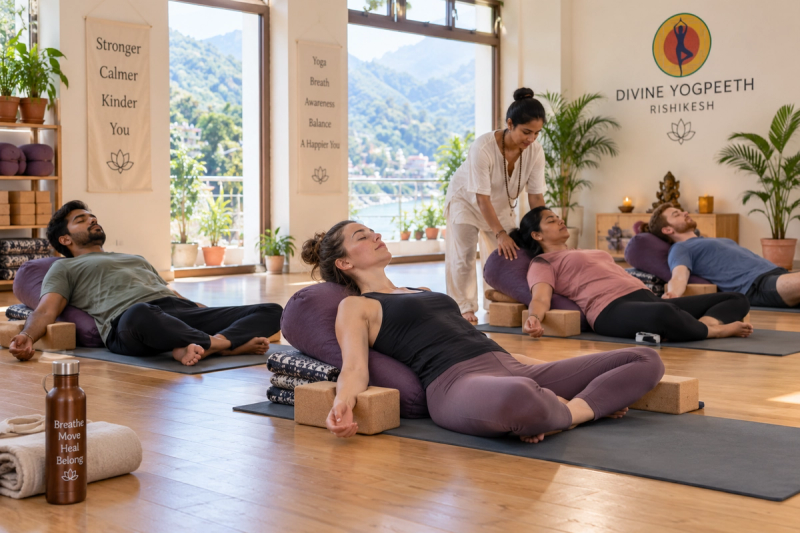
How a Yoga Retreat Can Help You Break the Burnout Cycle
The biggest value of a retreat is often not one particular yoga pose. It is the temporary removal of cues that keep your mind in work mode.
When you leave your usual environment, you can create a different daily sequence: wake up, move, breathe, eat without rushing, spend time outdoors, rest, and sleep at a more consistent hour. That rhythm gives you a chance to notice which parts of your normal routine are helping and which are quietly exhausting you.
1. Start with nervous-system downshifting
You do not need an extreme practice. Gentle asana, slow breathing, Yoga Nidra, meditation, and periods of silence can make your schedule feel less crowded.
A practice such as Yoga Nidra may be especially appealing when you are mentally tired but physically restless. If you want to understand the practice before choosing a retreat, read this guide to Yoga Nidra benefits and how to practice.
2. Replace constant stimulation with deliberate attention
Corporate work often rewards rapid switching. A retreat can reverse that pattern by asking you to stay with one activity for longer.
You might notice your breath during a seated practice, your balance during a standing pose, or the sensation of walking beside the Ganga. These simple acts train you to notice what is happening before immediately reacting to it.
3. Build a recovery routine you can take home
The most useful question is not, "How relaxed did you feel on the last day?" Ask instead, "What can you still do three weeks after returning?"
A practical post-retreat routine might include ten minutes of breathing before work, a short mobility sequence after long screen sessions, one device-free meal each day, and a fixed time to stop checking work messages.
That is where a retreat becomes more than a holiday. It gives you a controlled environment for testing habits that you can later adapt to your actual workload.
What to Look for in a Corporate Burnout Yoga Retreat
Not every retreat is designed for recovery. Some are packed with activities from early morning until late evening, leaving you with another demanding schedule in a different location.
If burnout management is your goal, look for balance rather than maximum activity.
A realistic daily rhythm
A good schedule should leave room for practice, meals, rest, personal time, and sleep. You should not feel pressured to attend every optional activity.
Qualified and transparent instruction
Ask who teaches the sessions, what their training is, and whether the program is suitable for beginners. If teacher training is part of your longer-term goal, Yoga Alliance provides information about yoga teacher education and registered schools at Yoga Alliance.
Practices that match your condition
You may benefit more from restorative yoga, gentle Hatha, breathwork, meditation, or Yoga Nidra than from highly demanding sessions every day. A responsible retreat should allow modifications.
Time away from work
If you spend every break answering Slack messages, the location will not solve the problem. Before arriving, decide which work communications are genuinely urgent and which can wait.
A plan for returning home
The best retreat experience should leave you with practical ideas for ordinary weekdays. You need something that can survive traffic, meetings, deadlines, and a full inbox.
For example, you might return with a simple rule: no work email during the first thirty minutes after waking. Another person may choose a ten-minute evening breathing practice or a weekly half-day without work notifications.
The exact routine matters less than whether you can repeat it consistently.
Why Rishikesh Matters for a Corporate Reset
Rishikesh gives you a useful contrast to a highly scheduled corporate environment. The city combines yoga communities, ashrams, wellness centers, walking routes, and the Ganga with a strong international visitor culture.
For you, the value is not simply that Rishikesh is associated with yoga. The physical environment can help create separation from your normal workplace cues.
If you are travelling internationally, practical planning matters. You should check accommodation standards, transport, dietary needs, health considerations, and the structure of the retreat before booking. If you are new to the region, this guide to a yoga retreat in Rishikesh for foreigners can help you think through the basics.
Tapovan and the Laxman Jhula area also make it possible to combine structured sessions with quieter personal time. A short walk, time beside the river, or an early night can be as relevant to recovery as another scheduled class.
If your main objective is rest rather than certification, a short residential retreat may be easier to fit around work than a multi-week training program.
You can compare the idea with a 5-day yoga retreat in Rishikesh when you want enough time to settle into a rhythm without committing to a longer course.
A Simple 5-Day Burnout Reset Framework
You can use a retreat to experiment with a five-day reset rather than trying to fix your entire life at once.
Day 1: Disconnect. Reduce work communication, settle into your room, and allow your body to slow down. Do not judge your energy level.
Day 2: Observe. Notice your sleep, appetite, energy, concentration, and urge to check your phone. Gentle yoga and breathing can help you identify where you hold physical tension.
Day 3: Rebuild. Choose a sustainable morning and evening routine. Keep it short enough that you could realistically continue it at home.
Day 4: Reflect. Write down the work habits that repeatedly push you beyond your limits. Separate genuine workload problems from habits such as unnecessary checking, poor boundaries, or skipping breaks.
Day 5: Plan the return. Pick three changes for your first two weeks back. Make them measurable. For example: finish work notifications by 8 p.m., take two five-minute movement breaks, and practice ten minutes of breathing five days a week.
This approach prevents a common mistake: leaving a retreat with ambitious plans that collapse as soon as your calendar fills up.
You can also explore Yoga mental health research and evidence if you want a more evidence-focused perspective before deciding how much yoga and meditation to include in your routine.

When a Short Retreat Is Better Than a Longer Program
A corporate professional does not automatically need a 200-hour teacher training because they enjoy yoga. Your objective should determine the format.
A three-day retreat can work when your schedule is tight and you mainly need a brief change of environment. You can review a 3-day yoga retreat option in Rishikesh if you want a compact break.
Five days can give you more time to move beyond the initial adjustment period. You may sleep more consistently, reduce digital stimulation, and test a routine before returning home.
A longer yoga teacher training makes more sense when you want education, disciplined practice, and the possibility of teaching yoga later. A 100-hour yoga teacher training program is a different commitment from a burnout-focused retreat, so do not choose it simply because you think more days automatically means better recovery.
You can also consider a 200-hour yoga teacher training in Rishikesh if your interest has expanded from personal recovery to a serious study of yoga and teaching.
The important distinction is simple: choose a retreat when you need structured recovery; choose teacher training when you want a structured education in yoga and teaching.
A Corporate Burnout Retreat Should Change What Happens After You Leave
A retreat can give you a pause, but your workplace remains waiting when you return. That is why the final part of recovery needs to happen at home.
Start by identifying the smallest changes that reduce repeated strain. You might protect your lunch break, stop carrying your phone into bed, schedule short movement breaks between meetings, or create a clear end-of-day shutdown ritual.
You should also examine workload itself. If your calendar contains more meetings than focused work, no breathing technique can solve the underlying scheduling problem. If your role regularly requires late-night availability, you may need a conversation with your manager about expectations and priorities.
Think of yoga as one part of a broader recovery system. Sleep, nutrition, movement, social connection, workload boundaries, and professional support all matter.
If stress symptoms are severe, persistent, or interfering substantially with daily life, speak with an appropriate healthcare or mental-health professional rather than relying on a retreat alone.
For you, the strongest outcome is not feeling peaceful for five days. It is returning with a clearer understanding of what drains you, what restores you, and which changes you are actually willing to maintain.
Explore a More Structured Reset with Divine Yogpeeth
If you want to combine guided yoga, meditation, relaxation, and time in Rishikesh, Divine Yogpeeth's retreat programs provide an option to explore a structured break from your usual routine.
For a corporate professional, the right program should support recovery without turning rest into another performance target.
FAQs About Yoga Retreat Corporate Burnout Management
Can a yoga retreat cure corporate burnout?
A retreat should not be treated as a cure. Burnout can involve workplace conditions, prolonged stress, sleep disruption, and other factors that may require changes at work or professional support. A retreat can provide space to rest, practice healthier routines, and reflect on what needs to change.
How many days should you spend on a burnout-focused retreat?
There is no universal number. Three days can provide a short reset, while five days may give you more time to establish a routine. Your available time, travel distance, experience, and actual recovery needs should guide the decision.
Is Rishikesh suitable if you are new to yoga?
Yes, you can find beginner-friendly practices in Rishikesh, but you should check the specific retreat's schedule and teaching approach before booking. You do not need advanced flexibility to begin a gentle yoga practice.
Should you avoid work completely during a retreat?
If possible, reduce work communication substantially. However, your responsibilities may make complete disconnection unrealistic. Set expectations with colleagues before travelling and identify genuine emergencies in advance.
Can yoga replace therapy or medical care for burnout?
No. Yoga can complement a broader wellbeing plan, but it should not replace appropriate medical or mental-health care. If symptoms are serious or persistent, seek qualified professional help.
Conclusion: Make Your Reset Practical
Yoga retreat corporate burnout management works best when you treat the retreat as a starting point, not a temporary escape from problems you will face again on Monday.
Use the time in Rishikesh to slow down, observe your habits, practice consistently, sleep properly, and decide what needs to change when you return. Keep your post-retreat plan small enough to survive a demanding workweek.
If you are ready for a structured reset, explore our 5-day yoga retreat in Rishikesh and choose a calmer way to step back from work pressure, reconnect with your practice, and return with a routine you can actually maintain.