.jpg)

A 100 hour YTT exam assessment evaluation can feel overwhelming. Discover exactly how practical tests, written exams, and daily behavior are graded. Learn more.
100 hour YTT exam assessment evaluation: How Are Students Evaluated?
Entering a yoga training program is exciting, but facing the 100 hour YTT exam assessment evaluation often brings an unexpected wave of nervousness. You might be wondering exactly how your skills, knowledge, and daily presence will be graded over such a short period. Understanding the evaluation process is the secret to moving through your training with confidence rather than anxiety. It removes the mystery and allows you to focus on what truly matters: your personal growth and teaching foundation.
Many students imagine a rigid, terrifying panel of judges scrutinizing every micro-bend in their knees. The reality is entirely different. Your instructors want you to succeed. They use the assessment to ensure you are safe, knowledgeable, and ready to share the practice.
In this guide, you will discover the exact breakdown of how students are evaluated during a 100-hour training. We will explore the practical teaching tests, the written examinations on philosophy and anatomy, and the ongoing daily observations that shape your final result. By the time you finish reading, you will know exactly how to prepare physically, mentally, and spiritually for your upcoming certification exams. Let's break down the process step by step.
100 hour YTT exam assessment evaluation: The Practical Test
The most anticipated part of your 100 hour YTT exam assessment evaluation is undoubtedly the practical teaching test. This is where you step onto the mat not as a student, but as a guide. Your lead teachers will closely observe how you structure a short sequence, usually ranging from fifteen to thirty minutes. They are looking for your ability to create a logical flow that safely warms up the body and prepares it for peak poses.
Demonstrating Asanas Safely
During the practical exam, safety is the ultimate priority. Evaluators watch your physical demonstration of asanas, but they do not expect perfection. They want to see that you understand the anatomical foundations of each posture. If you cannot perform an advanced pose, modifying it safely shows far more teaching maturity than pushing into pain.
Your ability to demonstrate variations for different body types is a critical part of the grading criteria. Organizations like Yoga Alliance mandate that safety and foundational alignment are at the core of all practical testing. You must prove you can keep future students out of harm's way.
Alignment and Adjustments
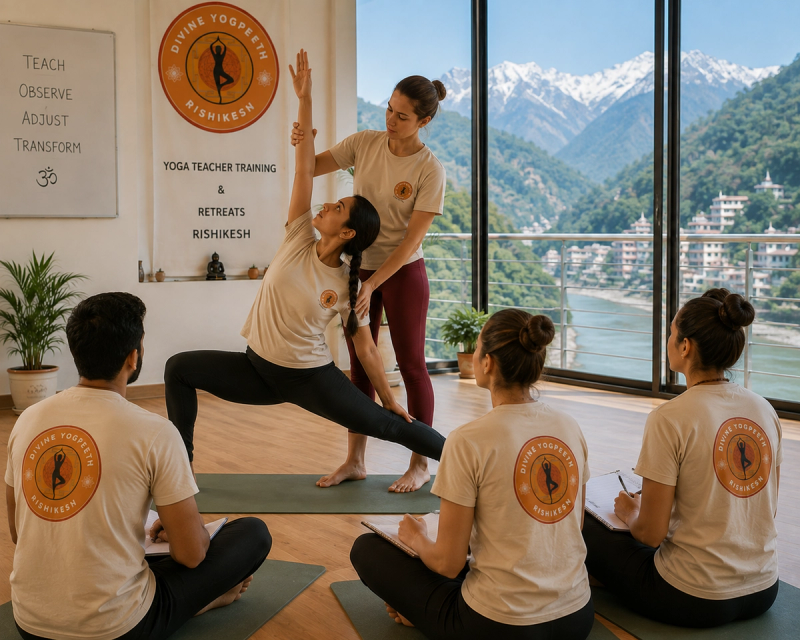
Another major component of your practical assessment involves physical and verbal adjustments. You must prove you can identify misalignment in your peers and offer safe, effective corrections. Evaluators will watch how you approach a student, ask for consent, and apply hands-on assists.
You are graded on your confidence, the firmness of your touch, and your anatomical awareness. Before your exam, reviewing resources like the 100 Hour Yoga Teacher Training: 5 Best Proven Benefits can help remind you why these foundational skills are so vital.
The practical test is less about your personal flexibility and more about your observational skills. Can you see when a student is holding their breath? Can you spot a hyper-extended knee? These are the moments your evaluators are looking for. They want to know that when you leave the training, anyone who steps into your class will be in capable, observant hands.
Written 100 hour YTT exam assessment evaluation Criteria
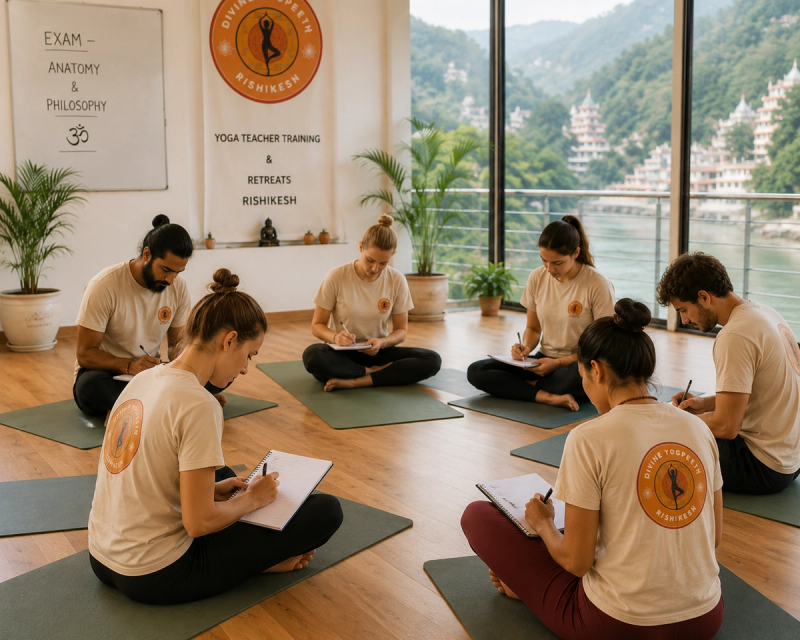
While yoga is a physical and spiritual practice, the written 100 hour YTT exam assessment evaluation ensures you possess the required intellectual foundation. You cannot safely teach what you do not cognitively understand. This written exam typically occurs near the end of your training and covers the massive amount of information you absorb during lectures. It is designed to test your retention of critical anatomical terms, historical contexts, and philosophical concepts.
Philosophy and Anatomy
The written test usually features a mix of multiple-choice questions, matching terms, and short essay responses. You will be tested on the skeletal and muscular systems, particularly how they engage or release during specific asanas. Understanding contraindications—knowing who should not do a pose—is a massive part of this section.
On the philosophy side, expect questions about the Eight Limbs of Yoga, the history of the practice, and basic Sanskrit terminology. You must demonstrate that your knowledge extends far beyond merely moving the body. A solid grasp of these concepts proves you respect the ancient roots of the discipline.
Preparing for the Written Component
Many students feel intimidated by the written exam, especially if they have been out of a traditional academic environment for years. The key to passing is consistent daily review. Do not wait until the night before the exam to memorize Sanskrit names or anatomical planes of movement.
Form study groups with your peers to review concepts over meals. If you want a clear picture of what subjects will be covered, looking at the Divine Yogpeeth 100 Hour Course Structure: 7 Best Truths provides an excellent roadmap of the academic curriculum.
Your teachers are not trying to trick you with obscure questions. The written test covers exactly what has been discussed in your manual and daily lectures. Take thorough notes, ask questions when you are confused during anatomy classes, and trust the learning process. The written assessment simply confirms you have the vocabulary and historical understanding required of a certified instructor.
Teaching Practicum and Verbal Communication
Your ability to speak clearly and guide a room is heavily scrutinized during the teaching practicum. A major part of the evaluation focuses on your voice, your pacing, and your overall presence. You can know every Sanskrit term and anatomical cue, but if you cannot communicate them effectively, your students will be lost. This assessment phase tests your true leadership qualities.
Voice Projection and Cueing
Evaluators listen closely to how you use your voice. Are you speaking loudly enough for the back row to hear? Are you changing your tone to match the energy of the class? A dynamic sequence requires a commanding, energetic voice, while a cool-down requires a softer, soothing tone.
Furthermore, your cues must be precise. Instead of saying "move your leg," you will be graded on using direct, actionable cues like "step your right foot between your hands." Clear communication eliminates confusion and prevents injuries on the mat. Evaluators want to hear confidence in your delivery.
Time Management in Class
Time management is a surprisingly difficult skill for new teachers, and it is strictly graded. If you are given twenty minutes to teach a sequence, you must open the class, guide the flow, and safely bring students into Savasana within that exact timeframe. Going over your allotted time shows a lack of control and spatial awareness.
Pacing your breaths and cues ensures you do not rush the students or leave them holding a challenging pose for too long. If you are nervous about standing in front of a room, that is completely normal. Practicing your cues out loud in front of a mirror or recording yourself on your phone can drastically improve your confidence.
Before you arrive, reading up on Questions Before Enrolling 100 Hour YTT India: 7 Best Tips will help you mentally prepare for these exact communication challenges. The practicum simply ensures you can translate your internal knowledge into external guidance.
Daily Observation: Ethics and Discipline
Many students do not realize that the assessment begins the moment they arrive at the school. You are not just tested on paper and during your practicum; you are evaluated on your daily behavior. Yoga is a lifestyle and a discipline. Your lead teachers continuously observe how you handle the rigorous schedule, how you interact with your peers, and how you embody yogic principles off the mat.
Punctuality and Attendance
Showing up late to meditation or skipping a philosophy lecture severely impacts your final evaluation. Discipline is the bedrock of yoga. If you cannot respect the time of your teachers and fellow students, you are not ready to hold space as an instructor.
Evaluators track your attendance rigorously. In India, regulatory bodies like the Pubmed emphasize the importance of traditional discipline in any legitimate yogic education. You must be present physically and mentally for every single session to pass.
Yogic Lifestyle and Attitude
Your attitude during challenging moments tells your teachers everything they need to know about your resilience. Do you complain when the physical practice gets tough? Do you support your classmates when they struggle? Evaluators look for compassion, patience, and a genuine willingness to learn.
You are expected to follow the school's code of conduct, which often includes a vegetarian diet and a respectful dress code. Your daily actions are a reflection of your understanding of Yamas and Niyamas. Living the practice daily is the ultimate test of your readiness to become a teacher.
Why Rishikesh? / Why This Matters
Undergoing your exams in Rishikesh adds an entirely different dimension to your grading. You are not just learning in a standard studio; you are immersed in the yoga capital of the world. The standards here are rooted in ancient traditions, and the evaluation process reflects that deep historical weight.
The Spiritual Atmosphere
The environment of Rishikesh naturally strips away your ego, which is a crucial part of your assessment. The intensity of living near the sacred Ganga River and the Himalayas forces you to confront your internal blocks. Evaluators here look beyond your physical capabilities.
They want to see how the spiritual atmosphere has transformed your mindset. Have you absorbed the energy of the city? Does your teaching reflect a deeper understanding of yoga as a spiritual path rather than just a fitness routine? The sacred setting pushes you to dig deeper into your authentic self.
Authentic Feedback from Masters
In Rishikesh, your evaluators are often masters who have dedicated their entire lives to the practice. Their feedback during your assessment is direct, honest, and profoundly transformative. They do not sugarcoat your weaknesses, because they want you to leave as a powerful, competent guide.
Receiving a passing grade from traditional Indian teachers carries immense global respect. It proves you have been tested in the birthplace of yoga and have met the highest standards of authenticity and dedication.
Overcoming Assessment Anxiety
It is entirely normal to feel a surge of performance anxiety as your evaluation days approach. The pressure of standing in front of your peers and experienced teachers can trigger self-doubt. Overcoming this mental hurdle is just as important as knowing your anatomy terms. The testing process is designed to push you out of your comfort zone, because growth only happens when you are challenged.
Shifting Your Perspective
The most effective way to conquer exam anxiety is to shift your perspective. Stop viewing the assessment as a harsh judgment of your worth. Instead, see it as a collaborative feedback session. Your evaluators are actively looking for reasons to pass you, not fail you.
They want to see your unique teaching voice emerge. When you stand up to teach your practicum, remember that every person in the room is rooting for your success. They have all experienced the same nervous energy and are ready to support your journey.
Grounding Techniques Before Exams
When the morning of your practical or written test arrives, use the very tools you have been studying. Engage in deep pranayama (breathwork) to calm your nervous system. Spend five minutes in a grounding meditation to clear your mind of clutter.
Remind yourself that you have put in the hours, absorbed the lectures, and practiced the sequences. You hold the knowledge inside you. You just need to take a deep breath and let it flow outward naturally. Embracing the nerves and turning them into focused energy is the final, unwritten test of your training.
Divine Yogpeeth's Approach to Evaluation
If you are considering completing your training in Rishikesh, you need a school that evaluates you fairly while offering unwavering support. At Divine Yogpeeth, we believe that an assessment should empower you, not break you down. Our teachers guide you through every step of the testing process, ensuring you feel fully prepared before exam day arrives.
We provide continuous, constructive feedback throughout the course so there are no surprises during your final week. Our 100-Hour Yoga Teacher Training is specifically structured to build your confidence gradually. We focus heavily on practical teaching from week one, so by the time your practicum arrives, leading a class feels completely natural.
If you want to study in a supportive, authentic environment, our main home base in Tapovan offers the perfect sanctuary for your growth. We evaluate your progress with compassion, ensuring you leave ready to share your light with the world.
FAQs
It is completely natural to have lingering questions about how you will be tested. Here are some of the most common concerns students have before their evaluations begin.
Is the final exam difficult?
The final assessments are rigorous but entirely fair. If you attend all your classes, take notes, and participate actively, you will have all the knowledge needed to pass. The difficulty lies in managing your time and focus, not in trick questions. Reading our Yoga Teacher Training Beginners FAQ: 10 Proven Answers can help settle your nerves before you arrive.
What happens if I fail a section?
Most authentic yoga schools, including ours, want you to succeed. If you struggle with a specific written section or your practical teaching needs work, you are typically given detailed feedback and an opportunity to re-test. The goal is your competence, not your failure.
Do I need to perform advanced poses perfectly to pass?
Absolutely not. A common myth is that you must be a contortionist to pass your evaluation. You are graded on your ability to teach safely, explain alignment, and offer modifications. Knowing how to guide a student into a pose is vastly more important than performing a flawless headstand yourself. Safety and clarity always outrank personal flexibility.
Conclusion
Your 100 hour YTT exam assessment evaluation is not something to fear. It is a powerful milestone that reflects the incredible hard work, discipline, and passion you have poured into your training. From the written tests on anatomy to the practical teaching demonstrations, every phase of the evaluation is designed to mold you into a confident, safe, and inspiring guide. Trust the process, trust your teachers, and most importantly, trust the knowledge you have cultivated within yourself. You are ready for this journey. Ready to begin? Explore our 200-Hour Yoga Teacher Training and take the first step today.