.jpg)

100 hour YTT experienced practitioners can deepen alignment, refine sequencing, and explore yoga philosophy in Rishikesh. Discover what makes this training different.
100 Hour YTT Experienced Practitioners: What Is Different About Advanced Practice in Rishikesh?
A 100-hour YTT for experienced practitioners is not simply a shorter version of a beginner's yoga course. If you already understand foundational poses, maintain a regular practice, and know how to coordinate movement with breath, you may need something more focused than another introduction to yoga.
The real question is whether your next training will challenge how you practise, understand, and eventually teach yoga.
A structured 100-hour immersion can help you examine familiar postures more carefully, understand sequencing beyond memorised routines, and connect physical practice with pranayama, meditation, anatomy, and philosophy. The difference lies in how deeply you engage with these subjects, not simply how many advanced poses you can perform.
Rishikesh, India, offers a setting where daily practice, traditional teachings, and time away from familiar routines can support this kind of concentrated learning.
Whether you want to refine your personal practice, prepare for a longer teacher training, or explore whether teaching yoga suits you, understanding the purpose and limitations of a 100-hour programme will help you choose wisely.
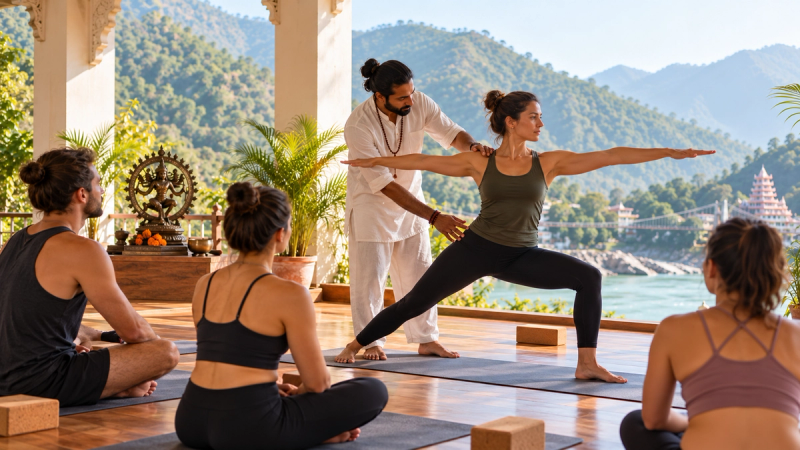
1. What Makes a 100-Hour YTT Different for Experienced Yoga Practitioners?
Experienced practitioners usually arrive with questions that go beyond basic pose recognition. You might understand Downward-Facing Dog, Warrior II, and seated meditation, yet still struggle to identify subtle alignment issues, adapt a posture for different bodies, or explain why one sequence feels more effective than another.
A focused training gives you space to investigate these gaps.
Instead of concentrating exclusively on learning a collection of asanas, you can study the principles behind them. For example, you might explore how shoulder positioning affects weight distribution in arm balances, how hip mobility influences standing postures, or how breathing patterns change when you move between dynamic and restorative practices.
The learning experience should also encourage you to question your habits. If you always practise Vinyasa, a slower Hatha session may reveal areas where you rely on momentum rather than control. If you prefer holding poses, structured movement can help you examine transitions, coordination, and stamina.
Familiar poses, deeper understanding
Look for teaching that explains:
The purpose and mechanics of a posture rather than only its final shape.
Safe modifications for different mobility levels and physical limitations.
The relationship between breath, movement, concentration, and effort.
How to recognise when a pose should be modified rather than pushed further.
Your experience is an advantage, but it does not automatically mean every advanced technique is appropriate for you. Good training builds understanding without treating physical difficulty as proof of progress.
If certification is part of your goal, review the programme's curriculum and the specific credential it awards. You can consult Yoga Alliance for general information about yoga teaching standards and registration. Do not assume that completing any 100-hour course automatically qualifies you for a particular registration category.
2. How Does a 100-Hour Yoga Teacher Training Refine Your Existing Practice?
A meaningful training should help you understand not only what you practise, but also how and why you practise it.
For experienced students, the most useful improvements often involve precision, adaptability, and awareness rather than collecting increasingly difficult postures.
Alignment and functional anatomy
You may already know the verbal cues for common asanas. A deeper study helps you understand when those cues are useful and when they need to change.
Consider Trikonasana, or Triangle Pose. Your stance, pelvic position, spinal movement, and available hip mobility all influence how comfortably you can enter the posture. Forcing your hand towards the floor may compromise your alignment without providing any additional benefit.
Studying anatomy alongside supervised practice helps you recognise these differences and make more informed adjustments.
Sequencing and intelligent progression
Experienced practitioners sometimes build personal routines around favourite poses. Training can help you examine whether a sequence prepares the body adequately for its demands.
You might study how to organise warm-ups, standing postures, peak poses, counterposes, and relaxation. You can also explore how intensity changes when you shorten transitions, extend holds, or incorporate breathwork.
A useful reference point is
, particularly if you want to understand the relationship between transitions, movement, and breath.
Breathwork and concentration
Pranayama and meditation can expose habits that physical practice does not always reveal. You may discover that you hold your breath during challenging postures, rush through transitions, or find sustained stillness more difficult than dynamic movement.
A well-structured programme gives you an opportunity to observe these patterns and practise with greater consistency. Breathwork should be taught progressively, with appropriate modifications and clear guidance about techniques that may not suit everyone.
The goal is not to replace your existing practice completely. It is to make that practice more deliberate, better informed, and easier to adapt over time.
3. Which Skills Should Experienced Practitioners Develop During 100-Hour YTT?
The strongest reason to pursue further training is the opportunity to identify what your current practice does not yet teach you.
You may be physically confident but unfamiliar with teaching. You might understand yoga philosophy intellectually but struggle to incorporate it naturally into a class. Or you may have a consistent personal practice without knowing how to adapt it for someone with different abilities.
A well-planned programme should help you recognise these gaps.
Teaching methodology and communication
Even if you do not intend to become a full-time yoga teacher, learning to communicate a posture clearly can improve your understanding of it.
Try explaining a simple standing sequence to another practitioner. Can you give concise instructions, describe the transition between poses, and offer an alternative when someone finds a movement uncomfortable?
These skills require a different perspective from following a teacher's instructions yourself.
Look for opportunities to practise verbal cueing, observation, class planning, and supervised teaching where these are included in the curriculum. You can also explore this guide to planning a yoga class as a new teacher for practical ideas on organising a session.
Philosophy beyond memorised quotations
Yoga philosophy becomes more useful when you connect its ideas to everyday choices and practice.
Concepts such as abhyasa (consistent practice) and vairagya (non-attachment) invite you to examine the difference between discipline and obsession. They can also help you question why you measure progress through flexibility, physical performance, or comparison with other practitioners.
Studying the philosophical foundations of yoga alongside physical training can broaden your understanding of the tradition. For additional historical context, you can visit the Encyclopaedia Britannica homepage and explore its educational material on Indian philosophy and related traditions.
Observation and responsible adjustment
Experienced practitioners may become accustomed to judging a pose by how it looks. Training should encourage a more careful approach.
You learn to consider individual comfort, mobility, balance, and the purpose of a movement before recommending a modification. Hands-on adjustments, where taught, require appropriate consent, training, and sensitivity.
Ultimately, your next level of practice is not defined by performing the most complicated posture in the room. It is defined by making better decisions, recognising your limitations, and understanding how different aspects of yoga work together.
4. Is a 100-Hour YTT Enough, or Should You Choose a 200-Hour Course?
The right choice depends on your objective, previous training, available time, and the credential you need.
A 100-hour programme can be useful when you want a concentrated introduction to specific areas of study, a structured period of personal development, or additional learning before committing to a longer residential course. Its actual depth depends on the curriculum, teaching hours, faculty, and practical assessment.
However, fewer hours mean less time for some subjects to be developed and assessed comprehensively.
Your main goal
Option to investigate
Deepen an established personal practice
A focused 100-hour programme
Explore yoga teaching before a longer commitment
A 100-hour programme with relevant teaching practice
Build a broader foundation for teaching
A comprehensive 200-hour teacher training
Develop a specific interest, such as sound work
A dedicated specialist course
Take a short break centred on yoga and relaxation
A yoga retreat
Check the certification pathway before paying
Do not assume that a 100-hour certificate is interchangeable with a 200-hour teacher training certificate. They serve different purposes, and the exact recognition of a qualification depends on the training provider and the registration system you intend to use.
If your objective is to pursue a conventional 200-hour teacher training qualification, compare the 200-Hour Yoga Teacher Training in Rishikesh with the shorter programme. Ask about entry requirements, contact hours, assessments, course completion criteria, and any progression arrangements.
Also establish whether previous training hours can be recognised towards another qualification. Get confirmation in writing rather than relying on an informal assurance.
Experienced practitioners should be especially careful about paying for a course simply because its title includes words such as advanced, intensive, or professional. A clearly defined syllabus and credible assessment process are more useful indicators of educational value.
5. Why Rishikesh Matters for an Immersive Yoga Practice
Rishikesh offers a distinctive environment for studying yoga because established yoga schools, spiritual traditions, riverside spaces, and Himalayan foothill landscapes exist within the same destination.
For international visitors, the appeal may include experiencing yoga in India, learning from different teaching perspectives, and spending time in a setting where yoga is part of the local cultural landscape. Indian practitioners may value the opportunity to step away from work, study, or household responsibilities and follow a more consistent daily schedule.
Yet the location alone does not make a programme effective. The quality of instruction, class size, curriculum, accommodation, and daily workload still matter.
Consider the rhythm of residential training
A typical intensive programme may combine asana practice, pranayama, meditation, theory, and independent study. The actual timetable varies by school, so review the schedule before enrolling.
You should also consider the practical realities of training in Rishikesh:
Weather: Temperatures, humidity, and rainfall vary significantly by season. Choose dates that suit your comfort and travel plans.
Accommodation: Confirm room type, bathroom arrangements, meals, Wi-Fi, and what is included in the quoted fee.
Daily workload: Ask how many hours are devoted to active practice, theory, breaks, and self-study.
Accessibility: Check transport arrangements, walking distances, and whether the facilities accommodate your needs.
Cultural expectations: Familiarise yourself with local customs and the school's guidelines for respectful participation.
You can explore yoga in Tapovan, Rishikesh to learn more about the area's appeal to yoga students.
Approach Rishikesh as a place to study rather than a guarantee of personal transformation. A supportive environment can make consistent practice easier, but your progress still depends on the quality of the teaching, your participation, and the time you give yourself to integrate what you learn.
6. How to Evaluate a 100-Hour YTT Before Enrolling
If you already have several years of yoga experience, choosing a course deserves more than comparing photographs and advertised prices.
Start by requesting the complete syllabus. Identify the subjects that are covered in detail, the time allocated to each, and the practical skills you are expected to develop.
Next, evaluate the teaching team. Ask about the instructors' relevant experience, teaching approach, and ability to work with students who have different levels of mobility and previous training.
Five questions worth asking
Before paying a deposit, find clear answers to these questions:
What will you learn? Request specific learning outcomes rather than broad promises about personal growth.
How much practical feedback will you receive? Find out whether instructors observe your practice and provide individual guidance.
What does the certificate represent? Clarify the credential, issuing organisation, and any registration implications.
What is included in the fee? Confirm tuition, accommodation, meals, materials, taxes, and any additional charges.
What happens if you cannot attend? Read the cancellation, refund, rescheduling, and withdrawal policies before committing.
It is also sensible to review independent feedback and ask how the school responds when a student needs a modification or additional support. Testimonials can offer useful context, but they should not replace a transparent syllabus or written policies.
Your experience should help you ask better questions, not make you assume that a course will automatically meet your expectations.
7. Explore a Focused Yoga Training in Rishikesh with Divine Yogpeeth
If you want to study yoga in Rishikesh without immediately committing to a longer programme, we invite you to explore our 100-Hour Yoga Teacher Training course and review its suitability for your experience, schedule, and learning goals.
Before enrolling, compare the syllabus with the subjects you most want to develop. Ask our team about the daily timetable, course inclusions, certificate, accommodation, and any requirements that may affect your participation.
A useful next step is to explain your current practice honestly. Tell us which styles you follow, how long you have practised, whether you have completed previous teacher training, and whether your priority is personal development or teaching skills.
That information can help you determine whether a shorter programme is appropriate or whether a comprehensive 200-hour course would better serve your goals.
You can also explore our five-day yoga retreat in Rishikesh if your immediate priority is a shorter period of guided practice and rest rather than a teacher-training qualification.
The best choice is the programme that matches your actual needs, not necessarily the longest or most intensive option.
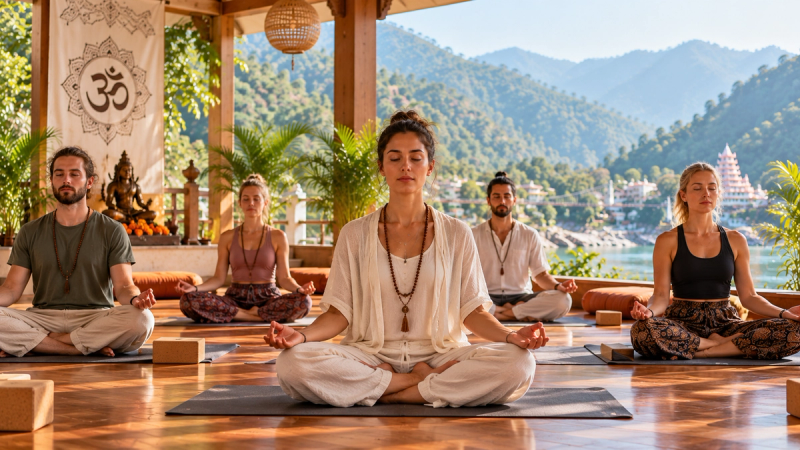
8. FAQs About 100-Hour YTT for Experienced Practitioners
Is a 100-hour YTT suitable if you have practised yoga for several years?
Yes, potentially. A 100-hour programme can suit experienced practitioners who want structured study, focused practice, or an introduction to teaching methodology. Check the curriculum to ensure it offers sufficient depth for your existing skills.
Do you need to be able to perform advanced yoga poses?
Not necessarily. Many important learning outcomes involve alignment, breathing, sequencing, meditation, and understanding individual limitations. You should ask the school about its physical requirements and any prerequisites before enrolling.
Can a 100-hour yoga teacher training qualify you to teach professionally?
A 100-hour certificate alone should not be assumed to meet the requirements for every professional teaching credential or registration pathway. Verify the course's recognition and the requirements of the organisation with which you intend to register.
What is the difference between 100-hour and 200-hour YTT?
A 100-hour course offers a shorter period of structured study, while a 200-hour programme provides more total training time for developing a broader foundation. The precise differences depend on the curriculum, assessment, and certification arrangements.
Why choose Rishikesh for yoga teacher training?
Rishikesh offers access to yoga schools, teachers, and a rich Indian cultural context. It can be a valuable setting for immersive study, provided you select a suitable programme and assess the quality of its instruction, accommodation, and curriculum.
Conclusion: Choose a 100-Hour YTT That Moves Your Practice Forward
For experienced yoga practitioners, the value of a 100-hour programme lies in what you learn to understand, question, and practise more effectively. Better alignment, thoughtful sequencing, more informed breathing practices, and a deeper understanding of yoga philosophy can all contribute to continued development.
The important step is choosing training that matches your current level and future goals. Review the syllabus, verify the certificate, understand the costs, and ask direct questions before committing.
If you are ready to deepen your practice in Rishikesh, explore our 100-Hour Yoga Teacher Training at Divine Yogpeeth. Review the course details and contact our team to discuss whether the programme is right for you.
─── IMAGE SUGGESTIONS ───
1. Featured Image
Description: An experienced practitioner practising a standing asana in a traditional yoga studio, with a calm Rishikesh setting.
ALT Text: Experienced yoga practitioners exploring 100-hour YTT in Rishikesh, India.
File name: 100-hour-ytt-experienced-practitioners-rishikesh.webp
2. In-Content Image 1
Description: A yoga instructor demonstrating alignment while experienced students observe and practise.
ALT Text: Yoga alignment training for experienced practitioners during a 100-hour YTT in Rishikesh.
File name: yoga-alignment-training-experienced-practitioners.webp
3. In-Content Image 2
Description: A small group of international students meditating in a peaceful yoga shala, suitable near the Divine Yogpeeth CTA.
ALT Text: Experienced yoga students practising meditation during yoga training in Rishikesh, India.
File name: yoga-meditation-training-tapovan-rishikesh.webp
─── SELF-CHECK ───
☑ Word Count: Approximately 2,400 words for the blog content; this is an estimate, not a verified exact count. Run a word count in your CMS before publishing to confirm it falls within 2,000–2,500 words.
☑ Main Page Links: 3 used.
https://www.divineyogpeeth.com/YTT/100-hour-yoga-teacher-training
https://www.divineyogpeeth.com/YTT/200-hour-yoga-teacher-training
https://www.divineyogpeeth.com/retreat/5-days-retreat
- ☑ Blog Links: 3 used.
https://www.divineyogpeeth.com/blog/vinyasa-fundamentals-100-hour-ytt
https://www.divineyogpeeth.com/blog/yoga-class-plan-template-new-teacher
https://www.divineyogpeeth.com/blog/tapovan-rishikesh-yoga
- ☑ External Links: Exactly 2, both formatted with rel="nofollow" in HTML.
- ☑ URL Verification: All 6 internal URLs used match the approved URL list character by character, including capitalization and path structure. No new internal URLs were generated.
Before publishing: The article is structured for your requested search intent, but the exact word count still needs verification. Also confirm the current course curriculum and certificate details with Divine Yogpeeth before making specific claims about certification or progression.