

Plan a 7 day yoga retreat Rishikesh with a realistic itinerary, expected costs, daily yoga practices and expert tips. Discover if it's right for you.
7 day yoga retreat Rishikesh: Itinerary, Cost and Who It Suits
Have you ever felt that a few days away from your regular routine could help you reconnect with yourself? A 7 day yoga retreat Rishikesh experience gives you enough time to slow down, establish a consistent yoga practice and explore a different way of living without committing to a month-long programme.
But what actually happens during seven days? Will you spend the entire week doing yoga, how much should you budget, and do you need previous experience?
A well-planned week combines physical yoga, breathing exercises, meditation, nourishing meals and time for personal exploration. You also get opportunities to experience Rishikesh beyond the yoga studio, from peaceful riverside mornings to the spiritual atmosphere of its traditional ashrams.
This guide explains what a realistic seven-day schedule looks like, the activities you can expect, approximate costs, accommodation considerations and who benefits most from this type of retreat. By the end, you should be able to decide whether a week in Rishikesh matches your expectations, experience and budget.
What Is a 7 Day Yoga Retreat in Rishikesh?
A seven-day yoga retreat is a short residential or organised wellness programme designed around regular yoga practice, meditation, relaxation and healthier daily habits.
Unlike a regular holiday, your days follow a purposeful schedule. You are not simply visiting a destination; you are giving yourself time to practise, observe your habits and experience a more balanced routine.
Rishikesh is particularly suitable for this format because yoga is part of its everyday culture. You can find traditional yoga schools, meditation spaces, vegetarian cafés, spiritual gatherings and quiet locations along the Ganga.
A typical retreat may include:
- Morning Hatha or Vinyasa yoga.
- Pranayama and breathing exercises.
- Guided meditation and relaxation.
- Evening yoga or restorative practices.
- Sattvic or vegetarian meals.
- Basic yoga philosophy and lifestyle discussions.
- Free time for riverside walks and local exploration.
The exact schedule depends on the school and the retreat package. Some programmes focus more on physical movement, while others place greater emphasis on meditation, traditional practices and relaxation.
It is also important to understand that a retreat is not the same as a yoga teacher training course. You are participating primarily for personal practice and wellness, not necessarily working towards a teaching qualification.
If you are curious about the difference, our guide to yoga retreat versus yoga vacation explains why these experiences can feel quite different.
For a broader understanding of recognised yoga education and certification, you can explore the Yoga Alliance website. Remember that a retreat and a teacher training programme have different educational objectives.
7 Day Yoga Retreat Rishikesh: A Realistic Day-by-Day Itinerary
Seven days give you a useful balance between structured practice and personal time. You can gradually become familiar with the schedule rather than trying to change everything overnight.
Here is an example of how a thoughtfully organised week might look. Actual activities and timings vary between retreat providers.
Day 1: Arrival, Orientation and Settling In
Your first day should be relatively light.
After arriving in Rishikesh, check into your accommodation, meet the instructors and become familiar with the surroundings. You may have an introductory meeting covering the retreat schedule, meals, facilities and basic guidelines.
A short introductory meditation or gentle stretching session can help you recover from travelling.
Use the evening to explore the nearby area, understand meal timings and get enough rest.
Your focus: Settle in without putting pressure on yourself to achieve anything immediately.
Day 2: Establishing Your Yoga Routine
The second day introduces you to the regular rhythm of retreat life.
You might begin with morning meditation or pranayama, followed by a Hatha yoga session. After breakfast, there may be time for a philosophy discussion or a break before afternoon activities.
An evening practice could involve gentle stretching, breathing exercises or relaxation.
Do not worry if your body feels unfamiliar with the schedule. Your first few sessions are about understanding your current abilities and learning how to practise safely.
Your focus: Build consistency and become comfortable with the practice.
Day 3: Exploring Breathwork and Meditation
By the third day, you may start feeling more familiar with the routine.
This is an appropriate time to pay closer attention to pranayama, meditation and body awareness. You can learn how breathing patterns influence concentration and how to approach meditation without becoming frustrated by wandering thoughts.
Some retreats introduce different breathing techniques, while others focus on a smaller number of foundational practices.
For a deeper understanding, explore these pranayama techniques and their role in yoga practice.
Your focus: Develop awareness of your breath and learn to approach meditation patiently.
Day 4: Yoga Philosophy and Personal Reflection
The middle of your retreat offers an opportunity to look beyond physical postures.
You may explore basic yoga philosophy, mindfulness, self-discipline and the relationship between everyday habits and personal well-being.
You can also use journaling to reflect on your experience so far.
Questions worth considering include:
- Which part of your routine feels most comfortable?
- Are you finding it easier to concentrate?
- Which yoga practices would you like to continue?
- Are you rushing through activities or giving yourself enough time?
Your focus: Understand the principles behind your practice and connect them with daily life.
Day 5: Deeper Practice and Relaxation
The fifth day can involve a more familiar and confident approach to yoga.
Depending on your experience and the retreat schedule, you may participate in a longer asana session, restorative yoga, guided relaxation or sound healing.
You should not confuse a deeper practice with an intense workout. The objective is to understand your body better, not compete with other participants.
If sound-based relaxation interests you, you can also explore the difference between group and private sound healing sessions.
Your focus: Balance physical practice with recovery and relaxation.
Day 6: Integrating Yoga Into Everyday Life
On the sixth day, attention can shift towards what happens after the retreat.
You may have discussions about maintaining a personal yoga routine, choosing suitable practices and managing your time when regular responsibilities return.
A relaxed walk around the neighbourhood or time near the Ganga can also provide space for reflection.
Try creating a simple routine that you can realistically maintain at home. Even a short daily practice is more useful than planning an unrealistic schedule that you abandon after a few days.
Your focus: Turn what you have learned into practical daily habits.
Day 7: Final Practice and Departure
Your final day usually includes a concluding yoga or meditation session, breakfast and a closing discussion.
You can reflect on the week, ask your instructors any remaining questions and prepare for your journey home.
Before leaving, write down two or three practices you want to continue.
Seven days will not solve every challenge in your life, but they can give you a clearer starting point.
Your focus: Leave with a realistic plan rather than temporary enthusiasm.
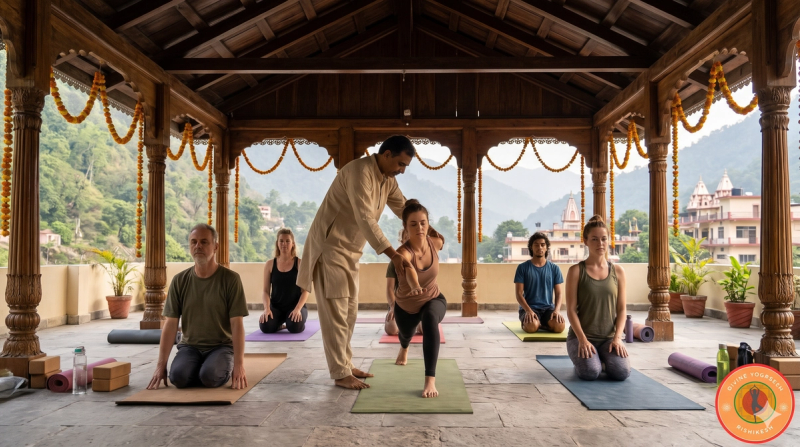
What Does a Typical Daily Schedule Look Like?
The daily schedule is one of the most important things to check before booking.
A retreat that looks attractive in photographs may not suit you if its timetable is too demanding or does not provide enough personal time.
Here is an illustrative timetable:
TimeActivity6:00 AMWake up and freshen up6:30 AMMeditation or pranayama7:00 AMMorning yoga session8:30 AMBreakfast10:00 AMPhilosophy or wellness session11:30 AMPersonal time1:00 PMLunch2:00 PMRest and relaxation4:00 PMEvening yoga or restorative practice5:30 PMMeditation or relaxation7:00 PMDinner8:00 PMPersonal time and rest
These timings are examples, not a guaranteed schedule. Some schools organise fewer sessions, while others have additional workshops.
Before making a booking, ask whether the retreat includes both morning and evening practices, how much free time you receive and whether sessions are compulsory.
You should also ask about the teaching style. A beginner may prefer detailed explanations and individual guidance, whereas an experienced practitioner might enjoy a more challenging schedule.
7 Day Yoga Retreat Rishikesh Cost: What Should You Budget?
The cost of a week-long yoga retreat in Rishikesh depends on accommodation, food, teaching quality, facilities, group size and the number of included activities.
There is no single standard price across all schools.
A low-cost package may offer shared accommodation and a basic yoga schedule. A more expensive programme might include private rooms, additional wellness sessions, smaller groups and more personalised attention.
For initial planning, you can use the following indicative budget ranges. These are general planning estimates, not verified prices or quotations from a particular retreat provider.
Expense categoryApproximate cost for 7 daysBudget retreat package₹12,000–₹20,000Mid-range retreat package₹20,000–₹35,000Premium retreat package₹35,000–₹60,000+Additional local expenses₹2,000–₹5,000Travel to RishikeshDepends on your starting point
International visitors should also account for flights, visa requirements, airport transfers, travel insurance and currency exchange.
What Should Your Retreat Package Include?
Do not compare packages by price alone.
Check whether the quoted amount includes:
- Accommodation for all seven days.
- Daily breakfast, lunch and dinner.
- Scheduled yoga and meditation sessions.
- Qualified and experienced instructors.
- Yoga mats and other practice equipment.
- Any advertised workshops or special sessions.
- Taxes and additional charges, where applicable.
Some schools advertise an attractive starting price but charge separately for accommodation, meals or optional activities.
Ask for a complete written breakdown before paying.
How Can You Avoid Paying for Unnecessary Extras?
Start by identifying what matters most to you.
If your priority is learning yoga, spend more attention on teaching quality and class size than luxury accommodation.
If you are travelling internationally, convenient accommodation and reliable communication may be worth paying extra for.
Also check cancellation policies, payment schedules and refund conditions. These details become particularly important when your travel plans involve international flights.
For more practical savings ideas, explore this guide to an affordable yoga retreat in Rishikesh.
Who Should Choose a Seven-Day Yoga Retreat?
A week-long retreat is not designed exclusively for experienced yoga practitioners.
It can suit different people, provided the programme matches their physical abilities, expectations and interests.
Beginners Who Want a Structured Introduction
If you have never attended a formal yoga class, seven days can help you understand basic postures, breathing techniques and meditation.
You have time to ask questions and become familiar with the instructions.
However, choose a beginner-friendly programme rather than assuming every retreat teaches from the absolute basics.
Experienced Practitioners Seeking a Change of Routine
You may already practise yoga at home but struggle to maintain consistency.
A retreat gives you dedicated time to practise without the usual interruptions.
It can also expose you to different teaching approaches and help you reconsider aspects of your existing routine.
Working Professionals Experiencing Routine Fatigue
If your regular schedule leaves little time for physical activity or quiet reflection, a structured retreat may offer a useful break.
The combination of movement, breathing exercises, rest and fewer everyday distractions can help you establish healthier habits.
However, a retreat is not a substitute for professional medical or mental healthcare when those services are needed.
International Travellers Interested in Indian Yoga Culture
Rishikesh offers an opportunity to experience yoga in a setting where traditional practices remain visible in everyday life.
You can learn about Indian yoga traditions while interacting with teachers and fellow participants from different backgrounds.
You should still research the programme carefully. Not every retreat follows the same philosophy or teaching approach.
Who Might Need a Different Programme?
A seven-day retreat may not be the best choice if you want professional yoga teacher certification.
In that case, a structured teacher training course is more appropriate.
Similarly, if you want extensive personal instruction, check whether private classes are available instead of assuming they are included in a group package.
Why Rishikesh Matters for a Yoga Retreat
The destination influences your experience, but it should not be the only reason you select a retreat.
Rishikesh offers a distinctive combination of natural surroundings, yoga education and spiritual traditions.
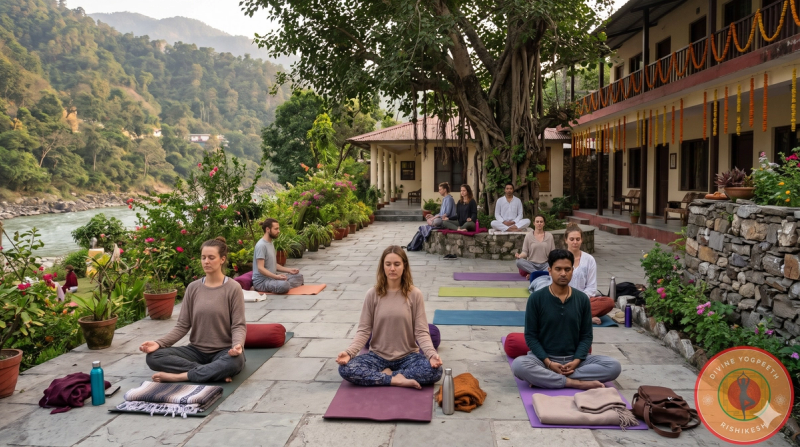
The Ganga and Riverside Environment
The Ganga is an important part of Rishikesh's cultural and spiritual identity.
Spending time near the river can give you opportunities for quiet walks, reflection and observing local traditions.
Areas around Laxman Jhula and Tapovan are particularly familiar to yoga travellers because of their concentration of yoga schools, accommodation and cafés.
Access to Different Yoga Traditions
Rishikesh has schools offering Hatha, Ashtanga, Vinyasa, meditation, pranayama and other practices.
This variety is useful, but it also means you should investigate what a school actually teaches.
A retreat described as traditional may have a very different schedule from one focused on contemporary fitness-oriented yoga.
A Setting That Encourages a Different Routine
Your surroundings can influence your daily habits.
When your day begins with a yoga session rather than checking emails, and you have scheduled time for meals and relaxation, you may find it easier to focus on the present.
Still, the location itself does not guarantee personal change. Your experience depends on the quality of instruction, your expectations and your willingness to participate.
What About the Best Time to Visit?
Rishikesh experiences seasonal changes that affect temperature, rainfall and travel comfort.
- February to April: Often a comfortable period for outdoor activities and sightseeing.
- May to June: Can become quite hot, especially during the afternoon.
- July to September: Monsoon conditions may bring heavy rainfall and travel disruptions.
- October to November: Generally pleasant for many travellers, with cooler evenings.
- December to January: Winter mornings and evenings can be cold, so suitable clothing is important.
Check local weather conditions before travelling rather than relying only on general seasonal expectations.
Choosing the Right Retreat School: What Should You Check?
The school you choose can make a bigger difference than the number of activities advertised.
A well-organised programme should clearly explain its teaching approach, schedule, accommodation arrangements and inclusions.
Consider these factors before making your decision.
1. Instructor experience
Check who will conduct your sessions, their teaching background and whether they have experience working with beginners.
2. Class size
Smaller groups can make it easier to receive individual attention. Ask how many participants usually attend each session.
3. Teaching style
Find out whether classes focus on Hatha, Vinyasa, restorative yoga or a combination of practices.
4. Accommodation and food
Ask for current room photographs, bathroom arrangements, meal details and information about drinking water.
5. Reviews and communication
Look for detailed participant feedback rather than relying exclusively on promotional testimonials.
Pay attention to how the school answers questions before you book. Clear communication is a useful sign of organised management.
6. Safety and accessibility
Ask whether modifications are available for different physical abilities and whether instructors explain how to practise safely.
You should also disclose relevant physical limitations to the retreat provider before joining.
Experience a Week of Yoga With Divine Yogpeeth
If you are considering a yoga retreat in Laxman Jhula, Divine Yogpeeth offers a place to explore yoga and traditional wellness practices in Rishikesh.
Our school is located in the Tapovan area, close to the Ganga and surrounded by the distinctive atmosphere of the Himalayan foothills.
You can explore our Divine Yogpeeth yoga programmes and learning opportunities to understand the different options available before choosing a programme that matches your goals.
When comparing a seven-day retreat, ask about the current schedule, accommodation, meals, instructor availability and total package cost so that your expectations match the actual experience.
Image placement suggestion: Show a welcoming yoga practice space with participants practising in a calm, naturally lit environment.
Frequently Asked Questions About a Seven-Day Yoga Retreat in Rishikesh
1. Is seven days enough for a yoga retreat in Rishikesh?
Yes. Seven days can give you enough time to establish a routine, experience different yoga practices and become familiar with meditation and pranayama.
However, it is a short introduction rather than a complete mastery of yoga. Your progress will depend on your previous experience, consistency and the programme's teaching quality.
2. Can beginners join a one-week yoga retreat?
Yes, many retreats accept beginners.
You should confirm that the programme offers suitable instruction, posture modifications and guidance for people with limited experience.
You do not need to be flexible or physically advanced to start practising yoga.
3. How much does a seven-day yoga retreat cost in Rishikesh?
Indicative package prices can range from approximately ₹12,000 to ₹60,000 or more, depending on accommodation, meals, teaching quality and additional services.
These are broad planning estimates, not fixed market rates. Always request the latest written quotation from the school.
4. What should you pack for a yoga retreat?
Pack comfortable yoga clothes, modest everyday clothing, a reusable water bottle, personal toiletries, comfortable footwear and any prescribed personal medication.
During winter, carry warm layers. During the monsoon, waterproof footwear and rain protection can be useful.
Check whether your retreat provides yoga mats and other equipment.
5. Is a yoga retreat the same as yoga teacher training?
No. A retreat generally focuses on personal practice, relaxation and wellness.
Teacher training programmes have a structured educational curriculum designed to develop teaching knowledge and practical instructional skills.
If you want to explore formal study, compare the 100-hour yoga teacher training programme with a longer certification-oriented course before deciding.
Conclusion: Is a 7 Day Yoga Retreat Rishikesh Worth It?
A 7 day yoga retreat Rishikesh experience can be a practical choice if you want dedicated time for yoga, meditation, healthier routines and exploring India's yoga culture.
You do not need to be an advanced practitioner or have years of experience. What matters more is choosing a suitable programme, understanding what your package includes and approaching the week with realistic expectations.
Before booking, compare schedules, instructors, accommodation, meals and total costs. Avoid choosing a retreat only because it looks attractive in photographs or advertises the lowest price.
If you are ready to spend a week practising yoga in Rishikesh, explore the Divine Yogpeeth retreat programmes and ask about the current retreat options that match your preferred dates and duration.
Give yourself seven days to practise with consistency, discover a different daily rhythm and take home habits that you can continue long after your stay in Rishikesh.
What Should You Expect Emotionally and Physically During the Week?
A week of regular yoga practice can feel different from your usual routine, particularly if you spend most of your day sitting, working or travelling.
During the first couple of days, you may notice muscle stiffness or difficulty adjusting to early morning sessions. This is not unusual when you begin a new physical routine, but discomfort should never be treated as something you must push through.
By the middle of the week, you may become more familiar with the practice schedule. You might find it easier to follow instructions, coordinate breathing with movement and spend time sitting quietly.
Your experience will not necessarily follow a predictable pattern. Some participants enjoy the physical sessions most, while others appreciate meditation, conversations with instructors or simply having fewer daily distractions.
How Can You Get More From Your Retreat?
A few practical habits can make your week more meaningful:
- Avoid overcommitting: Participate consistently, but respect your physical limits.
- Reduce unnecessary screen time: You do not need to disconnect completely, but consider limiting social media during practice hours.
- Ask questions: If you do not understand a posture or breathing technique, speak with your instructor.
- Stay hydrated: Rishikesh can become warm, especially during the summer months.
- Maintain realistic expectations: Do not measure your progress against another participant.
- Keep a journal: Record useful techniques, observations and questions throughout the week.
What About Food During the Retreat?
Food is another important part of the experience.
Many traditional yoga retreats serve vegetarian or sattvic-style meals, often consisting of rice, lentils, vegetables, seasonal fruits and other simple preparations.
However, dietary arrangements vary. If you have allergies, dietary restrictions or specific nutritional requirements, communicate these before booking.
You should also avoid making sudden dietary changes without considering your individual needs.
For information about India's traditional approaches to health and wellness, you can explore the Ministry of Ayush website.
The most useful outcome of a retreat is not following a perfect routine for seven days. It is discovering which practices you can realistically maintain when you return home.