.jpg)

Discover the real yoga retreat vs yoga vacation difference before you travel. Learn how structured discipline compares to casual rest and make the right choice.
Yoga Retreat vs Yoga Vacation Difference: Which Is Right for You?
Understanding the exact yoga retreat vs yoga vacation difference is the single most crucial step before you book your flight to India. You might feel exhausted and desperately need a break, but choosing the wrong type of getaway can leave you feeling frustrated rather than rejuvenated. Many travelers arrive in Rishikesh expecting to sleep in and sip coffee by the river, only to find themselves enrolled in an intense, highly disciplined schedule that tests their physical and mental limits.
Conversely, you might arrive hoping for deep spiritual transformation, only to realize you booked a casual holiday with minimal guidance. The yoga retreat vs yoga vacation difference ultimately dictates the entire rhythm, purpose, and outcome of your precious time away from home.
You need to know exactly what you are signing up for before making a commitment. This guide will break down the precise expectations, daily schedules, physical demands, and psychological benefits of both options. By the end of this read, you will have complete clarity on which path aligns perfectly with your current goals, energy levels, and spiritual needs. You deserve a trip that genuinely restores your soul, and that begins with making an informed, confident decision right now.
The Core Yoga Retreat vs Yoga Vacation Difference
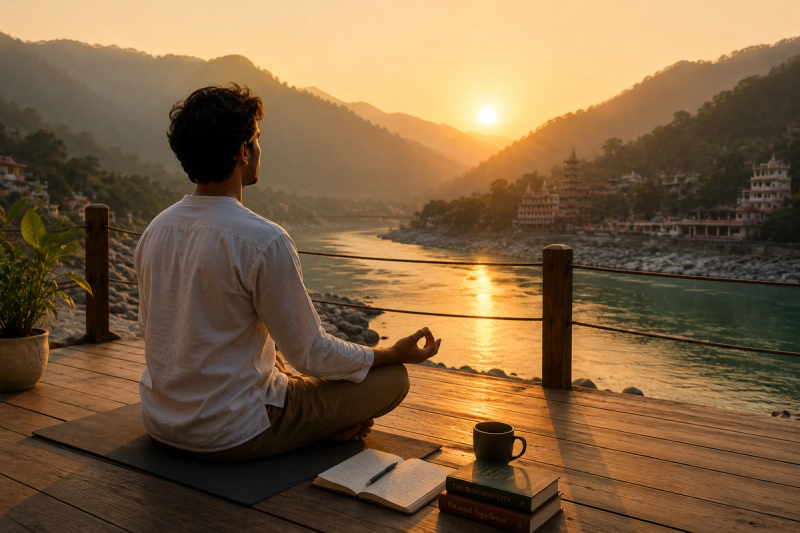
The fundamental yoga retreat vs yoga vacation difference comes down to one single concept: intention. A retreat is purposely designed to pull you out of your comfort zone and facilitate deep, focused personal growth. You are not just traveling to see new sights; you are traveling to look inward. Every element of the experience, from the moment you wake up to the food you consume, is carefully curated to support your spiritual and physical practice.
On a retreat, you surrender your daily decision-making to experienced teachers. You follow a set curriculum that builds progressively each day. Standards are high, and the environment often mirrors the rigorous expectations set by international bodies like Yoga Alliance for dedicated practitioners. You are expected to show up, do the work, and engage with the process even when it feels challenging.
A vacation, however, revolves entirely around your freedom and personal comfort. Your primary goal is relaxation, stress relief, and pleasure. You dictate the schedule, deciding whether you want to attend a morning class, sleep until noon, or skip yoga entirely to explore local markets. There is no curriculum, no teacher monitoring your progress, and no pressure to achieve a specific spiritual milestone.
Deepening Your Practice: The Ultimate Yoga Retreat vs Yoga Vacation Difference
When you analyze the yoga retreat vs yoga vacation difference, the depth of your daily practice stands out immediately. Retreats are immersive. You will likely practice asana twice a day, accompanied by mandatory meditation, pranayama (breathwork), and philosophy sessions. This intense structure is designed to break down physical and mental blockages rapidly.
You will encounter poses and breathing techniques that push your boundaries. The teachers will correct your alignment, challenge your stamina, and guide you through emotional releases. This level of immersion helps you decide if you want a short burst of intense discipline or a slightly longer commitment, much like evaluating a 5 Days Retreat.
To understand how duration impacts this intense focus, reading about the Yoga Retreat Rishikesh 5 Days vs 3 Days: 1 Best Choice can provide excellent perspective. Vacations, on the other hand, offer casual drop-in classes. The instruction is generally tailored to a rotating group of tourists, meaning the sequences remain accessible and relatively basic. You will stretch, move your body, and feel good, but you will not receive the personalized, progressive guidance necessary for deep physical or spiritual breakthroughs.
Daily Schedules: Strict Discipline vs Total Freedom
The daily itinerary highlights the most visible contrast in your travel experience. On a formal retreat, your alarm will likely ring before sunrise. You might start with a cleansing ritual, followed by a silent meditation, an intense two-hour physical practice, and a group breakfast. Your day is mapped out hour by hour, leaving little room for random sightseeing or extensive downtime.
This strict routine is not meant to restrict you; it is meant to liberate you from decision fatigue. When you follow a dedicated schedule, you stop worrying about what to do next. Research available through medical databases like PubMed frequently highlights how predictable, structured routines significantly lower anxiety and reduce cortisol levels in the brain.
A vacation offers the exact opposite approach. Your schedule is a blank canvas. You might wake up, enjoy a leisurely breakfast, take a slow walk, and decide at 4 PM that you want to try a gentle Yin class. This freedom is incredibly healing if you suffer from severe burnout and simply cannot handle another schedule or obligation in your life.
Physical and Mental Demands on the Body
You must honestly assess your physical and mental stamina before booking your trip. Retreats can be exhausting, especially in the first few days as your body adapts to the rigorous schedule and detoxifies. You will experience muscle soreness, fatigue, and potentially emotional turbulence as you sit quietly with your thoughts during long meditation sessions.
This discomfort is a normal, celebrated part of the retreat process. It signals that you are breaking old patterns and building new strength. If you want to dive deeper into how physical movement contrasts with casual stretching, the insights in Yoga vs Stretching Difference Benefits: 7 Proven Truths can help clarify your expectations.
Vacations place zero demands on your nervous system. If your body feels tired, you rest. If your mind feels overwhelmed, you distract yourself with a good book, a massage, or a nice meal. The priority is immediate comfort and soothing your senses, rather than digging into the challenging, sometimes uncomfortable work of active personal development.
The Social Environment: Community Connection vs Personal Solitude
The people you surround yourself with will heavily influence your experience. Retreats foster an incredibly tight-knit community. You eat together, practice together, and share vulnerable moments during group discussions. You are surrounded by like-minded individuals who are all focused on a similar path of self-improvement and healing.
This community aspect can be profoundly supportive. You build deep friendships quickly because the shared intensity of the program strips away superficial small talk. However, if you are highly introverted and seeking absolute silence, this constant group dynamic might feel draining unless you specifically book a silent, introspective program.
Vacations offer complete social autonomy. You can choose to be entirely solitary, interacting only with waiters and hotel staff. If you are desperate to unplug from the world, step away from social obligations, and simply exist without answering to anyone, this independence is vital. Learning how to properly disconnect is essential, as detailed in our guide to a Digital Detox Yoga Retreat Rishikesh: 5 Best Ways to Unplug.
Dietary Expectations and Physical Nourishment
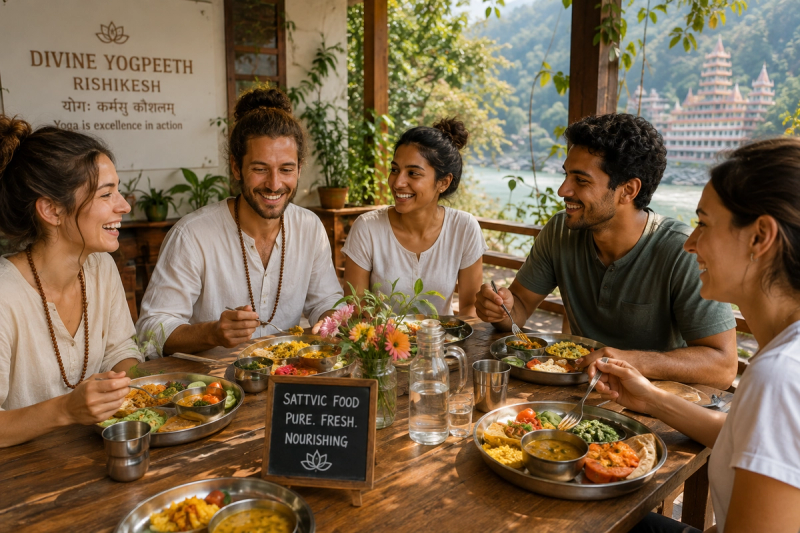
Food plays a massive role in how you feel during your travels. On a structured retreat, the diet is specifically tailored to support your physical practice and spiritual clarity. Meals are usually vegetarian, highly nutritious, and served at specific times to optimize digestion before classes.
You will likely eat a traditional yogic diet, avoiding heavy spices, caffeine, refined sugar, and processed foods. This clean eating approach accelerates detoxification and leaves you feeling remarkably light and energized. To understand exactly why this specific menu is so beneficial, explore the Sattvic Diet Yoga Retreat: 7 Best Reasons You Will Love It.
Vacations allow you to indulge in culinary exploration. You can eat whatever you want, whenever you want. You can try local street food, enjoy rich desserts, and drink coffee freely. While this is incredibly enjoyable and a valid way to experience a new culture, it does not provide the same physical reset or energetic lightness that a dedicated, controlled retreat diet offers.
Financial Investment: Analyzing the Value of Both Options
Cost is always a factor when planning international travel. A formal retreat often requires a higher upfront payment. You are paying for a comprehensive package that includes your accommodation, all meals, expert instruction, scheduled workshops, and sometimes local excursions.
While the initial price tag might seem higher, a retreat can actually be more cost-effective. Because everything is included and you are actively engaged in the program all day, you spend very little extra money on the ground. You are paying for a high-value, expertly guided transformational experience rather than just a place to sleep.
A vacation might look cheaper initially if you book a budget guesthouse and find cheap flights. However, the costs add up quickly. Paying individually for daily drop-in classes, eating all your meals at restaurants, and booking spontaneous tours can easily exceed the cost of an all-inclusive retreat. You are paying for flexibility, but you must manage the budget yourself daily.
Why Rishikesh? Why This Matters
Regardless of whether you choose a structured program or a flexible holiday, location amplifies the results. Rishikesh is not just a scenic town; it is a spiritual epicenter. The energy here is palpable, vibrating with centuries of focused meditation and spiritual devotion from wandering sages and modern practitioners alike.
Practicing in Rishikesh accelerates your growth. The natural environment, surrounded by the towering Himalayas and the rushing waters of the sacred Ganges, acts as a powerful catalyst for inner peace. Understanding the Ganga River Yoga Rishikesh Spiritual Significance: 5 Facts helps explain why this specific location feels so different from anywhere else in the world.
The town itself supports your journey. You are surrounded by ashrams, holistic healers, and organic cafes. The entire infrastructure of Rishikesh is built around supporting wellness, making it the perfect destination for both serious students seeking deep discipline and tired travelers needing a profound, spiritual rest.
Soft CTA: Finding Your Balance
Choosing the right path requires absolute honesty with yourself about your current physical and emotional needs. If you are considering training or resting in Rishikesh, we provide options that honor exactly where you are in your journey. You might want to explore our homepage at Divine Yogpeeth to see how we blend traditional teachings with comfortable, supportive environments.
Whether you need the gentle restorative touch of our specialized Therapy sessions or a structured program to reignite your passion, we ensure your time in India is safe, authentic, and deeply fulfilling. We handle the logistics so you can focus entirely on your personal evolution.
FAQs
What if I cannot keep up with a retreat schedule?
Experienced teachers know how to modify practices for varying energy levels. You will be encouraged to try your best, but you will also be taught how to rest properly in specific poses when your body truly needs a break.
Do I need to be an advanced student to join a retreat?
Absolutely not. You simply need an open mind and a willingness to learn. The structure is designed to guide you safely from wherever your current starting point happens to be.
Can I turn a vacation into a retreat experience?
It is very difficult to replicate the deep, cumulative benefits of a retreat on your own. Without a set curriculum, a dedicated teacher, and the support of a group, maintaining rigorous self-discipline while traveling requires immense willpower.
How do I know if I am too burnt out for a retreat?
If the thought of waking up early and attending a physically demanding class makes you feel anxious rather than excited, you likely need a vacation first. Listen to your body and prioritize pure rest before attempting rigorous inner work.
Conclusion
The true yoga retreat vs yoga vacation difference comes down to your personal intention for the journey. If you need ultimate freedom, late mornings, and casual stretching by a pool, a vacation will serve you beautifully. However, if you are hungry for real change, deep healing, and a structured environment that pushes you to evolve, a dedicated retreat is the only answer.
Stop guessing what you need and start taking action toward the transformation you deserve. We are here to guide you every single step of the way. Ready to begin your journey? Explore our 200-Hour Yoga Teacher Training in Rishikesh and take the first step toward a life-changing experience today.