.jpg)

Master bandhas yoga types how to practice safely. Discover the 5 ultimate energy locks to transform your daily flow. Read this guide and find out more today.
Bandhas Yoga Types How to Practice: The Ultimate Guide to Unlocking Your Energy
Are you struggling to find that elusive feeling of lightness and stability on your mat? If you want to master internal energy, understanding bandhas yoga types how to practice them safely is your ultimate starting point. For decades, practitioners have treated these internal locks as advanced mysteries, but they are highly accessible once you understand their mechanics.
Most physical yoga focuses purely on stretching and strengthening muscles. However, true transformation happens when you move beyond the physical and begin directing your life force, known as prana. Energy locks serve as valves in your body, sealing and directing this vital energy.
When you learn to engage these subtle locks, your physical postures become weightless. Your breathing exercises gain profound depth, and your mind settles into a state of unwavering focus. This guide will break down the fundamental locks and show you exactly how to integrate them into your daily routine.
Prepare to completely shift your perspective on what is possible within your body. By the time you finish reading, you will possess the precise knowledge needed to safely awaken and harness your internal power.
Understanding Bandhas Yoga Types How to Practice Effectively
To truly grasp internal energy work, you must first understand what a "bandha" actually is. In Sanskrit, the word translates to "lock," "bind," or "tighten." These are precise muscular and energetic contractions applied to specific areas of the physical body.
When you apply a lock, you temporarily block the flow of blood and energy to a certain region. The moment you release the lock, fresh, highly oxygenated blood floods the area. This process rejuvenates your internal organs and flushes out stagnant energy.
In traditional yogic anatomy, your life force flows through energy channels called nadis. The two primary energy forces are Prana (upward-flowing energy) and Apana (downward-flowing energy). Energy locks help reverse these natural flows so they meet and unite in your center.
This union forces energy upward through your central channel, the Sushumna Nadi. As this vital force rises, it clears blockages and awakens your dormant potential. It is a highly scientific process that merges physical anatomy with subtle energy dynamics.
Modern science is also beginning to validate these ancient techniques. Research available through PubMed explores how specific yogic breathing and muscular locks positively stimulate the vagus nerve. This stimulation triggers your parasympathetic nervous system, drastically reducing stress and anxiety.
You must approach these techniques with patience and respect. Forcing a muscular contraction will only create tension, which blocks energy rather than sealing it. True mastery comes from finding the delicate balance between effort and complete surrender.
The Core Bandhas Yoga Types How to Practice Mula Bandha
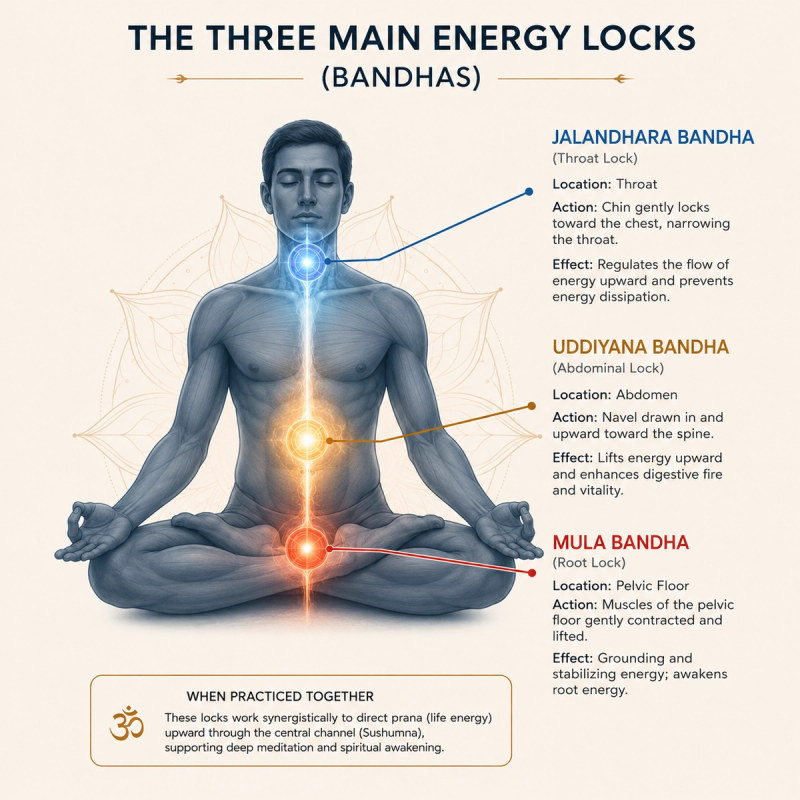
Mula Bandha, or the Root Lock, is the foundational practice of all energy work. "Mula" translates to root, source, or base, directly connecting to your foundational energy center. Physically, this lock involves the precise contraction of the pelvic floor muscles.
For men, the contraction occurs precisely at the perineum, the space between the anus and the genitals. For women, the focal point is at the cervix or the deepest part of the pelvic floor. It is essential to isolate these muscles without tensing your abdomen or glutes.
To practice Mula Bandha safely, start in a comfortable seated position with a straight spine. Close your eyes and bring your awareness entirely to your pelvic floor. Inhale deeply, and as you exhale, gently lift and squeeze the perineum inward and upward.
Hold this gentle contraction while continuing to breathe naturally through your nose. Initially, you may only be able to hold the lock for a few seconds before the muscles tire. Over time, your goal is to maintain a subtle, continuous engagement throughout your physical practice.
The benefits of the Root Lock extend far beyond physical stability. Engaging this area prevents your vital energy from escaping downward, keeping you energized and focused. It also builds incredible core strength, protecting your lower back during complex movements.
Energetically, Mula Bandha is heavily tied to your first energy center. If you want to explore the spiritual side of this area, understanding root chakra healing techniques provides a massive advantage. Combining the physical lock with chakra awareness accelerates your inner growth.
Mastering Uddiyana Bandha: The Abdominal Lock
Uddiyana Bandha translates to "upward flying," which perfectly describes the energetic sensation of this practice. This is the abdominal lock, and it is arguably the most dramatic and physically apparent of all the locks. It directs stagnant energy from your lower belly straight up into your heart center.
You must strictly perform Uddiyana Bandha on a completely empty stomach, preferably first thing in the morning. Attempting this lock after eating can cause severe digestive distress and nausea. Always prioritize safety and listen to your body's immediate feedback.
To practice, stand with your feet shoulder-width apart and your knees slightly bent. Rest your hands on your thighs, take a deep inhalation through your nose, and then aggressively exhale every drop of air through your mouth. Once your lungs are completely empty, hold your breath out.
Without inhaling, pull your abdominal muscles forcefully inward and upward, tucking them deep under your ribcage. You will feel a strong suction in your belly, creating a hollow cavity. Hold this vacuum-like seal for as long as it feels completely comfortable.
When you need to breathe, release the abdominal grip completely before slowly inhaling. Never gasp for air; the release should be smooth and controlled. Repeat this process three to five times, resting for a few natural breaths between each round.
Uddiyana Bandha is a massive tonic for your internal organs. It massages your digestive tract, stimulates the liver and pancreas, and dramatically improves sluggish digestion. When paired with learning about different pranayama types benefits practice, it becomes a powerful tool for holistic health.
Jalandhara Bandha and Maha Bandha: Completing the Circuit
Jalandhara Bandha, the Throat Lock, is the final individual lock you must master. "Jalan" means web or network, and "Dhara" means to hold or catch. This lock controls the network of subtle energy channels converging in your neck and throat.
To practice, sit comfortably, inhale deeply, and gently hold your breath. Lengthen the back of your neck and slowly drop your chin down to rest in the notch between your collarbones. Lift your sternum slightly to meet your chin, creating a firm but gentle seal.
Keep your shoulders relaxed and pulled away from your ears. Hold this lock for a few seconds, then lift your head back to a neutral position before smoothly exhaling. This lock is highly protective, preventing the intense energy generated in the lower body from rushing into your head.
The Throat Lock stimulates your thyroid gland, helping to balance your metabolism. It also naturally calms the mind, making it a perfect precursor to deep meditation. Reputable organizations like Yoga Alliance frequently emphasize the importance of practicing this lock specifically during breath retention.
Once you have mastered all three individual locks, you are ready for Maha Bandha, the Great Lock. This ultimate practice involves engaging Mula, Uddiyana, and Jalandhara simultaneously. It requires intense concentration and should only be attempted by experienced practitioners.
Maha Bandha creates an airtight seal within your body, halting the mental chatter entirely. It is the pinnacle of energy regulation, consolidating your life force and driving it into the highest energetic channels. This is where physical exercise truly transitions into a profound spiritual awakening.
The Anatomy and Science Behind Energy Locks
Beyond the spiritual philosophy, the physical mechanics of energy locks are fascinating. When you engage your pelvic floor, you create a supportive hammock for your internal organs. This muscular engagement directly links to the transverse abdominis, your deepest core muscle.
This physical connection explains why engaging your root lock makes balancing poses feel effortless. You are stabilizing your center of gravity from the inside out. The abdominal lock takes this a step further by creating negative pressure in the thoracic cavity.
This negative pressure acts as a powerful vacuum, aiding the venous return of blood to the heart. It takes a massive strain off your cardiovascular system, allowing your heart to pump more efficiently. The sheer mechanical advantage of this internal suction cannot be overstated.
Furthermore, the throat lock compresses the carotid sinuses located in your neck. These sinuses regulate blood pressure; when compressed gently, they signal your brain to slow your heart rate. This biological trigger instantly shifts you from a state of stress into profound relaxation.
Understanding this physiology removes the mystery and replaces it with actionable science. You are not just doing a random physical squeeze; you are biohacking your nervous system. You are taking conscious control over autonomic functions that most people never access.
Mastering these internal mechanics takes time, patience, and expert guidance. If you are serious about understanding the complete system, studying the eight limbs of yoga philosophy provides essential context. The physical locks are merely one tool within a much broader, highly systematic approach to human optimization.
Integrating Locks into Your Daily Flow
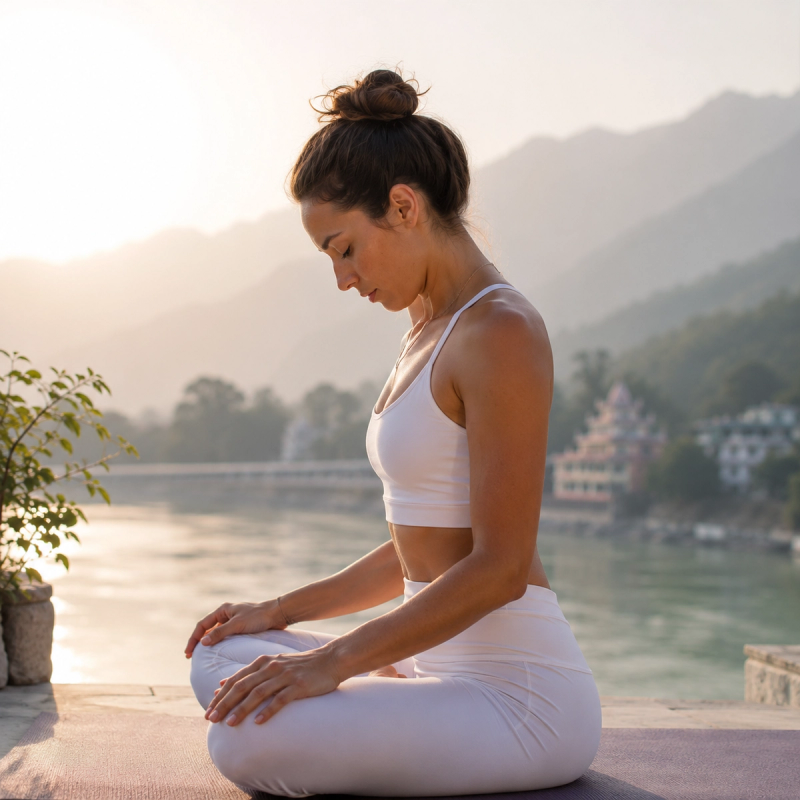
Knowing the mechanics is useless if you do not apply them on the mat. The goal is to weave these subtle engagements into your physical asana practice seamlessly. Start small, focusing on just one lock during a specific portion of your routine.
Begin by engaging a gentle Mula Bandha during your standing poses. Notice how it roots your feet into the earth while creating upward buoyancy in your spine. It acts as an anchor, keeping you grounded even when the physical posture becomes intensely challenging.
Next, try incorporating the abdominal lock exclusively during your morning breathing exercises. Practice it before your physical routine to wake up your digestive fire and clear your mind. Never attempt the deep abdominal lock while actively moving through flowing postures.
The throat lock is best reserved for seated breathing practices involving breath retention. Use it to seal the energy after a deep inhalation, holding the stillness before the release. Over time, these conscious engagements will become automatic, second nature reflexes.
You will find that your practice requires less muscular effort and more energetic alignment. Fatigue will vanish, replaced by a steady, buzzing vitality that lasts long after you step off the mat. This integration marks the transition from a beginner to an advanced practitioner.
Why Rishikesh? / Why This Matters
Learning these powerful techniques from a textbook or a recorded video is incredibly difficult. Because energy locks deal with subtle internal sensations, you need an environment free from modern distractions. You need a space where the atmosphere naturally supports introspection and focus.
Rishikesh is universally recognized as the yoga capital of the world for a reason. Nestled in the foothills of the Himalayas and situated on the banks of the sacred Ganges River, the energy here is unmatched. Generations of masters have practiced and perfected these exact techniques in this very valley.
When you practice in Rishikesh, you are tapping into a living lineage of authentic knowledge. The air is cleaner, the environment is spiritually charged, and the distractions of urban life disappear. This creates the perfect incubator for mastering complex internal practices.
Practicing here matters because authenticity matters. Learning how to properly engage your subtle body requires the guidance of teachers who live the philosophy daily. In Rishikesh, you receive direct transmission of ancient wisdom, ensuring you learn these powerful tools safely and correctly.
Elevate Your Practice in the Himalayas
If you are considering taking your practice seriously and learning in Rishikesh, we are here to support your journey. Divine Yogpeeth provides a safe, nurturing, and authentic environment to explore these profound techniques. We bridge the gap between ancient yogic wisdom and modern anatomical understanding.
Whether you are looking to deepen your personal practice or simply unplug from the world, our space is designed for you. For those seeking a short but impactful immersion, explore our 5 Days Yoga Retreat. It is the perfect opportunity to experience authentic teaching while surrounded by the healing energy of the Himalayas.
Frequently Asked Questions About Energy Locks
Can beginners practice energy locks safely?
Yes, beginners can practice the foundational root lock with proper guidance. However, the abdominal and throat locks require more body awareness and breath control. It is always best to learn under the supervision of a certified and experienced teacher.
Should I engage the root lock all the time?
While a very subtle, baseline engagement is beneficial, you should not forcefully grip your pelvic floor constantly. Over-tensing can lead to physical discomfort and energetic blockages. Aim for a soft, pulsing awareness rather than a rigid, permanent grip.
Why do I feel dizzy when trying the throat lock?
Dizziness usually occurs because you are holding your breath incorrectly or compressing the neck too aggressively. Ensure you are lifting your chest to meet your chin, rather than just forcing your head down. Always release the lock smoothly before you feel a desperate need for air.
Can pregnant women practice these techniques?
Pregnant women should absolutely avoid the abdominal lock (Uddiyana) and the great lock (Maha Bandha). The root lock (Mula) can be beneficial for pelvic floor strength, but you must consult your healthcare provider first. Always prioritize the safety of your body and your baby.
How do I know if I am doing it right?
You will know you are practicing correctly when your physical postures feel lighter and your breath flows smoother. There should be a sense of contained heat and sharp mental clarity. If you feel strained, anxious, or tense, you are likely using too much physical force.
Conclusion: Taking the Next Step
Mastering bandhas yoga types how to practice them is a lifelong journey of self-discovery and discipline. These internal seals are the missing link between a purely physical workout and a deeply transformative spiritual experience. By learning to harness your vital energy, you unlock levels of strength and focus you never knew existed.
The journey from learning the theory to experiencing the reality requires dedication and the right environment. Reading about these techniques is only the first step; embodying them requires expert guidance and a committed heart. It is time to move beyond the physical surface and dive into the profound depths of your own potential.
Ready to begin? Take the ultimate step in your journey and join our comprehensive 200-Hour Yoga Teacher Training. Learn to master your energy and discover exactly what it means to practice at the highest level—explore the home of authentic teachings and if you are still deciding between options, read up on the 100 Hour vs 200 Hour Yoga Teacher Training: 5 Best Truths to make the perfect choice today.