.jpg)

Learning to create yoga sequence after teacher training is essential. Discover proven tips to design safe, impactful classes in Rishikesh. Start planning today.
How to Create Yoga Sequence After Teacher Training: Complete Guide
Learning to create yoga sequence after teacher training is one of the most vital skills you must master as a new guide. Stepping off the mat as a student and onto the instructor’s platform can feel daunting.
You just absorbed hundreds of hours of ancient philosophy, precise anatomy, and alignment cues. Now, you face the very real challenge of organizing that massive wealth of knowledge into a cohesive, sixty-minute experience for your own students.
Many new instructors freeze when staring at a blank notebook, unsure of where to place the first downward dog or how to build toward a complex peak posture. This hesitation is entirely normal and is simply part of the growth process.
By relying on structured frameworks and trusting the intuition you developed during your certification, you can design classes that feel both safe and deeply transformative. You will soon realize that planning a class is less about perfection and more about facilitating a meaningful energetic journey.
Let this comprehensive guide serve as your roadmap for designing intelligent, intentional, and inspiring yoga flows that keep your students coming back.

1. The Core Foundation to Create Yoga Sequence After Teacher Training
Before you write down a single asana, you must define the core intention of your class. A sequence without a clear goal often feels disjointed and confusing to the physical body.
Start by asking yourself what you want your students to feel when they roll up their mats. Are you aiming to ground their nervous systems, build internal heat, or safely open their shoulders?
Once you establish a clear physical or energetic theme, every single pose you choose must support that ultimate goal. If you are building toward an intense backbend like Wheel Pose (Urdhva Dhanurasana), your warm-up must specifically target the hip flexors, shoulders, and spine.
Throwing in random core work or deep twists that do not serve the peak posture only wastes valuable class time. When mapping out your blueprint, always consult the safety guidelines set by organizations like Yoga Alliance to ensure your pacing protects student joints.
You can also theme your classes around philosophical concepts, such as the Yamas and Niyamas, or seasonal shifts. Weaving a verbal theme through your physical cues creates a multi-layered experience that elevates your teaching above a simple fitness class.
2. A Step-by-Step Blueprint for Intelligent Flow Design
Building a sequence is very much like writing a compelling story. You need a calm introduction, a steady build-up of action, an exciting climax, and a soothing resolution.
Begin every class with a grounding period, allowing students to transition from their busy days into their physical bodies. Five minutes of breathwork (Pranayama) or guided body scanning in Sukhasana sets a focused tone for the entire room.
From there, initiate gentle movements to lubricate the major joints. Cat-cow stretches, gentle seated twists, and neck rolls are excellent choices to safely awaken the spine before introducing weight-bearing postures.
Move next into the heat-building phase, typically utilizing traditional Sun Salutations (Surya Namaskar). This repetitive, breath-linked movement elevates the heart rate and generates the internal fire required to safely stretch muscle tissues.
Once the body is thoroughly warm, introduce your standing sequences, balancing postures, and finally your peak pose. To master the intricacies of moving from standing to floor work, review these essential yoga class sequencing principles.
3. Balancing Anatomy and Energy in Your Classes
Anatomy is the invisible scaffolding that holds your sequence together safely. You must deeply understand how specific muscle groups interact to prevent student injuries.
When designing a flow, always consider the relationship between agonistic and antagonistic muscles. If you intensely contract the hamstrings in a series of standing balances, you must follow up with postures that stretch those exact fibers.
Similarly, never ask your students to perform deep, passive stretches on cold muscles. Medical and physiological research found on platforms like PubMed consistently shows that dynamic, active stretching must precede deep, static holds to maintain joint integrity.
Beyond the physical muscles, consider the energetic journey (the Prana) of your students throughout the sixty minutes. Intense backbends are highly stimulating and activate the nervous system, which is why they are placed near the middle or end of the active sequence.
You must always neutralize the spine after deep extension before moving students into deep forward folds. Providing proper counter-poses is the hallmark of an educated, responsible teacher.
4. Overcoming Imposter Syndrome as a New Teacher
The blank page of a sequence planner can trigger intense self-doubt, a phenomenon known as imposter syndrome. You might wonder if you know enough to safely guide others through a physical practice.
Remember that you do not need to invent entirely new, acrobatic sequences to be an incredible teacher. The most profound yoga classes are often the simplest ones, where the instructor holds space with confidence and clear vocal cues.
Start by teaching the exact sequence you learned during your TTC practicum. You know those poses intimately, your body understands the transitions, and you already have the alignment cues memorized.
As you gain hours in the studio, you will naturally begin swapping out certain poses or experimenting with new transitions. Finding your unique teaching voice takes time, patience, and plenty of practice in front of a mirror or with friends.
If you are struggling with self-doubt before your first public class, read our guide on finding new yoga teacher confidence after training to help calm your nerves.
5. Adapting Your Sequence for Different Skill Levels
A beautifully written sequence is useless if the students in your room cannot safely perform the postures. You must learn to read the bodies in front of you and pivot your plan in real-time.
Always plan a baseline sequence that caters to an intermediate or beginner-intermediate level. From that baseline, you must write down at least two modifications (to make the pose more accessible) and one amplification (to challenge advanced practitioners).
For example, if your sequence includes full Plank Pose, you must verbally offer the option to lower the knees to the mat before anyone begins to struggle. Anticipating the needs of your students shows deep empathy and high-level teaching awareness.
Props are your best friends when adapting sequences. Remind your students at the beginning of class to grab two blocks and a strap, and actively cue how to use them during the flow.
Teaching a room full of mixed abilities is an art form. For a deeper understanding of how to manage diverse student needs, explore our breakdown of proper yoga teaching methodology.
6. The Importance of Pacing and Verbal Cues
How you deliver your sequence is just as important as the postures you select. A brilliant class plan will fall flat if your verbal pacing feels rushed, frantic, or monotonous.
Speak clearly, project your voice from your diaphragm, and use active, direct verbs. Instead of saying "Maybe you could try to lift your right leg," command the room gently with "Inhale, lift your right leg toward the ceiling."
Silence is also a powerful tool in your sequencing arsenal. You do not need to fill every single second of the class with alignment cues or philosophical quotes.
Once you have safely guided your students into a posture, give them three to five breaths of total silence to simply experience the shape in their own bodies. Holding space means allowing students to hear their own breath over the sound of your voice.
Why Rishikesh is the Ultimate Destination for Teachers
There is a profound reason why thousands of seekers travel to Rishikesh, India, every year to deepen their practice. The atmosphere here accelerates your growth in ways a local studio simply cannot match.
Nestled in the foothills of the Himalayas, this vibrant town pulses with centuries of dedicated spiritual practice. The environment naturally strips away your ego, allowing you to connect with the raw, authentic roots of traditional yoga.
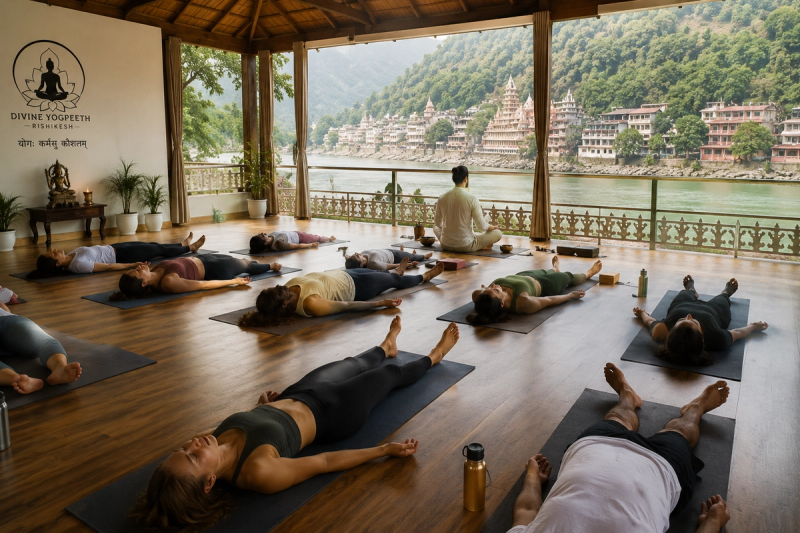
Practicing daily on the banks of the sacred Ganges River provides an unparalleled sense of peace and clarity. This deep immersion directly impacts how you design your classes, infusing your sequences with genuine spiritual depth rather than just physical fitness.
The community of dedicated practitioners in Tapovan offers endless inspiration and support as you navigate the challenges of becoming a new teacher. To explore everything this magical location has to offer, visit our Home page and discover the magic of India.
Take the Next Step in Your Teaching Journey
If you are reading this while dreaming of leading your own classes, the best time to take action is right now. Committing to a comprehensive training program changes the trajectory of your life forever.
We understand that choosing the right school is a massive decision, which is why we focus on authentic, traditional teachings combined with modern anatomical science. Our curriculum is designed to strip away self-doubt and build highly capable, confident instructors.
If you are seeking a foundation to launch your career, our 100-Hour Yoga Teacher Training offers the perfect stepping stone. It provides the rigorous practice and sequencing frameworks you need to find your unique voice on the mat.
Frequently Asked Questions
Do I need to write down my whole sequence?
Yes, absolutely. When you are a new teacher, writing down every pose, transition, and key alignment cue prevents you from freezing if you lose your train of thought. Keep a small notebook near your mat as a safety net during your first few months of teaching.
How long does it take to plan a 60-minute class?
Initially, it might take you two to three hours to design a safe, intelligent sixty-minute flow. As you memorize more transitions and build a personal library of mini-sequences, that planning time will drastically decrease to thirty minutes or less.
Can I teach the same sequence multiple times?
Teaching the same sequence for an entire week or month is actually highly beneficial. It allows your regular students to track their physical progress, and it gives you the opportunity to refine your verbal cues without stressing over new choreography every single day.
What if I forget my sequence while teaching?
Every single yoga teacher has forgotten their sequence at some point. If your mind goes blank, simply instruct the room to push back into Child's Pose (Balasana) for three deep breaths while you check your notes or refocus your mind. Your students will just think it is a well-timed rest.
For even more detailed strategies on building your personal teaching style, read our extensive guide to Create Yoga Sequence After Teacher Training: 7 Best Tips.
Conclusion
You already possess the profound knowledge and bodily awareness required to create yoga sequence after teacher training. The certification you earned is proof of your dedication, strength, and capability as a guide.
Trust the hours of practice you have put in, lean heavily on the anatomical frameworks you learned, and allow your authentic voice to shine through. Keep your flows simple, prioritize student safety, and remember that your energy matters far more than a perfectly executed peak pose.
Do not let the fear of a blank page stop you from sharing the incredible gift of yoga with your community. Grab your notebook, roll out your mat, and start building the sequences that only you can create.
Ready to begin your journey or take your teaching career to the highest professional level? Explore our Yoga Alliance certified 200-Hour Yoga Teacher Training in Rishikesh, or discover how to integrate deep healing into your classes through our advanced therapy programs and take the first step today.