.jpg)

Create a yoga sequence after teacher training with confidence. Discover how to safely build flows, structure classes, and guide your students. Find out now!
Create Yoga Sequence After Teacher Training: Your Ultimate Guide
To successfully create a yoga sequence after teacher training requires balancing anatomical logic with creative flow. Many new instructors stare at a blank notebook, overwhelmed by the endless possibilities of poses.
Stepping out of the studio as a certified guide shifts your perspective entirely. You are no longer just practicing the poses; you are responsible for the physical and mental journey of an entire room.
This guide will break down the exact frameworks you need to build safe, engaging, and memorable classes. You will learn to move past self-doubt and structure your teachings with absolute clarity.
Core Principles to Create Yoga Sequence After Teacher Training
Building a solid flow starts with understanding the basic biomechanics of the human body. Every pose you select should prepare the practitioner for the next movement in the chain.
Randomly stringing together your favorite asanas will leave students feeling disjointed or physically strained. The Yoga Alliance emphasizes that a well-rounded class must prioritize physical safety above all else.
You must warm up the specific muscle groups that will bear weight or stretch deeply later in the class. If you plan to focus on deep backbends, your opening sequence must systematically open the hip flexors and shoulders.
Counter-poses are non-negotiable when you design a balanced physical practice. After intense spinal extension, you must guide students through gentle twists before moving into forward folds to neutralize the spine.
Understanding these foundational concepts is critical for your teaching journey. Brushing up on yoga class sequencing principles will help you internalize these rules until they become second nature.
The Peak Pose Methodology Explained
Working toward a singular, challenging asana is one of the most effective ways to plan your class. The peak pose method gives your teaching a clear destination and energetic climax.
Once you select your peak pose, break it down into its anatomical components. Ask yourself which muscles need to be warm, strong, and flexible to safely execute this shape.
If your destination is Sirsasana (Headstand), your preparation must heavily target core stabilization and shoulder mobility. Dolphin pose and forearm planks become essential stepping stones in your earlier sequences.
This focused approach helps you eliminate unnecessary filler poses that distract from the main objective. Every sun salutation and standing series becomes a deliberate building block toward the final goal.
Mastering this method takes time, but it drastically improves your new yoga teacher confidence. When you know exactly where the class is going, your verbal cues become sharper and more authoritative.
Step-by-Step Guide to Create a Yoga Sequence After Teacher Training
Having a reliable template removes the anxiety from class preparation. Use this structured approach to ensure your classes flow logically from the first breath to the final rest.
Grounding and Centering
Start by bringing your students into the present moment. A seated meditation or reclined posture allows them to transition from their busy day into their physical bodies.
Use this time to establish the breath and introduce the theme of your class. Keep the physical movements small, focusing on gentle neck stretches and spinal awakening.
The Warm-Up Phase
Gradually increase the heat by moving into tabletop variations like Cat-Cow. Transition into core activation to ensure the lower back is protected for the rest of the practice.
This is the perfect phase to introduce modified Sun Salutations. Building heat slowly prevents injuries and signals to the nervous system that more intense work is coming.
For those just starting out, reviewing the fundamentals taught in a 100-Hour Yoga Teacher Training can reinforce how to structure these essential warm-up blocks safely.
Standing Poses and Heat Building
This is the cardiovascular peak of your class where the largest muscle groups are engaged. Link standing postures like Warrior II, Triangle, and Side Angle into fluid sequences.
Ensure your transitions between these standing shapes are anatomically sound. Avoid asking students to shift directly from internal hip rotation to extreme external rotation without a neutral transition.
The Cool Down
Once the peak effort is complete, begin the descent back to the mat. The heart rate should slow down as you introduce longer holds in seated or supine postures.
Deep stretches, gentle twists, and mild inversions belong in this closing sequence. This phase prepares the mind and body for the total relaxation of Savasana.
Theme-Based Sequencing Strategies
Beyond the physical body, a great class engages the mind and spirit. Weaving a philosophical or energetic theme throughout your sequence elevates the experience from a workout to a true practice.
Themes can be based on traditional yoga philosophy, changing seasons, or specific chakras. If you are focusing on the root chakra, ground your sequence heavily in standing balancing poses and low squats.
Introduce your theme clearly during the centering phase and subtly remind students of it during challenging moments. Connecting physical effort to a mental intention creates a profound impact on the practitioner.
You might also theme a class around specific breathwork or energy locks. Integrating Bandhas practice into a core-focused flow creates a powerful, heat-building sequence that students will remember.
Keep your messaging authentic to your own experiences and beliefs. Do not try to force complex philosophical concepts if they do not genuinely resonate with your current teaching style.
Adapting Flows for Different Experience Levels
A public class will inevitably bring together a mix of absolute beginners and seasoned practitioners. Your sequence must be flexible enough to accommodate this wide spectrum of abilities.
Always teach to the middle of the room while offering clear modifications for beginners and amplifications for advanced students. Provide blocks and straps as standard tools, not as crutches.
When instructing a complex transition, give the baseline variation first. Allow newer students to stay there while inviting experienced yogis to explore the deeper expression of the pose.
The Ministry of Ayush advocates for inclusive traditional practices that honor individual body mechanics. Never push a student into a shape their body is not ready to sustain.
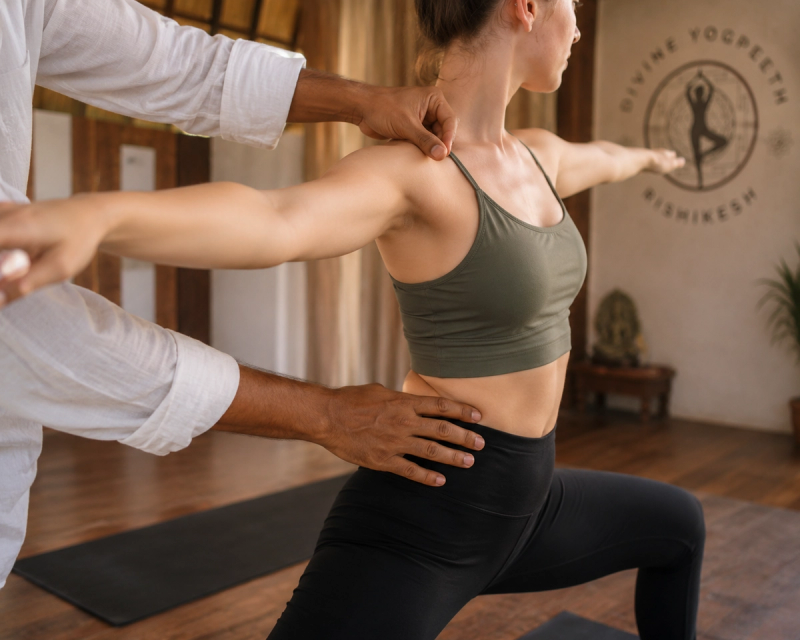
Learning proper yoga adjustments and assists is crucial here. Verbal cues should always be your first line of defense, followed by gentle, consensual physical guidance only when strictly necessary.
Nervous System Regulation Through Pacing
The speed at which you guide your students dictates their physiological response. A frantic, rushed sequence triggers the sympathetic nervous system, causing unnecessary stress and fatigue.
Pacing is a tool you must wield deliberately. Allow students enough time to actually find alignment in a pose before rushing them into the next movement.
Silence is a powerful teaching technique that many new instructors fear. You do not need to fill every single second of the class with verbal instruction or background music.
Give your students space to simply breathe and experience the sensations in their bodies. Strategic pauses during intense holds build mental resilience and focus.
As you wind down toward Savasana, deliberately slow your cadence and lower the volume of your voice. This auditory shift signals the parasympathetic nervous system to take over, promoting deep cellular repair.
Why Rishikesh is the Perfect Place to Master Sequencing
Studying yoga in its birthplace provides an energetic foundation you cannot replicate in a western studio. The ancient wisdom embedded in the soil of the Himalayas profoundly shapes how you understand the practice.
In Rishikesh, sequencing is taught not just as a physical exercise, but as a spiritual discipline. The integration of mantras, pranayama, and meditation happens naturally in this sacred environment.
Waking up to the sound of the Ganges river and chanting in traditional ashrams shifts your internal rhythm. You learn to sequence classes that carry this deep, grounding energy back to your future students.
Immersing yourself in the culture allows you to absorb the true essence of traditional Hatha and Ashtanga systems. This authentic knowledge directly translates into powerful, rooted class structures when you return home.
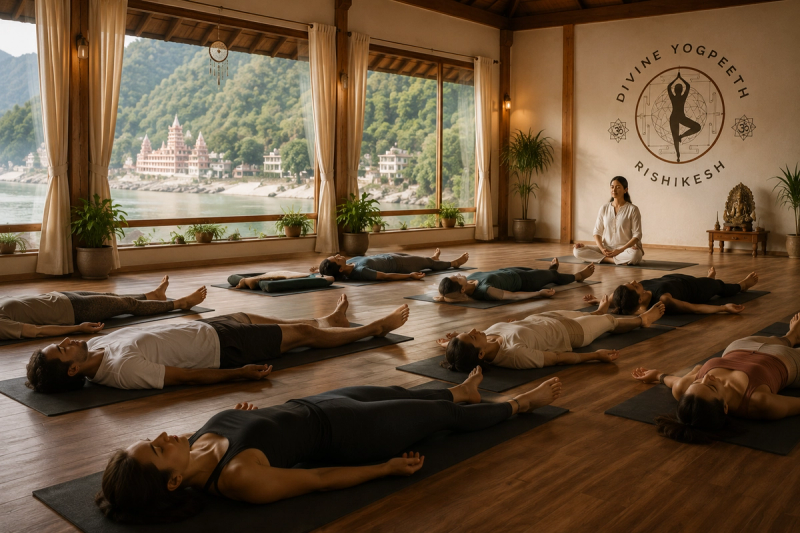
When you practice at our home on Laxman Jhula, you are surrounded by a community of dedicated masters. This environment accelerates your learning and strips away the superficial aspects of modern fitness yoga.
Experience Authentic Growth at Divine Yogpeeth
If you are considering stepping into the role of a teacher, the quality of your foundational education matters immensely. Where you learn shapes how you will eventually guide others on their path.
At Divine Yogpeeth, we focus heavily on the methodology and logic behind the practice. We ensure you leave our shala with the exact tools needed to construct safe, inspiring, and authentic classes.
Our curriculum bridges the gap between ancient philosophy and modern anatomical science. You will practice teaching daily, receiving constructive feedback from experienced Indian masters who care about your growth.
Ready to begin your true teaching journey? Explore our comprehensive 200-Hour Yoga Teacher Training in Rishikesh and take the first step toward mastering your craft today.
Frequently Asked Questions About Class Structure
How long does it take to plan a sequence?
When you first start, it may take an hour or two to write down a full 60-minute class. As you memorize your templates and trust your intuition, this time will drastically decrease.
Should I practice my sequence before teaching it?
Yes, absolutely. Moving through the flow yourself reveals awkward transitions, pacing issues, and muscular imbalances that look fine on paper but feel wrong in the body.
Can I repeat the same sequence multiple times?
Repeating sequences is actually highly beneficial for your students. It allows them to measure their progress and drop deeper into the moving meditation without overthinking the choreography.
What if I forget my sequence while teaching?
Bring your notebook into the studio and leave it near your mat. If you lose your place, simply guide the students into Downward Dog or Child's Pose for five breaths while you check your notes.
How do I transition smoothly between left and right sides?
Use symmetrical neutral poses like Plank, Chaturanga, or a simple Forward Fold to bridge the gap. This clears the physical slate before you begin the sequence on the opposite side.
Conclusion
To master how to create a yoga sequence after teacher training, you must commit to continuous practice and observation. The framework provided here will keep your classes safe, logical, and deeply impactful for your students.
Remember that the perfect sequence does not exist on paper; it exists in how your students respond in the room. Stay adaptable, read the energy of your class, and never be afraid to modify your plan in real-time.
Your unique voice and background are your greatest assets as an instructor. Trust the education you received, lean into the foundational principles of anatomy, and teach from a place of genuine service.
If you want to deepen your understanding of these principles, we invite you to join us on the mat. Discover the transformative power of our 200-Hour Yoga Teacher Training and refine your teaching skills in the yoga capital of the world.