.jpg)

Ganga river yoga Rishikesh spiritual significance reveals why yogis travel to the Himalayas for authentic practice and peace. Discover how geography heals you.
Ganga River Yoga Rishikesh Spiritual Significance: 5 Powerful Reasons Location Changes Everything
Understanding the Ganga river yoga Rishikesh spiritual significance unlocks why generations of yogis abandon quiet studios worldwide to practice along these glacial Himalayan waters. Have you ever wondered why your breath deepens effortlessly the moment you sit near clean, cascading mountain water?
Practicing asana and pranayama on the banks of Mother Ganga is not merely an aesthetic choice; it alters your nervous system and anchors your awareness. In this guide, you will uncover the energetic, physiological, and philosophical truths that make this sacred river the ultimate crucible for authentic yogic practice.
1. Ganga River Yoga Rishikesh Spiritual Significance: Living Kundalini and Elemental Prana
In traditional yogic philosophy, the Ganga is revered not just as a waterway, but as Shakti—the living, descending stream of pure cosmic consciousness. When you study historical texts archived on Britannica regarding Indian heritage, the river represents heaven descending directly to purify earthly existence.
Practicing pranayama directly beside this rushing water exposes you to high concentrations of vital life force, known as prana. Vedic traditions describe the river’s path through the Himalayas as a macrocosmic reflection of Sushumna Nadi, the central energetic channel along the human spine.
When you sit in padmasana beside the river, your internal bio-energetic currents align naturally with the elemental flow of the water. This resonance quiets mental fluctuations (chitta vritti) faster than practicing in a closed, urban room. Yogic masters have long maintained that the atmosphere along the riverbank carries an uninterrupted vibration of purification.
To understand how traditional texts outline this internal pathway to clarity, studying the eight limbs of yoga philosophy provides essential context for aligning your physical body with subtle spiritual planes.
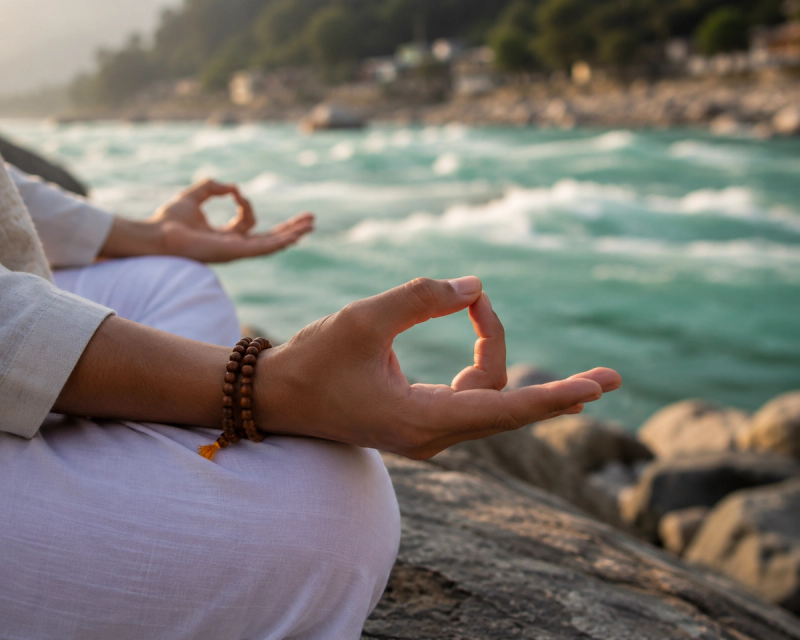
2. The Science of Prana: How Ganga River Yoga Rishikesh Spiritual Significance Enhances Physiology
The energetic reverence for the river is backed by physical, measurable phenomena that influence human neurology. Rapidly tumbling mountain water creates intense friction, breaking water molecules apart to generate high volumes of negative air ions.
When you inhale air dense with negative ions during breathwork, your bloodstream absorbs oxygen more efficiently, elevating serotonin levels and alleviating physiological stress. According to peer-reviewed wellness data documented on PubMed, environments rich in natural negative ionization significantly down-regulate autonomic nervous system arousal.
+-----------------------------------------------------------------------------+
| HOW GANGA'S NATURAL ENVIRONMENT IMPACTS YOGA |
+-----------------------------------------------------------------------------+
| Environmental Factor | Physiological Impact | Yogic Outcome |
+---------------------------+--------------------------+----------------------+
| Glacial Negative Ions | Balances Serotonin | Deeper Pranayama |
| Pure Himalayan Breeze | Lowers Cortisol | Effortless Dharana |
| Continuous River Acoustics| Induces Alpha/Theta Wave | Natural Nada Yoga |
| Ancient Tapasya Vibration | Calms Sympathetic Tone | Rapid Meditative Absorption
+-----------------------------------------------------------------------------+
Integrating rhythmic breath control near this moving river balances the two primary energy channels, Ida and Pingala. The crisp Himalayan breeze acts as a natural purifier for the lungs, allowing your body to sustain retention (kumbhaka) with ease.
If you want to refine your daily breathwork routines alongside these energetic principles, exploring pranayama types benefits practice will deepen your technique and mental focus.
The Auditory Vibration of River Acoustics (Nada Yoga)
The continuous roar of the river serves as natural white noise, tuning your auditory senses inward. In the practice of Nada Yoga—the yoga of inner sound—external ambient frequencies are used to dissolve superficial mental chatter.
The sound of the Ganga is considered an earthly manifestation of Aum, the primordial cosmic sound. When you meditate near the river, this acoustic blanket eliminates distracting environmental noises, guiding your brain swiftly from beta stress states into restorative alpha and theta brainwave rhythms.
3. Thousands of Years of Tapasya: The Energetic Grid of the Himalayan Valley
Rishikesh is celebrated as the world capital of yoga because great sages, rishis, and seekers have meditated along its riverbanks for thousands of years. In Sanskrit, dedicated spiritual effort is known as tapasya, a force believed to leave a lasting energetic imprint on physical geography.
When you roll out your yoga mat along these rocky shores, you are not practicing in isolation. You step directly into a concentrated energetic field cultivated by centuries of continuous chanting, meditation, and devotional discipline.
This accumulated spiritual charge accelerates personal breakthroughs. Stagnant emotions, mental resistance, and physical blockages surface and dissolve far more rapidly here than in conventional environments.
Many seekers report that emotional shifts occur spontaneously during asana or seated dhyana along the river. Discovering how to navigate these internal transitions is explored further in emotional experience yoga teacher training India, offering practical guidance for profound inner shifts.
Sacred Geography: From Gangotri to the Plains
Rishikesh occupies a unique transition point where the river leaves the steep Himalayan gorges and enters open valleys. The water here retains the raw, unpolluted vitality of high-altitude glaciers, carrying pulverized quartz and mineral sediments from the peaks.
This geological composition turns the river valley into a natural resonator. The surrounding mineral-dense rock formations amplify subtle bio-electric fields, helping you feel grounded through your root chakra while opening higher centers of intuition and awareness.
4. Rituals on the Riverbank: Ganga Aarti and Sacred Cleansing
Spiritual practice along the river extends far beyond physical postures on a rubber mat; it is an active immersion into daily devotion (Bhakti). Every evening at twilight, the riverbanks come alive with the ringing of brass bells, Vedic chanting, and the flickering flames of the sacred Ganga Aarti.
Participating in Aarti creates a bridge between your physical asana practice and the broader philosophy of surrender (Ishvara Pranidhana). Watching oil lamps float down the water reinforces non-attachment, reminding you to release mental burdens and emotional baggage into the current.
Daily Spiritual Rhythm Along the River:
• Brahma Muhurta (Dawn): Silent meditation and pranayama beside the cold waters.
• Mid-Morning: Dynamic asana and physical purification on open-air yoga shalas.
• Sunset: Vedic chanting and Ganga Aarti to cultivate devotion and release ego.
Washing your hands and feet or immersing yourself in the cold waters before meditation has been a mandatory yogic purification ritual (saucha) for centuries. The brisk temperature shocks the sensory nervous system, immediately centering your attention into the present moment.
For those planning their first spiritual immersion in India, reviewing what to pack yoga retreat Rishikesh ensures you bring the proper modest clothing and essentials for riverbank rituals.
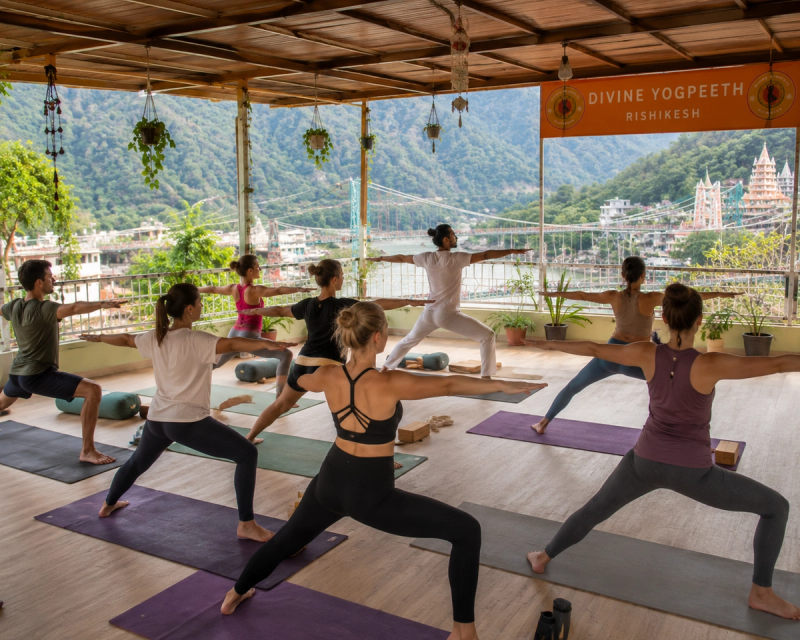
5. Why Practicing in Rishikesh Transcends Ordinary Studio Yoga
Modern yoga studios in metropolitan cities provide excellent physical exercise, but they often lack the environmental resonance required for complete mental stillness. Practicing in Rishikesh removes you from artificial lighting, urban smog, and constant digital interruptions.
The daily rhythm of the town is dictated by the river, temple bells, and sunrise over the Himalayan ridgeline. This immersive environment aligns your circadian rhythm naturally, resulting in deeper sleep cycles, improved digestion, and enhanced focus during long meditation sessions.
Metropolitan Yoga Studio Rishikesh Riverbank Immersion
├── Dry, recycled indoor air ├── Glacial air charged with negative ions
├── Traffic sirens & distractions ├── Natural river acoustics (Nada sound)
├── Isolated physical workout ├── Complete integration: Asana, Bhakti, Japa
└── Temporary stress relief └── Fundamental nervous system reset
The combination of fresh mountain air, sattvic vegetarian food, and sacred waters creates an optimal ecosystem for personal transformation. You cease treating yoga as an isolated 60-minute daily class and begin living the practice as a continuous state of awareness.
6. Transforming Your Practice on the Banks of Laxman Jhula
If you feel called to deepen your knowledge where yogic masters have walked for centuries, choosing the right learning space on the riverbank is essential. Divine Yogpeeth provides traditional, Yoga Alliance certified programs designed to immerse you directly in the spiritual and physical wisdom of this sacred valley.
Whether you are looking to build a rock-solid foundation through our comprehensive 200-hour yoga teacher training or take a foundational step with a 100-hour yoga teacher training, our school offers an authentic sanctuary right by Laxman Jhula.
For practitioners seeking holistic rejuvenation, combining traditional asana with energetic sound practices or therapeutic healing accelerates inner peace. You can explore our dedicated sound healing training course to master the power of vibrational resonance, or experience restorative wellness via holistic therapy.
If you are pressed for time yet desire a complete reset along the water, immersing yourself in a 5-days retreat offers the perfect blend of dynamic daily classes, riverbank meditation, and peaceful contemplation.
Frequently Asked Questions
Why is the Ganga river considered holy in yoga philosophy?
In yogic and Vedic philosophy, the Ganga represents Shakti—the descending current of divine purity and cosmic intelligence. It is revered for its ability to cleanse spiritual karma (samskaras), calm erratic thoughts, and recharge the human energetic system with pristine prana.
How does meditating near running river water improve focus?
The auditory frequency of flowing water produces steady white noise that activates alpha brainwave states, quietening the default mode network (DMN) in the brain. This acoustic environment masks jarring noises and naturally turns your senses inward (pratyahara).
What should I wear when practicing yoga near the river in Rishikesh?
Because the riverbanks are sacred cultural spaces, modest and breathable clothing is essential. Wear loose-fitting cotton yoga pants and tops that cover your shoulders and knees. Avoid synthetic, overly tight, or revealing activewear out of respect for local traditions.
Is it safe to bathe in the Ganga in Rishikesh?
Yes, in Rishikesh, the river emerges directly from the upper Himalayas and remains fast-flowing, clean, and refreshing. However, currents can be strong, so immersion should always be done at designated ghats with protective chains and steps.
Begin Your Spiritual Immersion by the Sacred Waters
The Ganga river yoga Rishikesh spiritual significance is not a concept to be analyzed through books—it is an energetic reality that must be experienced firsthand. Practicing on these ancient banks harmonizes your physical body, clears mental exhaustion, and connects you directly with the timeless roots of yoga.
Are you ready to step away from ordinary routines and transform your life along the sacred waters of the Himalayas? Explore our home page to discover upcoming courses and begin your life-changing yogic journey with us today.