.jpg)

Master the core meditation techniques 200 hour YTT programs teach in Rishikesh. Build your focus, clear your mind, and deepen your daily practice. Discover how!
Meditation Techniques 200 Hour YTT: Practices You Will Actually Learn
The specific meditation techniques 200 hour YTT programs cover often surprise new students. Many assume they will just sit cross-legged and try to force their minds to go blank.
The reality of formal training is much deeper, highly structured, and profoundly practical. You learn actionable methods to tame mental chatter, build fierce concentration, and access genuine stillness.
Mastering these practices is not just about personal peace. It forms the backbone of your ability to guide future students through their own mental roadblocks.
Understanding how the mind operates requires exploring various distinct pathways. What works for one practitioner might frustrate another, making a diverse toolkit essential.
Let us explore the exact techniques you will master during your certification journey.
The Core Meditation Techniques 200 Hour YTT Curriculums Require
When you commit to a professional training program, the focus shifts from casual practice to deep understanding. You are learning the architecture of the mind.
Standards set by global bodies like Yoga Alliance require comprehensive training in Dhyana, the seventh limb of yoga. This means moving beyond generic relaxation exercises.
You will dissect the mechanics of focus (Dharana) and how it transitions into sustained meditation. This theoretical foundation ensures you practice with absolute precision.
Your teachers will guide you through breaking down mental resistance. You will learn to observe your thoughts without getting tangled in their narratives.
This phase of your education is highly systematic. You explore the best 200 hour YTT curriculum subjects to understand how meditation links directly to anatomy, philosophy, and asana.
By deconstructing the process, you gain the confidence to teach it. You learn the exact cues, posture corrections, and breathing rhythms necessary to hold space for others.
Active vs. Passive Meditation Techniques in Your 200 Hour YTT
Meditation is rarely a one-size-fits-all experience. Training introduces you to the crucial difference between active and passive approaches.
Active meditation involves giving the mind a specific task to perform. This might mean visualizing a shape, repeating a phrase, or regulating your breath in a complex pattern.
These active methods are perfect for beginners or those with highly restless minds. By occupying the brain with a focused task, you prevent it from wandering into anxiety or daydreaming.
Passive meditation, on the other hand, asks you to become the silent witness. You sit back and observe sensations, thoughts, or sounds without reacting to them.
During your training, you will alternate between these two states daily. You will discover which approach grounds you faster and which brings you deeper insights.
This duality is vital for your future teaching career. You will encounter students who panic during silent observation but thrive when given an active visualization.
Having both passive and active tools ready allows you to adapt to any classroom dynamic.
Vipassana and Breath Awareness Practices
Breath awareness forms the absolute bedrock of eastern contemplative traditions. In your training, this goes far beyond simply noticing air moving in and out.
You will practice a modified approach to Vipassana, focusing entirely on the gross and subtle sensations of respiration. This trains the mind to anchor itself in the present moment.
Scientific studies cataloged on platforms like PubMed consistently show how breath regulation alters brainwave patterns. You will experience this neurological shift firsthand.
Your instructors will teach you how to track the breath at the tip of the nose or the rise of the belly.
- Notice the temperature difference between the inhale and exhale.
- Observe the tiny, natural pause that occurs between breaths.
- Feel the subtle expansion of the ribcage and collarbones.
This practice forces you to confront your mental distractions. Every time you lose focus, you gently but firmly pull your attention back to the breath.
Understanding the types and benefits of pranayama practice heavily supports this technique. Breath control (Pranayama) prepares the nervous system for the stillness required in Vipassana.
Over weeks of consistent practice, this simple observation becomes incredibly profound. You develop an unshakable mental resilience that translates directly off the mat.
Mantra Meditation and Chanting
Mantra meditation introduces the element of sound to your daily practice. This technique uses ancient Sanskrit syllables to create specific vibrational frequencies in the body.
You will learn to chant out loud (Japa) and internally (Ajapa Japa). The repetition gives the analytical mind something to chew on while the deeper consciousness expands.
The most common starting point is the universal sound of Om. You will learn the correct pronunciation, discovering how the vibration moves from the belly to the crown.
Other traditional mantras target specific energy centers or invoke particular qualities like courage or peace.
- Use a Mala (string of 108 beads) to track your repetitions.
- Focus on the silence that follows the end of the chant.
- Allow the vibration to resonate in your chest cavity.
This practice is deeply grounding and highly effective for scattered minds. If you want to understand the deeper science behind mantra chanting and sound healing, your training will connect the dots.
Mantra work also strengthens your vocal cords and teaching voice. It builds confidence in your ability to lead chanting in your future classes.
Trataka (Candle Gazing) for Extreme Focus
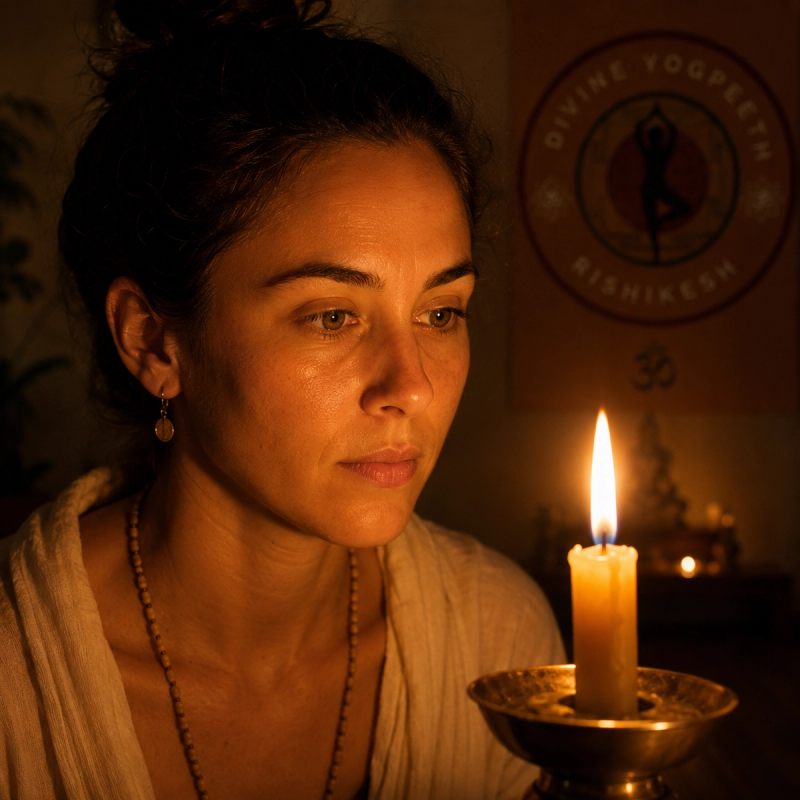
Trataka is a powerful cleansing technique (Shatkarma) that doubles as an intense concentration practice. It involves fixing your gaze steadily on a single point.
Most commonly, you will use the flame of a candle placed at eye level in a dark room. You stare at the brightest part of the flame without blinking.
You hold this unbroken gaze until your eyes begin to water. This physical response is believed to cleanse the tear ducts and purify the optic nerves.
Once the eyes water, you close them gently. You then hold the after-image of the flame in your mind's eye, focusing entirely on that internal light.
This method rapidly develops Dharana (one-pointed focus). It trains the brain to shut out peripheral distractions completely.
Trataka is highly beneficial for modern students suffering from digital eye strain. It strengthens the eye muscles while forcing the mind into a state of sharp clarity.
You will likely practice this technique in the early morning or late evening. The results are often immediate, leaving practitioners with a profound sense of calm and mental sharpness.
Yoga Nidra for Deep Rest and Reprogramming
Yoga Nidra, often called yogic sleep, is a guided practice performed lying down in Savasana. It is one of the most beloved techniques taught during a teacher training course.
Despite the name, the goal is not to fall asleep. You aim to hover in the liminal space between wakefulness and dreaming.
The instructor guides your awareness systematically through different body parts. This rotation of consciousness induces profound physical and mental relaxation.
In this deep state, the brain produces alpha and theta waves. You become highly receptive to positive intentions (Sankalpa) planted during the practice.
Yoga Nidra systematically releases muscular, emotional, and mental tension. Thirty minutes of this practice can feel as restorative as three hours of deep sleep.
Learning to guide Yoga Nidra requires specific vocal pacing and a calm demeanor. You will practice reading scripts and modulating your voice to keep your peers in that twilight state.
Dynamic and Moving Meditation Techniques
Not all meditation happens while sitting still. For many practitioners, movement is the key to unlocking mental silence.
Your training will explore how to turn physical action into a meditative state. Walking meditation is a primary example of this approach.
You learn to synchronize your breath with extremely slow, deliberate steps. Every shift in weight and movement of the foot becomes an object of intense focus.
This technique is incredibly useful for integrating mindfulness into daily activities. It bridges the gap between formal seated practice and normal life.
Even the physical asana practice becomes a moving meditation. When you link movement strictly to the breath (Vinyasa), the mind has no room to wander.
You will discover how to teach sun salutations as a continuous, unbroken chain of mindful awareness. This elevates the physical workout into a profound mental exercise.
Exploring Energy with Chakra Meditation
Understanding the subtle energy body is a massive component of eastern philosophy. Chakra meditation focuses your awareness on specific energy centers along the spine.
You will learn the locations, colors, sounds, and psychological attributes of the seven main chakras. This framework gives you a new vocabulary for understanding emotional blockages.
The practice involves visualizing spinning wheels of light at these specific points. You breathe into these areas, intentionally directing prana (life force) to clear stagnation.
If you feel ungrounded, you focus on the root. If you lack confidence, you target the solar plexus.
To start understanding this system early, reading a solid beginners guide to chakra meditation will give you a massive head start.
This technique bridges the gap between mental focus and emotional healing. It teaches you how physical sensations often hold trapped emotional data.
Many students choose to deepen this specific knowledge later through dedicated yoga therapy training to help future clients release trauma.
The Role of Sound Therapy in Meditation
Sound has been used for thousands of years to alter consciousness rapidly. Your training will likely introduce you to the power of singing bowls and gongs.
Unlike mantra chanting, sound therapy is entirely passive. You lie down and let the complex overtones of the instruments wash over your body.
The frequencies physically vibrate the water in your cells. This forces the brainwaves to slow down, effortlessly guiding you into a deep meditative state.
For students who struggle endlessly with silent seated meditation, sound is often the breakthrough they need. It provides an anchor that requires zero mental effort.
You will learn how to use a basic singing bowl to open and close your classes. The sharp, clear tone instantly snaps a distracted room back to attention.
Many teachers find this modality so powerful they return to complete a dedicated sound healing training course to expand their skill set.
Integrating Mindfulness into Daily Life
The ultimate goal of learning these techniques is not to become great at sitting on a cushion. The goal is to change how you experience your waking life.
Training teaches you how to carry the silence of meditation into chaotic situations. You learn to observe your anger before reacting to it.
You practice mindful eating, tasting every texture instead of rushing through a meal. You practice mindful listening, giving your full attention to the person speaking.
This integration is where the real transformation happens. The formal techniques are just the gym where you build the mental muscles.
Your instructors will challenge you to maintain your awareness during your free time. This continuous practice rewires your default reactions to stress and discomfort.
By the end of the course, mindfulness stops being something you "do" and becomes how you live. This authenticity is what makes a truly magnetic yoga teacher.
Why Rishikesh?
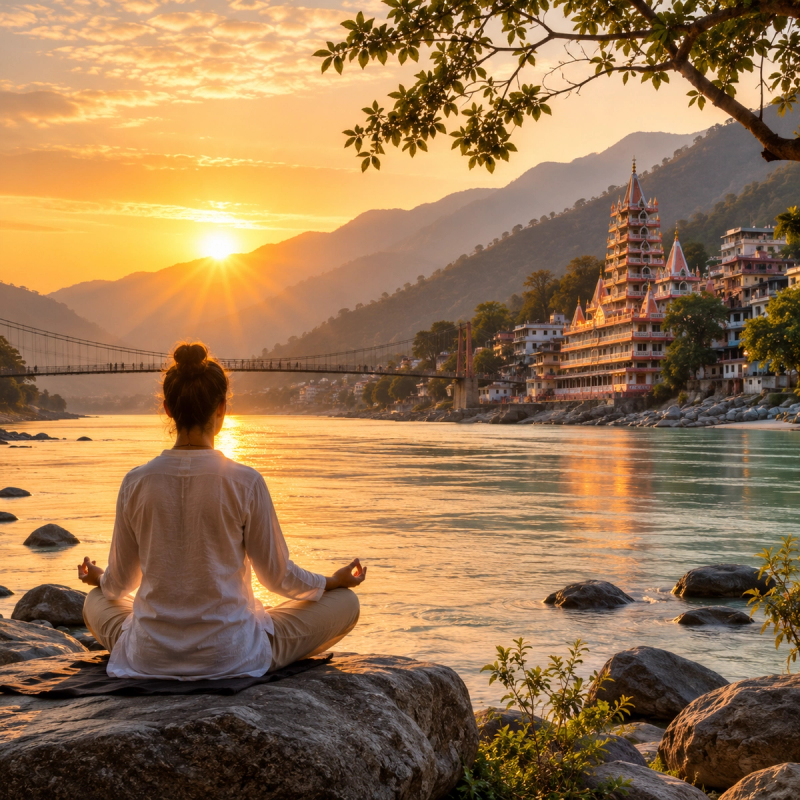
Practicing meditation in the West often means fighting against the frantic energy of a city. In Rishikesh, the environment actively supports your mental stillness.
The city is situated on the banks of the sacred Ganges River, wrapped in the foothills of the Himalayas. Sages have meditated in these specific caves and forests for millennia.
There is a palpable energetic charge in the air here. The entire culture operates on a rhythm dictated by temple bells, chanting, and the flow of the river.
When you sit for practice here, you are plugging into an ancient, unbroken lineage. The spiritual atmosphere does the heavy lifting, pulling your mind inward naturally.
You are surrounded by peers and teachers who share your exact intentions. This collective focus creates a powerful container for deep personal breakthroughs.
Deepen Your Practice with Expert Guidance
If you are serious about mastering these practices, learning from authentic Himalayan masters changes everything. Divine Yogpeeth offers a traditional environment where these ancient tools are taught with precision and care. Our seasoned teachers guide you safely through the mental resistance, ensuring you build a robust, lifelong practice.
FAQs
What if I cannot stop my thoughts during meditation?
You are not supposed to stop your thoughts. The goal is to observe them without attachment. Training teaches you how to let thoughts pass like clouds without letting them control your emotional state.
Do I need prior meditation experience before joining a YTT?
No prior experience is necessary. A good training program starts from the very beginning. You will learn the foundational mechanics before moving on to advanced techniques, ensuring you never feel lost.
How long will I meditate each day during training?
Most intensive programs include about 60 to 90 minutes of formal meditation daily. This is usually split between an early morning session and an evening practice, utilizing different techniques.
Is meditation physically uncomfortable?
Sitting still can highlight physical tension initially. You will be taught how to use props, cushions, and correct posture alignment to sit pain-free. The physical asana practice also opens the hips and spine to make sitting easier.
Conclusion: Your Meditation Journey Starts Now
Mastering the exact meditation techniques 200 hour YTT curriculums provide will completely restructure how your mind operates. You will move from feeling controlled by your thoughts to becoming the master of your internal landscape. This clarity is the greatest gift you can offer yourself and your future students. Ready to begin? Explore our 200-Hour Yoga Teacher Training in Rishikesh and take the first step today.