.jpg)

Uncover the exact 200 hour YTT curriculum subjects you will study. Discover anatomy, philosophy, and teaching methods to prepare for your journey. Find out.
200 Hour YTT Curriculum Subjects: The Complete Breakdown
Are you wondering exactly what 200 hour YTT curriculum subjects you will study during your intensive month of training? Committing to a certification course requires massive physical, mental, and emotional energy. Knowing the precise syllabus before you arrive helps you prepare effectively and eliminates unnecessary anxiety.
Many students arrive expecting a month of continuous physical exercise, only to feel overwhelmed by the academic demands. The reality is that learning to teach requires far more than physical flexibility. You must understand how the body works, how the mind operates, and how to safely guide others through their own physical limitations.
A high-quality certification program breaks this massive amount of information down into digestible modules. You will divide your daily schedule between physical practice, academic lectures, and hands-on teaching experience. This structured approach ensures you absorb the ancient wisdom while developing modern, practical teaching skills.
Understanding this breakdown allows you to arrive with the right study materials and mental focus. You are not just learning to perform poses; you are learning to analyze, deconstruct, and effectively communicate the mechanics of each movement.
Let us explore the core modules that shape your path from dedicated student to confident, certified instructor.
Core 200 Hour YTT Curriculum Subjects: Asana Practice
The physical practice forms the cornerstone of your daily routine and dictates the largest block of your training hours. You will spend countless hours on your mat, but the focus shifts entirely from working out to actively analyzing movement. Programs that align with Yoga Alliance standards mandate a specific number of contact hours dedicated strictly to technical training.
You will typically begin your mornings with intense, guided practices in primary styles like Hatha and Ashtanga Vinyasa. This dual approach allows you to understand both static alignment and dynamic, breath-linked movement. You will break down dozens of foundational postures, studying their Sanskrit names, physical benefits, and energetic impacts.
Instead of just flowing through a sequence, you will stop to analyze the micro-adjustments required for different body types. You will learn the difference between compression (bone hitting bone) and tension (muscular resistance), which dictates how deep a student can safely go. This knowledge is crucial for preventing injuries in your future classes.
Alignment and Safe Modifications
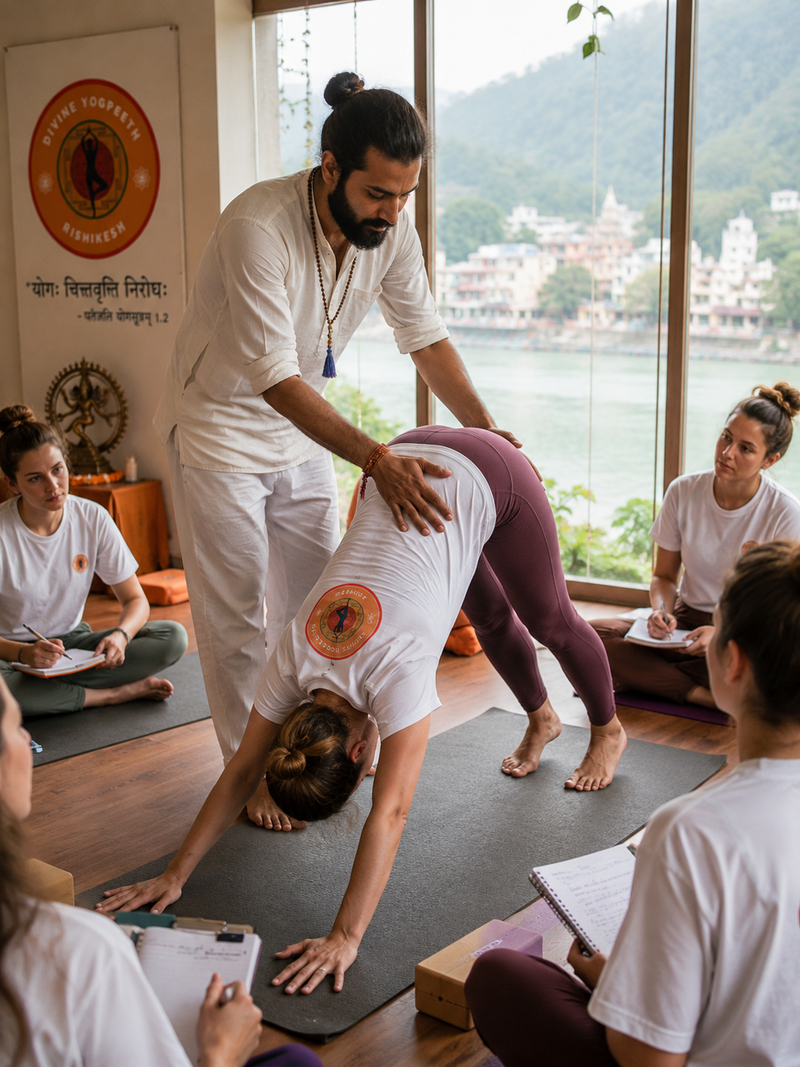
A major portion of this module focuses on modifications and the use of props like blocks, straps, and bolsters. You must learn how to adapt a traditional posture for a student with tight hamstrings, a lower back injury, or shoulder mobility issues.
You will also practice hands-on adjustments, learning how to physically guide a student deeper into a posture using safe, confident touch. To understand more about the specific standards required for certification, review the Yoga Alliance RYT 200 Certification: 7 Best Real Truths.
Understanding Functional Anatomy and Physiology
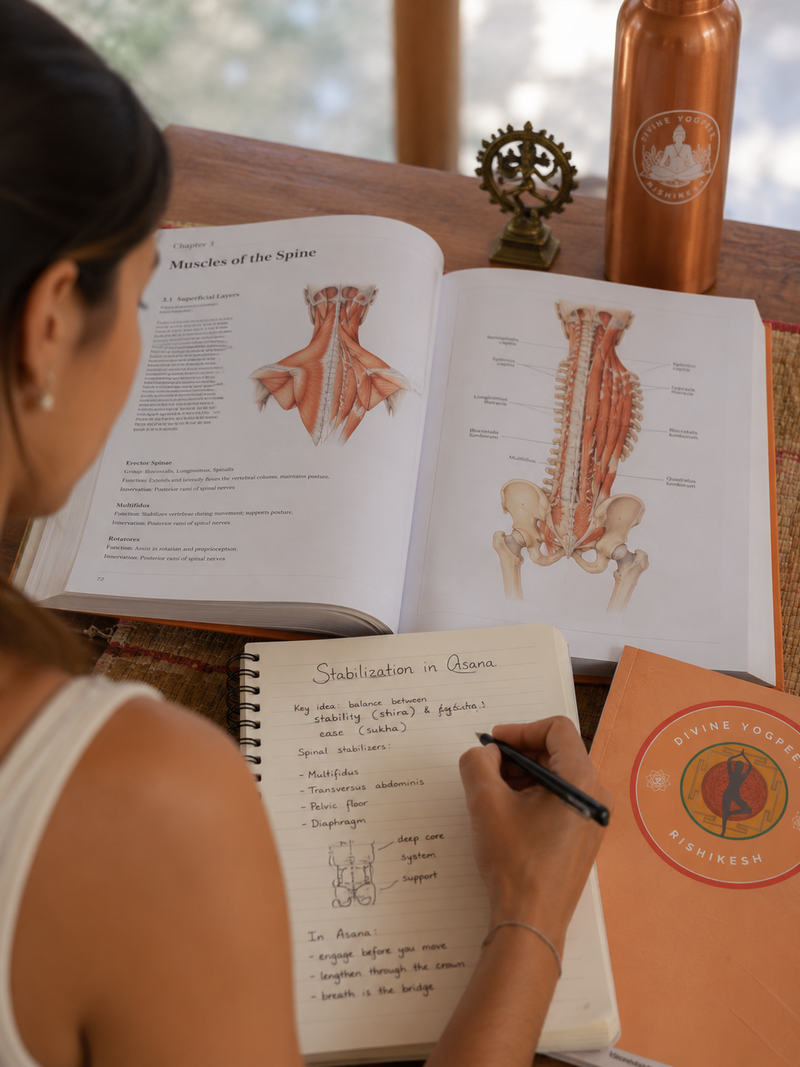
You cannot safely teach movement without understanding the biological machinery that makes it possible. Anatomy is often the most academically challenging module for new students, but it is absolutely essential for your credibility as an instructor. You will study the human body through the specific lens of movement and breath mechanics.
The curriculum covers the major skeletal structures, joint mechanics, and muscular systems. You will learn to identify key muscles like the psoas, the rotator cuff group, and the hamstrings, understanding how they engage or stretch in specific postures. This functional approach ensures the anatomy lessons apply directly to the physical practice on your mat.
You will also study the respiratory system, analyzing how the diaphragm functions and how lung capacity impacts physical endurance. Furthermore, you will explore the nervous system, specifically how mindful breathing shifts the body from a sympathetic (fight or flight) state into a parasympathetic (rest and digest) state.
Applied Biomechanics
Applied biomechanics bridges the gap between textbook anatomy and real-world teaching. You will learn to visually assess a student's posture and identify structural imbalances.
Understanding anatomy allows you to explain why a posture feels a certain way, rather than just telling students how it should look. This knowledge builds deep trust between you and your future clients.
Ancient Yoga Philosophy and Lifestyle Ethics
Yoga is a vast philosophical system that originated thousands of years ago, long before the modern fitness industry existed. This module strips away the physical exercise to focus on the ethical and psychological roots of the practice. You will study ancient texts, primarily focusing on Patanjali's Yoga Sutras, which map out the psychology of human suffering and liberation.
The core of this module revolves around the eight-limbed path, which dictates how a practitioner should interact with the world and themselves. You will study the Yamas (social ethics) and Niyamas (personal observances), which cover concepts like non-violence, truthfulness, and contentment. For a deeper dive into these ancient steps, explore the Eight Limbs of Yoga Philosophy: 8 Ultimate Steps to Peace.
You will also explore concepts from the Bhagavad Gita and discuss how ancient ethics apply to modern teaching scenarios. The curriculum covers the professional ethics of being an instructor, including boundary setting, inclusivity, and the student-teacher dynamic.
Organizations globally, including government bodies like the Ministry of Ayush in India, recognize the deep psychological benefits of preserving these traditional philosophical frameworks.
Teaching Methodology: Finding Your Voice
Knowing how to execute a perfect handstand does not automatically make you a good teacher. The teaching methodology module bridges the gap between your personal practice and your ability to guide others safely. This is where you develop your instructional voice, learn to command a room, and build the confidence to lead a class of diverse students.
You will learn the art of intelligent sequencing, which involves structuring a class so that it safely warms up the body, peaks at a challenging posture, and cools down effectively. You will study the energetic arc of a class and how to transition students smoothly from standing sequences to floor work.
Vocal cueing is a massive component of this module. You will practice using clear, concise language to guide movement, avoiding confusing jargon or unnecessarily wordy instructions. You will learn when to use active cues ("press your heel down") versus passive cues ("allow your shoulders to soften").
The Practicum Experience
The practicum is your testing ground. You will start by teaching single postures to a partner, eventually building up to teaching small sequences, and finally leading a full 60-minute class for your peers.
You will receive constructive feedback from lead instructors on your pacing, volume, and clarity. To prepare for this demanding phase of your training, read through Yoga Teaching Methodology TTC: 5 Proven Keys to Success.
Vital 200 Hour YTT Curriculum Subjects: Pranayama
Breath is the absolute foundation of the physical practice, yet it is often the most misunderstood component by beginners. The pranayama module teaches you how to control and direct vital energy (prana) through specific breathing techniques. You will move far beyond simple deep breathing and explore complex, traditional practices.
You will learn heating practices like Kapalabhati (Skull Shining Breath) and Bhastrika (Bellows Breath), which stimulate the nervous system and build internal fire. Conversely, you will master cooling practices like Nadi Shodhana (Alternate Nostril Breathing) and Sheetali, which calm the mind and lower the heart rate.
The curriculum breaks down the anatomical effects of these practices, explaining contraindications and safety protocols. You must understand why certain breathing techniques are dangerous for pregnant women or individuals with high blood pressure.
Bandhas and Energy Locks
Alongside breath control, you will study the Bandhas, or energetic locks. You will learn to engage the Mula Bandha (root lock), Uddiyana Bandha (abdominal lock), and Jalandhara Bandha (throat lock).
These subtle internal engagements create stability in physical postures and direct energy upward through the spine. Discover more about the science behind these breathing methods in Pranayama Types Benefits Practice: 7 Proven Breathing Truths.
Meditation, Mantras, and Subtle Anatomy
The ultimate goal of all physical yoga postures is to prepare the body to sit comfortably in meditation. This module explores the subtle, energetic body that exists beneath the physical muscles and bones. You will study the Chakra system, understanding the seven main energy centers located along the spine, and how blockages in these centers manifest as physical or emotional issues.
You will explore various meditation techniques, ranging from focused awareness (Trataka) to dynamic, active meditations. You will practice Yoga Nidra, a state of conscious deep sleep that promotes profound nervous system healing. Understanding these different modalities allows you to offer varied meditation styles to your future students.
Mantra chanting is also heavily integrated into this syllabus. You will learn the correct Sanskrit pronunciation of traditional mantras, understanding their vibrational impact on the mind and environment.
The repetition of sound serves as a powerful tool to anchor the wandering mind. If you find yourself deeply drawn to the vibrational aspects of the practice, you might later explore our specialized Sound Healing Training Course.
The Business of Yoga and Career Development
Graduating with your certification is just the beginning of your professional journey. A comprehensive curriculum includes a module on the practical realities of building a career in the wellness industry. You must learn how to market yourself, build a student base, and navigate the administrative side of being an independent contractor.
You will discuss the differences between teaching at established studios, running private corporate classes, or hosting independent retreats. The curriculum covers basic marketing strategies, the importance of building a digital presence, and how to define your unique teaching niche.
You will also learn about liability insurance, continuing education requirements, and how to maintain professional boundaries with clients. This module ensures you leave the ashram not just as a skilled yogi, but as a prepared professional ready to navigate the modern market.
Understanding the business landscape prevents early burnout and helps you build a sustainable, profitable career doing what you love.
Why Rishikesh? / Why This Matters
The location of your training dramatically impacts your ability to absorb this massive curriculum. Training in your home city often means returning to your daily stress, chores, and social obligations after class. Traveling to the source strips away these distractions, allowing complete immersion in the lifestyle.
Rishikesh is globally recognized as the yoga capital of the world. The environment itself acts as a secondary teacher. You wake up to the sound of temple bells, study beside the sacred Ganga river, and practice in the foothills of the Himalayas. This specific geography carries an undeniable, centuries-old energetic charge.
Studying here connects you directly to authentic lineages rather than westernized fitness adaptations. You learn from masters who have dedicated their entire lives to these ancient texts, offering insights you simply cannot find in a textbook.
Immersion in this environment accelerates your spiritual and physical growth, forcing you to confront your limitations without the comfort of your normal routine to hide behind.
Stepping Into Your Authentic Teaching Voice
Absorbing the vast syllabus of a certification course changes how you view yourself and your capabilities. You arrive as a student seeking knowledge, and you leave equipped with the tools to heal and guide others.
If you are considering starting this transformative path, Divine Yogpeeth offers an authentic, traditional environment designed to push you past your perceived limits. We provide the structured guidance, expert teachers, and supportive community you need to succeed.
You can explore our foundational philosophy and values by visiting the Divine Yogpeeth Home page. If you want to experience the energy of the ashram before committing to a full month, joining a 5 Days Retreat offers the perfect introduction to our teaching style and community.
FAQs
What if I cannot do advanced physical postures?
You do not need to master advanced postures like handstands or deep backbends to become an excellent teacher. The curriculum focuses on your ability to safely guide others, understand anatomy, and communicate clearly.
Will I have free time during the course?
The schedule is highly intensive, typically running from early morning until evening. However, Sundays are generally designated as rest days, allowing you time to explore local temples, rest your body, or study quietly.
Do I have to become a teacher after graduating?
Absolutely not. A large percentage of students enroll solely to deepen their personal practice, gain a profound understanding of anatomy, and immerse themselves in the philosophy without any intention of leading public classes.
How do I prepare my body before arriving?
Focus on consistency rather than intensity. Practice basic foundational postures daily to build joint strength, and begin familiarizing yourself with basic anatomical terms. For more detailed preparation steps, read our Yoga Teacher Training Beginners FAQ: 10 Proven Answers.
Conclusion
Understanding the detailed 200 hour YTT curriculum subjects removes the fear of the unknown and prepares you for real transformation. You will dive deeply into functional anatomy, master intelligent sequencing, and explore ancient philosophies that will permanently alter your worldview. This education provides the essential foundation for a lifetime of safe, authentic practice and leadership. Ready to begin? Explore our 200-Hour Yoga Teacher Training and take the first step today.