.jpg)

Mindfulness retreat vs yoga retreat Rishikesh explained: compare meditation, yoga, schedules, goals, and practical tips before you book. Discover more.
mindfulness retreat vs yoga retreat Rishikesh: How to Choose the Right Experience
Have you ever booked a retreat expecting quiet reflection, only to discover that most of your day is built around physical practice? Understanding the difference between a mindfulness retreat and a yoga retreat can save you from choosing an experience that does not match what you actually need. In Rishikesh, both formats can include meditation, mindful living, healthy food, and time away from routine, but their daily rhythm and main purpose can be quite different.
A mindfulness-focused retreat generally places sustained attention, meditation, awareness of thoughts, and present-moment observation at the centre. A yoga retreat may combine asana, pranayama, meditation, yoga philosophy, relaxation, and sometimes excursions or wellness practices.
The distinction is not absolute. Many Rishikesh programmes blend the two. What matters is knowing which activities take up most of your time and what you want to return home with: a calmer mind, a stronger practice, deeper philosophical understanding, practical teaching skills, or simply a few days to reset.
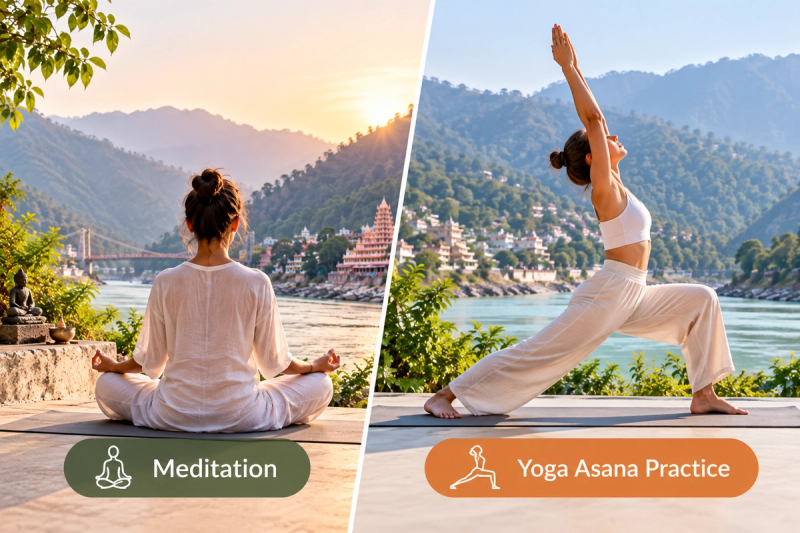
Mindfulness Retreat vs Yoga Retreat Rishikesh: What Is the Core Difference?
The simplest way to understand the difference is to look at the centre of the schedule.
On a mindfulness retreat, you usually spend substantial time developing awareness itself. You may sit quietly, follow guided meditation, observe sensations, practise mindful walking, eat without distractions, or participate in reflective discussions. The physical side can be gentle or secondary.
A yoga retreat is usually broader. Your day may begin with asana practice and continue with pranayama, meditation, yoga philosophy, relaxation, or other yogic practices. Some retreats are physically active; others are deliberately slow and restorative.
Neither format automatically guarantees a particular result. A retreat is a setting that gives you time and structure to practise. Your experience will also depend on the teacher, schedule, group size, accommodation, your previous experience, and how consistently you participate.
If certification matters to you, distinguish a retreat from teacher training. A retreat is generally designed around practice and personal experience, while a teacher-training programme has a structured curriculum intended to develop teaching knowledge and skills. Yoga Alliance is one organisation you may encounter when comparing yoga-teacher training credentials: <a href="https://yogaalliance.org">Yoga Alliance</a>.
A useful test is this: if you removed the meditation sessions from the programme, would the retreat still look substantially like yoga? If yes, you are probably looking at a yoga-led programme. If most of the programme would remain centred on observing attention, thoughts, emotions, and sensations, it is closer to mindfulness.
Mindfulness Retreat or Yoga Retreat in Rishikesh: Which Daily Rhythm Fits You?
Your ideal retreat often becomes obvious when you imagine the ordinary day rather than the marketing description.
A mindfulness-oriented schedule may have longer periods of silence or stillness. A typical day can include sitting meditation, mindful movement, walking meditation, meals taken slowly, and periods for personal reflection. The challenge is not necessarily physical intensity; it can be the discipline of staying present when your mind wants stimulation.
A yoga retreat usually gives you more variety. You may move through postures, breathing exercises, meditation, relaxation, and philosophical study. Depending on the programme, you might also have free time to explore Rishikesh or attend a wellness session.
If You Want More Stillness
Choose a mindfulness-heavy experience if your main goal is to practise sustained attention and become more comfortable with quiet. This can suit you if you spend much of your normal day switching between screens, messages, work, and other demands.
But do not assume that sitting quietly is automatically relaxing. At first, silence can make your usual mental noise more noticeable. A well-designed programme gives you enough guidance to work with that experience instead of simply leaving you alone with it.
If You Want Movement and Meditation Together
A yoga retreat may suit you better if you want physical practice to support your mental practice. Asana can give your attention an immediate object: the movement of the body, the breath, balance, alignment, or sensations.
You can also look for a retreat that includes restorative or slower practices if you do not want an athletic schedule. Before booking, check how many hours are devoted to asana and how intense those sessions are.
For a shorter introduction, a 5-day yoga retreat in Rishikesh can give you more structure than a casual wellness holiday while leaving enough time to experience the city.
What You Actually Practise: Meditation, Asana, Breath and Philosophy
The biggest practical difference is often not the label but the ratio of practices.
Mindfulness meditation typically asks you to notice what is happening without immediately reacting to it. You might observe the breath, bodily sensations, thoughts, sounds, or emotions. The skill is repeatedly returning attention when it wanders.
Yoga can include meditation, but the toolkit is wider. Depending on your retreat, you may practise asana, pranayama, relaxation, chanting, meditation, and philosophical study. The traditional yoga framework is therefore broader than a modern retreat built primarily around mindfulness meditation.
This is one reason the term “yoga retreat” can be misleading if you do not inspect the schedule. Two retreats can use the same label while offering completely different experiences.
Check the Programme Before You Book
Ask these questions:
- How many hours of meditation are scheduled each day?
- How many asana sessions are included?
- Is pranayama taught, and at what level?
- Is silence expected for part of the day?
- Is yoga philosophy part of the programme?
- How much free time do you have?
- Are excursions included?
- What is the accommodation and meal arrangement?
- Is the programme recreational, restorative, or educational?
If you want formal learning rather than a short retreat, a 100-hour yoga teacher training programme is a different commitment from a retreat and should be evaluated as training rather than a holiday.
Mindfulness also fits naturally into yoga practice. A slow posture sequence can become a concentration exercise when you pay close attention to breath, sensation, and movement instead of treating the sequence as something to complete. If sleep and deep rest are part of your goal, you may also want to understand Yoga Nidra and how to practise it, since it can complement a retreat without replacing meditation or yoga practice.
For broader background on yoga as a philosophical and cultural tradition, you can also consult <a href="https://www.britannica.com">Encyclopaedia Britannica</a>.
How to Choose Based on Your Goal, Time and Experience
Start with your reason for travelling.
If you want a quiet reset after a demanding period, a mindfulness-oriented retreat may give you the sustained stillness you are looking for. If you want to deepen your physical practice while also working with breath and meditation, a yoga retreat may make more sense.
If you are curious about yoga but have never practised seriously, do not assume you need an advanced programme. Ask whether beginners are welcome and whether teachers offer modifications.
If you already practise yoga regularly, look at the curriculum rather than choosing based on the number of days. A retreat with fewer practices can sometimes be more useful to you than a packed schedule if your goal is reflection and integration.
Your available time matters too. A three-day retreat can introduce you to the rhythm of a retreat, but it may feel short if you want substantial study. A longer programme gives you more opportunity to settle into a routine.
Cost should also be assessed beyond the headline price. Compare accommodation, meals, teaching hours, excursions, transfers, and what is actually included. A lower advertised price is not necessarily lower overall once you add separate expenses. It is also useful to distinguish a retreat from a sightseeing-focused trip; this comparison of a yoga retreat and a yoga vacation explains why the daily structure can feel very different.
You should also consider the location. Staying in Tapovan gives you access to cafés, yoga spaces, walking routes, and the atmosphere around the Ganga while still allowing you to maintain a retreat routine. If you want more seclusion, check whether the property itself offers enough quiet space.
If you are travelling internationally, practical preparation matters. Visa requirements, transport from the airport or railway station, local weather, dietary needs, insurance, and accommodation standards should be checked before you pay. A useful starting point is this guide to yoga retreats in Rishikesh for foreigners.
Why Rishikesh Works for Both Mindfulness and Yoga Retreats
Rishikesh offers something that is difficult to reproduce in a conventional hotel wellness setting: yoga is part of the surrounding culture, not merely an activity added to a holiday package.
You can build a retreat around morning practice, quiet time, meditation, study, and walks near the Ganga. At the same time, the city gives you access to teachers, ashrams, yoga schools, wellness services, and a large international practitioner community.
Tapovan can be particularly practical if you want a balance between retreat structure and access to everyday facilities. You can practise in the morning, eat a simple meal, spend time away from your phone, and still have the option of exploring nearby areas when your schedule allows.
The setting can support your intentions, but do not romanticise the location. Rishikesh is a living city. Traffic, crowds, construction, weather, and busy market areas are part of the experience. If silence is essential to you, ask specifically about the retreat's surroundings and daily quiet periods.
You can also use your time in Rishikesh to explore complementary practices. If meditation and body awareness interest you, you might consider a session focused on sound or therapeutic wellbeing alongside your main retreat, provided the programme fits your goals.
Mindfulness and yoga are also often discussed in relation to mental wellbeing, but avoid treating a retreat as a substitute for professional care when you have a medical or psychological concern. You can read a balanced overview of research on yoga and mental health before deciding what role a retreat should play in your routine.
Most importantly, choose the programme first and the Instagram image second. A beautiful riverside photograph cannot tell you whether the teacher is experienced, whether the schedule suits your level, or whether you will actually get enough quiet time.
A Gentle Option in Rishikesh: Explore Divine Yogpeeth
If you're considering a structured experience in Rishikesh, we offer programmes that combine traditional yoga practices with time for reflection and can suit different levels and time commitments. You can explore our 3-day yoga retreat in Rishikesh if you want a shorter introduction.
If your goal is deeper study rather than a short retreat, our 200-hour yoga teacher training in Rishikesh is designed as a substantially more intensive learning experience.
The important point is to choose according to your intention. You do not need the longest programme or the most activities; you need a schedule that gives enough space for the kind of practice you want to develop.
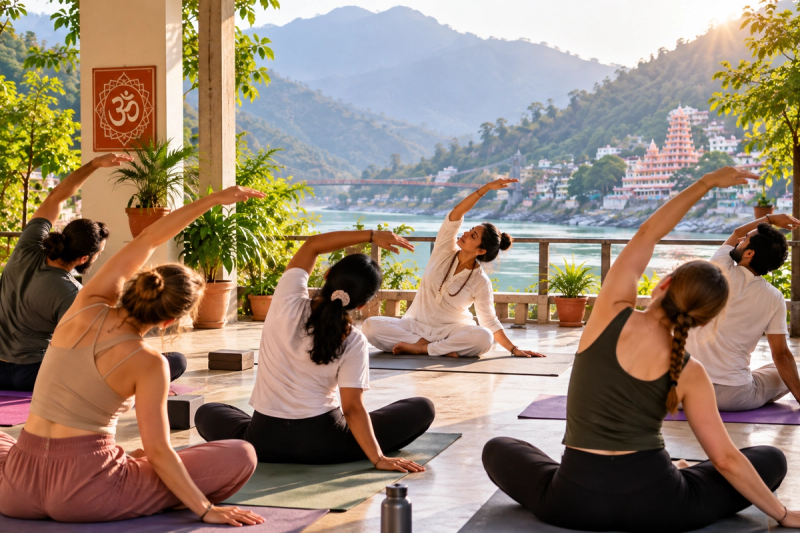
FAQs About Mindfulness and Yoga Retreats in Rishikesh
Is a mindfulness retreat the same as a yoga retreat?
No. They can overlap, but their emphasis can differ. A mindfulness retreat generally puts sustained awareness and meditation at the centre, while a yoga retreat may combine asana, pranayama, meditation, philosophy, and relaxation.
Can beginners join a yoga or mindfulness retreat in Rishikesh?
Many programmes welcome beginners, but you should confirm this before booking. Check the required experience, physical intensity, meditation expectations, and whether modifications are provided.
Is Rishikesh suitable for a quiet retreat?
It can be, but your experience depends heavily on the location and schedule. Rishikesh is an active town, so check whether your accommodation has quiet spaces and whether the programme includes designated periods of silence.
How many days should you spend on a retreat?
There is no universal ideal duration. Three to five days can work for an introduction or short reset. A longer programme may be more appropriate if you want deeper study, a consistent daily routine, or teacher training.
Can a yoga retreat include mindfulness meditation?
Yes. Mindfulness-style awareness can be integrated into asana, pranayama, walking, sitting meditation, and everyday activities. Always check the actual timetable because the amount of meditation varies between programmes.
Conclusion: Choose the Retreat That Matches Your Intention
When comparing mindfulness retreat vs yoga retreat Rishikesh options, do not choose based on the label alone. Look at the timetable, teaching approach, amount of meditation, physical practice, philosophy, silence, accommodation, and free time.
Choose a mindfulness-led format if sustained attention and stillness are central to what you want to practise. Choose a yoga-led retreat if you want a broader combination of movement, breath, meditation, and yogic study. If you want formal education, compare teacher-training curricula instead of treating a retreat as a substitute for certification.
Rishikesh gives you plenty of ways to build that experience around your actual goals. Take time to compare the details, then choose a programme you can genuinely commit to.
Ready to begin? Explore our 5-day yoga retreat in Rishikesh and take the first step toward a focused, meaningful retreat experience.