.jpg)

Discover why choose 100 hour over 200 hour YTT for your yoga journey in Rishikesh. Compare benefits, daily schedules, and career paths today. Learn more!
Why Choose 100 Hour Over 200 Hour YTT? The Ultimate Guide
Are you debating why choose 100 hour over 200 hour YTT for your upcoming immersion in India? Deciding to embark on a yoga teacher training journey is one of the most exciting decisions you can make, but choosing the wrong course length can leave you feeling either overwhelmed or under-prepared.
Navigating the choice between a month-long commitment and a shorter two-week course requires honest reflection on your personal goals, schedule, and current practice level. In this guide, you will uncover the specific advantages of selecting a short-term intensive, how the curriculum is structured, and how to decide which path aligns best with your life.
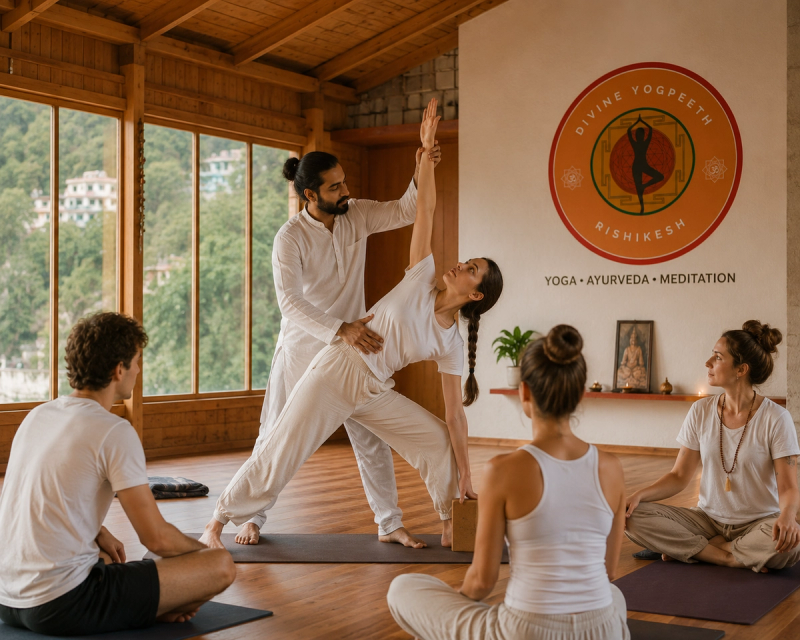
Understanding Why Choose 100 Hour Over 200 Hour YTT
When looking into yoga certification, many students assume that the 200-hour course is the only valid starting point. However, understanding why choose 100 hour over 200 hour YTT starts with recognizing how foundational yoga education is structured globally.
A 100-hour yoga teacher training is essentially the complete first half of a traditional 200-hour program. It follows the exact same academic and practical curriculum standards established by international bodies like Yoga Alliance, but splits the intensive workload into two separate, manageable segments.
Instead of digesting all twenty-three days of intensive philosophy, anatomy, and alignment in one exhausting sitting, you absorb the core fundamentals first. This approach prevents cognitive overload and physical burnout, giving your mind and body time to integrate what you learn.
If you want a deeper comparison between full certification and modular learning, explore our detailed breakdown on 100 Hour vs 200 Hour Yoga Teacher Training: 5 Best Truths.
By completing 100 hours now, you hold a recognized certificate for introductory completion. When you are ready in the future, you can return to complete your second 100 hours at the same school to earn your full 200-hour certification without repeating any material.
1. Time Constraints and Life Balance
The most common obstacle preventing passionate practitioners from taking a teacher training course is time. A traditional full course requires taking roughly four consecutive weeks away from your job, family, and daily obligations.
For working professionals, business owners, and university students, taking a full month off is often logistically impossible. A 100-hour program condenses the initial foundational training into approximately twelve to fourteen days.
This compact timeline allows you to fit an authentic Indian yoga immersion into a standard annual leave or vacation block without disrupting your professional career or family commitments. You get the full depth of traditional ashram life, early morning pranayama, and intensive alignment workshops in half the time.
For international travelers booking flights across continents, a two-week course offers a realistic getaway that returns you home refreshed rather than utterly exhausted. You can step away from your fast-paced routine, reset your nervous system in an inspiring environment, and return to work without taking unpaid leave.
2. Financial Practicality and Modular Investment
Investing in your education is essential, but committing a large sum upfront for a month-long course can create financial stress. Studying abroad involves not just tuition, but also round-trip flights, travel insurance, local transit, and emergency funds.
Opting for a 100-hour course halves your upfront tuition costs and living expenses while in India. This modular financial investment allows you to experience high-caliber instruction without straining your savings account.
- Lower initial tuition fee: Pay only for the first phase of training.
- Reduced accommodation expenses: Half the nights spent in guest houses or ashrams.
- Better budgeting for travel: Allocate remaining funds for local excursions or sound healing workshops.
- Flexible timing for phase two: Save up for your remaining 100 hours at your own comfortable pace.
If you are planning your trip budget and logistics, read our essential advice on Yoga Teacher Training India Preparation: 7 Best Vital Tips to ensure every financial and physical detail is covered before takeoff.
3. A Gentle, Beginner-Friendly Entry Point
Jumping directly into four weeks of five-to-six-hour daily physical practice can be grueling if your body is not accustomed to intense physical labor. Many enthusiasts love yoga, but experience joint fatigue or muscle soreness when practicing multiple times a day.
A 100-hour course serves as a gentle buffer that allows beginners and intermediate practitioners to test their physical stamina safely. Medical studies indexed on PubMed demonstrate that progressive overload in physical disciplines significantly lowers injury risks compared to sudden, high-volume stress.
The curriculum in the first half focuses heavily on basic anatomical principles, foundational posture modifications, and safety. You learn how to use props, protect your lower back, and align your joints properly before attempting advanced adjustments.
If you are worried about your current flexibility or lack of formal teaching background, review our guide on 100 Hour YTT for Beginners No Experience: 1 Perfect Guide. It reveals how structured guidance bridges the gap for new practitioners seamlessly.
4. Focus on Personal Growth Over Professional Teaching
Not everyone who enrolls in a yoga teacher training wants to open a commercial studio or teach public classes. A large percentage of modern practitioners join a course purely for self-discovery, stress relief, and deep personal study.
If your primary motivation is to refine your own postures, understand yoga philosophy, and establish a daily meditation routine, a 100-hour program gives you everything you need. You receive focused attention on your own alignment without the added pressure of practical teaching exams.
In a full 200-hour course, a significant portion of the final two weeks is dedicated to class sequencing, student management, practicum evaluations, and business marketing. If you have no intention of teaching immediately, those hours can feel unnecessary for your current goals.
Focusing on personal growth allows you to build a strong personal practice first. If you eventually decide to step in front of a class later in life, you can explore Teaching Yoga After 100 Hour Certification: 5 Best Truths to see how graduates transition smoothly into teaching roles.
5. Avoiding Physical and Mental Burnout
Practicing physical postures for three to four hours daily while studying Sanskrit terminology, ancient philosophy, and human anatomy demands relentless energy. By week three of an intensive full program, many students hit a physical wall known as training fatigue.
When physical fatigue sets in, concentration drops, muscles grow tight, and the risk of minor strains increases. A two-week course keeps your energy levels high from the opening fire ceremony to the graduation dinner.
- Sustained daily focus: High retention of philosophy and anatomy concepts.
- Optimal muscle recovery: Less risk of repetitive strain injuries in wrists and shoulders.
- Fresh mental space: You remain enthusiastic and fully present throughout every lecture.
- Deeper enjoyment: You return home feeling energized rather than physically drained.
Maintaining peak physical and mental vitality ensures that every hour you spend on the mat is enjoyable, insightful, and safe.
What Does a 100-Hour YTT Daily Schedule Look Like?
To understand how much ground you cover in two weeks, it helps to look at the daily flow of traditional ashram life in India. The days are structured to build discipline while honoring your physical limits.
A typical day begins early with the sound of morning bells or river breezes, setting a calm tone before sunrise:
- 06:00 AM – 07:30 AM: Morning Pranayama, Shatkarma (Cleansing), and Meditation
- 07:45 AM – 09:15 AM: Traditional Hatha Yoga Asana Practice
- 09:30 AM – 10:30 AM: Nutritious Sattvic Breakfast
- 11:00 AM – 12:30 PM: Yoga Philosophy & Yoga Sutras Lecture
- 01:00 PM – 02:00 PM: Sattvic Lunch and Rest Period
- 03:30 PM – 04:30 PM: Applied Yoga Anatomy and Physiology
- 04:45 PM – 06:15 PM: Ashtanga Vinyasa Flow or Alignment Workshop
- 07:00 PM – 08:00 PM: Dinner and Free Evening Reflection
This structured rhythm ensures you receive a balanced blend of physical movement, intellectual study, and restful integration each day. To prepare yourself mentally and physically for this routine, check out our walkthrough on 100 Hour YTT Daily Schedule: 5 Best Ways to Prepare.
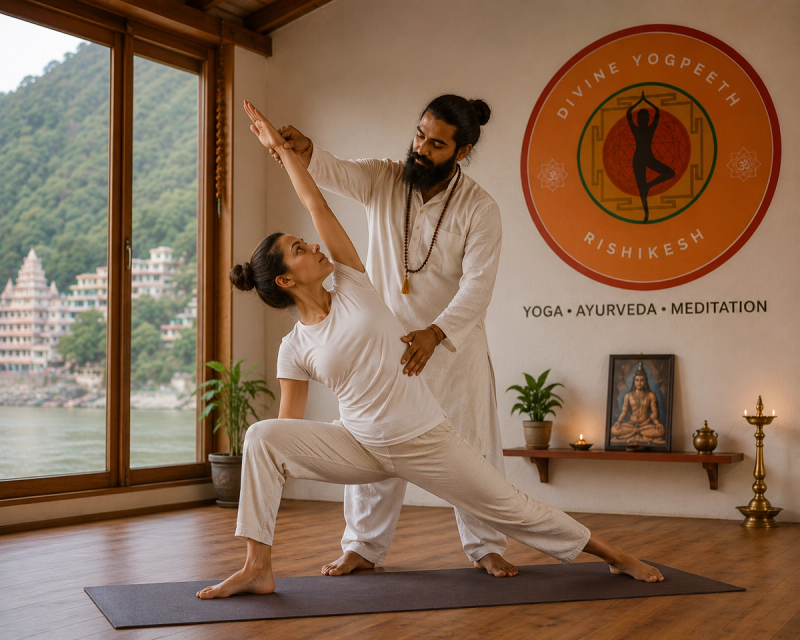
Why Study Yoga in Rishikesh?
Rishikesh is universally recognized as the yoga capital of the world, drawing spiritual seekers and dedicated yogis for centuries. Nestled along the banks of the sacred Ganga River against the backdrop of the Himalayan foothills, the energy of this sacred town is unmatched.
Studying in Rishikesh exposes you to authentic lineage masters, traditional Vedic chanting, and an environment entirely dedicated to spiritual practice. The town of Tapovan and Laxman Jhula provides a supportive community where healthy vegetarian food, quiet ashrams, and yoga halls exist on every corner.
When you practice in an environment steeped in spiritual history, your progression accelerates dramatically compared to practicing in a local Western studio. To learn more about how this unique atmosphere alters your perspective, read Yoga in Rishikesh: 7 Proven Reasons It Transforms You.
Experience Authentic Learning at Divine Yogpeeth
If you are ready to take your practice to the source, Divine Yogpeeth offers an ideal sanctuary on the banks of the Ganga in Laxman Jhula, Rishikesh. Our traditional school provides a warm, supportive atmosphere where experienced masters guide you step-by-step through traditional Hatha and Ashtanga principles.
Whether you choose our introductory two-week program or a restorative getaway, our courses are designed with small class sizes to ensure personalized attention for every single student. You can explore our foundational 100-Hour Yoga Teacher Training to start your journey with complete peace of mind.
If you are looking for sound therapy integration during your stay, we also provide specialized training in our Sound Healing Training Course and holistic relaxation through our 5 Days Retreat.
FAQs
Can I teach yoga certified with a 100-hour course?
A 100-hour course awards an official certificate of completion, but most commercial studios and insurance providers require a full 200-hour certification to register with international bodies. However, you can lead informal workshops, private sessions, or assist senior teachers while completing your remaining hours.
How long do I have to complete the second 100 hours?
There is no strict expiration date. Most reputable schools allow you to return within one to two years to complete your second module and claim your full 200-hour certification seamlessly.
Is a 100-hour course physically demanding?
Yes, you will still practice asana for three to four hours daily, but because the course lasts only two weeks, your muscles recover quickly without accumulating severe chronic fatigue.
Will I learn yoga philosophy during a 100-hour training?
Absolutely. You will study fundamental philosophy concepts including the Eight Limbs of Yoga, the Patanjali Yoga Sutras, basic pranayama techniques, and introductory human anatomy.
Conclusion: Making the Right Decision for Your Path
Understanding why choose 100 hour over 200 hour YTT ultimately comes down to honoring where you are right now in your personal journey. If you face busy calendar schedules, tight travel budgets, or simply want to deepen your own practice without committing to a full month away, the 100-hour path offers an authentic, flexible, and rewarding solution.
You do not need to rush your education to prove your devotion to yoga. By breaking your training into two manageable steps, you give yourself the time, space, and freedom to truly digest every lesson on and off the mat.
Ready to take the first step toward transforming your practice in India? Explore our premier 100-Hour Yoga Teacher Training or discover our full 200-Hour Yoga Teacher Training at Divine Yogpeeth and reserve your mat in Rishikesh today!