
A yoga journaling retreat inner work Rishikesh experience combines mindful movement, meditation, and self-reflection. Discover practical ways to begin.
Yoga Journaling Retreat Inner Work Rishikesh: Combine Physical Practice with Deeper Self-Reflection
Introduction
A yoga journaling retreat inner work Rishikesh experience can help you notice what your busy routine often hides: the tension you carry, the thoughts you repeat, and the feelings you rarely give yourself time to understand. What if your yoga practice could continue long after you roll up your mat?
Yoga helps you reconnect with your body through movement, breath, and stillness. Journaling gives you a place to explore what emerges during that practice. When you combine the two, you create an opportunity to understand yourself more clearly without needing to force a breakthrough or find an immediate answer.
Rishikesh offers a distinctive setting for this combination. Its yoga traditions, riverside atmosphere, Himalayan surroundings, and established wellness community can encourage you to slow down and pay closer attention to your experience.
Whether you are an international traveller seeking a meaningful retreat or an Indian practitioner looking for a break from familiar routines, this guide explains how yoga and journaling work together, what a retreat might include, and how to choose an experience that suits your needs.
You will also discover practical journaling prompts, a simple daily routine, and ways to carry your reflections home so that your retreat becomes more than a temporary escape.
1. How a Yoga Journaling Retreat Supports Inner Work in Rishikesh
Inner work means making space to understand your thoughts, emotional responses, habits, values, and personal boundaries. It is not about fixing everything you dislike about yourself. It is about becoming more aware of what is happening within you and responding with greater intention.
A yoga journaling retreat combines physical practice with deliberate reflection. Each supports a different part of the process.
Yoga encourages you to notice physical sensations, breathing patterns, balance, and the way you respond to challenge. For example, you might notice that you hold your breath during a demanding posture or become impatient when a movement feels unfamiliar.
Journaling helps you explore these observations. You can ask yourself what you felt, what thoughts appeared, and whether similar reactions occur outside the yoga room.
This combination can support several useful habits:
- Greater self-awareness: Recognise recurring thoughts and behavioural patterns.
- Mindful responses: Create space between an uncomfortable feeling and your reaction to it.
- Personal clarity: Explore your priorities, relationships, boundaries, and intentions.
- Consistent reflection: Turn occasional insights into questions you revisit over time.
Neither yoga nor journaling guarantees emotional healing, and you do not need to experience intense emotions for the practice to be worthwhile. Sometimes, the most useful discovery is simply recognising that you are tired, overwhelmed, or ready to change a routine.
If you want to understand how yoga fits into a broader framework of mindful living, the official Yoga Alliance website offers a useful starting point for exploring yoga education and professional standards.
The most important principle is simple: practise with curiosity rather than judgement. Your journal is a space to observe your experience honestly, not another place to criticise yourself.
2. Yoga and Journaling Retreat in Rishikesh: How the Two Practices Work Together
Yoga and journaling complement each other because they encourage you to pay attention in different ways. Yoga brings your awareness towards your body and breath, while writing helps you put your observations into words.
You do not need to be an experienced yogi or a skilled writer. A few minutes of honest reflection can be more useful than filling several pages with thoughts you feel you should have.
Begin with the body, then explore the mind
Imagine beginning your morning with gentle Hatha Yoga. As you move through standing postures, you notice that your shoulders feel tight and your breathing becomes shallow whenever you struggle to maintain balance.
Instead of dismissing these sensations, you finish your practice and write down what you noticed. You might explore whether you tend to become impatient when something does not come easily or whether you expect yourself to perform perfectly.
The physical experience gives you something concrete to reflect on. Your journal helps you consider its possible meaning without assuming that every sensation reveals a hidden psychological issue.
Use different journaling methods
Your writing does not need to follow one rigid format. Choose a method that matches your energy and intentions.
- Free writing: Write continuously for five to ten minutes without editing every sentence.
- Guided prompts: Respond to specific questions about stress, habits, values, or personal goals.
- Gratitude journaling: Record small moments that brought comfort, connection, or appreciation.
- Post-practice reflection: Describe your physical sensations, breathing, mood, and attention after yoga.
- Evening review: Identify one thing you learned and one thing you would like to approach differently tomorrow.
You can also keep a separate page for intentions. Rather than writing a vague statement such as "I want to become a better person," choose something actionable: "I will pause before agreeing to commitments I do not have time for."
If you want to explore meditation alongside reflective writing, our guide to chakra meditation for beginners offers another perspective on building a more attentive personal practice.
The goal is not to analyse every thought. It is to develop a habit of listening to yourself, recognising what matters, and making small, considered choices.
3. Practical Journaling Prompts for Deeper Self-Reflection
A blank notebook can feel surprisingly intimidating. You sit down intending to reflect, but your mind wanders towards tomorrow's plans, unfinished tasks, and everyday concerns.
Guided questions make it easier to begin. During a retreat, you can use them after yoga, following meditation, or during a quiet period in the afternoon.
Prompts for understanding your emotions
Start with what you can observe rather than searching for a profound revelation.
- What emotion has appeared most often in my life recently?
- Which situations leave me feeling calm, and which leave me drained?
- What do I usually do when I feel uncomfortable or uncertain?
- Is there a feeling I have been avoiding acknowledging?
- What would responding to myself with patience look like today?
Answer these questions honestly, but do not force yourself to revisit difficult experiences before you feel ready. You can skip a question, change the subject, or stop writing whenever you need to.
Prompts for connecting with your body
Yoga can help you notice physical habits that are easy to overlook during ordinary activities.
After a session, consider the following:
- Where did I notice tension or ease in my body?
- When did my breathing feel natural, and when did I hold it?
- Did I compare my performance with someone else's?
- Which posture encouraged patience rather than effort?
- What does my body seem to need today: movement, rest, nourishment, or gentleness?
These questions encourage you to observe physical experience without turning your practice into a test of flexibility or endurance.
Prompts for values and personal direction
Use your writing to examine whether your everyday choices reflect what you genuinely value.
Ask yourself what deserves more of your attention, which commitments no longer fit your priorities, and what a more balanced week would look like. Then identify one realistic change you can try when you return home.
For example, you might decide to spend ten minutes without your phone each morning, establish a boundary around work messages, or make time for a regular yoga session.
If your retreat includes sound-based relaxation, you can also explore preparing for a sound healing session so that you know what to expect and can reflect on your experience afterwards.
For broader background on traditional Indian systems of health and wellness, the Ministry of Ayush is an official government resource. Keep in mind that personal journaling is a reflective practice, not a substitute for professional mental health care.
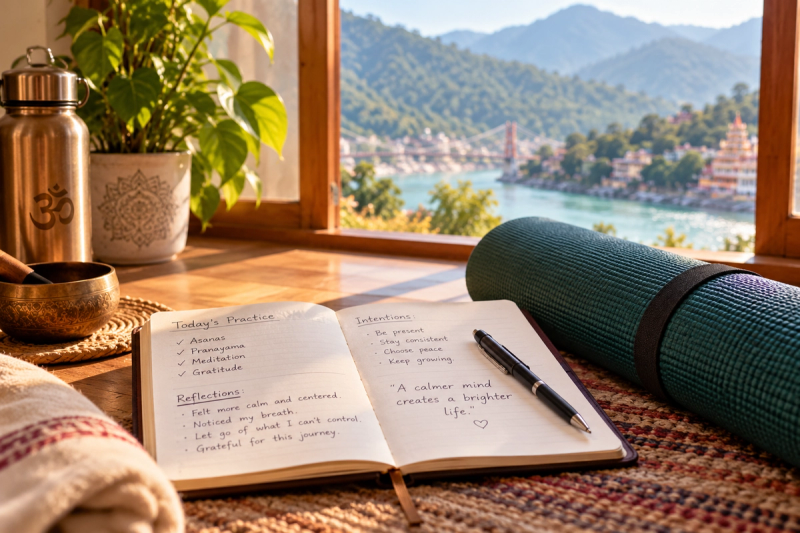
Suggested image placement — after Section 3: A person writing in a mindfulness journal beside a yoga mat in a peaceful Rishikesh retreat, with natural morning light.
4. What Does a Yoga and Journaling Retreat Schedule Look Like?
A retreat that combines yoga with inner reflection should give you enough structure to maintain a routine without filling every hour with activities. The aim is to create space for practice, rest, and unhurried observation.
Your actual schedule will depend on the retreat provider, duration, class levels, and included activities. The following is an illustrative day, not a promise of a particular school's timetable.
TimeFocusWhat you might doMorningMovement and intentionBegin with gentle yoga, breathing exercises, or meditation. Spend five minutes recording how you feel physically and mentally before the day becomes busy.MiddayRest and observationEat mindfully, take a gentle walk when appropriate, and notice your surroundings. You do not need to write constantly; allow some experiences to remain unrecorded.AfternoonGuided reflectionSet aside ten to twenty minutes for a journaling prompt. If a facilitator offers a reflective workshop, use it to explore your intentions and practical goals.EveningIntegration and restFinish with restorative movement, quiet meditation, or a relaxation practice if available. Record one useful observation and one manageable intention for tomorrow.
Choose the retreat length that suits you
A shorter retreat can offer an introduction to mindful routines, while a longer stay can provide more opportunities to practise consistently. Neither duration guarantees deeper insight.
A three-day option may suit you if you have limited time and want to step away from your normal schedule. Explore the three-day yoga retreat in Rishikesh to investigate a shorter retreat format.
If you have more time, a five-day retreat can give you additional space to settle into a routine and reflect on what you learn. You can compare the five-day yoga retreat in Rishikesh when considering a longer stay.
Before booking, confirm whether journaling sessions are explicitly included. A yoga retreat may offer meditation and personal free time without providing guided writing workshops. Knowing this distinction helps you choose an experience that matches your expectations.
5. Why Rishikesh Is a Meaningful Setting for Inner Work
The setting of a retreat can influence how you spend your time and what you notice. Rishikesh attracts yoga practitioners from India and around the world, offering access to yoga schools, meditation spaces, traditional wellness practices, and the natural landscape of the Himalayan foothills.
For many visitors, stepping away from familiar surroundings creates an opportunity to interrupt everyday routines. Without the usual commute, household demands, or constant notifications, you may find it easier to protect a small period for reflection.
The Ganga, the surrounding hills, and the changing rhythm of life around Tapovan and Laxman Jhula can provide opportunities for quiet observation. A walk, a few minutes of breathing practice, or time spent writing in a peaceful space may help you pay closer attention to your experience.
However, Rishikesh is a living town, not an isolated sanctuary. Popular areas can be busy, roads can be noisy, and travel conditions vary. You should choose accommodation and practice spaces based on your actual needs rather than assuming that every location offers complete silence.
Respect the traditions without chasing a spiritual breakthrough
Rishikesh has a long association with yoga and spiritual learning. You can approach its traditions with curiosity while recognising that personal growth does not require adopting every belief or practice you encounter.
If you are new to India, learn about local customs, dress respectfully in appropriate settings, and ask permission before photographing people or religious activities. Give yourself time to understand the environment instead of treating local traditions as attractions to consume.
International visitors may also benefit from reviewing this guide to yoga retreats in Rishikesh for foreigners, particularly when planning accommodation, travel arrangements, and cultural expectations.
Most importantly, remember that the location cannot do your inner work for you. The real value comes from the attention you bring to your practice, the choices you make, and the habits you continue after leaving.
6. How to Choose a Retreat That Supports Genuine Reflection
A beautiful location and a packed schedule do not automatically make a retreat suitable for inner work. Before booking, look beyond photographs and promotional language to understand what your days will actually involve.
Start by identifying your main intention. Do you want to establish a consistent yoga routine, explore meditation, spend time away from work, or investigate reflective practices in a supportive environment?
Your answer should guide your choice.
Questions to ask before booking
- What is included? Confirm the number and style of yoga classes, meditation sessions, meals, accommodation, and any additional activities.
- Is journaling guided? Ask whether the programme includes dedicated writing sessions or whether you will need to organise them independently.
- What experience level is expected? Choose a programme that welcomes your current ability rather than one that makes you feel pressured to keep up.
- How much free time is available? Reflection requires space. An overloaded timetable may leave little opportunity to rest or write.
- What support is available? Ask how teachers respond if a practice feels physically uncomfortable or emotionally difficult.
- What are the practical arrangements? Check the total price, cancellation terms, travel requirements, room arrangements, and any additional fees.
You should also distinguish between a retreat and teacher training. A retreat generally centres on personal practice, rest, and exploration, whereas teacher training involves structured study and preparation to teach yoga.
If you want a more structured educational experience, explore the 100-hour yoga teacher training programme. If your goal is personal reflection rather than professional preparation, a retreat may be a more appropriate starting point.
Be cautious of programmes that promise to eliminate anxiety, heal trauma, or guarantee profound spiritual experiences within a few days. Responsible providers should explain what they offer without promising outcomes they cannot guarantee.
7. Bringing Your Retreat Practice into Everyday Life
The most useful retreat is one that gives you practices you can realistically continue. Once you return to work, study, family responsibilities, and everyday distractions, your routine will inevitably change.
You do not need to recreate every part of your retreat at home. Instead, preserve the elements that helped you become more attentive and intentional.
Create a simple daily routine
Begin with a routine that takes fifteen minutes:
- Spend five minutes practising gentle movement or observing your breath.
- Write for five minutes about your current physical and emotional state.
- Use the final five minutes to identify one practical intention for the day.
On difficult mornings, reduce the routine rather than abandoning it completely. Two honest sentences in your notebook can be enough to maintain continuity.
You can also schedule a longer weekly reflection. Review your entries and look for recurring themes, such as situations that drain your energy, habits that support your concentration, or boundaries you want to strengthen.
Avoid judging your progress by how inspired you feel immediately after a retreat. Excitement can fade as normal responsibilities return.
Instead, ask yourself whether you are noticing your reactions sooner, responding more thoughtfully, protecting time for practice, or making decisions that better reflect your priorities.
For practical ideas on maintaining your routine, explore these yoga retreat integration tips for life after a retreat. Small, repeatable actions are often more sustainable than ambitious plans that depend on perfect conditions.
If journaling repeatedly brings up overwhelming memories or distress, pause the exercise and consider speaking with a qualified mental health professional. Yoga and personal reflection can complement appropriate support, but they are not replacements for it.
The purpose of continuing your practice is not to become a permanently calm person. It is to build a more honest relationship with yourself and develop useful ways to respond when life becomes complicated.
8. Explore a Yoga Retreat with Divine Yogpeeth
If you are considering Rishikesh for your next yoga experience, Divine Yogpeeth offers retreat options and structured yoga programmes in the Laxman Jhula and Tapovan area.
Our approach to your decision should begin with your intention: are you hoping to develop a personal practice, explore a new environment, or study yoga more systematically?
You can visit the Divine Yogpeeth homepage to explore the school's offerings and compare the available options.
Before making a booking, contact the school to ask whether its current retreat schedule accommodates dedicated journaling, guided self-reflection, or additional personal practice time. These details matter if reflective writing is central to the experience you want.
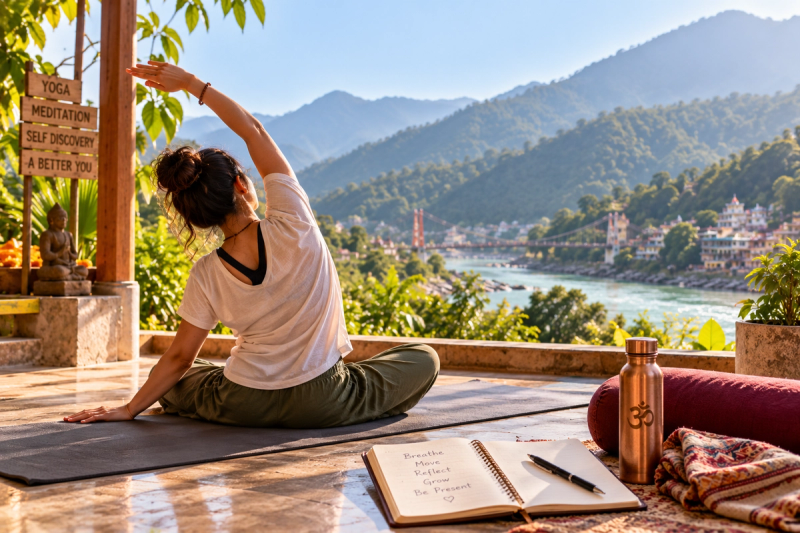
Suggested image placement — near the CTA: A person practising gentle yoga in a peaceful retreat setting in Tapovan, with a journal nearby and green Himalayan scenery in the distance. Use a genuine, accurately representative photograph wherever possible.
A retreat can provide the time and structure to establish new habits, but the value of the experience ultimately depends on the fit between your goals and the programme.
9. FAQs About Yoga Journaling Retreats and Inner Work
Do you need journaling experience to join a yoga retreat?
No. You can begin with a notebook and simple questions about your thoughts, feelings, and physical sensations. You do not need polished writing or a particular level of yoga experience. Consistency and honesty matter more than writing style.
How much time should you spend journaling during a retreat?
Ten to twenty minutes a day is a reasonable starting point. You can write for longer if it feels useful, but there is no need to fill pages. A short reflection that helps you identify one meaningful observation can be more practical than lengthy writing that leaves you exhausted.
Can yoga and journaling help with stress?
They may help you become more aware of stress, develop a regular relaxation routine, and examine how you respond to difficult situations. Individual results vary, and neither practice should be treated as a guaranteed treatment for a mental health condition.
Is a three-day retreat enough for inner work?
Three days can help you step away from everyday routines, try reflective practices, and establish an initial habit. Deeper or longer-term changes usually require continued practice beyond the retreat. Choose a duration that fits your schedule, budget, and expectations.
What should you bring to a yoga journaling retreat in Rishikesh?
Bring a notebook, a comfortable pen, clothing suitable for yoga, comfortable walking shoes, and any personal essentials. A phone-free period can also help you protect time for reflection. Check with your retreat provider about yoga equipment, meals, accommodation, and any items supplied on-site.
10. Conclusion: Begin Your Inner Work with Yoga and Journaling
A yoga journaling retreat inner work Rishikesh experience brings together mindful movement, quiet reflection, and time away from familiar distractions. Yoga helps you notice your body and breath, while journaling gives you a way to explore what you observe and translate useful insights into everyday decisions.
You do not need to solve every problem during a retreat. Begin with a clear intention, choose a programme that suits your needs, and give yourself permission to progress at a realistic pace.
If you are ready to make time for your practice, explore Divine Yogpeeth's five-day yoga retreat in Rishikesh and ask about the opportunities available for personal reflection and journaling.
Take the next step: choose your retreat dates, clarify what is included, and begin building a practice that you can continue long after you leave Rishikesh.