.jpg)

Yoga retreat integration tips post retreat help you carry mindful habits home, build a realistic routine, and sustain your retreat insights. Discover how.
yoga retreat integration tips post retreat: How to Keep the Transformation Going at Home
Introduction
The hardest part of a yoga retreat often begins when you return home. The yoga retreat integration tips post retreat you follow can help you carry the calm, clarity, and self-awareness you experienced into ordinary life, even when work, family responsibilities, and familiar routines compete for your attention.
Perhaps you spent several days in Rishikesh practising yoga beside the Ganga, meditating in the early morning, eating nourishing meals, and enjoying a welcome break from constant notifications. Back home, your inbox is overflowing, your sleep schedule changes, and your peaceful morning routine suddenly feels difficult to maintain.
This does not mean your retreat experience has disappeared. It means you are entering a different stage of practice.
Lasting change rarely comes from recreating every moment of a retreat. It comes from identifying what genuinely helped you and adapting those lessons to your everyday circumstances.
You will discover practical ways to maintain your yoga practice, process meaningful experiences, establish realistic habits, and recognise when you need additional support. Whether you attended a weekend retreat or a longer programme, you can build a sustainable routine without putting unnecessary pressure on yourself.
1. Yoga Retreat Integration Tips Post Retreat: Start Small, Not Perfect
After returning from a retreat, you might feel motivated to meditate for an hour, practise yoga daily, prepare every meal mindfully, and avoid your usual distractions. That enthusiasm is valuable, but trying to change everything immediately can make your new routine difficult to sustain.
Instead, choose a few practices that made the greatest difference during your retreat.
Think about the moments when you felt most grounded. Was it the quiet morning meditation, gentle asana practice, conscious breathing, time outdoors, or simply having fewer digital distractions? Start with the practices that suit your needs rather than copying the entire retreat schedule.
Choose three practices for your first week
Write down three habits you want to carry home. For example:
- Movement: Practise yoga for 10–15 minutes before starting work.
- Stillness: Sit quietly and observe your breathing for five minutes.
- Awareness: Take one short, screen-free walk each day.
These activities may seem modest compared with a full retreat timetable, but consistency gives them a place in your ordinary life.
If you are interested in understanding how yoga philosophy supports daily decisions, explore our related guide to yoga philosophy and modern practice.
You can also learn about yoga's wider traditions through the official Yoga Alliance website, a useful starting point for exploring yoga education and professional standards.
Make your routine flexible
Set a minimum version of each habit. On busy days, two minutes of conscious breathing may be more realistic than a 20-minute meditation. On less demanding days, you can practise for longer.
The goal is not to make every day identical. It is to keep returning to practices that support your well-being.
2. How to Maintain Yoga Practice After a Retreat
A retreat can temporarily remove many obstacles to practice. You may have a dedicated yoga space, a teacher guiding each session, and fewer daily responsibilities. At home, you need a routine that works within the life you actually have.
Start by assigning your practice a consistent place in your day. You could stretch after waking, meditate before lunch, or practise gentle yoga after work. Connect the habit to something you already do, such as making your morning tea or switching off your computer.
Create a home practice space
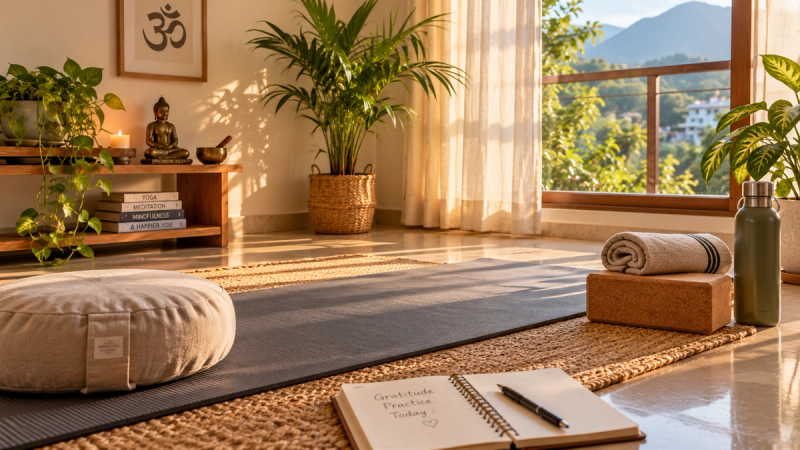
Your practice area does not need to resemble a yoga studio. A clean corner with a mat, comfortable clothing, and enough room to move is sufficient.
Keep the space accessible. If you need to move furniture, find equipment, and prepare the room every time, you create unnecessary friction.
Consider keeping a notebook nearby for reflections after meditation. A candle, cushion, or meaningful object can help establish a familiar atmosphere, but none is essential.
[Image placement: Add In-Content Image 1 here.]
Build a realistic weekly schedule
Rather than promising yourself a demanding daily routine, plan a week you can reasonably complete.
DaySuggested practiceMonday15 minutes of gentle asanaTuesday5–10 minutes of breath awarenessWednesday20 minutes of yogaThursdayShort meditation and mindful walkingFridayGentle stretching and reflectionSaturdayA longer practice if time allowsSundayRest, review, and prepare for the week
Adjust this schedule to your fitness, experience, energy, and responsibilities. You can practise more frequently if it feels comfortable, but you do not need to complete every session to benefit from maintaining a connection with yoga.
For movement, prioritise comfortable alignment and gradual progression rather than forcing advanced postures. If you have an injury, persistent pain, or a medical concern, seek appropriate professional advice before changing your practice.
A sustainable home routine should support your life, not become another source of guilt.
3. Process Your Retreat Experience Through Reflection
Yoga retreats can provide space to notice thoughts, emotions, and habits that are easy to overlook in everyday life. You might recognise that constant busyness leaves you exhausted, that you struggle to set boundaries, or that silence helps you notice your needs more clearly.
These observations are worth exploring, but you do not have to interpret every experience as a major breakthrough.
Integration means examining what you learned and deciding how, if at all, you want to apply it.
Keep a simple reflection journal
Spend five minutes writing about your retreat and the days that follow. Use questions that encourage honest observation:
- Which practice helped me feel most present?
- What did I notice about my usual reactions?
- Which part of the retreat do I genuinely want to continue?
- What feels difficult now that I am home?
- What is one practical change I can make this week?
Write without judging your answers. You might discover that you enjoyed meditation but struggled with long yoga sessions, or that the retreat reminded you to spend more time outdoors.
Both observations can guide your next steps.
Translate insights into everyday actions
Suppose you noticed that rushing between activities made you feel disconnected. Instead of trying to eliminate every busy day, pause for three conscious breaths before moving from one task to another.
If you appreciated the retreat's quiet mornings, leave your phone untouched for the first ten minutes after waking.
If you felt more connected to others during group practice, schedule regular time with friends or family.
These small actions give your insights a practical expression.
You may also find it helpful to explore yoga retreat and vacation differences to reflect on what made your experience meaningful and what you want from future retreats.
Importantly, you are not required to feel peaceful all the time. Difficult emotions can still arise after a retreat. Give yourself time to process them, and seek qualified mental health support if distress becomes persistent, overwhelming, or disruptive to daily life.
If you want to explore scientific research related to yoga and well-being, PubMed's research database is a useful starting point for finding published studies. Review individual studies carefully, as findings vary by intervention, population, and research quality.
4. Protect Your Progress Without Isolating Yourself
One common challenge after a retreat is returning to environments where your previous habits are still firmly established. Friends may expect you to follow the same social routines, colleagues may demand immediate attention, and family responsibilities may leave little room for solitude.
You cannot control every external influence. You can, however, make thoughtful choices about your time, attention, and boundaries.
Introduce mindful boundaries
Start with one boundary that addresses a genuine difficulty.
You might stop checking work messages during the first 15 minutes of your morning, reserve one evening for rest, or take a short walk without your phone.
Explain your needs clearly when necessary. You do not need to justify every personal choice or persuade everyone around you to adopt your lifestyle.
At the same time, avoid assuming that the people around you must change for your practice to continue. Integration is about developing greater awareness within your existing circumstances, not escaping ordinary responsibilities.
Stay connected without chasing the retreat feeling
If the retreat involved a supportive community, maintain contact with people whose company encourages healthy habits. You could join a local yoga class, arrange an occasional online practice, or share reflections with a trusted friend.
However, do not measure your progress by whether you can reproduce the exact calm you experienced in Rishikesh.
A retreat provides a particular environment. Home provides different opportunities to practise patience, awareness, and self-compassion when life becomes complicated.
The real test is not whether you remain relaxed throughout every challenge. It is whether you can notice what is happening and respond more consciously.
For a practical understanding of how yoga can fit into everyday routines, explore yoga practices for desk workers.
5. Why Rishikesh Can Inspire Lasting Yoga Habits
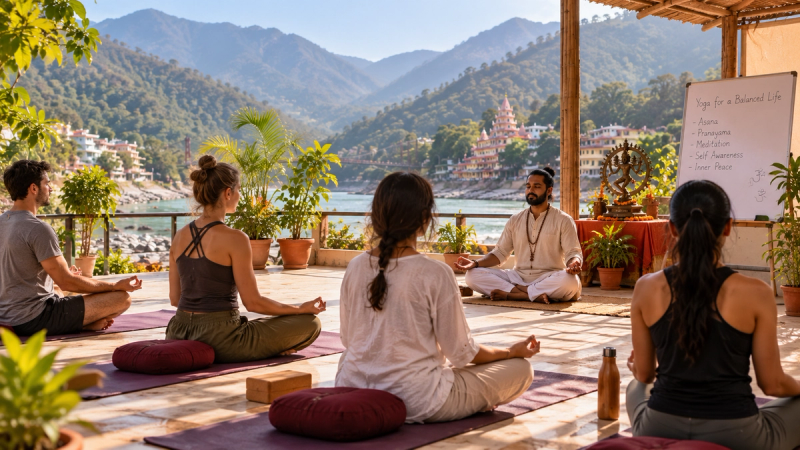
Rishikesh offers an environment where yoga, meditation, spiritual study, and daily life often intersect. In areas such as Tapovan and Laxman Jhula, you can encounter yoga schools, practice spaces, and the wider cultural traditions that draw visitors to the Himalayan foothills.
Time spent in such an environment can make it easier to step away from familiar distractions and observe your habits. The sound of the Ganga, early morning walks, group classes, and opportunities for quiet reflection may become important parts of your retreat memories.
Yet the location itself cannot guarantee lasting change. Your experience depends on the quality of the programme, your expectations, the guidance you receive, and the choices you make afterward.
Carry the atmosphere home, not the entire setting
You cannot bring the Himalayan landscape into every morning, but you can recreate some of the conditions that supported your practice.
Open a window before meditation. Spend time outdoors when possible. Eat one meal without scrolling through your phone. Allow a few minutes of quiet between waking and beginning work.
These actions are simple, but they help you build a more intentional relationship with familiar surroundings.
For international visitors, returning home can also mean adjusting to different time zones, weather, food, family expectations, and work cultures. For Indian practitioners, the challenge may involve balancing yoga with commuting, studies, caregiving, or professional demands.
Your integration plan should reflect these realities rather than an idealised version of retreat life.
If you are curious about the experience of practising in this region, our Tapovan Rishikesh yoga guide offers further context.
Remember that rest is part of practice
You do not need to fill every free moment with yoga, meditation, or self-improvement. Sleep, enjoyable activities, relationships, and unstructured time all matter.
A balanced approach leaves room for ordinary pleasures. Integration should make your life more manageable and meaningful, not turn it into a permanent retreat schedule.
6. When to Seek Guidance or Continue Your Learning
Sometimes a retreat inspires you to deepen your practice beyond what you can comfortably manage alone. You might want to understand meditation more thoroughly, learn about yoga philosophy, explore sound-based relaxation practices, or develop confidence in physical alignment.
Before committing to another programme, identify what you actually need.
If you want personal consistency, a local class or a regular online session may be enough. If you want structured study, look for qualified instructors, transparent course information, appropriate safety guidance, and a curriculum that matches your experience.
Be cautious of programmes that promise guaranteed emotional healing, instant enlightenment, or permanent freedom from stress. Meaningful personal development does not follow a universal timetable.
Choose a next step that matches your intention
Consider the following distinctions:
- For a regular personal practice: Choose guided classes or a manageable home programme.
- For deeper understanding: Explore yoga philosophy, meditation, anatomy, and appropriate modifications.
- For teaching ambitions: Investigate teacher-training requirements, curriculum, supervised practice, and professional expectations.
- For emotional or physical concerns: Consult an appropriately qualified healthcare professional rather than relying on yoga alone.
If you are interested in the professional side of yoga, understand that completing a course does not automatically establish teaching competence. Safe instruction requires practice, continued learning, and respect for individual limitations.
Your next step should serve a clear purpose rather than simply extending the excitement of your previous retreat.
7. Continue Your Practice With Divine Yogpeeth
If your time in Rishikesh has inspired you to explore yoga more deeply, choosing a learning environment that respects both traditional practice and everyday realities can help you make informed decisions.
At Divine Yogpeeth, our school is located in Laxman Jhula, Tapovan, Rishikesh, near the Ganga and the Himalayan landscape that attracts yoga practitioners from India and abroad.
You can explore our three-day yoga retreat in Rishikesh if you are considering a shorter introduction to retreat life, or review our five-day yoga retreat programme if you want to explore a longer period of guided practice.
Take time to review the programme details, schedule, inclusions, suitability, and current arrangements before making a decision.
[Image placement: Add In-Content Image 2 here.]
A future retreat can offer fresh learning and renewed perspective, but the most important work still happens when you return to your own life. Give yourself permission to practise gradually, ask questions, and build habits that remain realistic long after the retreat ends.
8. Frequently Asked Questions About Post-Retreat Integration
How long does it take to integrate a yoga retreat experience?
There is no fixed timeline. Some habits become familiar within a few weeks, while deeper changes in behaviour or perspective may take considerably longer. Focus on manageable actions, regular reflection, and adjustments that suit your circumstances instead of setting an arbitrary deadline.
How much yoga should you practise after a retreat?
Begin with a duration you can maintain comfortably. Ten to fifteen minutes on several days each week may be a reasonable starting point, depending on your experience and physical condition. Increase your practice gradually when appropriate, and include rest and recovery.
What should you do if you lose motivation after returning home?
Reduce the size of your routine rather than abandoning it completely. Try five minutes of stretching, a short breathing exercise, or one mindful walk. Revisit your reasons for practising and change the schedule if it no longer fits your daily life.
Can you maintain the benefits of a Rishikesh retreat without attending another one?
Yes, you can continue many of the habits and insights you developed without booking another retreat. Regular practice, reflection, supportive relationships, and realistic boundaries can help you maintain a connection with what you learned. Another retreat is an option, not a requirement.
Should you attend another yoga retreat to deepen your practice?
That depends on your goals. Another retreat may provide structured learning, guided sessions, or time away from distractions. However, if you have not yet integrated your previous experience, you may benefit more from practising consistently at home before deciding what you want to learn next.
Conclusion: Make Your Retreat Lessons Part of Everyday Life
The most useful yoga retreat integration tips post retreat are not about recreating every moment of your time away. They are about carrying meaningful lessons into ordinary situations through small, repeatable actions.
Begin with a realistic yoga routine, reflect on what you learned, establish healthy boundaries, and stay connected to supportive people. Allow your practice to change as your responsibilities and needs evolve.
You do not need to feel as peaceful as you did beside the Ganga every day. You need a way to return to awareness when life becomes busy, uncomfortable, or unpredictable.
If you want to experience guided yoga practice in Rishikesh again, explore the five-day retreat at Divine Yogpeeth and review whether its programme suits your goals.
Ready to reconnect with your practice? Explore the programme details, choose a retreat that fits your needs, and begin building habits you can carry home long after your stay in Rishikesh.