.jpg)

Understanding yoga philosophy modern practice importance transforms your time on the mat. Discover ancient wisdom for daily life. Read on and find real peace.
Yoga Philosophy Modern Practice Importance: Why It Truly Matters
Have you ever wondered about yoga philosophy modern practice importance while flowing through your physical sun salutations?
Most practitioners begin their journey seeking flexibility or stress relief through physical postures.
You quickly realize that the physical shapes are only the outermost layer of a much deeper, profound system.
True transformation begins when you step off the mat and carry your practice into your daily interactions, challenges, and quiet moments.
Ancient texts like the Patanjali Yoga Sutras offer a timeless blueprint for navigating the complexities of human existence.
This wisdom remains strikingly relevant, offering practical tools to manage anxiety, build resilience, and cultivate deep inner peace.
We will explore exactly how these ancient concepts seamlessly integrate into your current lifestyle to elevate your entire state of being.
You will learn actionable ways to anchor your mind, protect your energy, and live with intentional purpose.
Understanding Yoga Philosophy Modern Practice Importance in Daily Life
The foundational texts of yoga were written thousands of years ago in a vastly different society.
Yet, human nature—our fears, desires, and mental struggles—remains fundamentally unchanged across millennia.
Recognizing yoga philosophy modern practice importance allows you to bridge the gap between ancient asceticism and contemporary living.
At its core, this philosophy is a practical psychology designed to reduce human suffering and elevate consciousness.
It provides a clear framework for observing your mind without getting entangled in its endless stories.
When you study the Eight Limbs of Yoga Philosophy, you unlock a structured path toward self-realization.
The physical postures (Asanas) are just one of these eight profound limbs.
The other seven focus entirely on ethical behavior, energy management, breath control, and deep meditation.
By engaging with these deeper layers, your practice evolves from a simple workout into a comprehensive life strategy.
You learn to pause before reacting to an upsetting email or a frustrating commute.
You begin to observe your thoughts with compassion rather than immediate judgment.
This shift in perspective is the ultimate goal of the yogic path.
It teaches you that lasting peace is never found by altering your external circumstances.
True serenity is built internally by mastering the fluctuations of your own mind.
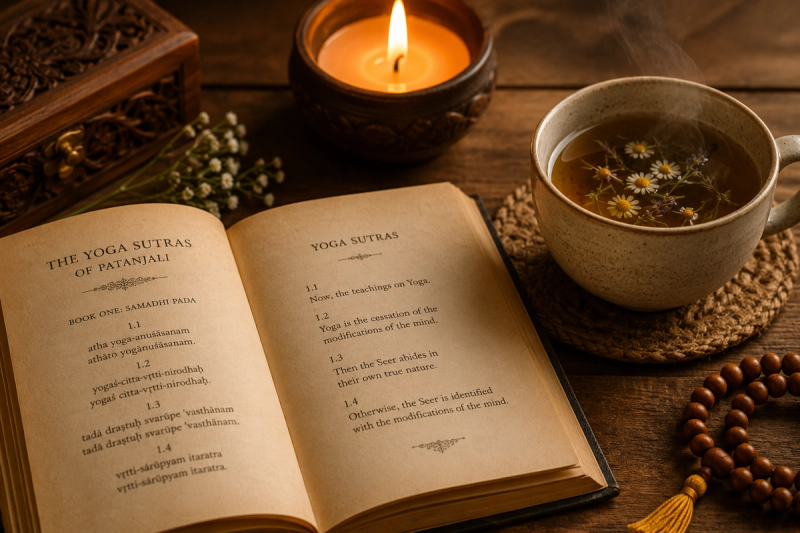
Yoga Philosophy Modern Practice Importance: Decoding Yamas and Niyamas
To truly grasp yoga philosophy modern practice importance, you must explore the first two limbs: the Yamas and Niyamas.
These are not strict moral commandments, but rather energetic guidelines for navigating the world harmoniously.
The Yamas dictate your external interactions, while the Niyamas guide your internal relationship with yourself.
Ahimsa, or non-violence, is the first and most crucial Yama.
Today, this means much more than avoiding physical harm; it involves eliminating negative self-talk and harsh judgments of others.
When you practice Ahimsa, you cultivate profound empathy and create safe spaces for those around you.
Satya, or truthfulness, challenges you to live authentically in an era of curated social media identities.
It asks you to be fiercely honest with yourself about your boundaries, desires, and limitations.
Asteya, non-stealing, extends beyond material goods to respect other people's time and emotional bandwidth.
Brahmacharya traditionally meant celibacy, but modern interpretation focuses on right use of energy.
It encourages you to direct your vitality toward what truly matters, rather than draining it on endless scrolling or toxic drama.
Aparigraha, non-attachment, teaches you to enjoy life's pleasures without clinging to them in fear of loss.
Turning inward, the Niyamas begin with Saucha, or purity of body and mind.
This involves consuming clean food, maintaining a tidy space, and filtering the media you absorb daily.
Santosha, contentment, is the radical act of finding deep gratitude exactly where you are right now.
Scientific literature increasingly supports these ancient practices; studies published on PubMed highlight how gratitude and mindfulness physically rewire the brain.
Tapas (discipline), Svadhyaya (self-study), and Ishvara Pranidhana (surrender) complete the Niyamas.
Together, they forge a resilient, self-aware individual capable of enduring life's inevitable storms.
Moving Beyond Asana: The Koshas and Mind-Body Connection
Western culture heavily prioritizes the physical body, but yogic wisdom introduces the concept of the Koshas, or energetic sheaths.
Understanding these five layers is essential for holistic healing and deep self-awareness.
The Annamaya Kosha is the physical body, nourished by food and maintained through Asana.
Moving deeper, the Pranamaya Kosha is your energy body, primarily governed by your breath.
When you feel anxious, your breath becomes shallow, immediately triggering a stress response in your nervous system.
By mastering different Pranayama Types and Benefits, you regain conscious control over your emotional state.
Beneath the energy layer lies the Manomaya Kosha, the mental and emotional body.
This layer processes sensory input, thoughts, and deeply ingrained emotional patterns.
Meditation and mindfulness practices are specifically designed to cleanse and balance this mental sheath.
Deeper still is the Vijnanamaya Kosha, the wisdom or intuitive body.
This is the quiet, observing presence that watches your thoughts without getting caught in the drama.
When you access this layer, you tap into profound clarity and undeniable inner guidance.
Finally, the Anandamaya Kosha is the bliss body, representing your truest, most joyful nature.
You access this state not through intense effort, but through surrender and profound stillness.
A dedicated Chakra Meditation Beginners Guide can help you unblock the energy channels needed to reach this profound state.
How to Integrate Ancient Wisdom Daily
Reading about philosophy is stimulating, but its true power lies in daily, consistent application.
You do not need to retreat to a cave to live a deeply yogic life.
The most profound spiritual work often happens in the mundane moments of a regular Tuesday.
Start your morning with intention rather than immediately reaching for your phone.
Spend just five minutes focusing entirely on the sensation of your breath entering and leaving your nostrils.
This simple act of Tapas (discipline) sets a grounded, centered tone for your entire day.
When you eat, practice mindfulness by tasting every bite and expressing gratitude for the nourishment.
During conflicts at work or home, practice the pause.
Take one conscious breath before responding, embodying Ahimsa by choosing words that heal rather than harm.
Organizations like Yoga Alliance encourage teachers to share these holistic practices, ensuring yoga remains a comprehensive lifestyle rather than just fitness.
Use transitions—like your commute or walking between meetings—as miniature meditation sessions.
Bring your awareness entirely to your physical senses, grounding yourself firmly in the present moment.
At the end of the day, practice Svadhyaya (self-study) by gently reviewing your actions without judgment.
Notice where you reacted out of fear and where you acted out of love.
This daily reflection slowly but permanently shifts your default behavioral patterns toward conscious awareness.
Why Rishikesh Elevates Your Understanding
There is a distinct reason why seekers from across the globe travel to the foothills of the Himalayas.
Rishikesh is not just a geographical location; it is a profound energetic vortex dedicated entirely to spiritual growth.
The very air here carries the vibrations of thousands of years of continuous meditation and chanting.
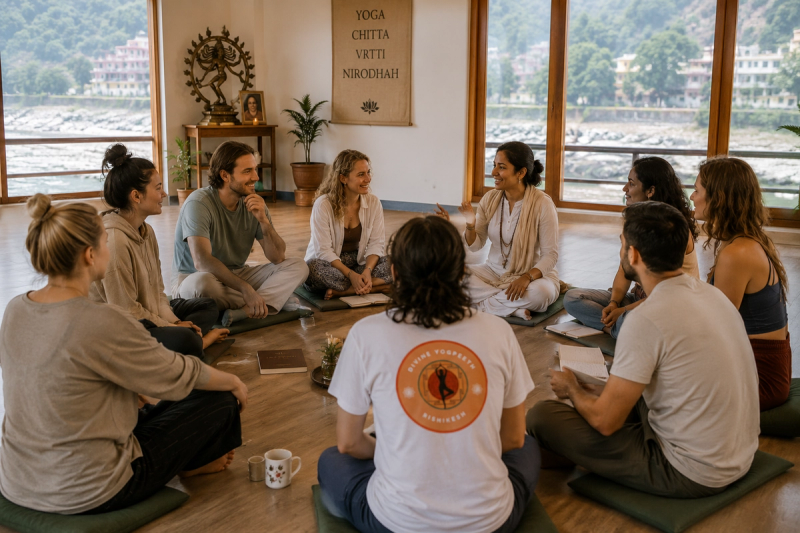
When you study in this sacred environment, the philosophy ceases to be intellectual and becomes deeply experiential.
Sitting by the banks of the mighty Ganges River, the concept of Ishvara Pranidhana (surrender) suddenly makes perfect sense.
The rushing water becomes a masterclass in letting go and trusting the natural flow of existence.
Immersing yourself in Tapovan Rishikesh Yoga removes the distractions of your everyday life.
You are surrounded by a community of like-minded individuals all striving toward higher consciousness.
This supportive environment accelerates your learning and deepens your personal evolution in ways impossible to achieve at home.
The traditional teachers in Rishikesh embody the philosophy they teach.
They show you that living a yogic life is about warmth, joy, and deep connection, not rigid austerity.
Their living example provides the clearest roadmap for taking these ancient teachings back into your modern world.
Finding Your Path Forward
If you are considering deepening your knowledge in a traditional, highly supportive setting, you are not alone.
Countless practitioners reach a plateau in local studio classes and crave the depth that only authentic immersion provides.
We understand this calling deeply and have designed our curriculums to bridge this exact gap.
If you are exploring training options in the spiritual heart of India, Divine Yogpeeth offers an authentic sanctuary.
For those short on time but craving transformation, our 5 Days Yoga Retreat provides the perfect introductory immersion.
Our programs ensure that philosophy is never taught as dry theory, but as a vibrant, living practice.
Frequently Asked Questions
Do I need to be a scholar to understand yoga philosophy?
Absolutely not. The foundational texts are designed as practical manuals for everyday human beings. The core concepts are intuitive, focusing on kindness, truthfulness, and self-awareness rather than complex academic theory.
How does yogic philosophy help with modern anxiety?
It provides actionable tools to detach from spiraling thoughts. By teaching you that you are the observer of your mind, not the mind itself, it breaks the cycle of chronic overthinking. Breathwork and grounding techniques provide immediate physiological relief.
Can I practice the philosophy without doing the physical poses?
Yes, undoubtedly. Asana (the physical postures) is only one of the eight limbs of yoga. You can be an advanced yogi simply by mastering your breath, living ethically, and cultivating deep contentment in your daily life.
Why is self-study (Svadhyaya) considered so important?
Without self-reflection, we operate on autopilot, repeating the same reactive patterns and mistakes. Self-study shines a light on your hidden biases and triggers, giving you the power to consciously choose better responses.
Is it necessary to travel to India to learn this?
While you can read texts anywhere, traveling to Rishikesh provides an unparalleled energetic immersion. Being completely removed from your daily triggers allows you to absorb the teachings on a much deeper, more cellular level.
Your Next Steps Toward Transformation
Integrating these ancient teachings into your daily routine is a lifelong, beautiful journey.
You now understand that yoga philosophy modern practice importance is the ultimate key to living a rich, peaceful, and highly intentional life.
The physical practice opens the door, but the philosophy invites you into the grandest room of your own soul.
When you are ready to move beyond the physical shapes and experience the full depth of this ancient science, we are here to guide you.
Ready to begin? Explore our 200-Hour Yoga Teacher Training in Rishikesh and take the first transformative step today.