.jpg)

Your yoga teacher ethics training 100 hour course builds the boundaries and philosophy you need. Discover how to protect your students and your practice.
Yoga Teacher Ethics Training 100 Hour: What You Actually Learn
Your yoga teacher ethics training 100 hour journey is about much more than mastering physical postures on the mat. Have you ever wondered what truly distinguishes a highly respected instructor from an average one? The secret lies in a rock-solid ethical foundation that creates safety, trust, and genuine transformation.
Stepping into the role of a teacher means accepting a profound responsibility for the physical and emotional well-being of others. It requires you to navigate complex power dynamics, set clear personal boundaries, and respect the ancient roots of the practice.
You are about to discover exactly how this foundational training shapes your entire career trajectory. We will explore the crucial lessons that protect you from burnout while ensuring your students receive the highest standard of care.
This guide breaks down the essential ethical frameworks taught in beginner programs. You will learn how these guidelines apply to modern studio environments and why they matter more than ever.
By the end of this read, you will understand exactly why ethics form the beating heart of your teaching practice.
Core Principles in Yoga Teacher Ethics Training 100 Hour
The foundation of any reputable yoga teacher ethics training 100 hour program begins with universal codes of conduct. You must learn to hold space for students from diverse backgrounds without projecting your own biases.
Global standard-bearers like Yoga Alliance provide comprehensive ethical guidelines that you will study deeply. These standards mandate inclusivity, respect, and a commitment to ongoing personal development.
You learn to evaluate your own motivations for teaching and serving the community. This self-inquiry guarantees that your ego steps aside, allowing the true teachings to flow through you.
When you dive into our 100 Hour Yoga Teacher Training: 5 Best Proven Benefits, you immediately see how ethics elevate your confidence. You gain a reliable compass for making difficult decisions in the classroom.
Your initial training is not just about alignment and anatomy; it is about moral clarity. You leave equipped to handle the emotional weight that often arises when students experience deep release.
Setting Boundaries in Yoga Teacher Ethics Training 100 Hour
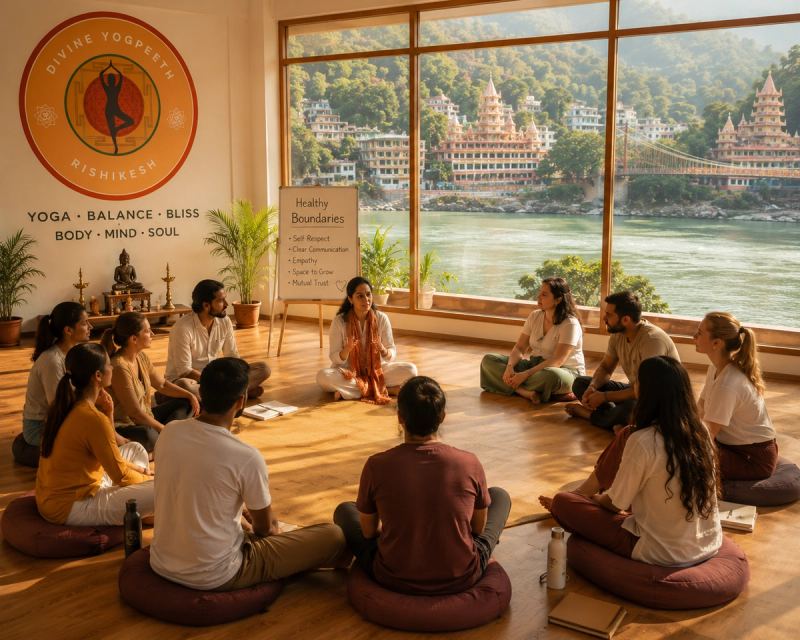
Clear boundaries are the absolute lifeline of a sustainable and healthy teaching career. Without them, you risk rapid emotional exhaustion and potential misunderstandings with your students.
A dedicated yoga teacher ethics training 100 hour curriculum teaches you exactly how to say no with compassion. You learn to define your availability outside of class hours, protecting your personal recovery time.
Physical boundaries are equally crucial, especially regarding hands-on adjustments and touch. You will practice explicitly asking for consent and recognizing when a student is uncomfortable.
We emphasize these boundary-setting techniques right from the start in our 100-Hour Yoga Teacher Training. This ensures you never feel overwhelmed by the energetic demands of leading a room.
You discover that setting limits does not make you a cold or distant instructor. Instead, strong boundaries create a safe container where students feel entirely secure and respected.
The Importance of Emotional Boundaries
Students often view their yoga teachers as healers, therapists, or spiritual guides. While this is a profound honor, it can easily blur the lines of your professional capability.
You must recognize when a student's needs exceed your qualifications and know how to refer them out. Maintaining this emotional distance protects your energy and ensures the student gets appropriate help.
This professional separation is a core topic we discuss to ensure you enjoy a long, healthy career.

Navigating the Complex Student-Teacher Relationship
The power dynamic inside a yoga studio is real, tangible, and must be handled with utmost integrity. As the instructor at the front of the room, your words and actions carry immense weight.
You must never leverage this authority for personal, financial, or romantic gain. Your training provides strict guidelines on maintaining professional distance while still offering warm, supportive guidance.
We heavily draw upon the Eight Limbs of Yoga Philosophy: 8 Ultimate Steps to Peace to anchor this dynamic. Applying these ancient principles guarantees that your relationships remain strictly focused on spiritual and physical growth.
Ethical training teaches you to recognize signs of dependency in your students early on. You learn strategies to empower them, encouraging them to find the answers within their own practice.
Ultimately, your goal is to make yourself obsolete by helping students become their own greatest teachers.
Applying Ancient Philosophy to Modern Teaching
Ancient texts offer profound wisdom, but translating them into a modern commercial studio requires practical skill. You must bridge the gap between thousands of years of tradition and a contemporary drop-in class.
For example, applying Ahimsa (non-harming) directly translates to how you sequence classes and offer physical modifications. You learn to prioritize joint safety and nervous system regulation over achieving an impressive, complex pose.
Institutions recognized by the Ministry of Ayush place massive importance on the authentic transmission of these ancient sciences. They ensure you respect the cultural origins of yoga rather than merely appropriating its physical aspects.
If you feel nervous about grasping these concepts, reading the Yoga Teacher Training Beginners FAQ: 10 Proven Answers will ease your mind. It clarifies how philosophy seamlessly integrates into everyday teaching scenarios.
You will quickly realize that philosophy is not just theory; it is a highly practical toolkit for real-world studio challenges.
Creating Safe and Inclusive Studio Spaces
A truly ethical yoga teacher actively works to dismantle barriers that keep people away from the practice. Your training highlights the importance of making your classes accessible to all body types, ages, and backgrounds.
You learn to modify your language, avoiding cues that assume everyone has the same physical capabilities. This shift in vocabulary instantly makes beginners feel welcome rather than inadequate or left behind.
Ethical instruction also involves understanding trauma-informed teaching practices on a foundational level. You become acutely aware of how lighting, music, and your physical proximity can affect a student's nervous system.
By prioritizing inclusivity, you build a loyal community rooted in mutual respect and safety.
Handling Difficult Situations Ethically
No matter how well you prepare, unexpected challenges will arise during your teaching career. A student might experience a severe emotional release on the mat, or conflict might occur between practitioners.
Ethical training equips you with the de-escalation skills needed to handle these moments with grace. You learn how to pause a class effectively, address the immediate issue, and maintain the energy of the room.
You also study the legal and professional liabilities associated with teaching physical movement. Understanding your scope of practice prevents you from offering medical advice or attempting to diagnose injuries.
Knowing exactly what to do in a crisis builds your internal confidence tremendously. It allows you to teach from a place of grounded certainty rather than underlying anxiety.
Why Rishikesh? / Why This Matters
Studying yoga in Rishikesh completely shifts your perspective on what it means to be a teacher. This city is not just a location; it is a living, breathing testament to the ancient roots of the practice.
The spiritual energy vibrating from the Himalayas and the sacred Ganga river deeply impacts your daily learning. Distractions of the modern world fall away, allowing you to focus entirely on your internal ethical development.
Here, the philosophy you study in textbooks is actively lived by the masters surrounding you. You witness true devotion, humility, and discipline firsthand, which naturally reinforces your own moral compass.
Choosing Rishikesh means you are honoring the tradition at its very source. It adds a layer of authenticity to your certification that resonates powerfully with your future students.
Taking the Next Step with Divine Yogpeeth
If you are serious about building a teaching career based on deep integrity, you need the right environment. We provide authentic, traditional guidance tailored to the demands of the modern wellness landscape.
Our experienced instructors prioritize your personal growth just as much as your physical alignment. We ensure you leave feeling fully prepared to lead classes that are physically safe and emotionally supportive.
Take the time to explore Divine Yogpeeth and discover how our programs align with your goals. Our immersive approach guarantees you will absorb the ethical frameworks necessary for long-term success.
You will find a supportive community ready to guide you through every challenge and breakthrough.
FAQs About Yoga Ethics
Why do yoga teachers need ethics?
Ethics provide a non-negotiable safety net for vulnerable students seeking healing, emotional release, or physical Therapy. They prevent the abuse of power, maintain professional boundaries, and preserve the deep integrity of the yogic tradition.
Is ethics fully covered in a 100-hour course?
Yes, foundational ethics are introduced on day one to immediately shape your baseline teaching habits. This initial exposure prepares you perfectly for the advanced, highly specialized study required in a 200-Hour Yoga Teacher Training.
How does philosophy tie into ethics?
Philosophy forms the deep, living roots of yogic morality and right action. The Yamas and Niyamas act as direct, actionable codes of conduct that guide modern teachers through real-world studio challenges.
Can ethics help prevent teacher burnout?
Absolutely. By teaching you how to set strict energetic and physical boundaries, ethical frameworks protect your personal well-being. They stop you from over-giving, ensuring you always have enough energy left for your own practice.
Does ethics cover cultural appropriation?
Yes, a strong ethical curriculum addresses the importance of honoring yoga's South Asian roots. You learn how to share the practice respectfully, avoiding the commodification of sacred symbols and ancient traditions.
Conclusion
Mastering yoga teacher ethics training 100 hour standards is the single most important commitment you will make as an instructor. It builds the indestructible framework required for a sustainable, honorable, and deeply rewarding career in the wellness space.
When you fully understand your responsibilities, you naturally command respect and foster profound trust within your community. Preparing for Teaching Yoga After 100 Hour Certification: 5 Best Truths demands this solid bedrock of ethical understanding.
Ready to begin your journey with unshakeable integrity? Explore our 100-Hour Yoga Teacher Training in Rishikesh and take the first transformative step today.