
Yoga teacher training India visa explained: understand tourist and student visa options, important documents and travel rules before joining a yoga course. Discover more.
Yoga Teacher Training India Visa: Which Visa Do You Need for Your Yoga Course in Rishikesh?
Planning to travel to India for yoga teacher training? Understanding the yoga teacher training India visa requirements before booking your flight can save you from unnecessary delays, unexpected expenses and problems at immigration. The right visa depends on the type of yoga course you intend to attend, its duration and the nature of the certification you will receive.
India welcomes thousands of international yoga practitioners every year, with Rishikesh being one of the most popular destinations for serious yoga studies. However, not every yoga programme falls under the same visa category.
Whether you are joining a short yoga retreat, a 100-hour teacher training programme or a comprehensive 200-hour Yoga Teacher Training Course (TTC), you should understand the difference between tourist and student visa permissions.
This guide explains the important visa considerations, documentation, application process and common mistakes to avoid. You will also learn how to prepare for your stay in Rishikesh so you can focus on your training rather than paperwork.
1. Yoga Teacher Training India Visa: Understanding Your Visa Options
Before purchasing flight tickets or paying a course deposit, identify which visa category matches your planned activities in India.
International visitors generally consider two main options when travelling to India for yoga education: the tourist visa and the student visa. However, the correct choice is not determined by the course title alone.
The Indian immigration authorities consider the purpose of your visit, the structure of your programme, its duration and whether it leads to a formal qualification.
Tourist Visa for Short-Term Yoga Programmes
An Indian e-Tourist Visa may permit participation in certain short-term yoga programmes.
Indian e-Visa conditions have included short-term yoga programmes and other non-formal courses, provided they do not exceed six months and do not lead to the award of a qualifying certificate or diploma.
This distinction is important.
A short introductory yoga programme, recreational yoga experience or non-formal course may fall within the permitted tourist activities. However, you should not automatically assume that a professional teacher training certification course qualifies.
Before applying, check the current e-Visa eligibility conditions and obtain clarification from the relevant Indian Embassy, Consulate or official visa authority.
A tourist visa is generally considered when:
- Your primary purpose is tourism or a short recreational visit.
- You are attending an eligible short-term, non-formal yoga programme.
- Your intended activities comply with the conditions of your visa.
- Your course does not require a different visa category.
You should never select a tourist visa simply because the programme lasts less than six months.
Student Visa for Formal Yoga Education
A Student Visa may be appropriate when your intended programme qualifies as formal education at an eligible and recognised educational institution.
The institution's eligibility, admission documentation and the nature of the course matter.
You may need an official admission or enrolment letter, details of your educational programme, proof of financial arrangements and other documents requested by the Indian authorities.
One important point: a Yoga Alliance USA registration or accreditation does not automatically make a school eligible to sponsor an Indian Student Visa.
Yoga Alliance and Indian immigration authorities have different responsibilities. Always verify whether the particular institution and course satisfy the applicable Indian Student Visa requirements.
For a better understanding of international yoga education standards, visit Yoga Alliance.
Your safest approach: Ask the yoga school for its course details and supporting documentation, then confirm your visa eligibility with the official Indian immigration authorities before travelling.
2. Which Visa Do You Need for Yoga Teacher Training in India?
The answer depends on what you are studying.
A weekend yoga workshop, a five-day retreat and a structured teacher training programme are not necessarily treated equally under immigration rules.
This is where many international students become confused.
100-Hour Yoga Teacher Training
A 100-hour course is often selected by practitioners who want to strengthen their personal practice, explore teaching fundamentals or begin their yoga education.
However, the 100-hour duration does not automatically determine the visa category.
Consider these questions:
- Is the programme recreational or structured professional education?
- Does it provide a qualifying certificate or diploma?
- Is the institution eligible to admit international students under the Student Visa category?
- Does the programme fall within the permitted activities of your intended visa?
If you are considering a shorter programme, explore the 100-Hour Yoga Teacher Training in Rishikesh and request its detailed course information before deciding which visa to apply for.
200-Hour Yoga Teacher Training
A 200-hour programme generally involves more comprehensive education.
Your schedule may include:
- Hatha Yoga and Vinyasa Yoga.
- Asana alignment and adjustments.
- Pranayama and meditation.
- Yoga anatomy and physiology.
- Yoga philosophy.
- Teaching methodology.
- Practical teaching sessions.
Because the programme is structured around professional teaching skills, you should pay particular attention to its educational status and certification arrangements.
Do not assume that a 200-hour course automatically qualifies for a Student Visa. Equally, do not assume that an e-Tourist Visa is appropriate just because the course duration is under six months.
The relevant authorities must confirm the correct category based on the actual programme.
You can explore the 200-Hour Yoga Teacher Training Course to understand the curriculum, learning structure and course arrangements.
Does Yoga Alliance Certification Decide Your Visa?
No.
Yoga Alliance USA is an international yoga organisation that maintains registration standards for yoga schools and teachers.
Its recognition may be valuable when evaluating your training, but it does not replace Indian immigration regulations.
A registered yoga school cannot independently guarantee that your chosen visa will be approved.
Keep these two decisions separate:
- Whether the school meets the yoga education standards you want.
- Whether the Indian authorities permit you to attend that particular programme under your visa category.
Both matter, but they serve different purposes.
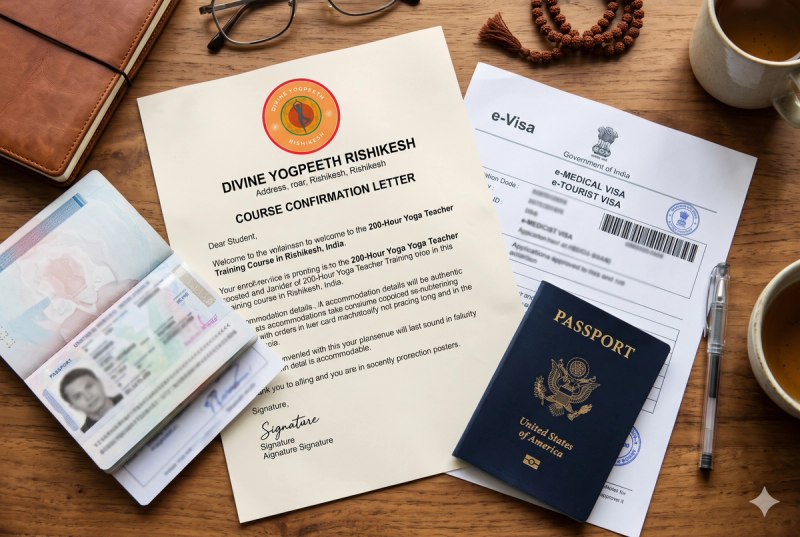
3. Documents Required for an India Yoga Course Visa
Once you understand which visa category may apply, prepare your documents carefully.
Missing or inconsistent information can delay your application. It can also create difficulties if immigration officials ask questions about your visit.
The exact requirements depend on your nationality, visa category and the latest instructions issued by the Indian authorities.
Essential Travel and Identification Documents
Keep the following documents ready where applicable:
- A valid passport with sufficient remaining validity and blank pages as required.
- A recent passport-style photograph meeting application specifications.
- A completed Indian visa application.
- Proof of your intended travel dates.
- Return or onward travel arrangements, if required.
- Accommodation details in India.
- Proof of sufficient financial resources, where requested.
Make sure your passport details match your visa application exactly.
Even a small discrepancy in your name, passport number or date of birth can create unnecessary complications.
Course-Related Documents
Your yoga school may be able to provide useful supporting information, depending on the visa category.
These documents may include:
- Course admission or enrolment confirmation.
- Course duration and scheduled dates.
- Curriculum or programme description.
- School address and contact information.
- Details of the certificate awarded, if applicable.
- Institutional eligibility documents where required by the visa authority.
For a Student Visa application, the admission documentation and institutional eligibility are particularly important.
For an eligible short-term programme under a tourist visa, the course information can help explain the purpose of your visit if clarification is requested.
Do not submit documents that describe your activities differently from what you actually intend to do.
Financial and Accommodation Information
You should also plan how you will support yourself during your stay.
Depending on the application requirements, you may need evidence of:
- Personal savings.
- Bank statements.
- Financial sponsorship.
- Accommodation arrangements.
- Course fee payment or booking confirmation.
Keep digital and printed copies of important documents.
Having your school address, contact number, accommodation details and course schedule accessible can make your arrival process easier.
For additional information about India's traditional systems of wellness and education, you can visit the Ministry of AYUSH website.
Remember that AYUSH information does not replace official immigration instructions.
4. How to Apply for an Indian Visa Before Your Yoga Course
Once you have identified the likely visa category, follow a careful application process.
Do not leave everything until the final week before departure.
Step 1: Confirm Your Course Details
Contact your chosen yoga school and request written confirmation of:
- Exact course dates.
- Total programme duration.
- Course structure.
- Certification details.
- Institutional information.
- Available admission documentation.
Ask specifically whether the course is suitable for the visa category you intend to apply for.
Avoid relying on informal assurances such as "everyone comes on a tourist visa."
Other students' experiences do not establish your legal eligibility.
Step 2: Check Your Visa Eligibility
Visit the official Indian visa application portal or contact the Indian Embassy or Consulate responsible for your country.
Check the latest rules for your nationality.
If you are considering an e-Tourist Visa, carefully read the permitted activities and restrictions concerning short-term yoga programmes.
If you are considering a Student Visa, verify whether the school and course meet the relevant eligibility requirements.
If the situation is unclear, request written clarification before submitting your application.
Step 3: Complete the Application
Use the official application channel for your selected visa.
Enter your passport details, travel dates, personal information and purpose of travel accurately.
Your application should reflect your actual plans.
Do not describe professional teacher training as casual sightseeing if that does not accurately represent your intended activities.
Step 4: Submit Supporting Documents
Upload or provide the requested documents according to the application instructions.
Check that:
- Photographs meet the specified requirements.
- Passport scans are clear.
- Course information is consistent.
- Travel dates match your intended visit.
- Financial documents are genuine and up to date.
Pay the applicable visa fee through the authorised payment method.
Step 5: Wait for Approval Before Finalising Travel
Visa processing times vary according to nationality, visa category, application volume and individual circumstances.
Do not assume that approval is guaranteed.
Where possible, avoid purchasing non-refundable international tickets before your visa is granted.
Once approved, carefully check the visa validity, number of permitted entries and length of stay.
These are separate conditions. Visa validity does not necessarily mean you can remain in India for the entire validity period.
Step 6: Check Your Arrival Requirements
Before flying, review your entry conditions and any applicable immigration instructions.
Keep your passport, approved visa, accommodation details and course confirmation accessible.
At immigration, answer questions honestly and explain the purpose of your visit clearly.
Your visa must cover the activities you actually intend to undertake.
5. Why Rishikesh Is a Meaningful Destination for International Yoga Students
Choosing the correct visa is only one part of preparing for your yoga education.
Your destination also influences your learning experience.
Rishikesh, located in Uttarakhand in northern India, has a long association with yoga, meditation and spiritual learning. Its location beside the Ganga River and its proximity to the Himalayan foothills attract practitioners from different parts of the world.
A Place Where Yoga Is Part of Everyday Life
In Rishikesh, yoga is not limited to a classroom.
You can encounter morning meditation, traditional chanting, asana practice, spiritual discussions and peaceful riverside environments.
This creates opportunities to observe how yoga philosophy connects with everyday living.
You can also explore the importance of yoga philosophy in modern practice to understand why traditional teachings remain relevant beyond physical postures.
An International Learning Environment
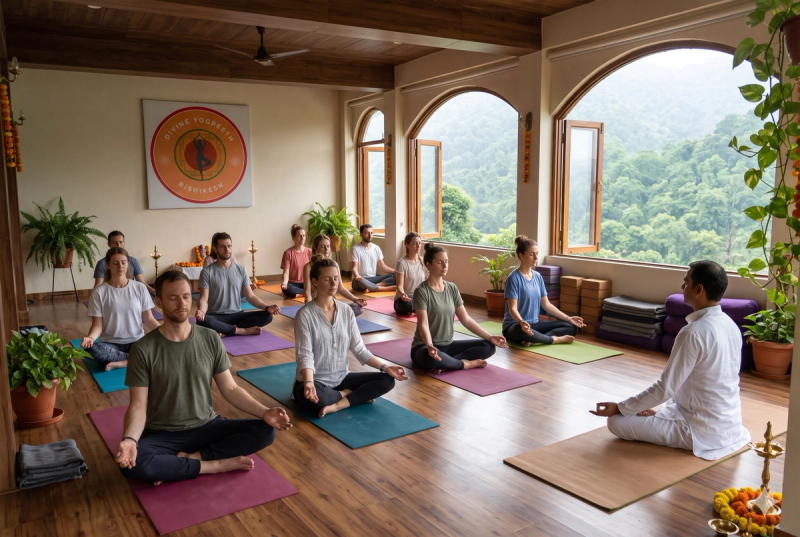
One advantage of studying in Rishikesh is the opportunity to meet practitioners from different cultural backgrounds.
You may share a classroom with someone who has travelled from Europe, Australia, North America or another part of Asia.
These interactions encourage you to understand different perspectives on teaching, discipline and personal practice.
Group learning also gives you opportunities to practise teaching, receive feedback and develop confidence.
A More Complete Experience Beyond the Classroom
Your time in Rishikesh does not need to be limited to formal classes.
Depending on your schedule, you may explore:
- Riverside walks along the Ganga.
- Local temples and traditional ashrams.
- Meditation and chanting sessions.
- Himalayan viewpoints.
- Local vegetarian food.
- Cultural experiences in the town.
A balanced schedule helps you experience the destination without compromising your training commitments.
If you are still comparing different learning formats, this guide on yoga retreat versus yoga vacation can help you understand which experience matches your intentions.
6. Planning Your Yoga Stay With Divine Yogpeeth in Rishikesh
Once your travel and visa requirements are clear, the next important decision is selecting a yoga school that understands your learning goals.
Located in Laxman Jhula, Tapovan, Rishikesh, Divine Yogpeeth offers yoga education and wellness experiences in an environment connected with the Ganga and Himalayan surroundings.
For international practitioners, clear course information and communication before arrival can make planning considerably easier.
If you are considering a structured teacher training programme, you can explore our 100-Hour and 200-Hour Yoga Teacher Training options to understand the available learning pathways.
Your experience may also extend beyond teacher training.
Depending on your interests and schedule, you can explore short wellness programmes, sound healing education and therapeutic experiences.
The important thing is to choose a programme that matches your actual learning objectives, available time and travel arrangements.
Before booking, discuss your course dates, accommodation, inclusions and supporting admission documents with the school.
Please remember that course admission and visa approval are separate matters. We can provide relevant course information, but the final decision regarding your immigration status belongs to the Indian authorities.
7. Common Visa Mistakes International Yoga Students Should Avoid
A little preparation can prevent problems that might otherwise interrupt your plans.
Here are some mistakes worth avoiding.
Assuming Every Yoga Course Qualifies for a Tourist Visa
This is one of the most important misunderstandings.
Indian visa provisions may allow certain short-term, non-formal yoga programmes, but a structured certification programme may have different requirements.
Always check the exact course arrangement.
Confusing Course Duration With Visa Permission
A programme lasting three months does not automatically qualify for a tourist visa.
The nature of the programme and the certificate awarded also matter.
Treating Yoga Alliance Registration as Immigration Approval
Yoga Alliance registration does not automatically establish eligibility for an Indian Student Visa.
Do not rely on a school's international registration alone when determining your immigration category.
Applying Too Late
Visa applications can require additional documents or clarification.
Apply with sufficient time before your planned departure and allow for possible delays.
Overstaying Your Visa
Never remain in India beyond your authorised period.
If your course dates change or you need to extend your stay, contact the appropriate Indian immigration authorities to understand your legal options.
Do not assume that changing accommodation, joining another course or paying an additional fee automatically extends your permission to stay.
Ignoring Local Registration Requirements
Some foreign nationals may have additional registration obligations depending on their visa category and length of stay.
Check whether registration with the Foreigners Regional Registration Office (FRRO) or another designated authority applies to your circumstances.
Do not assume that every international visitor has identical requirements.
8. Preparing for Your First Yoga Experience in India
Your preparation should go beyond your visa application.
India can feel very different from your home country, especially if you are visiting for the first time.
A little planning will help you settle into your new surroundings more comfortably.
Pack According to Your Course Schedule
Consider bringing:
- Comfortable yoga clothing.
- A reusable water bottle.
- Personal toiletries.
- Suitable walking footwear.
- Any prescribed personal medication.
- A light jacket for cooler mornings or evenings.
- Copies of your travel and course documents.
You may also want a notebook for recording philosophy lessons, meditation reflections and teaching observations.
Understand the Local Environment
Rishikesh has different weather conditions throughout the year.
Summer can be hot, monsoon brings rainfall and winter mornings can feel cold.
Check the expected weather before packing.
Respect local customs, religious spaces and community practices. Modest clothing is advisable when visiting temples and other traditional places.
Plan Your Daily Routine
Yoga teacher training can be physically and mentally demanding.
You may have early morning practice, lectures, meals, self-study and evening activities.
Allow yourself enough time to rest and adjust to the schedule.
If you are travelling across time zones, consider arriving with some flexibility rather than planning demanding activities immediately after landing.
The better prepared you are, the more attention you can give to learning.
9. Frequently Asked Questions About Yoga Teacher Training India Visa
Can I Join a 200-Hour Yoga Teacher Training Course in India on a Tourist Visa?
It depends on the exact programme and applicable Indian visa conditions.
Certain short-term, non-formal yoga programmes may be permitted under the e-Tourist Visa provisions. However, a structured teacher training course awarding a qualifying certificate or diploma may require a different arrangement.
Confirm your eligibility with the Indian Embassy, Consulate or official visa authority before applying.
Is a Student Visa Mandatory for Yoga Teacher Training in Rishikesh?
Not necessarily for every yoga programme.
The appropriate visa depends on the educational status of the institution, course structure, duration and applicable immigration rules.
A Student Visa may be relevant for qualifying formal educational programmes, but it is not automatically required for every short-term yoga experience.
Can I Study Yoga in India for Less Than Six Months on an e-Tourist Visa?
Certain short-term, non-formal courses, including eligible yoga programmes, may fall within the permitted e-Tourist Visa activities if they meet the applicable conditions.
The six-month limit alone does not establish eligibility.
You must also consider whether the programme awards a qualifying certificate or diploma and whether all other visa conditions are satisfied.
Does Yoga Alliance Certification Help With My Indian Visa Application?
Yoga Alliance registration can help you evaluate the international yoga education standards of a school.
However, it does not guarantee visa approval or automatically establish Student Visa eligibility.
Indian immigration authorities independently determine visa requirements and approval.
Can Indian Citizens Attend Yoga Teacher Training Without a Visa?
Yes. Indian citizens do not require an Indian visa to travel within India and attend yoga teacher training programmes.
International visitors, however, must hold appropriate permission to enter and undertake their intended activities in the country.
10. Conclusion: Prepare Your Visa, Choose Your Course and Begin Your Yoga Education
Planning your yoga teacher training India visa correctly is an essential first step towards studying yoga in Rishikesh.
The most important thing is to understand that tourist and student visas serve different purposes. An eligible short-term yoga programme may fall under tourist visa permissions, while qualifying formal education may require a Student Visa.
Never make your decision based only on course duration, another student's experience or a school's international registration.
Check your programme details, prepare your documentation and confirm the correct visa category through official Indian immigration channels before travelling.
Once your arrangements are clear, you can focus on what brought you to India in the first place: developing your practice, learning from experienced teachers and understanding yoga beyond the physical aspects.
Ready to begin your yoga education in Rishikesh?
Explore our 200-Hour Yoga Teacher Training Course at Divine Yogpeeth and take the next step towards a deeper understanding of yoga.
Plan your course carefully, confirm your travel requirements and prepare for your time in Rishikesh.