.jpg)

Yogic diet during teacher training can support energy, digestion, and focus. Learn what to eat before and after yoga practice in Rishikesh. Discover more today.
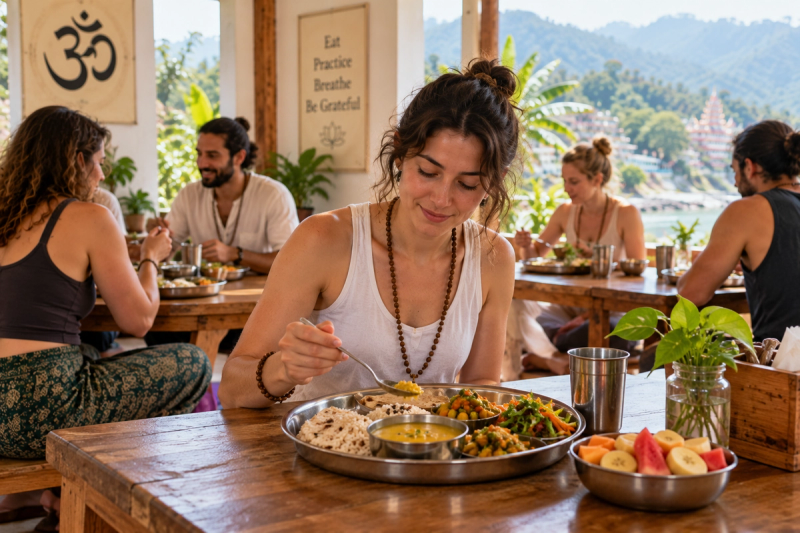
Yogic Diet During Teacher Training: What to Eat and Why It Matters
Introduction
Yogic diet during yoga teacher training can shape more than what you eat between classes—it can affect how comfortably you move, how steady your energy feels, and how well you handle long days of practice and study. If you arrive in Rishikesh expecting to eat only raw salads and fruit, you may quickly discover that a sustainable training diet is much more practical.
During a yoga teacher training course, your body may move through asana practice, pranayama, meditation, lectures, anatomy, philosophy, and teaching practice in the same day. Food therefore becomes part of your training routine, not a separate concern. You need meals that are nourishing, digestible, familiar enough to enjoy, and substantial enough to support your schedule.
This guide explains what a yogic diet commonly looks like during teacher training, why certain foods are emphasized, what you can eat before and after practice, and how to adapt your meals when training in Rishikesh. You will also learn how to avoid common mistakes, especially the temptation to make your diet unnecessarily restrictive.
What Does a Yogic Diet During Teacher Training Actually Mean?
A yogic diet is often associated with sattvic food, a traditional approach that emphasizes fresh, simple, wholesome meals. The practical idea is not that every meal must be perfect. Instead, you choose food that supports clarity, comfortable digestion, steady energy, and a balanced practice.
Traditional yoga philosophy often discusses food in relation to the three gunas: sattva, rajas, and tamas. Sattvic foods are generally described as fresh and nourishing; rajasic foods are associated with stimulation and intensity; tamasic foods are associated with heaviness or dullness. Different yoga traditions interpret these categories differently, so you do not need to treat them as a rigid nutritional classification.
A useful teacher-training approach is to ask a simpler question: “How does this meal help me practice?” If a meal leaves you comfortably energized, hydrated, and able to focus, it is probably serving you better than a meal that makes you sluggish or uncomfortable.
Common foods you may see in a yogic training environment include:
- Fresh seasonal fruits
- Cooked vegetables and leafy greens
- Rice, roti, oats, and other grains
- Dal, beans, and other legumes
- Milk, curd, paneer, or suitable alternatives
- Nuts and seeds in moderate portions
- Simple soups and lightly spiced meals
- Herbal teas and plenty of water
If you want broader context on yoga as a discipline and its traditions, Britannica's overview of yoga can give you useful background.
The key is consistency. A teacher-training diet should support your practice without making eating another source of stress.
What to Eat Before and After Yoga Practice
Your meal timing can matter as much as the food itself. A heavy breakfast immediately before a strong morning asana class can feel very different from a light snack eaten with enough time to digest.
Before morning practice
Many practitioners prefer to practice on an empty stomach or after a small, easily digested snack. Your personal tolerance matters more than a universal rule.
If you feel comfortable practicing without food, you may simply hydrate beforehand. If you wake up hungry or feel weak during practice, a small option can be more sensible, such as:
- A banana or another easy-to-digest fruit
- A few soaked nuts
- A small bowl of oats
- A light piece of toast
- Warm water or a mild herbal drink
Avoid experimenting with unfamiliar foods right before an important class. Rishikesh has plenty of tempting options, but your first intense practice is not the ideal time to test how your stomach responds to a new dish.
After practice
Post-practice food should help you recover without leaving you excessively heavy. A balanced meal can include carbohydrates for energy, protein from dal, beans, dairy or alternatives, vegetables, and fluids.
For example, rice with dal and vegetables is simple, familiar, and practical. A bowl of oats with fruit and nuts can work well after a lighter session. You can adjust portions according to your hunger, activity level, and dietary needs.
Yoga teacher training can involve repeated physical practice, so under-eating is not a sign of greater discipline. If you are consistently hungry, tired, dizzy, or unable to concentrate, your food intake may need attention rather than further restriction.
A Practical Daily Yogic Meal Plan in Rishikesh
You do not need an elaborate menu to eat well during teacher training. A simple routine can make your days easier because you are not constantly deciding what to eat.
A typical training day could look like this:
Early morning: Start with water. If needed, have a small snack before practice rather than forcing yourself to remain hungry.
Breakfast: Choose a filling but comfortable combination such as oats with fruit and seeds, poha with vegetables, or another simple meal available at your training centre.
Lunch: Build your main meal around a grain or roti, dal or another protein source, cooked vegetables, and a suitable side such as curd if you tolerate dairy.
Afternoon: If your schedule includes another practice or study session, choose fruit, nuts, yogurt, or another light snack according to your hunger.
Dinner: Keep the evening meal satisfying but comfortable. Khichdi, dal with vegetables, soup with a grain, or a simple cooked meal can be practical choices.
Hydration also deserves a place in the routine. Rishikesh can feel hot, especially outside the cooler months, and your needs can increase with physical activity. Drink regularly rather than waiting until you are extremely thirsty.
You can also explore practical ideas for a structured retreat diet in our guide to a detox yoga retreat in Rishikesh.
How to handle Indian food if you are new to it
International students sometimes worry that Indian food will automatically be too spicy or difficult to digest. It does not have to be. You can communicate your tolerance clearly and choose simpler preparations while your body adjusts.
Rice, dal, roti, cooked vegetables, fruit, curd, and mild khichdi can be easier starting points than very rich or heavily fried dishes.
You do not need to reject local food to follow a yogic routine. In fact, learning how to eat comfortably within the local food culture can become part of your experience in Rishikesh.
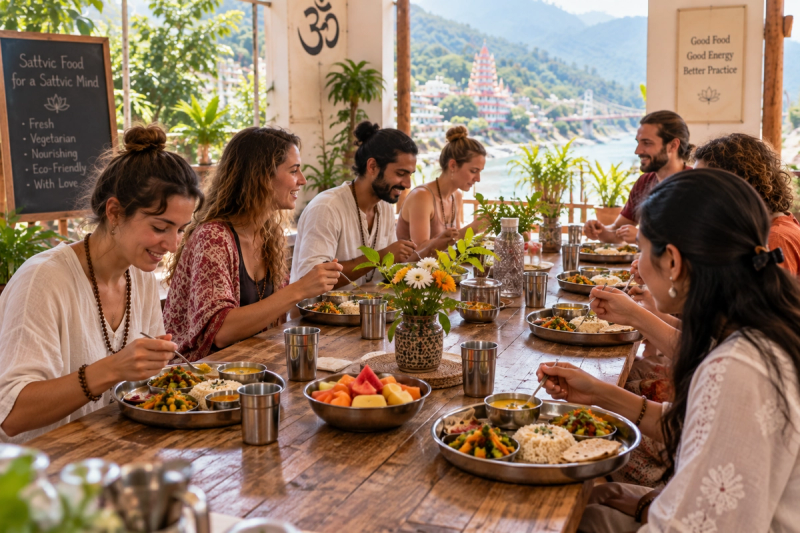
Common Yogic Diet Mistakes During Teacher Training
The biggest mistake is turning a flexible traditional approach into a rigid food rulebook. Teacher training is already demanding. Adding unnecessary restrictions can leave you distracted from the actual practice.
Mistake 1: Eating too little
Some students reduce portions because they believe feeling hungry proves commitment. It does not. Your body needs enough energy for movement, concentration, recovery, and normal daily function.
Mistake 2: Copying another student's diet
Your roommate may thrive on fruit and light meals while you need more substantial food. Differences in body size, activity level, dietary habits, allergies, medical needs, and food tolerance are normal.
Mistake 3: Suddenly removing familiar foods
If you normally eat certain foods and abruptly remove multiple categories before training, you may spend the first week dealing with hunger, cravings, or digestive changes. Gradual adjustment is often easier.
Mistake 4: Treating “sattvic” as a guarantee of health
A food can fit a traditional sattvic framework without automatically meeting every individual nutritional need. You still need adequate calories, protein, fluids, and micronutrients.
Mistake 5: Ignoring medical or dietary requirements
If you have diabetes, food allergies, an eating disorder, gastrointestinal problems, or another condition requiring dietary management, do not replace professional medical guidance with a yoga diet rule. Tell your training provider about relevant dietary requirements before arrival.
For general information about traditional systems of medicine and wellness in India, you can also explore India's Ministry of Ayush. This is background information, not a substitute for individualized medical advice.
Why Rishikesh? Why Your Diet Matters During Yoga Teacher Training
Training in Rishikesh can feel immersive because your schedule may place practice, study, meals, and community close together. That environment can make your daily habits more noticeable.
Food matters because your body is involved in almost every part of the course. You need enough energy to hold postures, enough concentration to follow philosophy discussions, and enough recovery capacity to handle repeated physical sessions.
Rishikesh also introduces you to a different rhythm of eating. Depending on the school and course schedule, meals may be shared with other students, and your normal restaurant-based routine may be replaced by structured training meals.
That structure can be useful. Instead of deciding what to eat several times a day, you can focus on observing how different foods affect your practice.
The location itself can add another dimension. Walking through Tapovan, spending time near the Ganga, and attending classes in a community of practitioners can make you more aware of habits that are easy to ignore at home.
If you are comparing training with a shorter retreat, our guide on the difference between a yoga retreat and a yoga vacation can help you understand how the two experiences differ.
How to Adapt a Yogic Diet to Your Own Body
A good training diet should have principles, not unnecessary perfectionism. You can respect yogic traditions while still paying attention to your own body.
Start by observing three things: energy, digestion, and concentration. After meals, ask yourself whether you feel steady and comfortable or excessively full, sleepy, hungry, or bloated.
Protein deserves particular attention if you are physically active. Dal, beans, lentils, paneer, yogurt, nuts, seeds, soy foods, eggs where compatible with your chosen diet, and other suitable sources can contribute protein. You do not need to follow a vegetarian diet to study yoga, although many yoga schools and practitioners choose one for ethical, cultural, or personal reasons.
Fiber and micronutrients also matter. A diet made only from rice and fruit may sound simple, but it can become nutritionally unbalanced. Include vegetables, legumes, whole grains, fruits, and other varied foods that you tolerate well.
If you follow a vegan, gluten-free, lactose-free, Jain, or allergy-related diet, communicate this before your course begins. The goal is to create a routine you can actually sustain for the full training period.
Most importantly, learn from your experience rather than judging it. If a meal does not suit you, adjust it. If you need a larger portion after a demanding practice, eat more. Yoga asks you to cultivate awareness, and that includes awareness of your body's real needs.
Choosing a Yoga Teacher Training in Rishikesh With Food and Lifestyle in Mind
When comparing teacher-training programs, look beyond the course title. Ask practical questions about the daily schedule, meal arrangements, dietary accommodations, accommodation, practice intensity, and what happens if you have specific food requirements.
A 200-hour program can be physically and academically demanding, so knowing how your daily routine is organized before you arrive can reduce unnecessary uncertainty. You can review the structure of a 200-Hour Yoga Teacher Training in Rishikesh and consider whether its format matches your goals. If you are weighing a shorter course against a workshop, our 100-Hour YTT vs Weekend Yoga Workshop guide can help you compare the two formats.
If you want a shorter introduction to structured teacher training, a 100-Hour Yoga Teacher Training course in Rishikesh may be a more manageable format depending on your experience and available time.
A simple checklist before booking
Before you commit, ask:
- Are daily meals included?
- Can the kitchen accommodate allergies or dietary preferences?
- What time are breakfast, lunch, and dinner served?
- How intense is the physical practice?
- Is drinking water readily available?
- Can you purchase additional snacks nearby?
- What should you bring if you follow a specialized diet?
These questions are practical, but they can significantly affect how comfortable your training feels.
Soft CTA: Make Your Training Routine Part of the Practice
If you want to study yoga in Rishikesh with a structured daily routine, we offer teacher-training programs designed to combine practice, study, and the lived rhythm of yoga in Tapovan. Explore our yoga teacher training programs in Rishikesh to see which format fits your goals.
FAQs About Yogic Diet During Teacher Training
Should you be vegetarian during yoga teacher training?
Not necessarily. Many yoga traditions and schools encourage vegetarian or sattvic eating, but dietary choices vary. Your priority should be eating adequately and choosing food that supports your practice while respecting your personal ethics and requirements.
Can you eat dairy on a yogic diet?
Dairy is included in some traditional yogic and Indian dietary practices, but tolerance varies. If dairy causes digestive discomfort or you avoid animal products, choose alternatives that provide suitable nutrition for you.
What should you eat before morning yoga?
If you feel good practicing without food, you may only need water. If you are hungry or low on energy, a small, easy-to-digest option such as fruit or a light snack may work better. Avoid heavy meals immediately before practice.
Is a yogic diet enough for a 200-hour yoga teacher training?
It can be nutritionally adequate when planned as a varied diet with enough energy, protein, fluids, fruits, vegetables, grains, and other appropriate foods. The term “yogic diet” itself does not guarantee nutritional adequacy.
What if you have food allergies during training in Rishikesh?
Tell the school before arrival and communicate clearly with the kitchen or food provider. Carry any medically necessary supplies and follow your healthcare professional's advice. Do not assume a meal is safe simply because it is described as vegetarian or sattvic.
Conclusion: Eat to Support the Practice
Yogic diet during teacher training does not need to become a competition in restriction or purity. The more useful approach is to choose simple, varied food, eat enough to support your schedule, stay hydrated, and observe how your body responds.
During a demanding training in Rishikesh, your meals are part of the practical foundation that allows you to learn, practice, recover, and stay present. You can respect traditional yogic principles without ignoring individual nutritional needs.
If you are ready to build your practice in a structured Rishikesh setting, explore our 200-Hour Yoga Teacher Training in Rishikesh and take the next step toward your teacher-training goals.