.jpg)

Divine Yogpeeth 100 hour YTT testimonials reveal graduate insights on practice, teaching, and Rishikesh. Compare real expectations before you enroll. Discover.
Divine Yogpeeth 100 hour YTT testimonials: What Graduates Really Say
Imagine arriving in Rishikesh with a strong yoga practice but still wondering whether a 100-hour teacher training can genuinely deepen your skills. Divine Yogpeeth 100 hour YTT testimonials can help you understand what graduates value before you commit your time, money, and energy.
The most useful testimonials are not simply five-star comments. They show what changes in your practice, confidence, teaching awareness, discipline, and understanding of yoga after intensive study. They also reveal whether a course suits a beginner, an experienced practitioner, or someone testing the waters before a longer certification.
In this guide, you will learn how to evaluate graduate feedback, what themes to look for in 100-hour YTT reviews, why Rishikesh can shape the learning experience, and which questions to ask before enrolling. You will also see how a 100-hour course can fit into a larger yoga education plan without pretending it is identical to a 200-hour teacher training.
Divine Yogpeeth 100 hour YTT testimonials: What should you look for?
When you read Divine Yogpeeth 100 hour YTT testimonials, look beyond phrases such as “amazing experience” or “highly recommended.” Those statements can be encouraging, but they tell you very little about whether the training matches your goals.
A useful testimonial gives you specific clues. You want to hear about the teaching approach, daily rhythm, practice intensity, instructor communication, accommodation, group environment, and what the graduate could actually do or understand better afterward.
Look for specific changes
Strong graduate feedback often describes practical outcomes such as:
- greater confidence with alignment and sequencing
- a clearer understanding of pranayama and meditation
- improved ability to observe a student's practice
- deeper familiarity with yoga philosophy
- more disciplined personal practice
- greater comfort speaking or demonstrating in a group
- a clearer decision about pursuing longer teacher training
These details are more useful than dramatic claims because they help you picture your own experience.
You should also distinguish a personal testimonial from an accreditation claim. If certification or professional recognition matters to you, verify the current standards directly through Yoga Alliance rather than relying only on a student's review.
A graduate may love a course because it gave them a strong personal foundation, while another person may need a more extensive program designed around a different professional goal. Both opinions can be genuine.
What graduates can reveal about a 100-hour YTT experience
A 100-hour yoga teacher training can be intense precisely because the curriculum is concentrated. Graduate feedback can help you understand whether the pace feels focused and manageable or too demanding for your current level.
One useful area to examine is the balance between theory and practice. You do not want every day to feel like a lecture, but you also should not leave with only a collection of physical routines. Good training connects what you study with what you practice.
Teaching confidence matters
You may begin with a solid personal practice and still feel nervous about guiding another person. Testimonials that mention demonstrations, peer teaching, feedback, or class observation can show whether the program creates opportunities to move from “I can do this” to “I can explain this clearly.”
That distinction is important. Teaching yoga requires more than performing a posture yourself. You need to communicate instructions, notice differences between students, offer appropriate adjustments or alternatives, and maintain a safe learning environment.
Graduate comments can also tell you about the classroom culture. A small, respectful group can make it easier to ask basic questions, practice teaching, and receive useful corrections without feeling embarrassed.
If group size is an important factor for you, you may also find value in this guide to small-group yoga teacher training benefits.
Depth without unnecessary overload
A concentrated course should help you identify the fundamentals that deserve your attention. You might come away with a better grasp of asana, pranayama, meditation, anatomy, teaching methodology, and philosophy, while also recognizing areas you need to study further.
That last point is not a weakness. Good training should make you more aware of what you know and what you still need to learn.
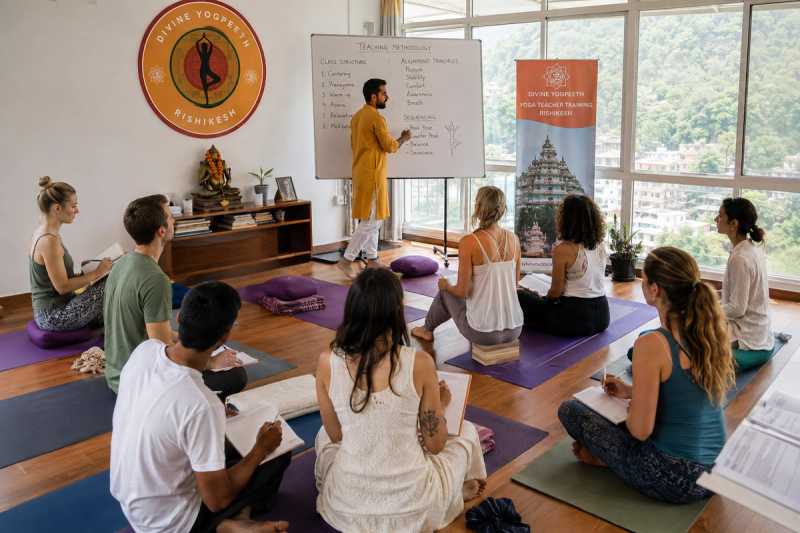
100-hour YTT graduate reviews: What the daily experience can teach you
Testimonials become more useful when you connect them with the realities of a training schedule. Ten or more hours of classes, practice, study, meals, rest, and personal reflection can feel very different from attending a weekly yoga class.
A graduate who says the training was “challenging” may mean the physical practice was demanding. They may instead be referring to early mornings, concentrated theory, teaching practice, or the mental effort of staying attentive for long periods.
This is why you should look for context rather than isolated adjectives.
A realistic review may mention that the first few days required adjustment, followed by greater confidence once the daily routine became familiar. It may describe sore muscles, improved concentration, better breathing awareness, or a stronger ability to organize a sequence.
For a deeper understanding of what a typical course rhythm can involve, explore this resource on the 100-hour YTT daily schedule for beginners.
Accommodation and recovery are part of the learning environment
Where you sleep, eat, rest, and study can influence how well you absorb intensive training. If your accommodation is noisy, uncomfortable, or far from class, even a strong curriculum can become harder to enjoy.
When reading reviews, notice comments about room comfort, cleanliness, privacy, meals, study areas, and access to nearby essentials. Your needs may differ from another graduate's, so treat testimonials as evidence to investigate rather than promises that everything will suit everyone.
If accommodation is a major concern, you can also review this guide to accommodation during yoga teacher training in Rishikesh.
The best question is not “Did everyone love the accommodation?” It is “Does the accommodation provide the conditions I personally need to recover and study?”
What makes meaningful 100-hour YTT testimonials different from generic reviews?
Generic reviews usually tell you whether someone enjoyed an experience. Meaningful testimonials help you understand why.
Look for comments that describe a before-and-after difference without making unrealistic promises. For example, a graduate might explain that they arrived unsure about teaching and left more comfortable creating a simple sequence. Another might say they developed a more disciplined meditation routine. Someone else may have decided that a 200-hour program was the logical next step.
These are useful because they connect the course with a concrete outcome.
You should also pay attention to balanced feedback. A review that mentions both strengths and challenges can be more informative than a review that sounds perfect in every respect. Intensive training naturally involves early mornings, sustained concentration, unfamiliar terminology, and periods when your body or mind needs adjustment.
Ask whether the testimonial matches your goal
Your ideal review depends on why you are considering 100 hours.
If you want to deepen your personal practice, look for evidence about technique, philosophy, breathwork, meditation, and self-discipline.
If you want to start teaching, focus on teaching methodology, communication, sequencing, observation, and feedback.
If you are considering a longer certification later, look for comments about how the 100-hour experience prepared graduates for continued study.
For perspective on the recognition question, this 100-hour YTT certificate international recognition guide can help you think more carefully about what a certificate does and does not mean.
The key is simple: do not ask whether a testimonial is positive. Ask whether it is relevant to the decision you are making.
Why Rishikesh matters when you evaluate yoga teacher training
The location of a teacher training is not just a backdrop for photographs. It affects your routine, your surroundings, your free time, and the cultural context in which you study.
Rishikesh offers a distinctive environment for yoga education because yoga practice is part of the city's wider identity. Around Tapovan and Laxman Jhula, you can encounter ashrams, yoga schools, temples, meditation spaces, the Ganga, and the Himalayan landscape within a relatively compact area.
That does not automatically make every course better. Location cannot replace qualified teaching, a clear curriculum, safe practices, or responsible course management.
What Rishikesh can offer is context. You may finish class and walk beside the Ganga, attend an evening practice, explore local traditions, or simply experience a slower rhythm than you are used to at home.
For many international students, that change in environment is part of why they choose India rather than completing training entirely online. If you are comparing formats, this guide on online versus in-person 200-hour YTT can help you assess the trade-offs.
You should still evaluate practical matters such as travel, weather, food, accommodation, insurance, and personal comfort before booking.
A gentle next step: explore 100-hour YTT in Rishikesh
If you are considering training in Rishikesh, we offer a focused 100-hour yoga teacher training designed for students who want structured study without automatically committing to a longer program first. You can explore our 100-hour yoga teacher training in Rishikesh and compare the course details with your goals.
Before enrolling, make a short checklist. Ask about the curriculum, daily schedule, teaching practice, assessment, accommodation, meals, certification, group size, and what support is available if you struggle with a topic.
You should also ask yourself whether you have enough time to participate fully. A concentrated training works best when you arrive prepared to attend consistently rather than treating it as a holiday with occasional classes.
If you already know that your long-term goal is a broader professional foundation, you can also compare it with our 200-hour yoga teacher training in Rishikesh. The right choice is the one that fits your current stage, not the one that simply sounds more advanced.

FAQs about Divine Yogpeeth 100 hour YTT testimonials
What should you learn from 100-hour YTT testimonials?
You should use testimonials to identify recurring themes about teaching quality, curriculum, practice intensity, classroom culture, accommodation, and personal outcomes. Individual reviews are subjective, so look for patterns across multiple experiences rather than treating one comment as proof.
Is a 100-hour YTT enough to become a yoga teacher?
That depends on the certification pathway, school requirements, and your professional goal. A 100-hour course can provide substantial education and practice, but it should not automatically be treated as equivalent to every 200-hour teacher-training pathway. Verify the current recognition and registration requirements relevant to where you intend to teach.
Is a 100-hour course suitable for beginners?
It can be suitable when the program is designed to build foundations progressively. You should check the stated prerequisites and physical expectations before enrolling. If you are new to yoga, honest communication with the school before booking is more useful than assuming a course is beginner-friendly from its title alone.
What should international students check before booking?
Check visa requirements, travel arrangements, accommodation, meals, local transport, course dates, cancellation terms, insurance, health considerations, and the exact certification offered. You should also confirm what is included in the published fee so unexpected costs do not change your budget.
Can a 100-hour YTT lead to further study?
Yes. Many students use concentrated training as a foundation for continued education, deeper personal practice, or exploration of teaching. If you decide you want a broader teacher-training pathway afterward, you can evaluate a 200-hour program based on your experience, goals, and the requirements you need to meet.
Conclusion: Use testimonials to make a smarter YTT decision
Divine Yogpeeth 100 hour YTT testimonials are most valuable when you read them as decision-making evidence rather than advertisements. Look for specific outcomes, realistic challenges, teaching opportunities, classroom details, and comments that match your own reason for studying.
Rishikesh can add a powerful sense of place, but the quality of your training still depends on the curriculum, instructors, practice opportunities, learning environment, and fit with your goals.
If you are ready to turn your interest into structured study, we invite you to explore our 100-hour yoga teacher training in Rishikesh. Review the details, compare the program with your expectations, and choose a training path you can commit to fully.