
Explore sacral chakra healing through yoga, meditation and mindful rituals. Understand emotional signs, restore creativity and discover practical ways to reconnect.
Sacral Chakra Healing: Signs of Imbalance and 7 Powerful Practices to Restore Your Svadhisthana
Introduction
Sacral chakra healing begins with understanding your relationship with emotions, creativity, pleasure and connection. Have you ever felt creatively blocked, emotionally disconnected or unable to express what you genuinely feel? In yogic philosophy, these experiences can be explored through the concept of Svadhisthana, the second primary chakra.
Located in the lower abdominal region, below the navel, the sacral chakra is traditionally associated with water, movement, adaptability and emotional expression. Its symbolism offers a useful framework for reflecting on how you experience relationships, respond to change and make space for enjoyment in everyday life.
When you explore this energy centre, you are not simply learning about chakras. You are also examining your habits, boundaries and emotional patterns.
This guide explains the traditional meaning of Svadhisthana, common signs associated with its perceived imbalance and seven practical approaches to working with it. You will also discover how yoga, meditation, breathwork and sound-based practices can support a more mindful relationship with yourself.
H2: What Is the Sacral Chakra (Svadhisthana)?
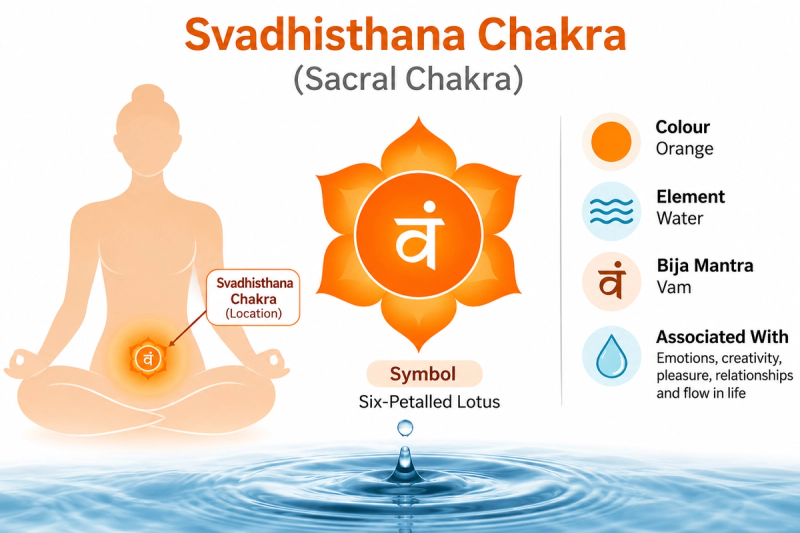
Svadhisthana is the second of the seven primary chakras described in many modern presentations of the traditional Indian chakra system. The Sanskrit word is commonly interpreted in relation to one's own abode or dwelling place.
It is traditionally represented by an orange lotus with six petals and is associated with the water element. This symbolism reflects qualities such as fluidity, adaptability, movement and the ability to experience emotions without becoming overwhelmed by them.
Unlike the root chakra, which is associated with stability and survival, Svadhisthana is connected with how you experience life beyond basic security.
Its traditional themes include:
- Emotional expression: Recognising your feelings and allowing yourself to acknowledge them honestly.
- Creativity: Exploring imagination, artistic interests and the freedom to experiment.
- Relationships: Developing meaningful connections while respecting personal boundaries.
- Pleasure: Experiencing enjoyment without unnecessary guilt or attachment.
- Adaptability: Responding to changes without feeling the need to control everything.
The sacral chakra is associated with the reproductive region and lower abdomen in traditional chakra maps. However, chakra locations and their energetic interpretations belong to spiritual and philosophical traditions, not established anatomical structures.
Understanding this distinction helps you approach the practice with curiosity rather than unrealistic expectations.
For a broader understanding of the philosophical ideas behind yoga, explore the importance of yoga philosophy in modern practice.
You can also explore the traditional and contemporary perspectives on Indian wellness through the Ministry of AYUSH.
H2: Sacral Chakra Healing: 7 Common Signs of Imbalance
In traditional chakra teachings, an imbalance in Svadhisthana is sometimes associated with difficulties involving emotional expression, creativity, relationships and personal enjoyment.
These signs are best understood as reflection points rather than medical symptoms or a diagnostic checklist. Experiencing one or more of them does not establish that your chakra is blocked.
1. Emotional Suppression
You may find it difficult to express sadness, disappointment, affection or frustration. Instead of acknowledging what you feel, you might regularly hide your emotions to avoid uncomfortable conversations.
Over time, this habit can make it harder to understand your own needs.
2. Lack of Creative Motivation
Activities that once interested you may no longer feel enjoyable. You might hesitate to explore new ideas because you fear criticism or making mistakes.
Traditional Svadhisthana teachings associate this experience with reduced creative flow.
3. Difficulty Building Healthy Relationships
You may struggle to communicate your boundaries, become overly dependent on external approval or find it difficult to maintain emotional independence.
Healthy relationships require both connection and personal space.
4. Excessive Guilt
Another commonly discussed theme is unnecessary guilt surrounding pleasure, personal needs and self-expression.
You might feel that spending time on hobbies, resting or doing something enjoyable is selfish.
5. Resistance to Change
Water is the traditional element associated with this chakra. Its symbolism represents movement and adaptability.
When you feel uncomfortable with uncertainty or become overly attached to familiar routines, you can use this symbolism as an opportunity to reflect on flexibility.
6. Emotional Dependence
Constantly seeking reassurance, validation or attention from others may indicate that you need to examine your emotional boundaries.
The objective is not to eliminate the need for connection but to develop a healthier relationship with yourself.
7. Disconnection from Enjoyment
You may complete your responsibilities while rarely making time for activities that bring genuine satisfaction.
The traditional sacral chakra framework encourages you to consider whether your everyday life includes space for creativity, meaningful connection and healthy enjoyment.
If emotional distress is persistent or affecting your daily functioning, consider speaking with a qualified mental health professional rather than relying on chakra practices alone.
H2: Seven Effective Sacral Chakra Healing Practices
Working with Svadhisthana does not require complicated rituals or expensive equipment. You can begin with simple practices that encourage movement, self-awareness and mindful emotional expression.
The following approaches draw from yoga traditions and general wellness practices.
1. Practice Hip-Opening Yoga Poses
The sacral chakra is traditionally associated with the pelvic region. Therefore, many practitioners include gentle hip-opening postures in their yoga practice.
Consider these asanas:
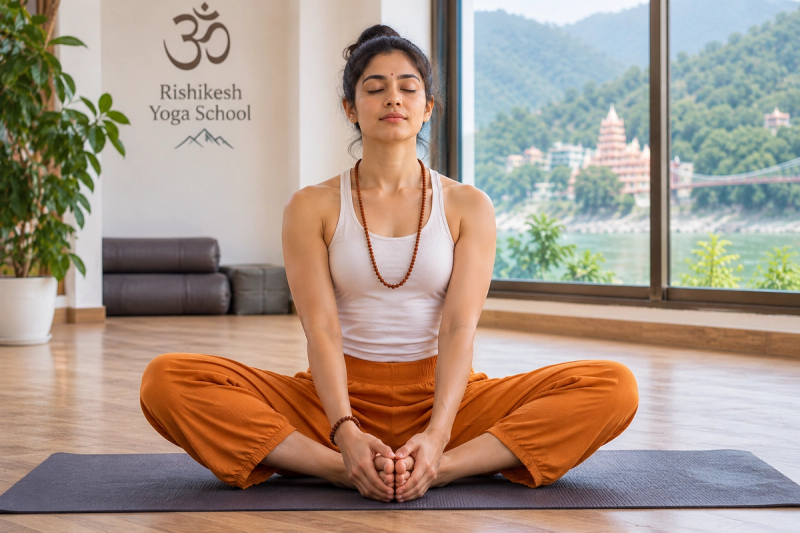
- Baddha Konasana (Butterfly Pose): Sit with the soles of your feet together and allow your knees to move gently towards the floor.
- Upavistha Konasana (Wide-Angle Seated Forward Bend): Open your legs comfortably and fold forward only as far as your body allows.
- Malasana (Garland Pose): Practise a supported squat to explore comfortable movement through your hips and ankles.
- Ananda Balasana (Happy Baby Pose): Lie on your back and gently bring your knees towards your chest.
Move slowly and avoid forcing your body into deeper stretches. Use cushions or blocks whenever necessary.
These poses can support mobility and body awareness, but they do not physically open or unblock an anatomical chakra.
2. Practise Sacral Chakra Meditation
Meditation offers an opportunity to observe emotions without immediately reacting to them.
For a simple Svadhisthana meditation, find a comfortable seated position and follow these steps:
- Close your eyes or soften your gaze.
- Bring your attention towards your lower abdominal region.
- Notice the natural movement of your breathing.
- Imagine a warm orange light in the area traditionally associated with the chakra.
- Observe any emotions or thoughts that arise without judging them.
- Repeat the affirmation: "I allow myself to feel, create and adapt."
Continue for five to ten minutes.
The orange light is a traditional visualisation technique, not a measurable source of energy. Its purpose is to provide a meaningful focus for meditation.
3. Use the Traditional VAM Mantra
Mantra meditation is an important part of many yogic and spiritual practices.
The seed mantra traditionally associated with Svadhisthana is VAM.
You can practise it by sitting comfortably, taking a few natural breaths and slowly chanting VAM. Allow the sound to resonate naturally without straining your throat.
Repeat it for several minutes, maintaining your attention on the sound and the experience of chanting.
You do not need to force a particular sensation. Consistency and comfortable attention are more useful than expecting an immediate spiritual experience.
4. Explore Gentle Water-Based Mindfulness
Water represents fluidity and adaptability in the traditional symbolism of the sacral chakra.
You can use this association in everyday mindfulness practices.
For example, spend a few minutes observing a flowing river, listening to rainfall or taking a mindful shower.
Pay attention to sensations, sounds and the movement of water.
If you live near a natural water body, a quiet walk beside it can also provide an opportunity to slow down and reconnect with your surroundings.
5. Make Space for Creative Expression
Creativity is one of the central themes associated with Svadhisthana.
You do not need to be an artist or musician to explore this practice.
Try activities such as:
- Writing freely in a journal for ten minutes.
- Painting or drawing without focusing on the final result.
- Dancing to music that you enjoy.
- Learning a musical instrument.
- Cooking a new recipe.
- Exploring photography or other creative interests.
The objective is to enjoy the process instead of constantly evaluating your performance.
6. Practise Mindful Emotional Reflection
Emotional awareness involves recognising what you feel, understanding possible triggers and choosing how to respond.
You can develop this habit through simple journaling.
At the end of the day, ask yourself:
- What emotion did I experience most strongly today?
- Did I express my feelings honestly?
- Where did I struggle to maintain my boundaries?
- What activity genuinely brought me enjoyment?
- Is there anything I need to communicate or reconsider?
Avoid judging your answers as good or bad.
This practice is particularly useful when you want to identify recurring patterns in your relationships and everyday decisions.
7. Explore Sound Healing and Relaxation
Sound-based practices can create a structured environment for relaxation and meditation.
Tibetan singing bowls, gentle instrumental sounds and traditional chanting are commonly used in wellness settings.
You can sit comfortably, listen to the sound and observe how your attention responds.
Some practitioners associate particular sounds and frequencies with individual chakras. However, there is insufficient scientific evidence to establish that specific frequencies directly activate or balance Svadhisthana.
If you enjoy these practices, approach them as relaxation and mindfulness experiences rather than guaranteed treatments.
For a deeper understanding, explore the differences between binaural beats and singing bowls.
H2: Yoga Poses, Breathwork and Lifestyle Habits for Svadhisthana
A meaningful practice should extend beyond meditation sessions. Your daily habits influence how you respond to emotions, manage stress and maintain a connection with your body.
Combining gentle yoga, conscious breathing and healthy routines can help you develop a more consistent wellness practice.
Yoga and Movement
You can build a short routine around hip mobility and comfortable movement.
A beginner-friendly sequence might include:
PracticeSuggested DurationSukhasana (Easy Pose)2 minutesBaddha Konasana2 minutesCat-Cow Pose2 minutesLow Lunge2 minutes each sideHappy Baby Pose2 minutesSeated Meditation5 minutes
Adjust the duration according to your comfort and experience.
If you have hip, knee or lower-back injuries, seek guidance from a qualified yoga instructor before practising unfamiliar postures.
Breathwork for Relaxation
Gentle breathing exercises can help you become more aware of your physical and emotional state.
Begin with natural diaphragmatic breathing:
- Sit or lie down comfortably.
- Place one hand on your abdomen.
- Inhale gently through your nose.
- Notice your abdomen expanding naturally.
- Exhale without forcing your breath.
- Continue for three to five minutes.
Avoid excessive breath retention or forceful breathing if you are a beginner.
You can gradually explore other pranayama techniques under appropriate guidance.
Everyday Lifestyle Choices
Your daily routine can reinforce the principles associated with Svadhisthana.
Consider making these small changes:
- Create time for enjoyable activities without turning everything into a productivity goal.
- Maintain relationships that respect your emotional boundaries.
- Allow yourself to rest when you need it.
- Spend time in nature.
- Reduce unnecessary screen distractions during personal time.
- Practise expressing your needs clearly.
- Maintain a balanced diet, adequate hydration and regular physical activity.
These habits are not chakra-specific medical treatments. They are practical ways to support general well-being and self-awareness.
For a deeper understanding of how yoga can be adapted to different needs, you can explore trauma-informed yoga teacher training principles.
H2: Why Rishikesh Is a Meaningful Place to Explore Chakra Practices
Rishikesh has a distinctive place in India's yoga culture. Situated in Uttarakhand, near the Himalayan foothills, the city attracts yoga practitioners, spiritual seekers and travellers from different parts of the world.
Its connection with yoga is reflected in its ashrams, traditional learning environments, meditation spaces and riverside practices.
For someone exploring Svadhisthana, the surroundings can provide opportunities to slow down and observe everyday experiences more consciously.
Learn Yoga Beyond Physical Postures
A structured yoga experience can introduce you to more than asana practice.
You may explore:
- Traditional yoga philosophy and the chakra system.
- Meditation and concentration techniques.
- Pranayama and breath awareness.
- Mantra chanting.
- Mindful movement.
- Relaxation and self-reflection.
These subjects can help you understand the broader context of yogic practices.
The Ganga and the Water Element
The Ganga River is an important part of Rishikesh's cultural and spiritual identity.
Since Svadhisthana is traditionally associated with water, spending quiet time near the river can become a meaningful personal reflection practice.
Observe the movement of the water, listen to its natural sounds and allow yourself a few moments without distractions.
You do not need to follow a particular religious belief to appreciate the peacefulness of this environment.
Choose Guidance Carefully
If you are travelling to Rishikesh to explore yoga, look beyond attractive photographs and marketing promises.
Consider the instructors' experience, course structure, student support, safety practices and the balance between practical learning and philosophical understanding.
A responsible learning environment should respect individual boundaries and never promise guaranteed emotional healing or medical results.
H2: Explore Yoga and Sound Healing at Divine Yogpeeth
If you want to explore yoga beyond independent home practice, learning in a structured environment can help you understand different techniques and their traditional foundations.
At Divine Yogpeeth, located in Laxman Jhula, Tapovan, Rishikesh, our approach brings together traditional yoga learning, practical sessions and opportunities for self-exploration.
Our location near the Ganga and the Himalayan surroundings offers a setting where you can step away from everyday distractions and focus on your practice.
Depending on your interests and experience, you can explore:
- Our 100-Hour Yoga Teacher Training in Rishikesh to develop your understanding of yoga fundamentals.
- Our Sound Healing Training Course to explore sound-based wellness practices and their applications.
- Our five-day yoga retreat in Rishikesh for a shorter opportunity to experience yoga, relaxation and mindful living.
Our aim is to provide learning opportunities that encourage a thoughtful and consistent yoga practice rather than promising instant results.
H2: Frequently Asked Questions About Sacral Chakra Healing
1. How do you know if your sacral chakra is imbalanced?
Traditional chakra teachings associate Svadhisthana imbalance with emotional suppression, creative blocks, relationship difficulties, excessive guilt and discomfort with change.
These are reflective themes, not scientifically validated diagnostic symptoms. If you experience persistent emotional difficulties, consider professional support.
2. Which yoga poses are best for sacral chakra healing?
Baddha Konasana, Malasana, Upavistha Konasana and Ananda Balasana are commonly included in practices associated with the sacral chakra.
These poses involve comfortable movement around the hips and pelvic region. Choose variations appropriate to your flexibility and physical condition.
3. Which colour represents the sacral chakra?
Orange is the traditional colour associated with Svadhisthana.
It is commonly used in chakra visualisations, meditation practices and spiritual artwork to represent creativity, movement and emotional expression.
4. What is the seed mantra of the sacral chakra?
The traditional seed mantra associated with Svadhisthana is VAM.
You can chant it slowly during meditation while maintaining comfortable breathing and attention on the sound.
5. How long does sacral chakra healing take?
There is no scientifically established timeframe for balancing a chakra.
Rather than expecting a specific result within a certain number of days, focus on building consistent habits involving yoga, meditation, emotional reflection and healthy relationships.
If you are dealing with significant emotional distress, chakra practices should complement, not replace, appropriate professional care.
H2: Conclusion: Build a Healthier Connection With Yourself
Sacral chakra healing offers a traditional yogic framework for exploring your emotions, creativity, relationships and ability to adapt to change.
Svadhisthana reminds you that personal well-being involves more than physical fitness. It also includes recognising your feelings, respecting your boundaries and making space for meaningful experiences.
Start with simple practices. Explore comfortable hip-opening asanas, try VAM mantra meditation, practise gentle breathing and give yourself opportunities for creative expression.
You do not need to master every technique at once. A consistent and thoughtful approach is more valuable than chasing dramatic experiences or expecting instant results.
If you are ready to explore yoga and sound-based practices in a dedicated learning environment, we invite you to discover our Sound Healing Training Course at Divine Yogpeeth in Rishikesh.
Take the next step towards a deeper understanding of yoga, mindful living and your own practice.