.jpg)

Teaching methodology 200 hour YTT training breaks down how to guide students safely. Discover the core skills you need to teach with confidence. Learn more!
Teaching Methodology 200 Hour YTT: What It Means in Practice
Understanding the teaching methodology 200 hour YTT programs offer is the crucial bridge between practicing yoga and actually guiding others. You might be able to hold a perfect headstand or flow through chaturanga with flawless breath control.
However, translating that physical knowledge into clear, actionable instructions for a room full of beginners requires a completely different skill set. This is where methodology steps in to transform your perspective.
Your training is not just about deepening your personal practice. It is about learning the precise mechanics of communication, observation, and structural planning.
By the end of your course, you will understand how to build a class from the ground up. You will learn to read bodies, adjust safely, and speak with an authority that makes your students feel secure.
The Heart of Teaching Methodology 200 Hour YTT
When you step onto the mat as a teacher, your focus shifts entirely away from yourself. You are no longer there to get a workout or find your own inner peace. Your sole purpose is to facilitate the experience of the people in front of you.
This monumental shift in perspective is the foundation of the teaching methodology 200 hour YTT curriculum. It teaches you how to observe a room, identify struggling students, and offer modifications without disrupting the flow of the class.
You learn how to break down complex postures into digestible, step-by-step instructions. This is governed by strict safety standards, such as those outlined by Yoga Alliance, ensuring every teacher meets a baseline of competence.
Teaching is equal parts art and science. The science involves understanding anatomy, biomechanics, and contraindications. The art is how you deliver that information gracefully.
To truly master this balance, you must dive deep into the Yoga Teaching Methodology TTC: 5 Proven Keys to Success.
Core Components of Teaching Methodology in 200 Hour YTT
Methodology is not a single subject. It is an umbrella term that covers a wide variety of practical skills you will use every time you teach.
Each component works together to create a seamless experience for your students. If one pillar is weak, the entire structure of the class can feel ungrounded.
Let us explore the core elements you will master during your time in Rishikesh.
The Architecture of Sequencing
Sequencing is the logical progression of postures. You cannot simply throw a group of poses together and call it a yoga class. A well-designed sequence has a clear beginning, middle, and end.
It must properly warm up the specific muscle groups needed for the peak pose. It must also safely cool the body down before final relaxation.
Understanding the Yoga Class Sequencing Principles Teacher Training: 5 Best methods ensures you never lead a disjointed or dangerous class. You will learn how to counter-pose safely and balance the energetic arc of your sequence.
Effective and Inclusive Cueing
Cueing is how you use your voice to direct movement. It is arguably the most critical skill you will develop. If your cues are confusing, your students will look around the room in frustration.
Methodology training teaches you to use direct, active language. Instead of saying, "Maybe try to reach your arms up," you will learn to confidently say, "Inhale, sweep your arms overhead."
You will also learn the difference between breath cues, directional cues, and anatomical cues. Knowing when to use each type prevents you from overwhelming your students with too much information.
The Power of Demonstration
Sometimes, words are not enough. Visual learners need to see the posture to understand it. However, demonstrating while teaching can be exhausting and distracting.
You will learn the precise moments when demonstration is necessary and when it is better to walk the room. You will discover how to mirror your students, which means moving your left arm while telling them to move their right.
This prevents confusion but requires intense focus and practice to master.
Safe Physical Adjustments
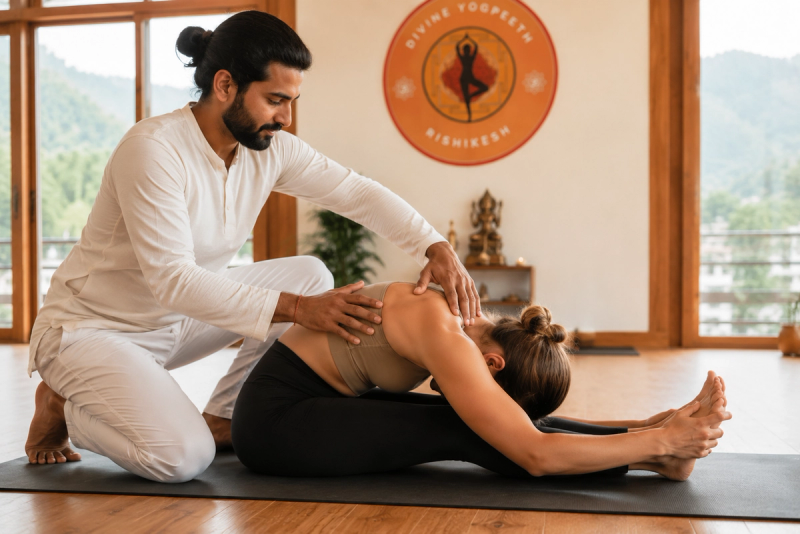
Hands-on assists can be profoundly healing, but they can also cause injury if done incorrectly. Methodology training dedicates significant time to the biomechanics of touch.
You will learn how to approach a student, ask for consent, and apply pressure safely. You will understand how to stabilize a joint rather than force a deeper stretch.
Mastering the Yoga Adjustments Assists Teacher Training: 5 Best Benefits ensures you offer adjustments that empower your students rather than fix them.
The Psychology of Leading a Yoga Class
Teaching methodology is not strictly physical. A significant portion of your training revolves around the psychological aspects of leadership.
When you stand at the front of a room, you are managing the energy of every individual present. Some students arrive stressed, some are dealing with trauma, and others are purely seeking a physical workout.
You must learn to create an environment that feels inclusive and non-judgmental for all of them. This requires deep empathy and strong emotional intelligence.
Understanding traditional standards of well-being, often guided by organizations like the Ministry of Ayush in India, helps you maintain a holistic approach to student care. You are not a therapist, but you are a space-holder.
Setting clear boundaries is essential for your longevity in this career. You will explore the Yoga Teacher Ethics Training 100 Hour: Ultimate Guide 2024 to understand the professional relationship between teacher and student.
If you are beginning your journey and want to test these waters gently, a foundational 100-Hour Yoga Teacher Training provides a solid introduction to these concepts.
Finding Your Authentic Voice as a Teacher
One of the biggest hurdles for new teachers is overcoming imposter syndrome. It is incredibly common to feel like you are just pretending to be a yoga teacher.
Early on, you might catch yourself mimicking the voice or phrases of your favorite instructors. This is a normal part of the learning process, but methodology training pushes you beyond it.
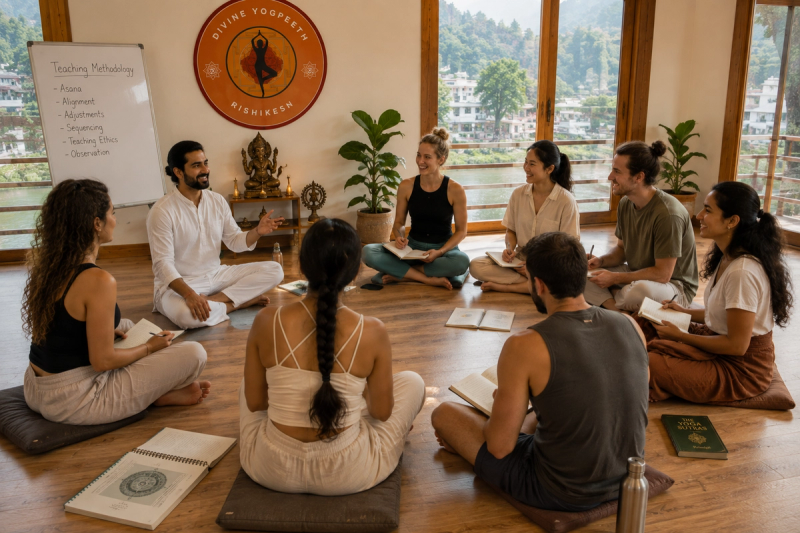
You will participate in teaching practicums where you guide your peers. These sessions are designed to break down your insecurities in a highly supportive environment.
Through constructive feedback, you will slowly strip away the artificial "yoga voice" and discover your natural tone. You will learn to project clearly from your diaphragm without straining your vocal cords.
Building this internal trust is crucial for your success. Reviewing the New yoga teacher confidence after training: 7 Best Tips can give you a head start on conquering these common fears.
Managing Different Learning Styles
No two students process information the same way. A skilled teacher must accommodate various learning styles simultaneously.
Auditory learners thrive on clear, concise verbal cues. They can follow a class with their eyes closed if your instructions are precise.
Visual learners need to see the shape. They rely on your demonstrations or by watching the student next to them.
Kinesthetic learners need to feel the alignment. These are the students who benefit most from physical adjustments or tactile cues.
Your methodology classes will teach you how to weave all three styles of instruction into every sequence. You will learn to verbally explain, physically show, and safely touch, ensuring no student is left behind.
The Business and Professionalism of Yoga
Finally, methodology touches upon the realities of stepping into the wellness industry. Being a great yogi does not automatically make you a successful professional.
You must learn how to read a room, manage time effectively, and handle unexpected situations. What do you do if a student starts crying in pigeon pose? How do you handle someone who arrives fifteen minutes late?
These are practical scenarios that methodology prepares you for. You will also learn the basics of marketing yourself, finding teaching jobs, and building a community.
Professionalism extends to how you present yourself, how you invoice studios, and how you continue your education.
Why Rishikesh is the Perfect Place to Learn
There is a reason thousands of seekers travel to Rishikesh every year. Located on the sacred banks of the Ganga River, this city vibrates with ancient spiritual energy.
Studying teaching methodology in Rishikesh provides a depth you simply cannot find in a Western studio. You are surrounded by the Himalayas, immersing yourself in a culture that birthed this practice.
The environment strips away your daily distractions, allowing you to focus entirely on your transformation. You will learn from Indian masters who carry generational knowledge of these teachings.
Even if you are only visiting for a short duration, such as a 5 Days Retreat, the impact of Laxman Jhula and Tapovan will stay with you forever.
Take the Next Step with Us
If you are considering training in Rishikesh, Divine Yogpeeth offers an authentic, immersive environment to refine your teaching skills.
Our experienced Indian masters provide personalized feedback to ensure you graduate with total confidence. You will practice teaching daily, ensuring you leave ready to lead a class immediately.
We provide the tools, the community, and the sacred space for you to evolve from a dedicated student into a powerful guide.
Frequently Asked Questions
What exactly is teaching methodology in yoga?
It is the study of how to effectively teach yoga to others. It covers sequencing, verbal cueing, physical adjustments, room management, and the psychology of guiding students. It transforms your personal practice into a professional skill set.
Is teaching methodology difficult to learn?
It can be challenging at first because it requires you to talk, move, and observe all at the same time. However, like any skill, it becomes second nature with consistent practice and constructive feedback during your practicum sessions.
Will I actually teach during my 200-hour training?
Yes, absolutely. A high-quality program requires you to practice teaching from day one. You will start by teaching single poses to a partner and gradually build up to teaching full sequences to small groups of your peers.
How do I remember long yoga sequences?
Methodology teaches you the logic behind sequencing. Instead of memorizing a random list of poses, you learn the anatomical rules of how poses connect. Once you understand the formula, sequencing becomes intuitive rather than an act of pure memorization.
What if I am too shy to speak in front of a class?
Many incredible yoga teachers started out terrified of public speaking. Your training provides a safe, non-judgmental space to find your voice. Over time, your passion for the practice will naturally overpower your fear of speaking.
Conclusion
Mastering the teaching methodology 200 hour YTT concepts is the most empowering part of your journey. It is the exact process that turns your passion for yoga into a tangible, shareable gift.
You will learn to sequence brilliantly, speak clearly, and adjust safely. More importantly, you will discover a profound inner confidence that spills over into every other area of your life.
The transition from student to teacher is challenging, but it is deeply rewarding. You will leave training equipped to hold space for others with grace and authority.
Ready to begin? Explore our 200-Hour Yoga Teacher Training in Rishikesh and take the first step toward finding your voice today.