
Winter yoga poses help you stay warm, improve mobility and maintain energy in cold weather. Explore seven effective practices and discover how to start.
Winter Yoga Poses: Best Practices to Stay Warm, Active and Energised in Cold Weather
Introduction
Winter yoga poses can help you maintain warmth, mobility and energy when cold weather makes you want to stay under a blanket all morning. But what if just 20–30 minutes of mindful movement could make your winter mornings feel more comfortable and productive?
Cold temperatures often change your daily routine. You may move less, experience stiffness after waking up, and find it harder to maintain your regular exercise schedule. Your muscles can feel less prepared for movement, particularly when you go straight from a warm bed into a cold room.
Yoga offers a practical way to respond. A combination of standing postures, flowing sequences, gentle twists and controlled breathing can gradually prepare your body for the day.
The key is choosing appropriate movements rather than forcing intense stretches when your body is cold.
Whether you practise at home in India, experience snowy winters abroad, or are exploring yoga in the Himalayan foothills, the right routine can help you remain consistent throughout the colder months.
Here are seven useful postures, breathing techniques and practical recommendations to make your winter yoga practice safer and more effective.
1. Why Winter Yoga Poses Matter for Your Body and Mind
Winter changes how you move. Shorter daylight hours, lower temperatures and reduced outdoor activity can make your usual fitness routine harder to maintain.
You might notice tighter hips after sitting for extended periods, stiffness around your shoulders or a general reluctance to exercise early in the morning.
A thoughtful yoga routine addresses these challenges through gradual movement.
Supporting circulation and physical warmth
Dynamic movements encourage muscular activity and increase the body's metabolic demand. As your muscles work, they generate heat.
This is one reason flowing sequences and standing postures can feel particularly useful during colder mornings.
However, yoga does not replace proper winter clothing or environmental warmth. Your body temperature still depends on several factors, including activity level, clothing and surrounding temperature.
Maintaining flexibility and mobility
When you spend more time indoors, your joints may receive less movement throughout the day.
Gentle yoga movements help you explore comfortable ranges of motion around your ankles, hips, spine and shoulders.
Regular practice may also support balance, coordination and muscular endurance.
For example, simple standing postures encourage you to engage your legs and maintain an upright posture instead of remaining seated for prolonged periods.
Supporting mental well-being
Winter can affect motivation and daily routines. A consistent morning practice provides structure and an opportunity to slow down.
Mindful breathing and focused movement can help you become more aware of physical tension and mental stress.
Yoga is not a guaranteed treatment for seasonal depression or anxiety. However, it can complement other healthy habits, including adequate sleep, outdoor daylight exposure and regular physical activity.
For a broader understanding of how yoga connects physical practice with mental discipline, explore the importance of yoga philosophy in modern practice.
2. Seven Winter Yoga Poses to Generate Body Heat Naturally
If you are building a winter routine, start with movements that activate larger muscle groups.
The following postures combine standing strength, controlled movement and gentle stretching. You do not need advanced flexibility to practise them.
1. Surya Namaskar (Sun Salutation)
Surya Namaskar is one of the most practical sequences for beginning a winter morning.
It combines several movements into a continuous flow, involving your shoulders, arms, legs, spine and core.
How to practise:
- Stand upright with your feet together and hands near your chest.
- Inhale as you raise your arms overhead.
- Exhale and fold forward comfortably.
- Step back into a supported plank position.
- Lower your knees if necessary and move towards Cobra Pose.
- Lift your hips into Downward-Facing Dog.
- Step forward and return to standing.
Adjust the sequence according to your experience and physical condition.
Start with two or three comfortable rounds. Gradually increase the number if your breathing remains controlled.
Winter benefit: Continuous movement activates several muscle groups and can help you feel warmer without immediately attempting demanding postures.
2. Utkatasana (Chair Pose)
Chair Pose activates your thighs, hips, glutes and core.
Because it requires muscular engagement, it can be a useful addition to a short winter warm-up.
How to practise:
- Stand with your feet hip-width apart.
- Inhale and raise your arms.
- Exhale and bend your knees as though sitting on an imaginary chair.
- Keep your weight balanced through your feet.
- Maintain a comfortable spinal position.
- Hold for 15–30 seconds while breathing naturally.
Avoid forcing your knees into a deep bend.
Winter benefit: Engaging the large muscles of your legs creates muscular activity and supports lower-body strength.
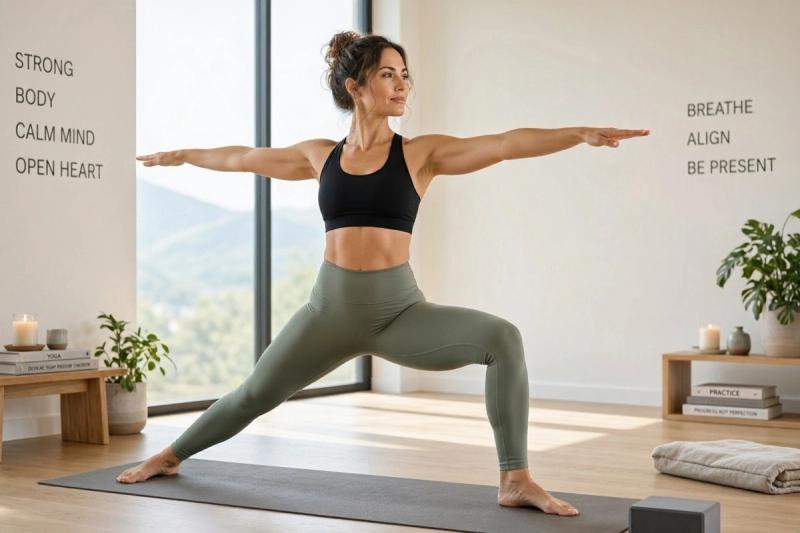
3. Virabhadrasana II (Warrior II)
Warrior II is an excellent standing posture for developing leg strength, balance and body awareness.
How to practise:
- Stand with your feet comfortably apart.
- Turn your right foot outward and slightly turn your left foot inward.
- Bend your right knee while keeping it aligned with your ankle.
- Extend both arms at shoulder height.
- Look towards your right hand.
- Maintain the position for 20–30 seconds.
- Repeat on the opposite side.
Keep your shoulders relaxed and avoid allowing your front knee to collapse inward.
Winter benefit: The posture engages your legs and improves standing stability while encouraging controlled breathing.
4. Adho Mukha Svanasana (Downward-Facing Dog)
Downward-Facing Dog is a familiar yoga posture that combines shoulder engagement, spinal lengthening and posterior-chain stretching.
How to practise:
- Begin on your hands and knees.
- Position your hands shoulder-width apart.
- Tuck your toes under.
- Lift your hips towards the ceiling.
- Keep your knees slightly bent if your hamstrings feel tight.
- Lengthen your spine without forcing your heels towards the floor.
- Hold for five comfortable breaths.
Winter benefit: It introduces movement through your shoulders, arms, spine and legs, helping you transition from gentle warm-up movements into a more active practice.
5. Bhujangasana (Cobra Pose)
Cobra Pose gently strengthens your back muscles and introduces spinal extension.
It can be particularly useful if you spend long periods sitting indoors.
How to practise:
- Lie on your stomach.
- Place your palms beside your lower ribs.
- Keep your elbows close to your body.
- Inhale and gently lift your chest.
- Use your back muscles rather than pushing strongly through your hands.
- Keep your shoulders away from your ears.
- Hold briefly and release.
Avoid compressing your lower back or lifting higher than feels comfortable.
Winter benefit: Gentle spinal extension introduces movement after prolonged sitting and supports back-muscle engagement.
6. Setu Bandhasana (Bridge Pose)
Bridge Pose activates your glutes, hamstrings and back muscles while opening the front of your hips.
How to practise:
- Lie on your back with your knees bent.
- Place your feet flat on the floor, hip-width apart.
- Keep your arms beside your body.
- Inhale and lift your hips gently.
- Maintain a comfortable position without over-arching your lower back.
- Hold for 15–20 seconds.
- Lower slowly.
Winter benefit: It activates the muscles around your hips and posterior chain while introducing controlled spinal movement.
7. Balasana (Child's Pose)
Child's Pose provides a gentle resting position between more active postures.
Although it does not generate as much muscular activity as Warrior II or Chair Pose, it helps you regulate your breathing and release unnecessary tension.
How to practise:
- Kneel on your mat.
- Bring your big toes together.
- Allow your knees to remain together or separate them comfortably.
- Lower your torso towards your thighs.
- Extend your arms forward or rest them beside your body.
- Breathe slowly and comfortably.
Winter benefit: It creates a recovery period within your routine and helps you avoid treating every part of yoga as an intense physical workout.
For additional guidance on standing alignment and technique, explore the benefits and techniques of standing yoga poses.
3. Winter Yoga Practices: Breathing Techniques That Support Energy
Yoga is not limited to physical postures. Your breathing pattern also plays an important role in how you experience a session.
When temperatures drop, you may naturally breathe more shallowly or feel uncomfortable practising outdoors.
A controlled breathing routine can help you develop awareness and maintain a steady rhythm during movement.
Kapalabhati Pranayama (Skull-Shining Breath)
Kapalabhati involves active, relatively quick exhalations followed by passive inhalations.
It is traditionally included in yogic cleansing practices rather than being treated as an ordinary relaxation exercise.
Basic approach:
- Sit comfortably with your spine upright.
- Take a natural inhalation.
- Exhale gently but actively by drawing your abdomen inward.
- Allow the next inhalation to happen naturally.
- Begin with a small number of comfortable repetitions under appropriate guidance.
Do not force rapid breathing or compete to complete a particular number of rounds.
Kapalabhati may not be appropriate for everyone, particularly people with certain cardiovascular, respiratory or abdominal conditions, uncontrolled blood pressure, pregnancy or recent surgery.
If you are unsure, avoid it until you have received qualified instruction.
Nadi Shodhana (Alternate Nostril Breathing)
Nadi Shodhana is a gentle breathing practice commonly used to develop attention and regulate breathing rhythm.
How to practise:
- Sit comfortably.
- Relax your shoulders and facial muscles.
- Use your right thumb to close your right nostril.
- Inhale gently through your left nostril.
- Close your left nostril and release the right.
- Exhale through the right nostril.
- Inhale through the right, then switch sides and exhale through the left.
Continue for a few comfortable cycles without holding your breath.
This practice can be a useful way to settle your attention before meditation or after physical movement.
Bhramari Pranayama (Humming Bee Breath)
Bhramari uses a gentle humming sound during exhalation.
How to practise:
- Sit in a comfortable position.
- Close your eyes if that feels comfortable.
- Inhale naturally through your nose.
- Exhale slowly while producing a soft humming sound.
- Repeat several times without straining your throat.
Many practitioners find the vibration and focused attention calming.
For more information about breathwork and its practical application, explore pranayama techniques and their benefits in yoga training.
You can also consult the Ministry of AYUSH for information about traditional Indian systems of wellness.
4. How to Build a Safe Winter Yoga Routine at Home
Knowing individual postures is useful, but combining them into an appropriate sequence makes your practice more effective.
A common mistake is starting with demanding stretches immediately after waking up.
Your body may feel stiff after several hours of inactivity. Give yourself time to transition into movement.
A practical 30-minute winter yoga sequence
DurationPractice3 minutesGentle joint rotations5 minutesEasy marching and dynamic warm-up5 minutesSurya Namaskar7 minutesChair Pose and Warrior II4 minutesDownward Dog and Cobra3 minutesBridge Pose3 minutesChild's Pose and relaxed breathing
Adjust the timing according to your fitness level.
If you are a beginner, spend more time learning alignment and less time holding challenging positions.
Warm up before stretching
Begin with gentle movements such as:
- Shoulder rotations.
- Wrist and ankle movements.
- Slow marching.
- Gentle side bends.
- Comfortable spinal rotations.
The purpose is to gradually prepare your body, not to exhaust yourself before the main practice.
Choose suitable clothing and surroundings
Practising in a cold room can make movement uncomfortable.
Wear breathable layers that allow your joints to move freely. Keep your feet warm and use a non-slip yoga mat.
If you practise near an open window, avoid sitting directly in a strong cold draft.
Maintain hydration and recovery
You may not feel as thirsty during winter as you do during summer, but hydration remains important.
Drink water throughout the day and avoid treating intense sweating as a requirement for an effective yoga session.
Allow sufficient recovery between demanding sessions.
If a posture causes sharp pain, dizziness, unusual breathlessness or chest discomfort, stop practising and seek appropriate medical advice.
People with existing injuries, significant joint limitations or medical conditions should adapt their practice with qualified guidance.
5. Why Rishikesh Is a Special Place for Winter Yoga Practice
Rishikesh offers a distinctive setting for practising yoga during the colder months.
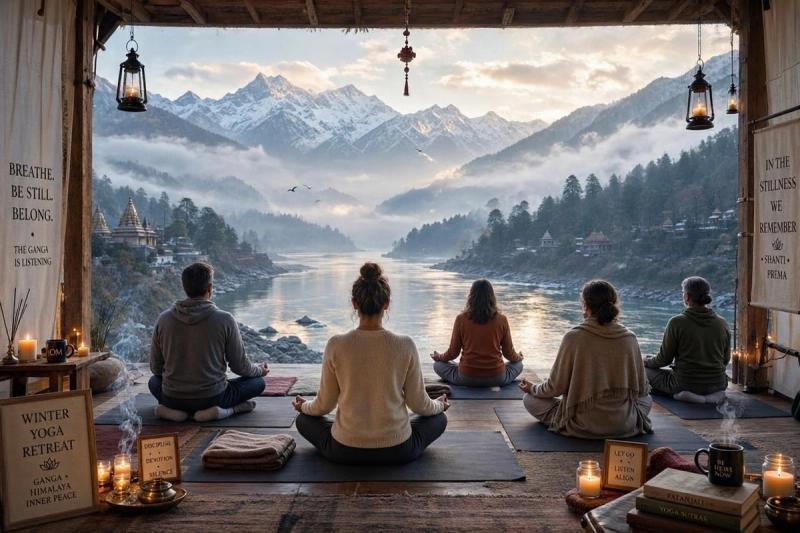
Located in Uttarakhand, where the Ganga flows through the Himalayan foothills, the city attracts practitioners from India and around the world.
Winter brings a different atmosphere to the region. The air can feel crisp, mornings are often cool, and the surrounding hills provide a peaceful environment for meditation and mindful movement.
However, the experience is not just about the scenery.
A setting that encourages consistency
A structured daily routine can become easier when your surroundings support focused practice.
Rishikesh has a long-standing association with yoga, meditation and spiritual learning.
You can combine physical practice with meditation, breathing exercises and opportunities to understand traditional yogic philosophy.
Learning beyond physical postures
A complete yoga education includes more than learning how to perform challenging asanas.
You can explore:
- Basic yoga anatomy and alignment.
- Traditional yoga philosophy.
- Pranayama and meditation.
- Teaching methodology.
- Relaxation and restorative practices.
- Practical understanding of different yoga traditions.
For international students, studying in Rishikesh can also provide an opportunity to experience yoga within its Indian cultural context.
Understanding the best time to visit
Winter temperatures in Rishikesh can vary considerably.
December and January mornings can be particularly cold, while daytime conditions may be more comfortable.
If you are planning an extended stay, check seasonal weather conditions, accommodation arrangements and the facilities available at your chosen school.
You should also understand that Himalayan winter weather varies between the foothills and higher-altitude destinations.
Do not assume that every yoga session will take place outdoors or that the weather will always be pleasant.
6. Learn and Experience Winter Yoga with Divine Yogpeeth
Practising independently can help you develop a healthy routine, but learning from experienced instructors can improve your understanding of alignment, breathing and safe progression.
If you are considering structured yoga education in Rishikesh, Divine Yogpeeth offers yoga teacher training and retreat opportunities at Laxman Jhula, Tapovan, near the sacred Ganga River.
The Himalayan surroundings provide a peaceful environment for developing a consistent practice while exploring different dimensions of yoga.
Depending on your experience and goals, you can explore the following programmes:
- 100-Hour Yoga Teacher Training: A suitable option for practitioners interested in structured yoga learning and developing their foundation. Explore our 100-Hour Yoga Teacher Training in Rishikesh.
- 200-Hour Yoga Teacher Training: A more comprehensive programme for developing asana practice, pranayama, anatomy, philosophy and teaching skills. Discover our 200-Hour Yoga Teacher Training programme.
You can also explore our five-day yoga retreat in Rishikesh if you prefer a shorter stay focused on yoga, relaxation and self-practice.
7. Winter Yoga Mistakes You Should Avoid
A good winter routine is not about performing the maximum number of postures or generating as much sweat as possible.
Your approach should prioritise consistency, comfort and proper technique.
Here are common mistakes worth avoiding.
Starting with intense stretches
Cold muscles and joints may feel less comfortable when you immediately attempt deep stretches.
Begin with gentle movement and increase the intensity gradually.
Ignoring proper alignment
A posture performed incorrectly can place unnecessary stress on your knees, shoulders, wrists or lower back.
For example, forcing your front knee too far inward in Warrior II can compromise comfortable alignment.
Use modifications instead of copying advanced practitioners.
Practising too intensely every day
Daily movement can be beneficial, but every session does not need to be demanding.
Alternate stronger practices with gentle mobility, restorative yoga or meditation.
Holding your breath unnecessarily
Breathing should remain comfortable and controlled.
Avoid excessive breath retention or aggressive breathing exercises, particularly when you are new to pranayama.
Ignoring your body's signals
Discomfort, fatigue and pain are not challenges that you must overcome to become a better practitioner.
Reduce the intensity or stop when necessary.
If you are recovering from an injury or have a medical concern, seek guidance from an appropriate healthcare professional before beginning a new routine.
8. How to Maintain Your Yoga Practice Throughout Winter
Starting a winter routine is one thing. Maintaining it for several weeks is another.
The most useful approach is to make your practice realistic enough to repeat.
Establish a consistent morning schedule
Choose a time that works with your daily responsibilities.
You do not need to wake up before sunrise if doing so leaves you sleep-deprived.
A regular 20-minute practice can be more sustainable than an ambitious 90-minute routine that you abandon after three days.
Set achievable weekly goals
If you are a beginner, start with three or four sessions per week.
You can gradually increase the frequency as your body adapts.
Track simple improvements such as:
- Better movement control.
- More comfortable forward folds.
- Improved standing balance.
- Greater awareness of breathing.
- Better consistency with your daily routine.
Combine yoga with healthy winter habits
Your practice works best as part of a broader approach to well-being.
Pay attention to sleep, hydration, balanced meals and appropriate physical activity.
Avoid assuming that yoga alone can prevent every seasonal illness or solve every physical complaint.
Explore different styles of yoga
Winter is a good time to understand how different approaches serve different needs.
Vinyasa can offer a more dynamic practice, while restorative yoga focuses on supported relaxation.
Yin yoga involves longer-held, generally passive postures and should be approached with appropriate modifications.
Your ideal routine may combine several styles rather than relying on one approach throughout the season.
9. Frequently Asked Questions About Winter Yoga Poses
1. Which yoga poses are best for winter mornings?
Surya Namaskar, Chair Pose, Warrior II and Downward-Facing Dog are useful options for a winter morning routine.
They involve several muscle groups and allow you to gradually increase movement intensity.
Begin with gentle joint movements before attempting a flowing sequence.
2. How long should you practise yoga during winter?
For most beginners, 20–30 minutes can be a practical starting point.
You can divide the session between warming up, standing postures, gentle stretching and breathing exercises.
The appropriate duration depends on your experience, fitness and individual needs.
Consistency and safe technique matter more than completing a fixed number of minutes.
3. Is morning yoga better than evening yoga in winter?
Neither is universally better.
Morning yoga may help you establish a consistent routine and prepare for the day.
Evening yoga can be useful if your schedule is busy or you prefer gentle movement after work.
Choose the time that allows you to practise comfortably without sacrificing sleep or recovery.
4. Can beginners practise yoga during cold weather?
Yes. Beginners can practise yoga during winter by choosing accessible postures and warming up properly.
Start with basic movements, use modifications and avoid advanced postures until you understand their alignment.
If you have an injury or medical condition, seek appropriate professional guidance.
5. Does yoga help you stay warm during winter?
Physical yoga practices can increase muscular activity and temporarily generate body heat.
Dynamic sequences and standing postures generally create more physical activity than passive relaxation practices.
However, yoga does not replace warm clothing, appropriate indoor heating or other precautions against cold exposure.
Conclusion: Make Winter the Season of Consistent Yoga Practice
Winter does not have to interrupt your physical activity or your connection with yoga.
With the right winter yoga poses, you can maintain mobility, engage your muscles, improve body awareness and establish a routine that supports your overall well-being.
Start with Surya Namaskar, add a few standing postures, practise comfortable breathing and finish with relaxation.
Remember that the best routine is not necessarily the most advanced one. It is the one you can practise safely and consistently.
If you want to take your practice beyond home workouts, consider experiencing yoga in Rishikesh.
At Divine Yogpeeth, you can explore structured yoga learning in the peaceful surroundings of Laxman Jhula, Tapovan.
Ready to deepen your practice? Explore our 100-Hour Yoga Teacher Training in Rishikesh and take your first step towards a more informed, disciplined and meaningful yoga practice.