
Explore the 100 hour YTT syllabus, from yoga philosophy and asanas to anatomy and pranayama. Understand every subject before training in Rishikesh. Learn more.
100 Hour YTT Syllabus: Complete Subject-by-Subject Breakdown for Your Yoga Training in Rishikesh
What if 100 hours of structured yoga education could change the way you understand your body, breathing, and relationship with yoga? The 100 hour YTT syllabus gives you a structured introduction to traditional yoga education without requiring you to commit to a longer teacher training programme immediately.
Whether you are an international yoga enthusiast travelling to India or an Indian practitioner looking to deepen your existing practice, understanding the curriculum matters before you enrol.
A 100-hour Yoga Teacher Training (YTT) programme generally introduces you to several interconnected subjects, including Hatha Yoga, Vinyasa, yoga philosophy, anatomy, pranayama, meditation, and teaching methodology.
However, not every yoga school teaches these subjects with the same depth or approach. Some programmes emphasise physical practice, while others provide greater attention to traditional yogic knowledge and self-awareness.
This guide explains the major subjects, what you can expect to learn in each class, how the subjects connect, and what to consider when choosing a 100-hour programme in Rishikesh.
1. Understanding the 100 Hour YTT Syllabus and Its Learning Structure
A 100-hour yoga teacher training programme is designed to provide foundational yoga education through a combination of practical sessions, theoretical classes, guided learning, and personal practice.
Unlike a casual yoga workshop, a structured YTT programme introduces you to the reasoning behind different yoga techniques.
You do not simply learn how to perform a posture. You begin understanding its purpose, physical requirements, breathing patterns, modifications, and place within a broader yogic practice.
What Does 100 Hours of Training Actually Include?
The exact distribution depends on the school's curriculum. A well-rounded programme may cover:
- Asana practice and alignment
- Pranayama and breathing techniques
- Yoga philosophy and traditional teachings
- Human anatomy and physiology
- Meditation and mindfulness
- Shatkarma and introductory yogic cleansing practices
- Teaching methodology and communication
- Mantra chanting and practical application
These subjects are connected rather than independent.
For example, anatomy helps you understand the physical mechanics of an asana, while pranayama teaches you to work with breathing during physical practice.
Philosophy provides a wider perspective on why yoga involves much more than flexibility or physical fitness.
Is a 100-Hour Course Suitable for Beginners?
Yes, many programmes welcome beginners and intermediate practitioners. However, you should check the school's entry requirements and the expected physical intensity.
You do not need to perform advanced arm balances or complicated inversions before joining.
What matters more is your willingness to practise consistently, listen to instructions, and learn the foundations carefully.
If you want to understand how a shorter training compares with an informal workshop, explore our guide to 100-hour YTT versus a weekend yoga workshop.
For international students, it is also useful to understand that a 100-hour programme should not automatically be considered equivalent to a complete 200-hour teacher training qualification.
The scope of certification and its recognition depend on the programme and applicable certification requirements. You can explore the Yoga Alliance website for information about its teacher-training standards and credential pathways.
2. Core Subjects in the 100 Hour Yoga Teacher Training Curriculum
The most important part of your training is understanding what happens inside the classroom.
A meaningful curriculum should balance physical practice, theoretical knowledge, and personal development.
Here is a subject-by-subject breakdown of the major areas you may encounter.
Hatha Yoga and Asana Practice
Hatha Yoga introduces you to foundational physical postures and their correct alignment.
You learn how to enter, maintain, and release different asanas while coordinating your movement with conscious breathing.
Common areas of practice include:
- Standing postures such as Trikonasana and Virabhadrasana
- Seated postures such as Sukhasana and Dandasana
- Forward bends and gentle backbends
- Basic twists and balancing postures
- Foundational relaxation postures
The focus should not be on achieving the deepest expression of a posture.
Instead, you learn how to recognise your physical limitations, maintain stability, and practise safely.
For example, during Trikonasana, you explore spinal length, hip positioning, shoulder alignment, and weight distribution.
These details help you develop a more intelligent practice rather than simply copying the shape demonstrated by an instructor.
Vinyasa Yoga and Movement Coordination
Vinyasa introduces the relationship between movement and breath.
You learn how different postures can be connected through controlled transitions, creating a continuous sequence.
Sun Salutations are often an important part of this subject.
You may practise:
- Surya Namaskar variations
- Breath-led transitions
- Standing posture sequences
- Basic flow construction
- Movement awareness and pacing
Vinyasa practice helps improve coordination, body awareness, and concentration.
If you want to understand the foundations more deeply, our article on Vinyasa fundamentals in 100-hour YTT provides additional context.
Pranayama and Breath Awareness
Pranayama is one of the essential subjects in traditional yoga education.
It introduces you to conscious breathing techniques and the relationship between breath, attention, and mental steadiness.
Depending on the curriculum, you may study:
- Anulom Vilom
- Nadi Shodhana
- Bhramari
- Ujjayi breathing
- Kapalabhati
- Basic breath observation
You also learn why breathing patterns should be approached progressively.
For example, beginners should not force breath retention or practise advanced breathing techniques without appropriate instruction.
Understanding contraindications, comfort, and individual capacity is important.
Pranayama is not about competing to hold your breath for the longest time. It is about developing awareness and control through appropriate practice.
Meditation and Mindfulness
Meditation introduces you to techniques for observing your thoughts and developing concentration.
You may explore:
- Breath-focused meditation
- Guided meditation
- Mantra meditation
- Body awareness
- Basic mindfulness practices
Regular practice helps you recognise distractions and develop a more consistent relationship with your attention.
It also teaches you that meditation does not necessarily mean stopping every thought.
Instead, you learn to observe mental activity without becoming automatically involved in every thought that appears.
3. Yoga Philosophy, Anatomy and Traditional Yogic Knowledge
Physical practice explains how your body moves. Philosophy and anatomy help you understand the wider foundations of yoga.
These theoretical subjects are particularly valuable because they prevent your training from becoming limited to memorising postures.
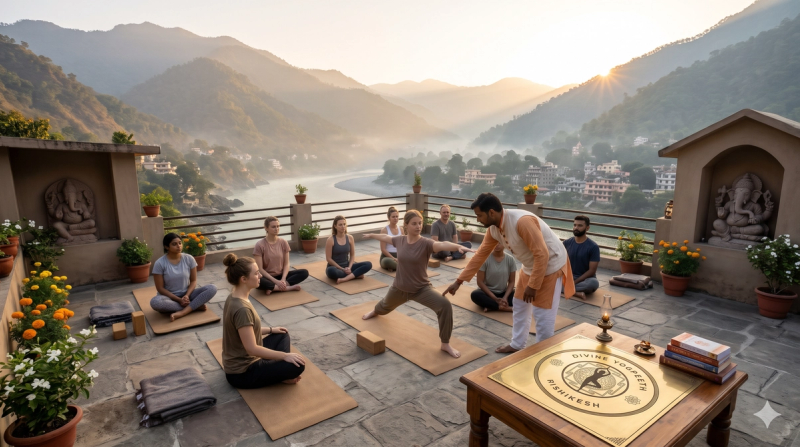
Yoga Philosophy and the Eight Limbs
Yoga philosophy introduces you to the principles that guide traditional yogic practice.
One important framework is Patanjali's Eight Limbs of Yoga, commonly associated with the Yoga Sutras.
The eight limbs are:
- Yama – Ethical restraints.
- Niyama – Personal observances.
- Asana – Physical postures.
- Pranayama – Regulation of breath.
- Pratyahara – Withdrawal of the senses.
- Dharana – Concentration.
- Dhyana – Meditation.
- Samadhi – Deep meditative absorption.
You learn that yoga involves more than physical flexibility.
For example, Ahimsa, one of the Yamas, means non-violence. In your personal practice, this can involve avoiding unnecessary strain, respecting physical limitations, and treating yourself with patience.
Similarly, Svadhyaya, or self-study, encourages you to observe your habits and understand your own behaviour.
You can explore the philosophical foundations of modern yoga practice to see how traditional concepts remain relevant in contemporary yoga education.
For additional background on India's traditional systems of yoga and wellness, the Ministry of AYUSH is a useful official resource.
Yoga Anatomy and Physiology
Anatomy helps you understand what happens inside your body during different yoga postures.
A responsible programme should introduce the major body systems and their relevance to movement and breathing.
Important topics may include:
- Skeletal structure and joint movement
- Major muscle groups
- Spinal anatomy
- Basic muscular engagement
- Respiratory mechanics
- Posture and alignment
- Common movement limitations
Consider a simple example.
When practising Bhujangasana, you need to understand spinal extension, shoulder positioning, and the importance of avoiding excessive compression in the lower back.
Anatomical awareness helps you recognise when a posture needs modification.
You may also study basic physiology to understand how breathing, muscular activity, and physical effort relate to one another.
This knowledge is especially useful if you eventually want to guide other practitioners.
However, a 100-hour introductory course does not make you a medical professional or qualify you to diagnose injuries.
Shatkarma and Traditional Yogic Practices
Shatkarma refers to six traditional cleansing practices described in Hatha Yoga texts.
These include Neti, Dhauti, Nauli, Basti, Kapalabhati, and Trataka.
Introductory training may explain their traditional purpose and demonstrate selected practices under appropriate supervision.
Not every technique is suitable for every student.
Some practices require specific preparation, contraindication screening, and direct guidance from a qualified teacher.
You should never feel pressured to perform an unfamiliar cleansing technique simply because it appears in a traditional curriculum.
Understanding the principles and safety considerations is just as important as practical exposure.
4. Teaching Methodology, Alignment and Practical Application
One common misconception about shorter yoga teacher training programmes is that they only involve personal practice.
A well-designed curriculum should also introduce the fundamentals of teaching.
Even if you are not planning to become a professional instructor immediately, teaching methodology can improve your understanding of yoga.
Understanding Alignment and Modifications
You learn that the same posture may look different for different students.
For example, a practitioner with limited hamstring flexibility may need a modification during Uttanasana.
Another student may need additional support during balancing postures.
Important teaching concepts include:
- Giving clear verbal instructions
- Demonstrating postures correctly
- Recognising common alignment mistakes
- Offering suitable modifications
- Understanding basic contraindications
- Avoiding unnecessary physical adjustments
The goal is to develop an understanding of individual differences rather than expecting everyone to perform identical movements.
Introduction to Class Planning
A yoga session should have a logical structure.
You may learn how to organise a basic class using:
- Initial centring and preparation.
- Gentle warm-up exercises.
- Main asana practice.
- Appropriate counterposes.
- Breathing exercises.
- Relaxation.
You also begin understanding how to manage timing and communicate instructions without overwhelming students.
For example, teaching a beginner class requires a different pace from guiding experienced practitioners through a demanding Vinyasa sequence.
A useful next step is learning how to prepare a yoga class plan as a new teacher.
Practice Teaching and Feedback
Where included, supervised teaching practice gives you an opportunity to apply what you have learned.
You may practise explaining a posture, guiding a short sequence, or giving breathing instructions to fellow students.
Feedback helps you identify areas that need improvement.
You might discover that your physical demonstration is clear but your verbal instructions are confusing.
Or perhaps you understand a posture but struggle to explain its alignment in simple language.
These are valuable learning opportunities.
Remember that completing 100 hours does not automatically mean you are prepared to teach every level of student or every style of yoga independently.
Teaching ability develops through continued education, practice, supervision, and experience.
5. Why Study the 100 Hour YTT Syllabus in Rishikesh, India?
The location of your training can influence your daily routine, learning environment, and overall experience.
Rishikesh has a longstanding association with yoga, meditation, spiritual study, and traditional Indian wellness practices.
For international students, studying here also provides an opportunity to experience Indian yoga culture beyond what is available through online classes.
A Learning Environment Connected to Yoga
Rishikesh offers an environment where yoga schools, meditation spaces, traditional ashrams, and the Ganga River form part of everyday life.
Areas such as Tapovan and Laxman Jhula are particularly familiar to yoga practitioners visiting the city.
Your experience is not limited to classroom sessions.
You may find opportunities to observe local traditions, visit peaceful riverside locations, and spend time reflecting on what you learn during training.
Daily Discipline and Consistency
A structured training schedule helps you develop consistency.
Instead of practising occasionally whenever you find free time, you follow a planned routine.
This can include morning asana sessions, theory classes, pranayama, meditation, and evening practice.
The routine may feel demanding initially, especially if you are travelling from another country or are unfamiliar with intensive yoga education.
However, a balanced schedule with adequate rest, hydration, and appropriate nutrition can help you adapt.
Learning Beyond the Classroom
Rishikesh also gives you an opportunity to experience different aspects of yogic culture.
You may explore mantra chanting, traditional vegetarian food, spiritual discussions, and sound-based relaxation practices.
If you are interested in extending your learning beyond yoga teacher training, you can also explore sound healing training in Rishikesh.
The important thing is to choose a programme based on teaching quality, curriculum, safety, accommodation, and realistic learning outcomes rather than location alone.
6. Choosing the Right 100-Hour Training Programme: What Should You Check?
Before enrolling, take time to evaluate the actual course structure.
A beautiful location and attractive photographs do not guarantee quality education.
You should examine what the programme delivers.
Here are some practical questions worth asking.
1. Is the Curriculum Clearly Explained?
You should know which subjects are taught, how much practical training is included, and whether teaching methodology forms part of the programme.
A school should be able to explain what you will study instead of relying on vague descriptions such as complete yoga transformation.
2. Who Teaches the Subjects?
Check the instructors' qualifications, experience, teaching approach, and relevant expertise.
A teacher who understands anatomy should be responsible for explaining anatomical concepts rather than relying entirely on general yoga demonstrations.
3. Is the Daily Schedule Balanced?
A good schedule should provide time for practice, theory, meals, rest, and personal reflection.
An excessively demanding routine is not automatically a better educational experience.
4. Are Beginners Supported?
Ask whether students with different physical abilities receive appropriate modifications and guidance.
A supportive teaching environment should encourage questions instead of making students feel uncomfortable about their limitations.
5. What Does the Certificate Represent?
Check the issuing institution, course completion requirements, and whether the programme is part of an applicable recognised pathway.
Do not assume that every 100-hour certificate independently grants the same teaching credentials as a 200-hour training.
6. What Happens After the Programme?
Ask whether you can continue studying, seek guidance, or receive information about further training opportunities.
This is particularly important if you eventually want to develop a teaching career.
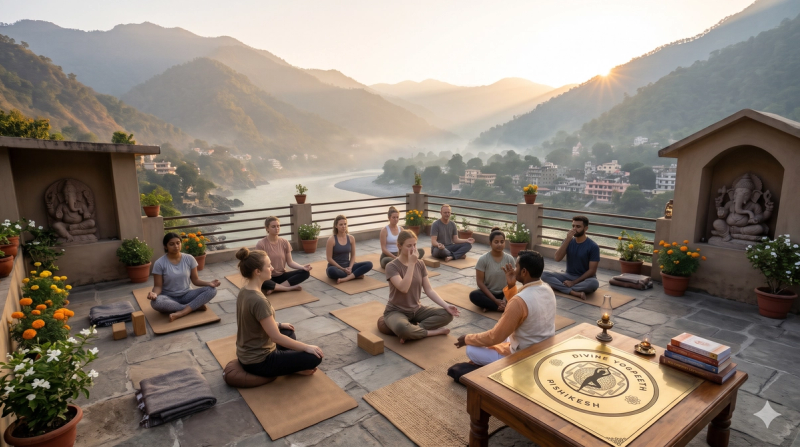
7. Explore Yoga Training at Divine Yogpeeth in Rishikesh
If you are considering studying yoga in Rishikesh, Divine Yogpeeth offers a 100-hour Yoga Teacher Training programme in the Laxman Jhula and Tapovan area.
Located close to the Ganga River and surrounded by the Himalayan landscape, the school provides an environment for students who want to explore yoga through structured learning and regular practice.
We encourage you to examine the course details, understand the subjects covered, and consider whether the programme matches your current experience and learning goals.
You can explore our 100-Hour Yoga Teacher Training in Rishikesh to review the programme information before making your decision.
If you are planning a shorter stay, you can also explore our five-day yoga retreat in Rishikesh as an alternative way to spend focused time practising yoga.
The right programme is the one that matches your goals, provides appropriate guidance, and gives you a realistic understanding of what you will learn.
8. How to Prepare for Your First 100-Hour Yoga Teacher Training
Preparing before arriving in Rishikesh can make your training more comfortable and productive.
You do not need to become an advanced yoga practitioner before joining. However, developing a few basic habits can help you adjust to the schedule.
Build a Consistent Practice
If you are relatively new to yoga, begin with 20–30 minutes of gentle practice each day.
Include basic standing postures, comfortable seated positions, gentle stretches, and simple breathing awareness.
Avoid suddenly increasing your practice intensity just before travelling.
Your goal is to arrive with a familiar understanding of movement and breathing, not to exhaust yourself before training begins.
Understand the Lifestyle
Yoga teacher training often involves a more disciplined daily routine than a typical holiday.
You may need to wake up early, attend several classes, eat at scheduled times, and maintain regular personal practice.
A few preparations can help:
- Adjust your sleeping schedule gradually.
- Carry comfortable clothing suitable for movement.
- Bring a reusable water bottle.
- Avoid overpacking unnecessary items.
- Inform the school about relevant injuries or physical limitations.
- Keep some time available for rest and personal reflection.
Prepare Yourself Mentally
One of the biggest adjustments for students is accepting that learning yoga involves patience.
You might struggle with a posture that looks simple when demonstrated by an experienced instructor.
You might also find philosophical discussions unfamiliar or discover that sitting quietly during meditation is more challenging than expected.
These experiences are normal.
Instead of comparing your progress with other students, concentrate on understanding each subject at your own pace.
A successful training experience is not measured by how many advanced postures you can perform by the final day.
It is measured by how much more clearly you understand your practice, your body, and the principles behind yoga.
9. FAQs About the 100 Hour YTT Syllabus
What Subjects Are Included in a 100-Hour Yoga Teacher Training Syllabus?
A typical programme introduces Hatha Yoga, Vinyasa, asana alignment, pranayama, meditation, yoga philosophy, anatomy, physiology, traditional yogic practices, and introductory teaching methodology. The exact subjects and teaching hours vary between schools, so review the actual curriculum before enrolling.
Can Beginners Join a 100-Hour Yoga Teacher Training Course?
Yes, many 100-hour programmes accept beginners, although individual schools may have different entry requirements. You generally do not need advanced flexibility or experience with complicated postures. A willingness to practise consistently and follow instructions is more important.
Is a 100-Hour YTT Certificate Enough to Become a Certified Yoga Teacher?
A 100-hour certificate should not automatically be treated as an independent 200-hour teaching qualification. Its recognition depends on the school, programme structure, and relevant certification requirements. If your goal is professional teaching, check the applicable credential pathway before enrolling.
How Is a 100-Hour YTT Different from a 200-Hour YTT?
A 100-hour programme provides a shorter introduction to yoga education, while a 200-hour programme generally offers more extensive study and practical development. The longer programme typically allows greater time for anatomy, philosophy, asana, teaching methodology, and supervised teaching practice.
You can compare the 200-Hour Yoga Teacher Training programme to understand the broader training option.
Why Should You Choose Rishikesh for Yoga Teacher Training?
Rishikesh offers a distinctive environment for studying yoga, with established yoga schools, traditional spiritual practices, and access to the Himalayan landscape and Ganga River. However, the school you select matters more than the destination alone. Always assess its teachers, curriculum, safety practices, and course details.
10. Conclusion: Understand Your Curriculum Before Beginning Your Yoga Training
The 100-hour programme can be a meaningful starting point if you want to develop a stronger foundation in yoga without immediately committing to a longer course.
Understanding the subjects beforehand helps you set realistic expectations and choose a programme that matches your goals.
From Hatha Yoga and Vinyasa to pranayama, meditation, philosophy, anatomy, and teaching methodology, every subject contributes something different to your education.
The real value comes from understanding how these subjects work together rather than treating them as separate classroom topics.
If Rishikesh is your preferred destination, take time to explore the teaching approach, course schedule, instructors, and certification details before making your decision.
Ready to deepen your yoga practice? Explore our 100-Hour Yoga Teacher Training in Rishikesh at Divine Yogpeeth and take your next step towards a more informed and disciplined yoga practice.