.jpg)

Read an honest review 100 hour YTT Rishikesh seekers can use to compare training, workload, teaching practice, feedback, and fit. Discover what to expect now.
honest review 100 hour YTT Rishikesh: What Past Students Say
What does a 100-hour yoga teacher training in Rishikesh actually feel like once you move beyond the brochure? This honest review 100 hour YTT Rishikesh guide looks at the practical side: what you may learn, how demanding the schedule can be, what the setting adds, what may not suit you, and what to check before paying a deposit.
A useful review should do more than praise a school. You need enough detail to judge whether a shorter teacher-training format fits your experience, goals, and available time.
In this guide, you will explore the main strengths and limitations to consider, the kind of daily rhythm you can expect, how Rishikesh changes the experience, and what questions to ask before choosing a course. You will also see where a 100-hour program sits compared with a workshop or a longer 200-hour path, so you can decide based on fit rather than hype.
Honest review 100 hour YTT Rishikesh: What should you judge first?
When you read reviews of a yoga teacher training, look past star ratings and emotional phrases. The useful questions are practical: Did the course match its published curriculum? Was the teaching level appropriate? Did the schedule leave enough time to absorb the material? Were anatomy, sequencing, teaching methodology, philosophy, and practice teaching treated seriously?
A 100-hour course can be attractive because it gives you a structured period of immersion without the larger time commitment of a 200-hour program. That can work well when you already have some yoga experience or when you want focused teacher-training education before deciding whether a longer certification path is right for you.
At the same time, shorter does not automatically mean easy. A concentrated schedule can feel intense because several areas of study are packed into a limited number of days. You may spend one session working on alignment and anatomy, another exploring philosophy or pranayama, and another practicing how to communicate instructions clearly.
If certification matters to you, check exactly what the school means by its certification and how the hours are structured. You can also review the broader standards and terminology used by Yoga Alliance before comparing schools.
The most useful student feedback contains specific observations about teachers, workload, accommodation, food, location, and teaching practice rather than a single emotional rating.
What an honest 100-hour YTT review should tell you about the learning experience
The strongest part of any teacher-training review is the learning itself. You are not only attending yoga classes; you are learning how to understand and communicate a practice.
A well-structured 100-hour program may cover areas such as asana practice, teaching methodology, sequencing, anatomy, yoga philosophy, pranayama, meditation, and practical teaching. The exact curriculum varies by school, so you should compare the published syllabus rather than assuming every 100-hour course offers the same depth.
From practicing yoga to explaining yoga
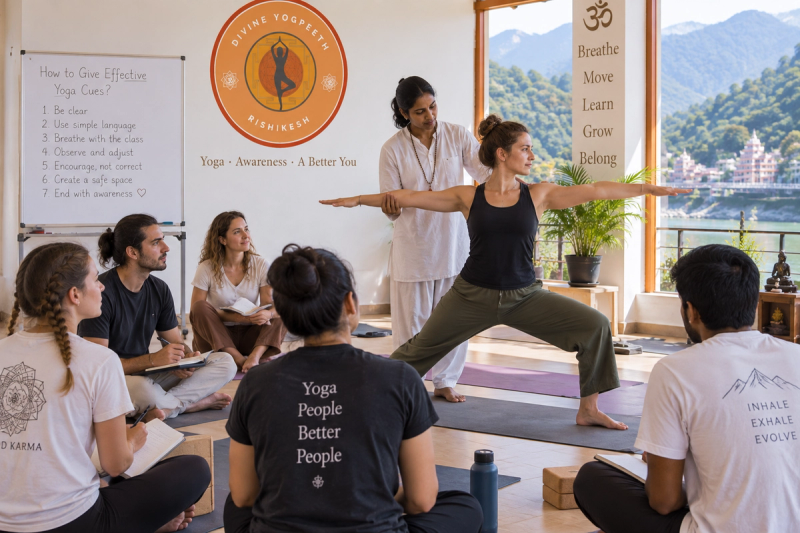
One of the biggest adjustments is moving from “I can do this posture” to “I can explain this posture safely and clearly.” That means observing alignment, choosing useful cues, demonstrating when appropriate, and adapting language for different students.
You may also discover that teaching requires patience. A sequence that feels obvious to you can be confusing to a first-time student. Good training helps you think about pacing, transitions, and how much information a student can process.
This is where hands-on teaching practice matters. If a course gives you opportunities to teach short sequences and receive feedback, you can identify weak points before teaching a full class outside the training environment.
You may also find that philosophy becomes more practical than expected. Ideas from yoga philosophy can influence how you approach discipline, attention, self-study, and the relationship between practice and everyday life. For a deeper look at one of these foundations, you can explore this guide to yoga philosophy and its importance in modern practice.
For anatomy, avoid courses that treat the subject as a list of body parts to memorize. You need enough functional understanding to recognize common alignment issues, communicate responsibly, and know when a posture should be modified rather than forced.
100-hour YTT in Rishikesh: What past students may appreciate—and what can be challenging
A realistic review has to include both sides. Your experience will depend on your background, expectations, physical stamina, learning style, and the specific school's teaching approach.
One potential advantage is immersion. Spending multiple days studying and practicing with the same group can help you establish a rhythm. You are not trying to learn everything during a two-hour weekend workshop and then returning immediately to your normal routine.
The group environment can also be valuable. You may practice teaching with classmates, observe different bodies and movement patterns, and learn from questions that you would not have considered yourself. However, group dynamics are not always effortless. Some students are highly experienced, some are beginners, and people may have very different communication styles.
Another common challenge is the pace. A concentrated program can leave you mentally tired even when you enjoy the subject. Early practices, classroom sessions, self-study, meals, and teaching assignments can make the day feel full. If you expect a holiday with occasional yoga, a teacher training may feel much harder than expected.
Physical discomfort can also happen, especially when your practice suddenly becomes more frequent. The sensible approach is not to compete with classmates. Ask for modifications when needed, respect recovery time, and prioritize safe movement over impressive shapes.
You should also look closely at what students say about faculty. Helpful reviews often mention whether teachers answer questions, explain difficult concepts patiently, and give useful feedback during practice teaching. The Divine Yogpeeth 100-hour YTT testimonials can give you another perspective to consider alongside the course information.
No review can guarantee that you will have the same experience as another student. That is precisely why you should compare several independent signals before booking.
What the daily routine can really feel like during 100-hour YTT
A teacher-training schedule is usually more structured than a retreat. You may have practice sessions, theory classes, meals, assignments, teaching practice, and personal study all competing for attention.
The exact timetable depends on the school and season, so treat any example schedule as a planning model rather than a promise. A typical day might begin with an early yoga practice, followed by breakfast and classroom study. Later sessions may focus on anatomy, philosophy, sequencing, teaching methodology, meditation, or another part of the curriculum.
Afternoons can be especially useful for practice teaching and review. You may need to prepare a sequence, rehearse instructions, or reflect on feedback. Evenings can provide space for meditation, revision, or rest depending on the school's schedule.
The biggest practical lesson is that you should arrive ready to manage your energy. Sleep matters. Hydration matters. Food matters. So does knowing when to step back from a posture instead of pushing through fatigue.
If you are new to the format, it can help to compare a teacher-training program with a shorter workshop before booking. This 100-hour YTT versus a weekend workshop guide explains why the two formats should not be treated as interchangeable.
You should also check what is included in the course fee. Ask about accommodation, meals, course materials, certification, transfers, and any additional charges. A lower headline price is not necessarily lower overall cost if essential items are excluded.
Why Rishikesh matters for a 100-hour yoga teacher training
Rishikesh changes the context in which you study. You are not learning yoga in an ordinary classroom detached from the wider practice culture. The city has long attracted practitioners, teachers, retreat participants, and students from India and abroad.
For you, that can make the experience feel more immersive. A morning practice can be followed by time near the Ganga, a walk through Tapovan, or quiet study away from the classroom. The environment can encourage you to spend more time thinking about why you practice, not only how you perform a posture.
Location also has practical consequences. Tapovan and the Laxman Jhula area have cafes, shops, accommodation, and places where international visitors commonly spend time. At the same time, Rishikesh is a working city, not a controlled retreat bubble. Traffic, crowds, heat, monsoon conditions, noise, and changing routines can all be part of your experience.
You should also think about cultural expectations. A respectful approach to local customs, temple spaces, food choices, clothing, and community life will make your stay easier. Do not expect every part of Rishikesh to operate according to tourist schedules.
The setting is one reason people choose to train here, but it should not replace a serious curriculum. A beautiful location cannot compensate for weak teaching or unclear course hours.
For international students, practical preparation matters too. You can review this guide to yoga retreats in Rishikesh for foreigners for broader considerations around planning a stay in the city.
What makes a 100-hour YTT a good fit for you?
A 100-hour program can make sense when you want a focused training experience and have a clear reason for choosing the shorter format.
You may be a good fit if you:
- already maintain a regular yoga practice and want structured education;
- want to explore teaching before committing to a longer training;
- have limited time but can handle an intensive schedule;
- want deeper study than a casual yoga workshop provides;
- are interested in anatomy, sequencing, philosophy, and teaching methodology.
It may be less suitable if you are expecting a relaxed retreat, have no interest in teaching or structured study, or need a qualification whose requirements specifically call for a longer training pathway.
This distinction matters. A 100-hour course should not be presented as a universal replacement for every 200-hour program. If your long-term goal is a more extensive foundational teacher-training route, compare the curriculum, required hours, teaching practice, and certification details of a 200-hour yoga teacher training in Rishikesh.
You should also ask yourself what you want to be able to do after the course. If the answer is simply “practice better,” a training may still be valuable, but a retreat or specialized workshop might be a better fit. If you want to teach, your priorities should include supervised practice, feedback, anatomy, sequencing, ethics, and communication.
Before enrolling, ask these questions:
- What are the exact contact and practice hours?
- What subjects are covered in the curriculum?
- How much teaching practice will you complete?
- Who teaches each major subject?
- What is included in the fee?
- What certification or completion document will you receive?
- What happens if you need a modification or miss a session?
- What level of previous yoga experience is recommended?
Clear answers are a better buying signal than exaggerated promises.

A closer look at choosing Divine Yogpeeth for your 100-hour YTT
If you are comparing Rishikesh schools, you can review the published course details for Divine Yogpeeth's 100-hour Yoga Teacher Training and compare its curriculum, schedule, and practical details against your own priorities.
Our approach is to give you enough information to decide whether the course fits you rather than suggesting that one program can suit everyone. You can also review the Divine Yogpeeth home page to understand the broader training and wellness options available in Rishikesh.
If you are still deciding between training and a shorter wellness stay, you can also compare the structure of a 5-day yoga retreat in Rishikesh with a teacher-training schedule. A retreat is designed around rest, practice, and experience; teacher training adds academic study, teaching skills, and structured evaluation.
That distinction is important when reading reviews. A student who wanted relaxation may describe a demanding training negatively, while a student who wanted intensive study may see the same workload as useful. Neither reaction automatically tells you what your own experience will be.
The most useful review is therefore not “this school is perfect.” It is “here is what the experience asks of you, here is what you can gain, and here is what you should verify before enrolling.”
FAQs about an honest review of 100-hour YTT in Rishikesh
Is a 100-hour YTT enough to become a yoga teacher?
That depends on the certification pathway and your intended teaching context. A 100-hour course can provide substantial training, but you should not assume that every 100-hour certificate has the same recognition or role as a 200-hour foundational program. Verify the school's stated certification and the requirements relevant to where you intend to teach.
Is 100-hour YTT suitable for beginners?
It depends on the school's entry requirements and curriculum. If you are relatively new to yoga, check whether the program expects prior practice and whether the pace is designed for beginners. You should be comfortable asking questions and modifying physical practices when needed.
How difficult is a 100-hour yoga teacher training in Rishikesh?
The difficulty is usually a combination of physical practice, classroom learning, schedule intensity, and teaching assignments. It can be demanding even if you are physically fit because learning to teach requires concentration and repeated practice.
How should you judge student reviews?
Look for repeated, specific comments about teachers, curriculum, teaching practice, accommodation, food, schedule, location, and support. Be cautious with reviews that contain only broad praise or criticism without concrete details. You should also compare reviews with the school's published course information.
Is Rishikesh better than training somewhere else?
There is no universal answer. Rishikesh offers a distinctive yoga environment and access to a large international practitioner community, but the quality of your training still depends on the school, faculty, curriculum, schedule, and your own goals. Compare the actual program rather than choosing based only on location.
Conclusion: Is a 100-hour YTT in Rishikesh right for you?
An honest review 100 hour YTT Rishikesh should leave you with more than excitement. It should help you understand the workload, learning expectations, teaching practice, location, and limitations before you commit your time and money.
If you want focused yoga education without immediately committing to a longer program, a 100-hour course can be a practical option to investigate. But check the curriculum carefully, ask direct questions, read detailed student feedback, and confirm what certification you will receive.
If you are ready to explore the training itself, our 100-hour Yoga Teacher Training in Rishikesh gives you a direct place to review the course details and decide whether the program matches your goals.
Your best decision will not come from the loudest review. It will come from matching the course structure to what you actually want to learn.