

Shruti box vs harmonium: discover their differences, sounds, yoga applications and healing potential. Find the right instrument for your practice. Learn more.
Shruti Box vs Harmonium: Instruments of Sound Healing and Yoga Explained
Introduction
Shruti box vs harmonium is an interesting comparison when you explore how sound influences meditation, yoga, chanting and relaxation. Both instruments belong to India's rich musical tradition, yet they create very different experiences.
Imagine sitting comfortably before a meditation session. A steady, gentle musical vibration fills the room, helping you settle into your breathing. There is no complicated melody, no performance to follow, and no pressure to sing perfectly. Just sound, breath and awareness.
Now imagine another setting where a teacher plays musical notes to guide a group through devotional chanting. The atmosphere feels expressive, interactive and uplifting.
These experiences demonstrate why choosing the right instrument matters.
The shruti box provides a continuous tonal foundation, while the harmonium offers greater melodic flexibility. Both can support yoga and spiritual practices, but their strengths are not interchangeable.
In this guide, you will discover how these instruments work, their differences, their applications in sound healing, and how you can choose between them for meditation, chanting or professional practice.
1. Shruti Box vs Harmonium: Understanding Their Origins and Purpose
Before comparing their sound, it helps to understand why these instruments exist and what makes them different.
Although both use bellows and reeds to produce sound, their musical purposes are distinct.
What Is a Shruti Box?
A shruti box is a traditional Indian drone instrument designed to produce continuous musical notes.
The word shruti relates to musical pitch and the subtle distinctions heard in Indian classical music.
Unlike instruments designed primarily for melodies, a shruti box creates a sustained tonal background. You select the desired notes using stops or knobs and operate the bellows to maintain a consistent flow of sound.
Its purpose is relatively simple: establish a stable tonal reference.
During meditation, chanting or vocal exercises, this steady sound can become an anchor for your attention.
You do not need advanced musical knowledge to begin using one. Once you understand how to select suitable notes and maintain airflow, you can create a continuous sound environment.
What Is a Harmonium?
The harmonium is a free-reed keyboard instrument widely used in Indian devotional music, classical music and group singing.
It produces sound through air passing across metal reeds. You operate the bellows while pressing keys to create individual notes, chords and melodies.
Unlike a shruti box, the harmonium allows you to change musical notes easily.
It is particularly useful for:
- Bhajans and devotional singing.
- Mantra chanting accompanied by melodies.
- Kirtan and group singing.
- Vocal training and musical education.
- Accompanying yoga classes with devotional music.
The harmonium is more expressive, but it also requires greater musical coordination.
If you want to understand how traditional Indian musical instruments contribute to meditation and wellness, explore this complete guide to sound healing instruments.
For a deeper understanding of the broader musical tradition, you can also visit Encyclopaedia Britannica.

2. Shruti Box vs Harmonium: Key Differences You Should Know
The biggest difference between these instruments is not simply their appearance or construction. It is the way they interact with your attention.
A shruti box creates a consistent tonal environment. A harmonium gives you the ability to guide that environment through musical expression.
Understanding this distinction makes choosing between them much easier.
FeatureShruti BoxHarmoniumMain purposeContinuous droneMelody and accompanimentSoundSustained tonal soundIndividual musical notesKeyboardUsually absentPresentLearning difficultyRelatively easyRequires practiceMusical flexibilityLimitedHighMeditationSuitable for drone-based practiceSuitable for guided musical practiceMantra chantingProvides a stable tonal backgroundSupports melodic chantingSound sessionsUseful for sustained tonal texturesUseful for musical accompanimentPortabilityGenerally compactDepends on constructionBest suited forMeditation and vocal referenceBhajans, kirtan and music
Understanding the Musical Experience
Consider a simple example.
You want to chant a mantra for fifteen minutes.
With a shruti box, you can maintain a continuous background note throughout the session. Your attention can remain on pronunciation, breath and rhythm rather than changing musical notes.
With a harmonium, you can create a melody that guides the chanting. This can make the experience more expressive, particularly when participants enjoy singing together.
Neither approach is automatically better.
Your choice depends on whether you want a stable sound environment or an instrument that actively accompanies your voice.
Which Instrument Is Easier to Learn?
The shruti box generally has a shorter learning curve because you are primarily managing airflow and selecting notes.
The harmonium requires coordination between your hands, bellows and musical understanding.
You must learn where notes are located, how to maintain consistent airflow and how to coordinate melody with singing.
However, a beginner can start with simple harmonium exercises without becoming an advanced musician.
For yoga practitioners, the important question is not which instrument is easier. It is which one supports the purpose of your practice.
3. How These Instruments Support Yoga, Meditation and Sound Healing
Sound has an important place in several contemplative traditions.
Mantra repetition, devotional singing, breath awareness and listening practices all involve attention to sound.
The shruti box and harmonium can support these activities in different ways.
The Role of the Shruti Box in Meditation
A shruti box can create a continuous musical reference during meditation.
Instead of introducing changing melodies, it maintains a relatively stable tonal background.
This can be useful when you practise:
- Mantra repetition.
- Breath-focused meditation.
- Nada-oriented listening practices.
- Gentle vocal toning.
- Guided relaxation.
- Meditation involving sustained sound.
For example, you can sit comfortably, begin with a few natural breaths and gradually bring your attention to the drone.
Notice its pitch, continuity and subtle variations.
When your mind wanders, return your attention to the sound without forcing concentration.
This is a practical listening exercise rather than a guaranteed therapeutic intervention.
The Role of the Harmonium in Yoga
The harmonium has a different role.
It can accompany chanting, devotional practices and group sessions where melody helps participants stay together.
Imagine a yoga group practising a mantra.
A teacher plays a simple melody, establishes the rhythm and allows everyone to participate.
The instrument becomes a musical guide.
You may find it particularly helpful when teaching beginners who feel uncomfortable chanting without musical support.
It can also contribute to a devotional atmosphere during bhajans and kirtan.
Does Sound Healing Actually Work?
This is where it is important to separate personal experience from scientific evidence.
Listening to music and participating in structured musical activities can influence mood, attention and subjective relaxation.
However, that does not establish that a particular instrument can cure illness, remove emotional trauma or balance chakras through a scientifically proven mechanism.
The therapeutic value of a sound-based session depends on several factors, including the individual, environment, volume, duration and nature of the practice.
If you are interested in the relationship between different sound frequencies and relaxation, explore frequency healing and sound therapy explained.
For broader information about traditional wellness systems in India, you can visit the Ministry of AYUSH.
Using Both Instruments Together
You do not necessarily need to choose only one instrument.
A shruti box can maintain a continuous drone while a harmonium introduces a simple melody.
This combination can work during guided chanting, vocal exercises and certain group practices.
The key is to avoid making the sound environment unnecessarily complicated.
When your objective is meditation, simplicity often works better than an elaborate musical arrangement.
4. Which Instrument Should You Choose for Your Practice?
The right instrument depends on your intention, musical experience and the kind of sessions you want to conduct.
Buying an instrument simply because it looks spiritual is not a particularly useful approach.
Think about how you will actually use it.
Choose a Shruti Box If You Want:
- A simple instrument for meditation.
- Continuous drone-based sound.
- A musical foundation for mantra chanting.
- An accessible introduction to Indian tonal traditions.
- A portable option for individual or small-group sessions.
- A tool for exploring sustained listening and vocal awareness.
It is especially practical if you do not want to spend months learning melodies before incorporating sound into your yoga practice.
Choose a Harmonium If You Want:
- To accompany bhajans and kirtan.
- To lead group mantra chanting.
- To explore Indian devotional music.
- To learn musical notes and basic compositions.
- To support vocal training.
- To create melodic arrangements during yoga sessions.
If you enjoy singing and want to participate actively in musical practices, the harmonium offers more possibilities.
Can Beginners Use These Instruments?
Absolutely, although your expectations should be realistic.
You can begin using a shruti box after understanding its basic controls and selecting an appropriate tonal setting.
With a harmonium, start with simple notes and short musical phrases.
Avoid purchasing an expensive instrument immediately.
Instead, consider:
- Trying the instrument before purchasing it.
- Checking the quality and consistency of its sound.
- Inspecting the bellows for air leakage.
- Testing the reeds and tuning.
- Choosing a size that suits your practice environment.
- Considering maintenance and portability.
One important detail: the quality of the instrument matters more than its appearance.
A poorly tuned instrument can make sustained listening uncomfortable, particularly during longer sessions.
5. Why Rishikesh Is an Interesting Place to Explore Sound and Yoga
Rishikesh offers an environment where yoga, meditation, devotional music and spiritual learning are part of everyday cultural life.
Located in Uttarakhand, along the Ganga and surrounded by Himalayan foothills, the city attracts practitioners from India and across the world.
You will find different approaches to yoga here.
Some practitioners focus on asana and pranayama. Others explore meditation, mantra chanting, yoga philosophy and traditional approaches to sound.
The presence of these different practices creates opportunities to understand how sound can complement a broader yoga routine.
Learning Through Direct Experience
Reading about a shruti box or harmonium can explain the technical differences.
However, listening to both instruments in a real practice environment helps you understand their practical applications.
You can notice:
- How a continuous drone influences your listening experience.
- How melodic accompaniment changes group chanting.
- How volume affects concentration.
- How different pitches feel during vocal exercises.
- How silence between musical sessions influences awareness.
These observations are more useful than assuming that every sound produces the same response in every person.
Sound and Traditional Yoga Practices
Sound-related practices can be explored alongside pranayama, meditation and yoga philosophy.
For example, mantra chanting involves attention to pronunciation, breath and repetition.
Nada-oriented listening practices encourage you to observe sound as an object of awareness.
You can also explore the benefits and effects of chanting Om to understand how vocal repetition fits into a wider yoga routine.
The most valuable approach is to remain curious without treating every traditional explanation as a proven scientific fact.
Making Your Practice More Meaningful
If you are visiting Rishikesh, consider experiencing different styles of yoga rather than restricting yourself to physical postures.
A balanced routine may include:
- Gentle asana practice.
- Breath awareness.
- Meditation.
- Mantra chanting.
- Periods of silence.
- Reflective journaling.
The instruments become supportive tools rather than the entire focus of your practice.
6. Explore Sound Healing and Yoga Training at Divine Yogpeeth
Understanding sound instruments is one part of a much broader subject.
If you want to explore sound healing professionally or incorporate sound into your yoga practice, structured learning can help you develop a clearer understanding of the techniques, their appropriate applications and their limitations.
At Divine Yogpeeth, located in Laxman Jhula, Tapovan, Rishikesh, we offer yoga and sound-related learning opportunities in an environment connected with traditional yoga practices.
Our Sound Healing Training Course is a relevant starting point if you want to explore sound-based practices beyond personal listening.
You can also consider different learning formats depending on your experience and available time.
- Our 100-Hour Yoga Teacher Training Course offers an opportunity to develop your foundational yoga knowledge.
- Our 5-Day Yoga Retreat in Rishikesh provides a shorter format for experiencing yoga, meditation and personal practice.
If your interest is specifically therapeutic, you can also explore our yoga and wellness therapy offerings.
The important thing is to choose a programme based on your actual learning objectives rather than assuming that a short workshop automatically qualifies you as a professional sound therapist.
7. How to Incorporate a Shruti Box or Harmonium Into Your Daily Routine
You do not need an elaborate sound healing room or expensive musical equipment to begin.
A simple, consistent routine can help you understand how these instruments fit into your daily practice.
A 15-Minute Shruti Box Meditation Routine
Minutes 1–3: Settle your body
Sit comfortably with your spine naturally upright.
Relax your shoulders and observe your breathing without trying to change it.
Minutes 4–6: Introduce the drone
Start your shruti box at a comfortable volume.
Choose a suitable pitch and listen to the continuous sound.
Minutes 7–11: Practise attentive listening
Observe the sound without attempting to analyse it.
When your attention moves elsewhere, gently return to listening.
Minutes 12–15: Finish with silence
Gradually stop the instrument.
Remain seated for a few moments and notice the difference between listening to the drone and listening to silence.
A 15-Minute Harmonium Chanting Routine
If you prefer the harmonium, try this approach.
- Spend three minutes practising a few basic notes.
- Spend four minutes playing a simple musical sequence.
- Spend five minutes accompanying a familiar mantra or devotional song.
- Finish with three minutes of quiet sitting.
Keep the melody simple.
Your objective is to support the practice, not to turn meditation into a musical performance.
A Practical Tip for Sound Practitioners
Pay attention to volume.
Louder sound is not automatically more effective sound.
A comfortable listening level, suitable room acoustics and sufficient breaks can make sessions more accessible.
If someone experiences discomfort, headaches or sound sensitivity, reduce the volume or stop the session.
People with significant sound sensitivity or relevant medical concerns should consider professional advice before participating in intensive sound-based sessions.
8. Frequently Asked Questions About Shruti Boxes and Harmoniums
1. Is a shruti box better than a harmonium for meditation?
A shruti box is often more convenient for drone-based meditation because it produces continuous sound without requiring you to play melodies.
A harmonium can also accompany meditation, particularly when the practice involves chanting or devotional music.
The better choice depends on the style of meditation you prefer.
2. Can you use a harmonium for sound healing?
Yes, a harmonium can be incorporated into sound-based wellness sessions, especially those involving chanting, singing and musical expression.
However, it should not be presented as a medical treatment or a guaranteed method of healing physical or psychological conditions.
3. Do you need musical knowledge to play a shruti box?
No advanced musical knowledge is necessary.
You mainly need to understand the basic controls, select suitable notes and maintain consistent airflow.
A little practice can help you use it comfortably during meditation and chanting.
4. Can you use a shruti box and singing bowls together?
Yes. A shruti box can provide a continuous tonal background while singing bowls introduce additional sound textures.
However, you should consider volume, timing and the listening comfort of participants.
For another useful comparison, explore binaural beats versus singing bowls for sound healing.
5. Which instrument should you learn first as a yoga teacher?
If your primary interest is meditation, mantra practice or sustained tonal listening, starting with a shruti box can be practical.
If you want to lead bhajans, kirtan and melodic group chanting, the harmonium may be more useful.
You can eventually learn both, depending on your teaching interests and musical goals.
9. Conclusion: Choose the Sound That Supports Your Practice
Shruti box vs harmonium is not a competition in which one instrument must win.
Both have distinct purposes.
The shruti box offers a continuous drone that can support meditation, chanting and attentive listening.
The harmonium provides melodic flexibility that makes it valuable for devotional singing, group chanting and musical accompaniment.
Your choice should reflect what you want to experience and learn.
If you are exploring these instruments as part of a deeper interest in yoga, meditation and sound-based practices, Rishikesh offers an opportunity to experience their traditional context.
At Divine Yogpeeth, we welcome practitioners who want to develop their understanding of yoga and sound through structured learning.
Ready to explore sound healing beyond personal practice?
Discover our Sound Healing Training Course at Divine Yogpeeth and take the next step towards understanding sound, meditation and traditional wellness practices in Rishikesh.
Your learning begins with listening.
IMAGE SUGGESTIONS
1. Featured Image — Shruti Box vs Harmonium
Description: A traditional shruti box and harmonium placed side by side, with a warm Indian musical setting.
ALT Text: Shruti box vs harmonium instruments for sound healing in Rishikesh
File Name:shruti-box-vs-harmonium-rishikesh.jpg
2. In-Content Image 1 — Shruti Box Meditation
Description: A shruti box beside a meditation cushion in a peaceful yoga practice space.
ALT Text: Shruti box for meditation and yoga practice in Rishikesh
File Name:shruti-box-meditation-yoga.jpg
3. In-Content Image 2 — Sound Healing Training
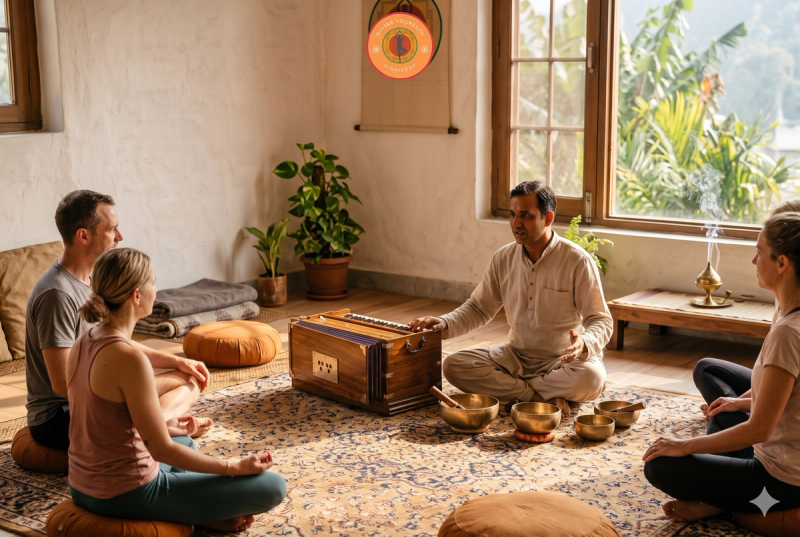
Description: A teacher demonstrating sound-based instruments during a small-group yoga and sound healing session.
ALT Text: Sound healing training with traditional instruments in Rishikesh
File Name:sound-healing-training-rishikesh.jpg
SELF-CHECK
- Word Count: Approximately 2,350 words (blog content only; manual final count recommended).
- Main Page Links: 4
- Blog Links: 4
- External Links: Exactly 2, both with
rel="nofollow". - URL Verification: All internal URLs match the approved URL list.
Main Page URLs Used
- https://www.divineyogpeeth.com/YTT/sound-healing-training-course
- https://www.divineyogpeeth.com/YTT/100-hour-yoga-teacher-training
- https://www.divineyogpeeth.com/retreat/5-days-retreat
- https://www.divineyogpeeth.com/therapy
Blog URLs Used
- https://www.divineyogpeeth.com/blog/sound-healing-instruments-complete-guide
- https://www.divineyogpeeth.com/blog/frequency-healing-hz-sound-therapy
- https://www.divineyogpeeth.com/blog/chanting-om-benefits-effects-science
- https://www.divineyogpeeth.com/blog/binaural-beats-vs-singing-bowls-healing
External URLs Used
URL Verification: All internal URLs match the supplied approved list. No unapproved internal URLs introduced.
Final Editorial Note: The article is structured for informational and commercial-investigation intent, with contextual internal linking and a relevant sound-healing course CTA. The word count is an estimate, not a verified exact count, so check it in WordPress before publishing.