.jpg)

Teaching online yoga classes after certification? Learn how to build safe online sessions, find students, price classes, and start with confidence. Discover
Teaching Online Yoga Classes After Certification: A Practical Starter Guide
Teaching online yoga classes after certification can look deceptively simple: open a video call, teach a sequence, and get paid. In practice, the hardest part is translating a room-based teaching skill into a screen-based experience where you cannot physically adjust posture, control the room, or always see what each student is doing.
If you have finished a yoga teacher training course (TTC), the next step is not merely finding students; it is building a safe, clear, repeatable online class.
A strong online teacher knows how to adapt sequencing, cueing, pacing, technology, communication, and business basics without losing the heart of yoga. You also need to understand what your certification does—and does not—qualify you to teach.
This guide walks you through the practical setup from your first niche and class format to equipment, safety, pricing, student retention, and your first launch. It also explains why your training foundation matters and how studying in Rishikesh can strengthen the skills you bring to an online audience.
Teaching Online Yoga Classes After Certification: What Changes?
The first mistake is assuming that an online class is simply an in-person class moved onto Zoom or another video platform. The format changes your teaching environment.
In a studio, students can often watch you from different angles, hear your voice naturally, and receive visual or physical feedback. Online, your camera becomes the student's main reference point. A pose that feels obvious in the room may be difficult to follow through a small screen.
Your teaching therefore needs more deliberate communication. Give concise cues, name the body part you are directing, and allow enough time for students to respond. Instead of rapidly stacking instructions, use a rhythm such as action, breath, pause, and check-in.
Your certification provides a foundation, but your online teaching competence grows through practice. Review your scope of training, local requirements, insurance expectations, and any platform or professional standards that apply where you teach and where your students are located. Yoga Alliance can be a useful starting point for understanding professional yoga teaching pathways: Yoga Alliance.
You should also decide what you will not teach. If a student has a medical concern, injury, pregnancy-related need, or condition outside your training, do not improvise a specialist prescription. Adapt within your competence and recommend appropriate professional care when necessary.
How to Build an Online Yoga Class That Students Can Follow
A good virtual class feels structured without becoming rigid. Your students should know what is happening, why it is happening, and what they can choose if a movement does not suit them.
Start by defining one clear outcome for each class. For example, a 45-minute beginner session might focus on basic standing alignment and breath awareness. A mobility-oriented class might emphasize controlled movement rather than a long list of advanced postures.
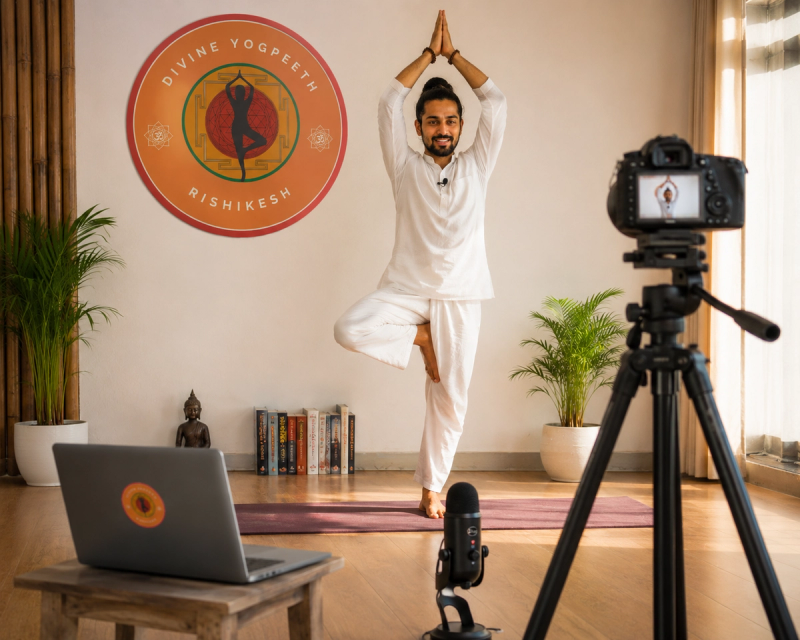
Use a simple class architecture
A dependable structure could look like this:
- Arrival and centering: 3–5 minutes
- Warm-up and joint preparation: 7–10 minutes
- Main sequence: 20–25 minutes
- Peak or focused practice: 5–8 minutes
- Cool-down and relaxation: 5–10 minutes
You do not have to use these timings every time. The point is predictability. When students recognize your rhythm, they spend less mental energy figuring out what comes next.
Before launching, rehearse your sequence while watching yourself on camera. Notice whether your demonstrations hide your face, whether your hands leave the frame, and whether a student could understand the instruction without copying every movement.
This is also where your sequencing skills matter. If you need help developing post-training sequencing confidence, study practical guidance on how to create a yoga sequence after teacher training.
Equipment, Camera Setup, and Online Teaching Safety
You do not need a studio full of expensive equipment to begin. You need a setup that lets students see and hear you reliably.
Prioritize these basics:
- A stable camera at roughly waist-to-chest height for seated work, with enough distance to show your full body for standing postures.
- A microphone or headset that keeps your voice clear when you move away from the device.
- Even, non-distracting lighting so students can see alignment cues.
- A stable internet connection and a backup plan for interruptions.
- A clear practice area free of furniture or objects that could create avoidable hazards.
Do a technical test before every paid class. Check framing, sound, battery, connection, and the position of your mat. If possible, record a short private rehearsal and watch it later.
Safety also includes what happens when technology fails. Tell students what to do if the audio cuts out. Establish a simple policy for missed sessions, late arrivals, and class recordings. If you record, explain how the recording will be used and how long it will remain available.
Your physical cueing needs extra care online because you cannot reliably assess a student's body from one camera angle. Encourage students to work within a comfortable range and to stop when something causes sharp pain, dizziness, or unusual symptoms.
For alignment fundamentals, you can reinforce your teaching knowledge with resources on yoga anatomy, muscles, joints, and safe alignment. For broader health information, the Indian Ministry of AYUSH is another established reference point: Ministry of AYUSH.
How to Price, Schedule, and Package Your Online Yoga Classes
Once your class is technically ready, you need a simple business model. This is where many newly certified teachers overcomplicate things.
Do not begin by creating ten different packages. Start with one clear offer and one easy way to book or pay.
Your pricing should reflect the format, class length, level of personalization, your experience, and the market you are serving. A private one-to-one session generally requires a different price structure from a group class because you are providing significantly more individualized attention.
You also need to think about time zones. If you want international students, decide whether you will teach at fixed times that work for a particular region or offer a limited number of time slots. Trying to accommodate every country can quickly create an exhausting schedule.
A simple starting model could be:
- One weekly group class at a fixed time.
- A small private-session option for students wanting individual guidance.
- A short introductory package for new students.
- A clear cancellation and rescheduling policy.
You can later add memberships, recorded resources, workshops, or specialized classes if students actually ask for them.
Retention matters more than constantly chasing new leads. A student who attends consistently for three months is more valuable to your teaching practice than someone who attends one free class and disappears.
After every few sessions, ask yourself: Are students returning? Which parts of the class receive the best feedback? Where do people get confused? Are your class times realistic?
Use those answers to refine your offer instead of copying whatever another online yoga teacher is doing.
How to Find Your First Online Yoga Students
You do not need thousands of followers to start. You need a clearly defined group of people who understand what your class offers.
Choose a practical niche based on your training and genuine teaching strengths. You might work with beginners, busy professionals, small private groups, travelers, students in a particular time zone, or practitioners who want a specific style.
Avoid making your offer so broad that it becomes meaningless. “Yoga for everyone” gives a prospective student little reason to choose you. “Beginner-friendly 45-minute morning Hatha classes for English-speaking students” is much easier to understand.
Your first students can come from your existing network, local yoga community, alumni contacts, social media, or referrals. Offer a small pilot group rather than trying to build a large business immediately.
Ask early students for feedback on three things: clarity of instruction, class pace, and technical quality. Then improve one problem at a time.
If you are still developing confidence for your first teaching opportunities, review these practical tips for teaching your first yoga class without unnecessary nervousness.
Why Rishikesh Matters When You Want to Teach Online
Online teaching has no physical location, but your training environment still shapes how you teach.
Rishikesh gives you access to an environment where yoga is practiced, studied, discussed, and taught by people from different backgrounds. Training in a place such as Tapovan can expose you to international students, different learning styles, traditional subjects, and the discipline of practicing before teaching.
That does not automatically make you a better online teacher. A certificate from Rishikesh is not a substitute for teaching practice, communication skills, business discipline, or continued education.
What Rishikesh can provide is a strong learning context. You can develop a deeper relationship with asana, pranayama, meditation, anatomy, sequencing, and yoga philosophy, then translate those lessons into a modern online format.
If you are comparing training routes, explore the difference between a 100-hour YTT and a weekend yoga workshop before choosing your next step. If your goal is a more substantial teaching foundation, a 200-hour program may be the more appropriate starting point.
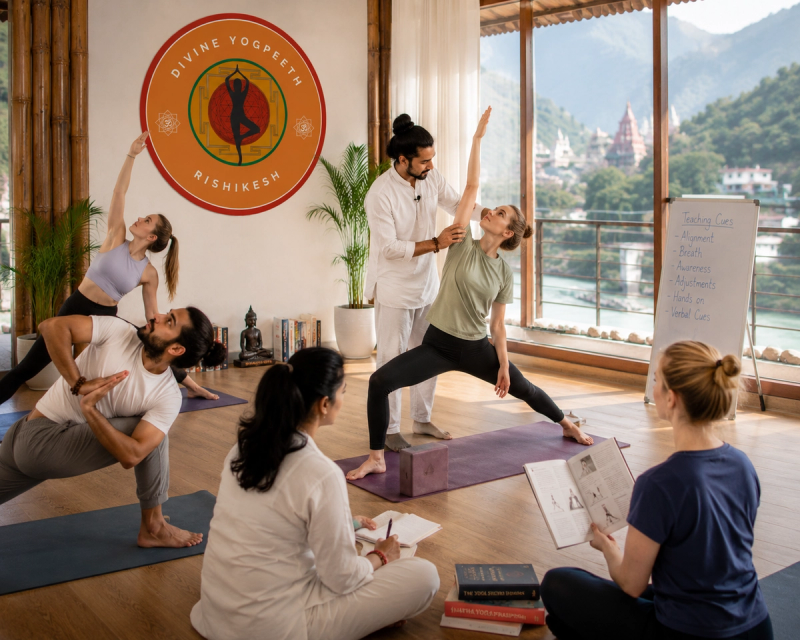
Start Your Online Teaching Journey With the Right Foundation
If you want to build confidence before teaching a wider online audience, we offer yoga teacher training in Rishikesh designed to give you a stronger foundation in practice, teaching methodology, sequencing, and related subjects through our 200-Hour Yoga Teacher Training in Rishikesh.
Your post-certification path can then become more intentional. Rather than rushing to sell classes, you can practice teaching, collect feedback, refine a niche, and gradually build a schedule you can sustain.
You may also choose a shorter training route if you already have relevant experience and want to deepen selected areas. Our 100-Hour Yoga Teacher Training in Rishikesh can be considered as part of that broader learning path.
The key is to choose training based on the teacher you want to become, not simply the fastest certificate you can obtain.
FAQs About Teaching Online Yoga Classes After Certification
Can you teach yoga online after completing a TTC?
Yes, you can teach online if your training and scope prepare you for the classes you offer and you meet applicable professional, legal, insurance, and platform requirements. Certification alone does not guarantee teaching competence in every specialty.
What should you teach in your first online class?
Start with a class that sits comfortably inside your training. Keep the sequence familiar, avoid unnecessary complexity, and leave time for demonstrations, questions, and modifications.
How long should an online yoga class be?
There is no universal ideal length. Thirty, 45, and 60-minute formats can all work. Choose a duration your target students can realistically attend and that gives you enough time to teach safely without rushing.
Do you need expensive equipment?
No. Stable framing, clear audio, adequate lighting, reliable internet, and a safe practice area matter more than premium gear. Upgrade after you identify a real limitation in your current setup.
Should you offer private or group online classes?
Both can work. Private classes allow more individualized attention and can be easier to tailor. Group classes can be more scalable and community-oriented. Many teachers test one format first, then add the other once their workflow is reliable.
Conclusion: Turn Your TTC Into a Sustainable Online Practice
Teaching online yoga classes after certification is less about owning the perfect camera and more about becoming a teacher students can trust through a screen. Your strongest assets are clear cueing, thoughtful sequencing, safe boundaries, consistent preparation, and a class format that genuinely serves your audience.
Start small. Teach a pilot class. Review your recording. Ask for honest feedback. Fix the biggest weakness, then repeat. That process will teach you more than endlessly planning your website or waiting for the “perfect” launch.
If your foundation needs strengthening before you take your teaching online, explore our 200-Hour Yoga Teacher Training in Rishikesh and build the skills you can carry into both in-person and virtual teaching. We welcome you to train with us in Laxman Jhula, Tapovan, Rishikesh, and take your next teaching step with a clearer foundation.