
A yoga retreat end of season Rishikesh experience helps you release stress, reflect and welcome a fresh beginning. Discover how to end your year mindfully.
Yoga Retreat End of Season Rishikesh: How to Close the Year with Intention
The end of a year can leave you with two very different feelings: satisfaction about what you have achieved and uncertainty about everything that remains unfinished. A yoga retreat end of season Rishikesh experience offers an opportunity to pause, reflect and approach the next chapter with greater clarity.
Instead of filling your final weeks with more commitments, imagine spending a few days practising yoga, sitting beside the Ganga, breathing in the Himalayan air and giving yourself time to understand what the past year has taught you.
Closing the year intentionally does not mean reviewing every mistake or creating another demanding list of resolutions. It means recognising your experiences, releasing unnecessary pressure and deciding what deserves your attention moving forward.
Whether you are an experienced yoga practitioner or someone beginning a wellness journey, an end-of-year retreat in Rishikesh can provide the space to reconnect with your physical health, mental well-being and personal values.
Here is how you can make that time meaningful and carry its benefits into the year ahead.
1. Why Choose a Yoga Retreat at the End of the Season?
The end of the year is often associated with celebrations, travel plans, deadlines and personal expectations. However, it can also be one of the most useful times to slow down.
A seasonal yoga retreat creates a deliberate break from your usual surroundings. You temporarily step away from familiar responsibilities and create room for practices that support reflection.
Unlike a conventional holiday, a yoga retreat combines physical movement, breathing exercises, meditation and opportunities for self-observation.
Give Yourself Space to Reflect
During an ordinary week, you may move from one responsibility to another without examining how you actually feel.
A retreat allows you to ask questions that often get postponed:
- Which experiences brought genuine happiness this year?
- What situations repeatedly drained your energy?
- Which habits supported your physical and mental well-being?
- What relationships or commitments deserve more attention?
- What would you like to approach differently next year?
You do not need immediate answers. Sometimes, simply recognising a pattern is a valuable beginning.
Journaling after your morning meditation can help you explore these questions without judging yourself.
Replace Pressure with Presence
Many people approach the new year with ambitious resolutions involving fitness, career growth, finances and relationships.
There is nothing wrong with having goals. The problem begins when those goals become another source of pressure.
A retreat encourages you to experience the present rather than constantly measure yourself against an imagined future.
You can also explore the importance of yoga philosophy in modern daily practice to understand how traditional principles can support a balanced lifestyle beyond the yoga mat.
For a deeper understanding of yoga traditions, you can explore the official Yoga Alliance website.
2. How a Yoga Retreat Helps You Close the Year Mindfully
A meaningful retreat is not about completing as many activities as possible. It is about choosing practices that help you become more aware of your physical, emotional and mental state.
An end-of-season yoga experience can bring together several complementary practices.
Hatha and Vinyasa Yoga for Physical Reset
Regular yoga practice can help you develop strength, mobility, balance and body awareness.
Hatha yoga provides an opportunity to explore postures at a controlled pace, while Vinyasa connects movement with breathing through flowing sequences.
You can use these practices to:
- Release physical stiffness from prolonged sitting.
- Improve body awareness and movement coordination.
- Develop better breathing habits.
- Build consistency in your personal practice.
- Create a healthier relationship with physical activity.
The objective is not to achieve advanced postures before the year ends.
Instead, pay attention to how your body responds. Respect your limitations and work with appropriate modifications.
If you want to understand how flowing sequences are structured, explore these Vinyasa fundamentals and essential techniques.
Meditation for Mental Clarity
Meditation provides a structured opportunity to observe your thoughts without automatically reacting to them.
During an end-of-year retreat, you can practise:
- Breath awareness meditation.
- Guided mindfulness meditation.
- Mantra meditation.
- Silent sitting meditation.
- Body-scan meditation.
Start with 10–15 minutes if you are new to meditation. Gradually increase the duration according to your comfort.
You may notice that thoughts about unfinished work, personal responsibilities or future plans continue to appear.
That is normal. Meditation does not require you to eliminate thoughts. The practice is to notice when your attention wanders and gently return it to your chosen point of focus.
Pranayama for Breath Awareness
Pranayama introduces you to conscious breathing techniques that can support relaxation and concentration.
Practices such as gentle diaphragmatic breathing and Nadi Shodhana can be included under appropriate guidance.
Avoid forcing your breath or practising advanced retention techniques without qualified supervision, particularly if you have an underlying health concern.
The purpose is to develop a comfortable relationship with your breathing.
3. Five Meaningful Practices for Your End-of-Year Yoga Retreat
You do not need a complicated schedule to make your retreat valuable.
A combination of simple, consistent activities can help you create a more meaningful experience.
1. Start Your Morning with Intention
Begin your day without immediately checking your phone.
Spend a few minutes noticing your breathing, observing your surroundings and setting one realistic intention.
Your intention could be as simple as:
"I will give myself time to rest today."
This creates a different starting point from waking up and immediately responding to messages and responsibilities.
2. Create a Personal Reflection Journal
Writing helps you organise experiences that may otherwise remain unclear.
Divide a journal page into three sections:
What I am grateful for:
Write about people, opportunities, experiences and small moments that positively influenced your year.
What I have learned:
Recognise difficult experiences, personal mistakes and situations that helped you understand yourself better.
What I want to carry forward:
Identify the habits, relationships and values you want to prioritise.
Try to write honestly rather than creating answers that sound impressive.
3. Practise Yoga Without Chasing Performance
Your retreat should not become another fitness competition.
Choose a practice appropriate to your experience and physical condition.
A gentle morning sequence, followed by restorative postures or a guided relaxation session, may be more beneficial than pushing yourself through an exhausting routine.
Notice how your body feels before and after practice.
4. Spend Time in Silence
You do not need to remain silent throughout your retreat.
However, creating short periods without unnecessary conversation, music or digital distractions can help you notice your thoughts more clearly.
Try a 30-minute mindful walk or spend some quiet time near the Ganga.
Observe the sounds of the river, the movement of the water and the changing atmosphere around you.
5. Establish Three Realistic Priorities for the Next Year
Instead of creating twenty resolutions, identify three areas that deserve your attention.
For example:
- Physical health: Build a consistent movement and sleep routine.
- Personal development: Dedicate time to learning a meaningful skill.
- Mental well-being: Establish boundaries around work and digital distractions.
Your priorities should be specific enough to guide your decisions but flexible enough to adapt as circumstances change.
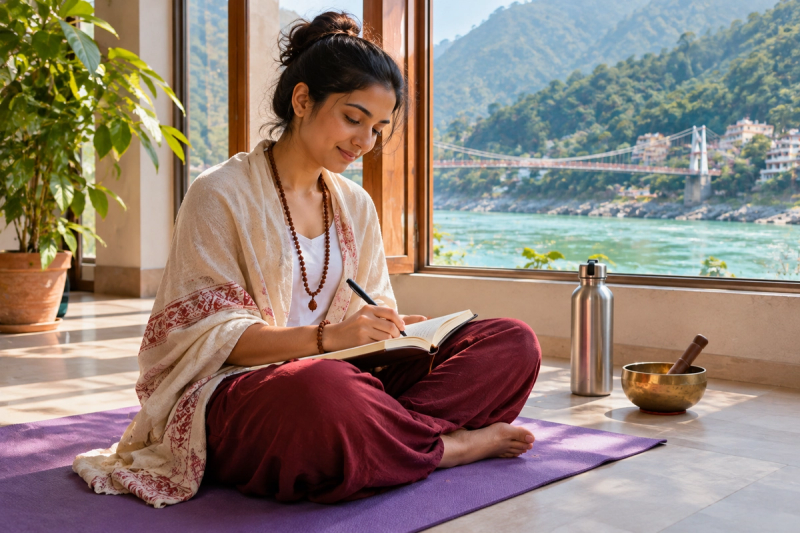
Suggested in-content image placement: After this section, add an image of a practitioner journaling beside the Ganga after a morning yoga session.
4. Designing Your Own End-of-Season Retreat Routine
A retreat becomes more effective when its schedule provides a healthy balance between structured activities and personal time.
You do not need to practise yoga for six hours daily. Consistency, appropriate guidance and adequate rest matter more than the number of activities.
Here is an example of a balanced daily routine.
Sample Daily Yoga Retreat Schedule
TimeActivity6:30 AMWake up and morning silence7:00 AMPranayama and meditation7:45 AMGuided yoga practice9:00 AMBreakfast10:00 AMPersonal reflection and journaling11:30 AMFree time or mindful walk1:00 PMLunch and relaxation3:00 PMYoga philosophy or self-study4:30 PMGentle yoga or restorative practice5:30 PMMeditation or sound healing7:00 PMDinner8:00 PMGratitude journaling and quiet time
The schedule can be adjusted according to the retreat duration, teaching style and your personal needs.
Choosing Between a Short Retreat and a Longer Programme
Your available time and personal goals should influence your choice.
A three-day retreat can be suitable if you want a short break from daily responsibilities and an introduction to structured yoga and mindfulness practices.
A five-day programme provides more time to establish a routine, explore different practices and reflect without rushing.
If you are interested in a more intensive learning experience, a teacher training programme may offer a deeper exploration of yoga philosophy, anatomy, pranayama and teaching methodology.
Remember that a retreat and a teacher training course have different objectives. You can understand the distinction through this guide to yoga retreats and yoga vacations.
5. Why Rishikesh Is a Meaningful Destination for a Year-End Yoga Retreat
Rishikesh offers an environment where yoga, spiritual traditions and the natural landscape come together.
Situated in Uttarakhand, along the banks of the Ganga and near the Himalayan foothills, the town has long attracted yoga practitioners, spiritual seekers and travellers interested in Indian wellness traditions.
The atmosphere can make it easier to step away from familiar routines.
The Ganga and the Practice of Slowing Down
The Ganga is an important part of the spiritual and cultural identity of Rishikesh.
Spending time near the river can become a simple mindfulness practice.
You might sit quietly in the morning, observe the movement of the water or take a slow walk along the riverbank.
You do not have to follow a particular religious tradition to appreciate the opportunity for quiet reflection.
A Natural Setting for Mindful Travel
The Himalayan foothills provide a different environment from crowded urban surroundings.
Depending on the season and weather conditions, you may experience cooler mornings, pleasant daytime temperatures and beautiful views of the surrounding landscape.
Winter travel requires preparation. December and January mornings can be cold, so comfortable warm clothing is important.
Also remember that Rishikesh experiences seasonal weather variations. Check local conditions before planning outdoor activities.
Explore Beyond Your Yoga Mat
A retreat can also include time to understand the local culture and surroundings.
You might explore:
- The spiritual atmosphere around Laxman Jhula and Tapovan.
- Evening Ganga Aarti at an appropriate location.
- Local temples and traditional markets.
- Peaceful riverbank areas.
- Nearby nature trails and viewpoints, depending on accessibility and weather.
Choose activities that complement your retreat rather than filling every available hour.
Supporting Your Well-Being Through Ayurveda and Traditional Practices
Rishikesh also has a strong connection with Ayurveda and traditional Indian wellness practices.
You may encounter programmes involving lifestyle guidance, traditional food philosophies, relaxation practices and therapeutic approaches.
If you are interested in these subjects, explore the official Ministry of AYUSH website for information about India's traditional systems of medicine.
Keep your expectations realistic. Yoga and wellness programmes can complement healthy lifestyle choices, but they should not be presented as replacements for necessary medical treatment.
6. How to Carry Your Retreat Experience into the New Year
One of the biggest mistakes people make after a retreat is returning to exactly the same routine without making any adjustments.
You may feel relaxed and motivated during your stay, but those feelings can gradually disappear when work, travel and everyday responsibilities return.
The real value of a retreat becomes clearer when you integrate a few of its practices into ordinary life.
Build a 20-Minute Daily Routine
You do not need a full retreat schedule at home.
Start with something manageable:
- Five minutes of comfortable breathing.
- Ten minutes of yoga or gentle movement.
- Five minutes of meditation.
A short routine that you can maintain consistently is more useful than an ambitious routine that lasts only a few days.
Create Digital Boundaries
Constant notifications can interrupt concentration and make it difficult to enjoy quiet moments.
Consider introducing a few simple boundaries:
- Avoid checking your phone immediately after waking up.
- Keep meals free from unnecessary screen time.
- Take short breaks from social media.
- Avoid using your phone during meditation.
- Set a reasonable time to disconnect before sleeping.
These changes do not require you to abandon technology. They simply help you use it more consciously.
Continue Your Reflection Practice
Keep your retreat journal accessible.
At the end of each week, spend a few minutes reviewing your progress.
Ask yourself:
- Did I make time for my priorities?
- Which habits helped me feel balanced?
- What made it difficult to maintain my routine?
- What small adjustment can I make next week?
This approach turns reflection into an ongoing practice rather than a once-a-year activity.
For another perspective on continuing your practice after travelling, explore these practical yoga retreat integration tips.
7. Find the Right End-of-Season Yoga Experience at Divine Yogpeeth
Choosing a retreat is not simply about selecting a beautiful destination.
You should also consider the teaching approach, programme duration, accommodation arrangements, daily schedule and the type of experience you want.
Located in Laxman Jhula, Tapovan, Rishikesh, Divine Yogpeeth offers yoga and wellness programmes for practitioners with different interests and experience levels.
Our retreat options provide opportunities to explore yoga, meditation and mindful living in the surroundings of Rishikesh.
You can consider the following programmes according to your available time:
- Three-Day Yoga Retreat: A short introduction to yoga and mindful living through our 3-day retreat in Rishikesh.
- Five-Day Yoga Retreat: More time for regular practice, relaxation and personal reflection through our 5-day yoga retreat programme.
If you want to explore a longer educational commitment, our 100-hour Yoga Teacher Training offers a more structured approach to studying yoga.
We encourage you to consider your personal goals, physical comfort and available time before selecting a programme.
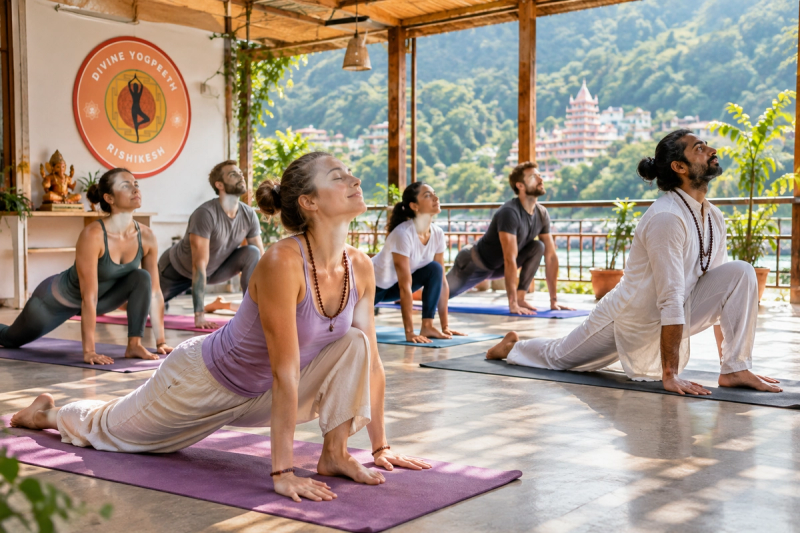
Suggested in-content image placement: Add an authentic photograph showing a small group practising yoga in a peaceful studio or open practice space at Divine Yogpeeth.
8. FAQs About an End-of-Season Yoga Retreat in Rishikesh
Is the end of the year a good time for a yoga retreat in Rishikesh?
Yes. The winter season attracts many travellers interested in yoga, meditation and spiritual experiences. December and January can offer a peaceful atmosphere, although mornings and evenings are cold. Check weather conditions and accommodation arrangements before booking.
How many days are enough for an end-of-year yoga retreat?
Three to five days can provide a useful introduction to structured yoga practice and personal reflection. A longer programme may be appropriate if you want more time to develop a routine or study yoga in greater depth.
Can beginners join a year-end yoga retreat?
Yes. Many retreat programmes welcome beginners. However, check the specific programme requirements before booking and inform the instructors about any physical limitations or relevant health concerns.
What should you pack for a winter yoga retreat in Rishikesh?
Pack comfortable yoga clothing, warm layers, a jacket, suitable footwear, personal toiletries, a reusable water bottle and a journal. You may also want to carry a personal yoga mat if you prefer practising with your own equipment.
Does a yoga retreat help you prepare for the new year?
A retreat can give you dedicated time for reflection, physical activity and mindfulness. It may help you identify priorities and establish realistic habits. However, lasting changes depend on how you continue practising after returning home.
9. Conclusion: Close the Year with Awareness, Not Pressure
The end of the year does not have to become another deadline.
A yoga retreat end of season Rishikesh experience gives you an opportunity to pause, recognise your experiences and make thoughtful decisions about the future.
You do not need to enter the new year with a perfect plan or an entirely different version of yourself.
Sometimes, the most meaningful preparation is simply understanding what matters, letting go of unnecessary expectations and creating space for healthier habits.
Rishikesh offers a setting where you can explore these intentions through yoga, meditation, mindful movement and time spent in nature.
At Divine Yogpeeth, we invite you to explore our five-day yoga retreat in Rishikesh if you want to dedicate more time to your well-being before beginning another year.
Give yourself permission to slow down. Close this chapter with intention, and let your next beginning come from clarity rather than pressure.