.jpg)

Yoga teacher training personal transformation freedom can reshape how you see choice, discipline and confidence. Explore the real lessons of YTT in Rishikesh.
Yoga Teacher Training Personal Transformation Freedom: How Teacher Training Changed Your Relationship with Freedom
What if freedom is not having fewer responsibilities, but having more choice in how you respond to them? Yoga teacher training personal transformation freedom can begin with that uncomfortable question. When you spend weeks practicing, studying, teaching, and living more deliberately, independence stops being an abstract idea and becomes something you can observe in your daily decisions.
Teacher training can change your relationship with freedom because it asks you to notice what controls your attention: habits, fear of judgment, automatic reactions, or the need to keep everyone satisfied. You are not simply learning poses or memorizing Sanskrit terms. You are learning to stay present when something feels difficult, uncertain, or unfamiliar.
A training experience in Rishikesh can make those lessons especially tangible. Your routine may revolve around practice, study, meals, rest, and community rather than your usual schedule. The point is not to escape ordinary life permanently. It is to return to it with a clearer understanding of what you actually choose.
This article explores how teacher training can reshape independence, boundaries, discipline, confidence, and everyday freedom—and how you can decide whether a YTT is the right next step for you.
Yoga Teacher Training Personal Transformation Freedom Starts With Choice
Independence often sounds like doing everything alone. Teacher training can show you a different definition: being able to make conscious choices without being pushed around by every impulse, expectation, or fear.
Your first shift may be surprisingly ordinary. You wake up for practice because you decided that the training matters. You arrive even when your body feels stiff. You listen to feedback without immediately defending yourself. You take notes because you want to understand, not because someone is grading your obedience.
These small decisions build self-trust.
During a structured course, you may also discover how quickly convenience can become a habit. If your normal routine lets you postpone practice, avoid silence, or distract yourself whenever discomfort appears, a consistent training schedule removes some of those escape routes. That can feel restrictive at first. Yet the structure can reveal an important distinction: discipline chosen freely is different from control imposed on you.
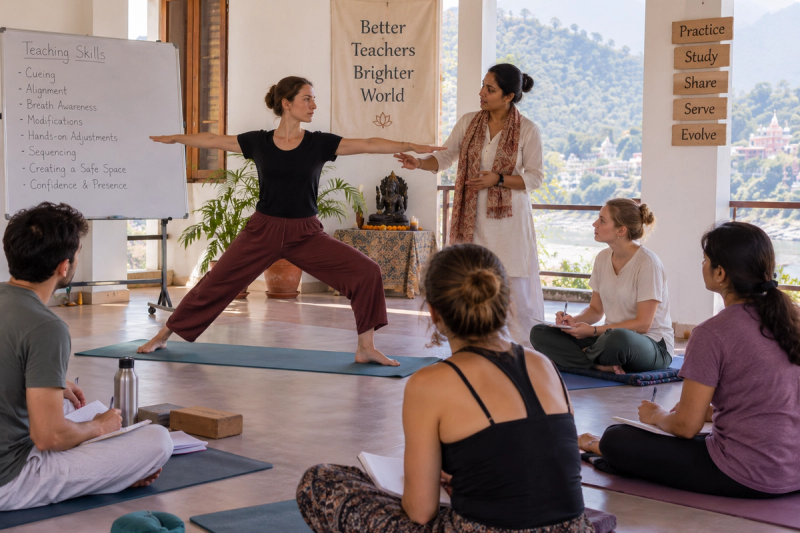
The educational side matters too. A credible yoga teacher training should give you more than a sequence of poses. You learn about teaching methodology, anatomy, yoga philosophy, communication, and responsible instruction. For information about the broader professional framework, you can explore Yoga Alliance.
You still make your own decisions about what to believe and how to practice. Training does not need to hand you a fixed identity. Instead, it can give you tools for examining your existing one.
That is where personal transformation becomes practical. You begin asking: Is this my choice, or simply my usual reaction?
How Teacher Training Builds Inner Independence
Independence becomes more meaningful when it includes emotional and mental self-reliance. That does not mean suppressing emotions or refusing help. It means becoming better at noticing what is happening inside you before handing control to an external situation.
Learning to sit with discomfort
A challenging posture, difficult teaching practice, or unfamiliar group dynamic can bring up frustration. Your first instinct may be to compare yourself with someone else or decide that you are not good enough.
Training gives you repeated opportunities to pause.
You can observe the sensation, breathe, adjust, and continue. That pattern can become useful outside the studio. A difficult conversation does not automatically require an immediate reaction. A disappointing result does not have to define your next decision.
Becoming comfortable with being a beginner
Teacher training puts you in situations where competence is uneven. You may understand anatomy quickly but struggle to explain a posture. You may feel confident during personal practice but become nervous when teaching others.
That vulnerability can be freeing.
Instead of protecting an image of yourself as someone who already knows everything, you learn to ask questions. You receive corrections. You try again. The ability to say “I do not know yet” can reduce a surprising amount of pressure.
This is also why group dynamics matter. Learning alongside people from different ages, cultures, and experience levels can challenge assumptions about how a “good” practitioner should look or behave. If you want to explore that dimension before enrolling, our guide to yoga teacher training group dynamics explains how shared learning can shape the training environment.
Inner independence is therefore not isolation. It is the capacity to remain connected to others without losing your own judgment.
From Self-Doubt to Responsible Confidence
Confidence after teacher training should not mean believing you are perfect. A healthier version is quieter: you trust yourself to prepare, communicate, adapt, and keep learning.
Teaching makes this distinction obvious.
When you stand in front of a group for the first time, you may notice every nervous thought. What if you forget the sequence? What if someone asks a question you cannot answer? What if your voice shakes?
Those fears are normal. The useful response is not pretending they do not exist. It is preparing well enough that you can function while they are present.
Confidence through preparation
A responsible teacher learns to build a class with intention. You consider the students, sequence, pacing, instructions, modifications, and safety. You learn that confidence can come from preparation rather than performance.
You also learn the limits of your role. If a student's concern requires medical assessment, you do not turn a yoga qualification into a license to diagnose. Good boundaries protect both teacher and student.
Government resources such as the Ministry of AYUSH provide broader information about yoga and traditional wellness systems; you can explore the Ministry of AYUSH for official context.
For many students, this creates a more grounded relationship with personal freedom. You do not need to know everything to move forward. You need enough awareness to know what you can handle, what you should learn, and when you should seek appropriate expertise.
If you feel nervous about teaching, practical preparation matters. You can also review our guide on teaching your first yoga class with less nervousness before your first teaching practice.
Freedom Does Not Mean Avoiding Structure
One of the biggest misconceptions about independence is that freedom requires a completely unstructured life. Teacher training can challenge that idea.
A fixed daily schedule may initially feel restrictive. Practice begins at a certain time. Classes happen according to a timetable. Meals and rest fit around study. You have assignments and teaching practice.
Yet structure can create freedom by reducing unnecessary decision-making.
When your practice time is already protected, you spend less energy negotiating with yourself. When study has a defined place in the day, you are less likely to carry vague guilt around unfinished work. When you repeat a routine long enough, the effort required to start can decrease.
The deeper lesson is that you can choose useful constraints.
A runner chooses a training schedule. A musician practices scales. A developer blocks time for focused work. A yoga teacher practices consistently because skill develops through repetition.
Freedom is not the absence of commitment. It is the ability to choose commitments that support the person you want to become.
This perspective can also change how you think about your future after certification. You might teach full-time, offer private sessions, work online, integrate yoga into another profession, or simply keep yoga as a serious personal practice. Certification does not force you into one career.
Your options can expand precisely because your skills have expanded.
Why Rishikesh Makes the Lesson More Tangible
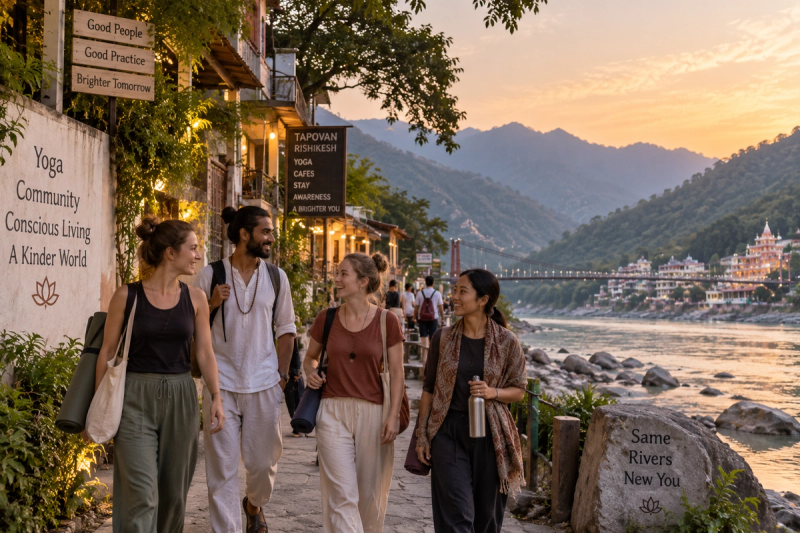
Rishikesh offers a particular training environment because yoga is woven into the city's daily rhythm. Around Tapovan and Laxman Jhula, you can encounter studios, ashrams, teachers, practitioners, cafés, and travelers within a relatively compact area.
The setting can make it easier to step away from familiar routines.
That does not mean Rishikesh automatically transforms everyone who visits. Location is not magic. Your attention, discipline, expectations, and willingness to participate matter more than scenery.
Still, environment influences behavior. Waking up near the Ganga, walking to class, practicing with people from different countries, and spending less time inside your normal social routine can give you space to examine habits that usually run on autopilot.
For international students, the experience can also involve practical independence: navigating a new place, communicating across cultural differences, managing personal time, and adapting to unfamiliar routines. If you are considering a retreat or training from abroad, our guide to staying safe during a yoga retreat in Rishikesh covers practical considerations worth thinking through before you travel.
For Indian practitioners, the experience can be different but equally useful. You may live relatively close to home yet still enter a learning environment that changes your usual routine and social expectations.
The important question is not whether Rishikesh will change you. Ask whether you are willing to use the environment to examine yourself honestly.
A More Practical Definition of Freedom After YTT
After teacher training, freedom can become less dramatic and more practical.
You may notice it when you decline a commitment that conflicts with your priorities. You may notice it when you stop comparing your progress with another practitioner's body. You may notice it when you teach without needing every student to approve of you.
You may also become more comfortable changing direction.
Perhaps you entered training intending to become a full-time teacher and later realized you prefer teaching part-time. Perhaps you wanted a career change but discovered that yoga fits better alongside your existing profession. Perhaps you simply wanted deeper personal practice.
None of these outcomes makes the training a failure.
Personal transformation is not a fixed result that a course can guarantee. It is an ongoing process shaped by your choices after the course ends.
That is why continuing education can matter. Once the initial certification is complete, you can deepen specific interests such as anatomy, philosophy, meditation, sound work, or specialized teaching methods. If you want to explore what comes next, our guide to continuing education after 200-hour YTT can help you think beyond the first certificate.
Freedom, in this sense, is not “I can do anything.” It is closer to “I can choose more deliberately.”
If You Want to Explore Teacher Training in Rishikesh
If you are considering training in Rishikesh, we offer structured teacher-training options at Divine Yogpeeth, including our 200-Hour Yoga Teacher Training in Rishikesh.
Before choosing a course, look beyond the certificate. Consider the schedule, curriculum, teaching practice, accommodation, group size, instructor experience, safety approach, and what level of independence you want during your stay.
A 200-hour program generally requires a deeper time commitment than a short retreat or introductory workshop. That can be valuable if you want sustained practice and space for reflection, but it also means you should be realistic about your energy, budget, travel plans, and responsibilities at home.
If you are not ready for a longer program, a shorter format can help you understand whether the environment suits you. Our 5-day yoga retreat in Rishikesh offers a more compact way to experience structured practice and retreat life.
The goal should not be to buy a dramatic life change. Choose a learning environment where you can practice consistently, ask questions openly, and develop skills that remain useful after you leave Rishikesh.
FAQs About Yoga Teacher Training and Freedom
Can yoga teacher training really change your sense of independence?
It can, but there is no guaranteed psychological outcome. A structured training environment gives you repeated opportunities to practice discipline, self-observation, communication, and decision-making. What changes depends on how actively you engage with those opportunities.
Do you have to become a yoga teacher after completing YTT?
No. Training can support teaching as a profession, but you can also use the education to deepen your personal practice, complement another career, or explore teaching gradually. Your certification does not determine your entire professional identity.
Is a 200-hour YTT better for personal growth than a short retreat?
They serve different purposes. A 200-hour program involves substantially more study and teaching practice, while a short retreat provides a shorter immersion. Your choice should depend on your goals, available time, and willingness to commit to an intensive curriculum.
Why choose Rishikesh for yoga teacher training?
Rishikesh provides a strong yoga-learning ecosystem and an environment where you can step away from familiar routines. However, the location alone does not guarantee personal change. The quality of the program and your participation are crucial.
What should you look for before enrolling?
Check the curriculum, daily schedule, teacher qualifications, practical teaching opportunities, accommodation details, policies, student reviews, and what is actually included in the fee. Ask direct questions before paying.
Conclusion: Let Freedom Become a Practice
Yoga teacher training personal transformation freedom are connected when training helps you move from automatic reactions toward deliberate choices. You learn that independence is not about rejecting structure, avoiding people, or having complete control over every circumstance.
It is about knowing yourself well enough to choose your commitments, respond to difficulty, set boundaries, and keep learning.
Rishikesh can provide the setting. A teacher-training course can provide structure and skills. But the lasting work happens through what you do with those lessons after you return home.
If you are ready to explore that next step, begin with our 200-Hour Yoga Teacher Training in Rishikesh and see whether a deeper period of practice, study, and teaching fits the kind of freedom you want to build.
Freedom is not something you wait to feel. You can practice choosing it, one deliberate decision at a time.