
Ashtanga primary series teacher training reveals how a 200-hour TTC builds strength, breath control and teaching skills. Discover what you will actually learn.
Ashtanga Primary Series Teacher Training: What You Actually Learn in a 200-Hour TTC
Introduction
Ashtanga primary series teacher training can be much more than learning a sequence of challenging yoga postures. Have you ever wondered why some practitioners move through demanding asanas with controlled breathing while others struggle to maintain their rhythm?
The difference often comes down to understanding the relationship between movement, breath, alignment and consistent practice.
When you join a 200-hour Yoga Teacher Training Course (TTC), you begin exploring these principles systematically. You learn how the traditional Ashtanga Primary Series is structured, why particular postures appear in a specific order, and how to adapt your practice according to your body's abilities.
However, there is an important distinction: practising the Primary Series and learning how to teach yoga are two different skills.
A quality teacher training introduces you to both personal practice and teaching methodology. This guide explains what you can realistically expect to learn, how the Primary Series fits into a 200-hour curriculum, and why studying yoga in Rishikesh can add another dimension to your experience.
1. Understanding Ashtanga Primary Series Teacher Training
Before exploring the curriculum, you need to understand what makes Ashtanga Vinyasa Yoga different from other popular yoga styles.
Ashtanga is a structured practice that connects breath with movement through a progressive sequence of postures. Rather than choosing unrelated poses during every session, practitioners follow an established sequence designed to develop strength, mobility, coordination and concentration.
The Primary Series is traditionally known as Yoga Chikitsa, commonly translated as yoga therapy or yoga for purification.
Its traditional sequence includes standing postures, seated postures, forward bends, twists, backbends and finishing postures.
During your teacher training, you explore the purpose and organisation of this sequence instead of simply memorising its names.
What Makes the Primary Series Different?
Three important principles shape the traditional practice:
1. Vinyasa: Each movement is coordinated with a specific inhalation or exhalation. This creates a rhythm between breathing and physical movement.
2. Tristhana: This refers to three areas of attention: posture (asana), breathing (pranayama) and focused gaze (drishti).
3. Consistency: Repeating a structured sequence allows you to observe changes in strength, flexibility, concentration and technique over time.
You also become familiar with traditional Sanskrit terminology used to identify postures and describe different stages of practice.
If you want to understand how Sanskrit terminology appears throughout yoga education, explore our guide to essential Sanskrit terms in yoga teacher training.
For a broader understanding of internationally recognised yoga education standards, you can visit Yoga Alliance.
Remember that a 200-hour TTC does not necessarily teach every student the complete traditional Primary Series to an advanced teaching standard. Its purpose is to establish a sound foundation for further development.
2. What You Actually Learn About the Ashtanga Primary Series
One of the biggest misconceptions about a 200-hour yoga teacher training course is that most of the time is spent performing difficult poses.
In reality, a comprehensive programme combines physical practice with theoretical understanding, observation and teaching preparation.
Your exposure to Ashtanga depends on the school's curriculum, faculty and daily schedule. However, several foundational learning areas are particularly valuable.
A. Standing Postures and Foundation
Standing postures help you understand balance, stability and the relationship between different parts of your body.
You may study postures such as:
- Padangusthasana – Big Toe Pose
- Pada Hastasana – Hand Under Foot Pose
- Utthita Trikonasana – Extended Triangle Pose
- Parivrtta Trikonasana – Revolved Triangle Pose
- Utthita Parsvakonasana – Extended Side Angle Pose
- Prasarita Padottanasana – Wide-Legged Forward Bend
You learn how to position your feet, distribute body weight, engage your legs and maintain spinal alignment.
These details matter because a pose that appears simple can become uncomfortable when performed with poor technique.
B. Seated Postures and Forward Bends
The seated section of the Primary Series introduces different approaches to hip mobility, spinal movement and controlled stretching.
You may encounter postures such as:
- Dandasana
- Paschimottanasana
- Purvottanasana
- Janu Sirsasana
- Marichyasana
- Navasana
Rather than forcing yourself into a particular shape, you learn to recognise the difference between productive muscular engagement and excessive strain.
C. Understanding the Finishing Sequence
Finishing postures help bring the practice towards a more settled conclusion.
They can include shoulder stand variations, plough pose, fish pose, seated meditation and relaxation.
You learn why the finishing sequence is important and how breathing and controlled transitions contribute to a balanced session.
The goal is not to achieve every advanced posture immediately. It is to understand the purpose of each stage and develop a safe, progressive approach.
D. Learning About Modifications
Your body may not respond to every posture in the same way as another student's.
A useful teacher training therefore introduces modifications, appropriate props and alternatives for different levels of mobility.
This is particularly important if you eventually want to teach beginners.
You should understand when to encourage progression and when to recommend a simpler variation.
3. Breath Control, Drishti and the Vinyasa Method
Ashtanga is not simply a physical workout. Its defining characteristic is the coordination of breathing, movement and attention.
This is where your learning becomes more technical.
Understanding Ujjayi Breathing
Ujjayi is a breathing technique commonly associated with Ashtanga Vinyasa practice.
It involves controlled breathing through the nose, with a gentle narrowing of the throat that creates a soft sound.
During training, you learn:
- How to develop steady breathing.
- How to coordinate inhalation and exhalation with movement.
- How to avoid unnecessarily forcing the breath.
- How to recognise when your breathing becomes strained.
- How to maintain awareness during physically demanding sequences.
Breath should support your practice, not become another source of tension.
What Is Drishti?
Drishti refers to a focused gaze used during yoga practice.
Traditional Ashtanga uses specific gaze points to support concentration and awareness.
Examples include looking towards the nose, hands, navel, toes or a fixed point in front of you.
You learn that drishti is not simply about looking in a particular direction. It helps reduce unnecessary visual distractions and encourages internal attention.
Understanding Vinyasa Transitions
A transition is the movement between two postures.
For example, moving from a forward bend into a standing position requires coordination, balance and control.
During training, you explore how breath-led transitions create continuity between asanas.
You also learn that not every student needs to perform advanced transitions such as jump-backs or jump-throughs.
Alternative movements can provide a more accessible way to maintain the rhythm of practice.
To understand the relationship between flowing movement and structured sequencing in greater detail, read our article on Vinyasa fundamentals in a 100-hour yoga teacher training.
What About Bandhas?
Bandhas are traditionally described as energetic locks or engagements used in yogic practice.
Mula Bandha and Uddiyana Bandha are particularly associated with Ashtanga.
You may learn their traditional explanations, how they are discussed in practice and why instructors emphasise core awareness.
However, bandha instruction requires appropriate guidance. You should not assume that a verbal explanation alone is enough to master these techniques.
A good teacher helps you approach them progressively rather than encouraging unnecessary muscular tension.
4. From Practising Asanas to Learning How to Teach Them
This is arguably the most important distinction in any teacher training.
You might become comfortable performing several postures, but that does not automatically mean you know how to teach them.
Teaching requires observation, communication, sequencing and the ability to respond to different student needs.
A 200-hour TTC introduces the foundations of these professional skills.
A. Learning Correct Alignment
You study the basic principles of posture alignment and understand how body positioning affects stability and comfort.
For example, in Trikonasana, you may explore:
- Foot positioning.
- Leg engagement.
- Pelvic orientation.
- Spinal length.
- Shoulder positioning.
- Appropriate hand placement.
You also learn that alignment is not identical for everyone.
Differences in body proportions, mobility and previous injuries can influence how a student approaches an asana.
B. Verbal Instructions and Demonstrations
A yoga teacher needs to communicate clearly.
During practice teaching, you may learn how to:
- Introduce a posture using its English or Sanskrit name.
- Explain entry and exit movements.
- Give concise breathing instructions.
- Demonstrate accessible variations.
- Maintain awareness of the entire class.
The objective is to make instructions understandable rather than overwhelm students with technical language.
C. Observing Students and Providing Adjustments
You learn to observe how students move and identify common alignment difficulties.
You also explore the difference between verbal guidance, visual demonstrations and hands-on adjustments.
Hands-on adjustments require consent, appropriate training and sensitivity. They should never be treated as compulsory.
Understanding when not to adjust someone is an important part of responsible teaching.
For more practical guidance, explore our article on yoga injury prevention and safe teaching techniques.
D. Practice Teaching
Practice teaching gives you an opportunity to apply what you have learned.
You may take turns leading a short sequence, explaining postures and receiving feedback from instructors and fellow students.
This experience helps you recognise common teaching challenges:
- Speaking too quickly.
- Giving unclear instructions.
- Forgetting breathing cues.
- Losing track of sequencing.
- Focusing only on your own demonstration.
You gradually learn that teaching is about guiding the class, not displaying your personal flexibility.
For additional preparation, see our practical guide to teaching your first yoga class with confidence.
5. Why Study Ashtanga and Yoga in Rishikesh, India?
<PLACE IMAGE 2 HERE>
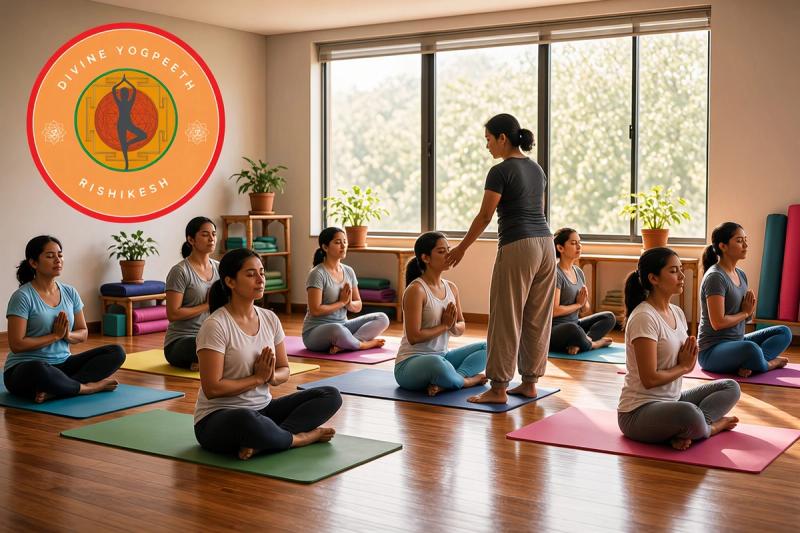
The environment in which you study can influence how you experience yoga.
Rishikesh offers a setting where traditional Indian yoga education, contemporary teacher training and international yoga communities come together.
Located in the Himalayan foothills, the city attracts practitioners who want to study yoga beyond their regular studio routines.
A Setting That Supports Consistent Practice
Rishikesh offers opportunities to establish a more structured daily routine.
You can dedicate time to asana practice, pranayama, meditation, study and reflection without the usual distractions of a busy urban schedule.
The presence of the Ganga River and surrounding Himalayan landscape also provides a distinctive atmosphere for personal practice.
However, the location alone does not guarantee a good education. The quality of instruction, curriculum and student support should remain your priorities.
Exposure to Different Yoga Traditions
Rishikesh has a diverse yoga community.
You can encounter different teaching approaches, traditional terminology and interpretations of yoga philosophy.
This exposure can help you understand how Ashtanga relates to other practices, including Hatha and Vinyasa.
It also gives you opportunities to observe how different practitioners approach the same posture.
Learning Beyond Physical Practice
A comprehensive teacher training may include:
- Yoga philosophy.
- Anatomy and physiology.
- Pranayama.
- Meditation.
- Teaching methodology.
- Yogic lifestyle principles.
- Practical teaching sessions.
You can also explore the wider Indian framework of traditional yoga through resources from the Ministry of AYUSH.
If you are comparing different yoga styles, understanding the importance of yoga philosophy in modern practice can help you develop a broader perspective.
6. What a 200-Hour TTC Does Not Automatically Teach You
An honest understanding of course limitations is just as important as knowing what you will learn.
A 200-hour teacher training is a foundation, not the final stage of your yoga education.
There are several things you should not automatically expect from the programme.
Complete mastery of the Primary Series: Learning the foundational sequence does not mean you will immediately master every posture, transition or advanced variation.
Advanced Mysore-style teaching skills: Traditional Mysore teaching involves individualised instruction within a group setting. Developing the experience to guide such sessions takes continued practice and mentorship.
Automatic injury rehabilitation expertise: Yoga teacher training does not make you a physiotherapist or medical professional. You must recognise the limits of your training and refer students to qualified healthcare professionals when appropriate.
Expert-level anatomy: You gain foundational knowledge of anatomy and movement, but specialised understanding requires further study.
Professional confidence overnight: Teaching confidence develops through observation, practice, feedback and real teaching experience.
You should also understand that the traditional Ashtanga method and a general 200-hour multi-style curriculum are not necessarily identical.
If Ashtanga is your primary goal, ask the school how much dedicated time is included for the Primary Series, who teaches it and whether the programme includes supervised practice teaching.
These questions will help you make a more informed decision.
7. How to Choose the Right 200-Hour Yoga Teacher Training
Not every programme offers the same depth of Ashtanga instruction.
Before enrolling, look beyond attractive photographs, location descriptions and promotional claims.
Evaluate the actual learning experience.
Check the curriculum: Does it explicitly mention Ashtanga, Vinyasa, alignment, pranayama and teaching methodology?
Understand the teaching hours: Find out how much time is dedicated to personal practice, theory and supervised teaching.
Ask about faculty experience: Experienced teachers should be able to explain their teaching background and approach to different student levels.
Review the class structure: Ask whether beginners and experienced practitioners receive appropriate guidance.
Understand certification: Check the school's current Yoga Alliance registration status and the applicable requirements for the credential you intend to pursue.
Ask about post-course support: Find out whether you can receive guidance after graduation, particularly when you begin teaching.
A useful way to evaluate your options is to compare the 200-hour yoga teacher training in Rishikesh with your personal learning objectives.
Do not choose a course simply because it promises the fastest path to becoming a yoga teacher.
Choose one that gives you enough time to understand, practise and teach the fundamentals responsibly.
8. Begin Your Yoga Teacher Training with Divine Yogpeeth
<PLACE IMAGE 3 HERE>
If you are considering studying yoga in Rishikesh, the learning environment and the quality of instruction should guide your decision.
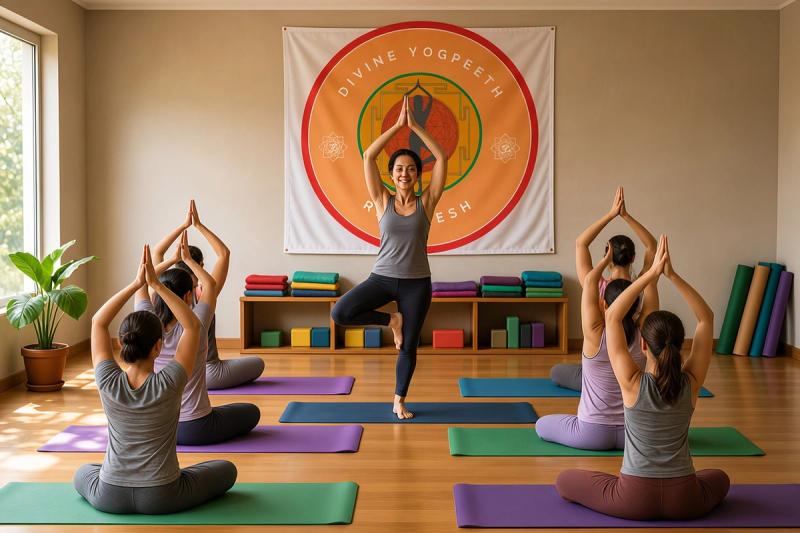
At Divine Yogpeeth, located in the Laxman Jhula and Tapovan area of Rishikesh, our focus is on providing students with an opportunity to develop their yoga practice while exploring the foundations of yoga teaching.
Our 200-hour Yoga Teacher Training Course is a relevant option if you want to study asana practice, breathing techniques, yoga philosophy, anatomy and teaching methodology in a structured programme.
Whether you are an international practitioner exploring yoga education in India or an Indian student looking to deepen your understanding of traditional practice, the right foundation matters.
You can explore our 200-hour Yoga Teacher Training Course to review the programme and decide whether it aligns with your learning goals.
9. Frequently Asked Questions About Ashtanga Primary Series Teacher Training
1. Is the Ashtanga Primary Series included in a 200-hour yoga teacher training?
It depends on the school's curriculum. Many multi-style programmes introduce Ashtanga-inspired sequences, Vinyasa principles and foundational postures. However, the depth of traditional Primary Series instruction varies. Always check the actual syllabus before enrolling.
2. Do I need previous Ashtanga experience to join a 200-hour TTC?
Not necessarily. Many foundational teacher training programmes welcome beginners and practitioners with different levels of experience. You should, however, be prepared for regular physical practice and consistent participation.
3. How many postures are included in the Ashtanga Primary Series?
The traditional Primary Series contains a structured sequence of standing, seated and finishing postures, with variations and transitions. The exact way poses are counted can differ depending on whether transitions and vinyasas are included in the count.
4. Can I teach Ashtanga after completing a 200-hour TTC?
A 200-hour qualification can provide a foundation for teaching yoga, depending on the programme and applicable credential requirements. However, completing it does not automatically make you an experienced Ashtanga specialist or Mysore-style instructor. Further practice, mentorship and specialised training are valuable.
5. Is Rishikesh a good place to study Ashtanga yoga?
Rishikesh offers access to a diverse yoga community, traditional Indian learning environments and experienced yoga practitioners. It can be a suitable location for developing your practice, provided you carefully evaluate the school's curriculum, teachers and training standards.
10. Conclusion: Build a Strong Foundation Before Teaching Ashtanga
Ashtanga primary series teacher training is about understanding much more than a fixed sequence of yoga postures.
A meaningful 200-hour TTC introduces you to alignment, breathing, drishti, movement coordination, yoga philosophy and the foundations of teaching.
You learn to approach your own practice with greater awareness while developing the communication and observation skills required to guide others.
Remember that becoming a capable yoga teacher takes more than completing a certificate. Regular practice, continued learning and responsible teaching are essential parts of professional development.
If you are ready to strengthen your practice and explore the foundations of yoga teaching in Rishikesh, take the next step with Divine Yogpeeth.
Explore our 200-Hour Yoga Teacher Training in Rishikesh and begin building your foundation as a confident, knowledgeable and responsible yoga practitioner and teacher.